Outdoor Pitstop

Bike cover outdoors: when is it worth it?
A bike cover is a protective sheet you pull over a parked bike. It keeps rain, dust, leaves and bird droppings off the frame and chain, and sun off the saddle, grips and any display. Whether you need one depends on where your bike is kept:
| Where your bike is kept | Is a cover useful? | Why |
|---|---|---|
| Outside in a garden or on a balcony, no roof | Yes | Rain, sun and dirt land on it directly |
| Under a lean-to or carport | Sometimes | Against wind-blown rain, dust and birds |
| In a shed, garage or bike store | Usually not | The bike is already dry |
| At a campsite or holiday cottage | Yes | A few days outside, often under trees |
| On a bike rack behind the car | Sometimes | Against rain, road spray and insects, if the cover is made for transport |
| In a public cycle park at a station | No | Awkward, and the cover can blow away or be taken |
A cover does not replace a dry place. If a bike stands outside for months, some damp will always collect underneath. A covered spot, a bike store or a shed remains the best protection; the cover is for when you do not have one.
- Most useful
- outside, without a roof
- Better still
- shed, garage or bike store
- Fit
- down over both wheels
Waterproof bike cover: what to look for
An outdoor cover does not need to be complicated, but these points make a difference:
- Size. Pick a cover that reaches down over the wheels. An e-bike with a front rack, a bike with a child seat or a cargo bike needs more room than a road bike. Covers for two bikes exist too.
- Waterproof but breathable. A fully sealed cover can hold moisture underneath. Vents or a breathable fabric let damp escape.
- A fastening at the bottom. Elastic, a drawcord or a buckle keeps it in place when the wind picks up.
- A hole for the lock. An opening or eyelets near the wheel let you lock the bike to a fixed point with the cover on.
- Fabric that copes with sun. Over time sunlight makes thin plastic brittle, so a cover with UV protection lasts longer.
- A storage bag. Handy if you take it on holiday or keep it in a pannier.
Pull the cover over a dry bike if you can. If you put the bike away wet, leave the cover a little looser or open at the bottom so the moisture can get out. Heavy-duty fabric helps against wind and wear, but a heavier sheet without vents traps just as much damp as a thin one.
Which bike cover do you need?
Where does your bike stand?
Outside at home, no roof
- Waterproof, with vents
- Elastic or a drawcord at the bottom against the wind
- A hole for your lock to a fixed point
An electric bike outside
- Big enough for front rack, display and battery
- Take the battery indoors when it freezes
- Take the display with you if it comes off
On a car bike rack
- Fastened tightly so it does not flap or tear
- Number plate and lights stay clear
- Check the instructions for the speed it is made for
On holiday or at a campsite
- Folds small enough for a pannier
- One cover for two bikes if you travel together
- Do not park right under a dripping tree
If you are torn between a cover and a place indoors, choose the place indoors. A cover is a good second choice, not the first.
Bike rain cover for an electric bike
An electric bike can cope with rain. Bosch, which makes e-bike motors, writes that the components are protected against rain, spray and splashes. A rain cover for an e-bike is still useful when it stands outside for long, mainly for the display, the switches, the saddle and the battery.
The battery needs extra care in winter. Bosch says e-bikes can spend the winter outdoors as long as they are well protected against rain and snow, and that a garage or basement is ideal. If you keep yours in a carport or an unheated shed, Bosch advises taking the battery off and storing it at room temperature. When riding in temperatures below zero, it recommends removing the battery after the ride, keeping it indoors, ideally between 10 and 20°C, and putting it back shortly before you set off. For cold rides, Bosch mentions a neoprene battery cover from a bike shop.
So a cover protects your e-bike against rain and dirt, but not against cold. In frost the battery belongs indoors, cover or no cover. More on charging and storing is in the guide e-bike battery.
Bike cover for a bike rack
On a rack behind the car, bikes catch rain, road spray, grit and insects. A cover made for the rack keeps them cleaner, especially on a long drive to a holiday. Keep these points in mind:
- Use a cover made for transport. An ordinary cover for home can flap, tear loose or get in the way of your view at motorway speed. The instructions say up to what speed a transport cover is suitable.
- Keep the number plate and lights clear. The Highway Code says lights, indicators, reflectors and number plates must be kept clean and clear. A cover must never hang over them, and the same goes for the plate and lights on the rack itself.
- Fasten everything tightly. The Highway Code also says you must secure your load and it must not stick out dangerously. Check the straps and buckles again at your first stop.
- Take loose parts off. A display, panniers and a removable battery are better off inside the car; check your bike's manual on whether the battery should come off for transport.
More on carrying bikes is in the guide taking your bike by car.
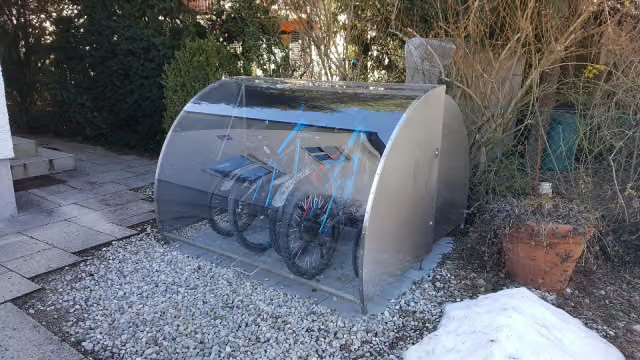
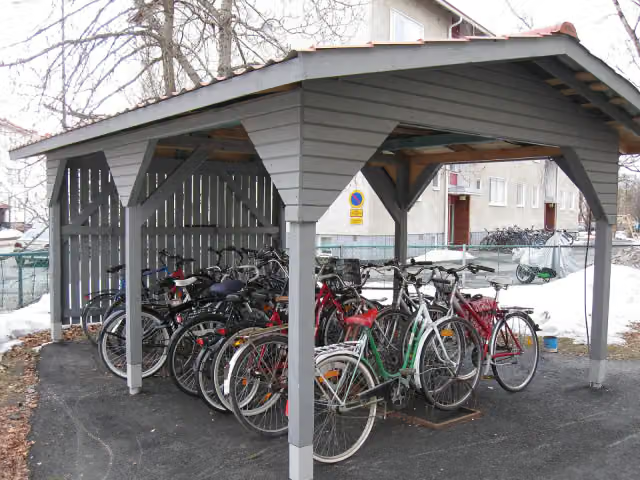
Better than a cover: a dry place
How to use a bike cover: the steps
- Dry the bike as well as you can. Wipe the saddle, display and chain after a wet ride.
- Lock the bike first, to a fixed point if you can, and take the key out.
- Pull the cover on from front to back, with the lock opening at the wheel.
- Fasten the bottom with the elastic or drawcord, so the wind cannot get underneath.
- Leave some space at the bottom in wet weather, so moisture can escape.
- Take the cover off now and then to air the bike, especially after a spell of rain and fog.
A bike that has stood still for a while, covered or not, often has soft tyres. Pump them up to the pressure printed on the side of the tyre before you ride again; more is in the guide tyre pressure.
From our data
Public bike pumps in the United Kingdom
- Public bike pumps
- 647
- in the United Kingdom
- Bike repair stations
- 274
- in the United Kingdom
As of 29 November 2026, from the Outdoor Pitstop database. A repair station is a public pump with tools attached. Pumps come from OpenStreetMap and from reports by our users.
After the winter: pump up and check
If your bike has spent the winter under a cover, look it over before the first long ride. Check whether the chain is dry or rusty, whether the brakes bite properly and whether the lights work. A dry chain needs a few drops of oil.
No good pump at home? Public pumps and repair stations stand at some stations, cycle parks and along cycle routes. They are on our map of pitstops in the United Kingdom; in Ireland, see pitstops in Ireland. Our guide to getting your bike ready for winter covers the rest.
In our data I can see 647 public bike pumps in the United Kingdom, 274 of them repair stations with tools.