Outdoor Pitstop

Which bike pump do you need?
There are four kinds of bike pump, and most cyclists end up with two: a big one for home and a small one for the road.
- The track pump (floor pump) stands on the ground and you work it with both hands. Each stroke moves a lot of air, and a gauge shows the pressure as you go.
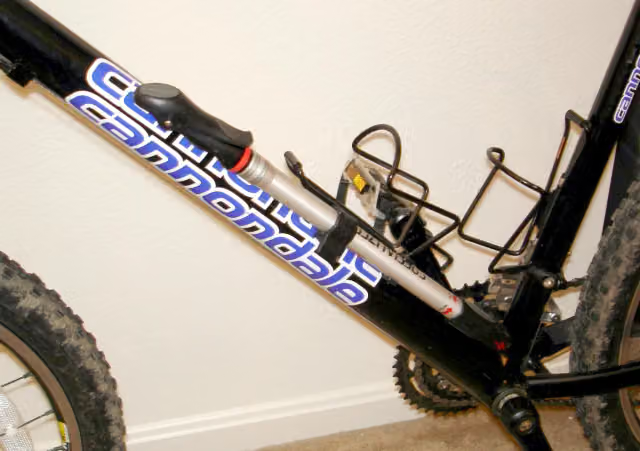
- The mini pump fits in a pocket, a saddle bag or a bracket on the frame. It is light, but it takes many strokes to fill a tyre.
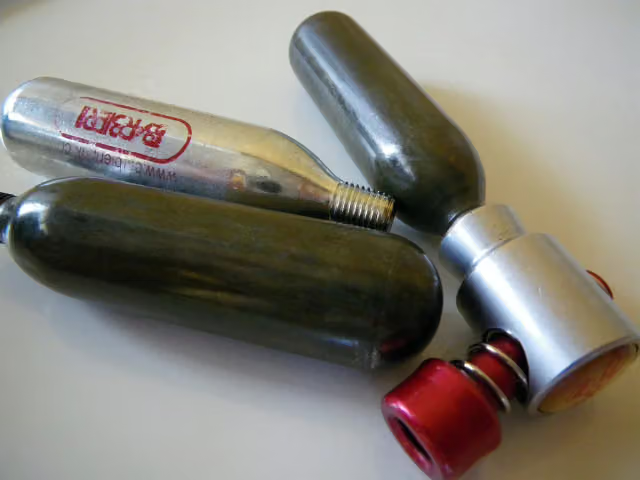
- A CO2 inflator is a small head that screws onto a cartridge of compressed gas. It fills a tyre in seconds, but each cartridge is used once.
- An electric bike pump runs on a battery. You set the pressure you want and it switches off when it gets there.
Which one you pick depends on your bike and on how far from home you ride. Whatever you choose, the pump only works if its head fits the valve on your tyre, so check that first.
- At home
- Track pump with a gauge
- On the road
- Mini pump or CO2
- Easy option
- Electric pump
- Always
- Head fits your valve
The kinds of bike pump
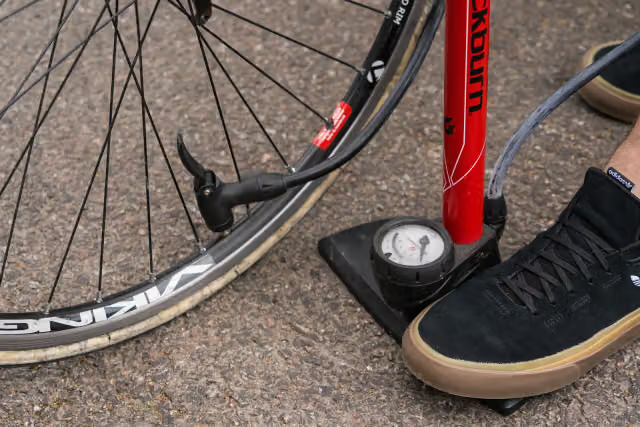
Track pump: a bike floor pump with a pressure gauge
A bike pump with a pressure gauge tells you how much air is in the tyre, in bar or psi. Pumping by feel is guesswork, and most of us guess too low. The tyre maker Schwalbe advises checking tyre pressure with a gauge at least once a month and topping up when needed. Even the most airtight inner tube loses pressure: Schwalbe calls a loss of about 1 bar a month normal, and a tyre at high pressure loses air faster than one at low pressure.
Low pressure is not just slower. According to Schwalbe, a tyre that is always too soft punctures more easily, wears faster and can crack along its sidewalls. The allowed range is printed on the side of the tyre, and you should never go below the minimum or above the maximum. How to choose a pressure within that range is in the guide to tyre pressure.
One catch: on a classic Dunlop valve you cannot measure the pressure, Schwalbe says. The gauge on your pump then gives only a rough idea. If you want an exact reading, you need a valve you can measure on, such as Presta or Schrader.
How to pump a tyre to the right pressure
Animatie, 9 seconden, herhaalt zich
Stilstaand beeld: je apparaat staat op minder beweging
- 1
Read the range printed on the side of the tyre.
- 2
Pump up with a pump with a gauge.
- 3
Stop when the gauge is within the range, not above it.
Bekijk als video
Presta bike pump: does the head fit your valve?
Schwalbe names three valve systems on bike tyres:
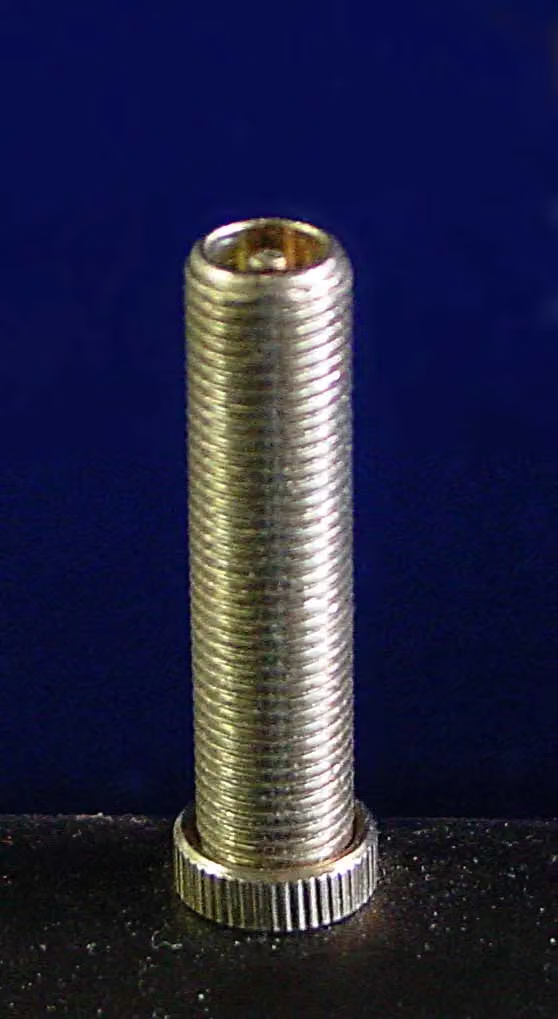
- Dunlop valve: the classic bike valve, still the most common on everyday bikes. Easy to let air out of, but you cannot read the pressure on it.
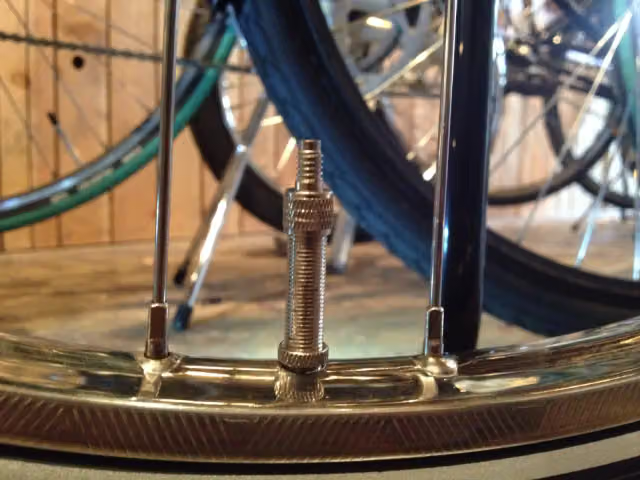
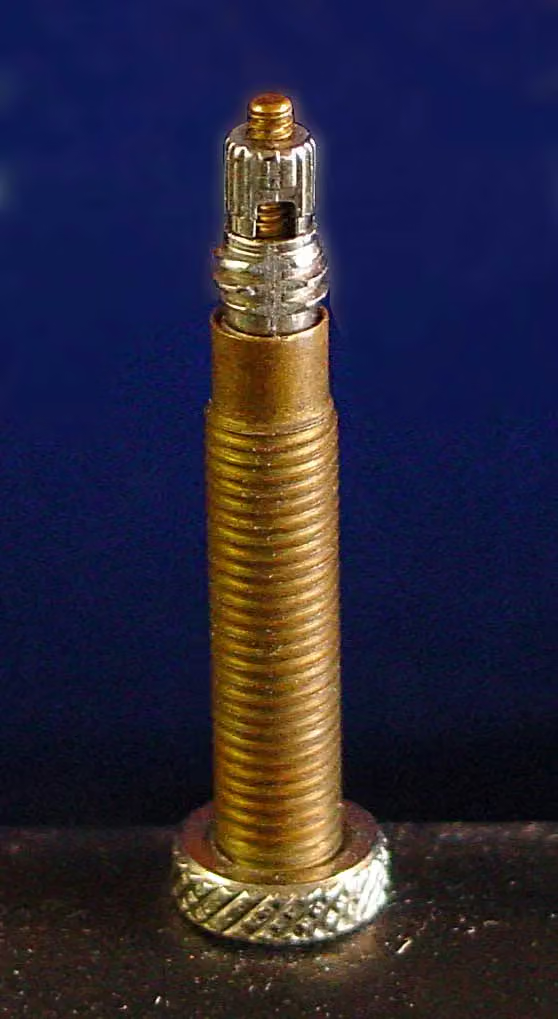
- Presta valve (French valve or sclaverand): thinner than the others, 6 mm instead of 8 mm, so it suits narrow road bike rims. It has a small knurled nut that you unscrew before pumping and close again afterwards. The thin pin on top bends easily when you push the pump head on or pull it off, so go straight.
- Schrader valve (car valve): wide, with a pin in the middle. Schwalbe notes you can easily fill it at a petrol station air line, but older and very simple bike pumps do not fit it.
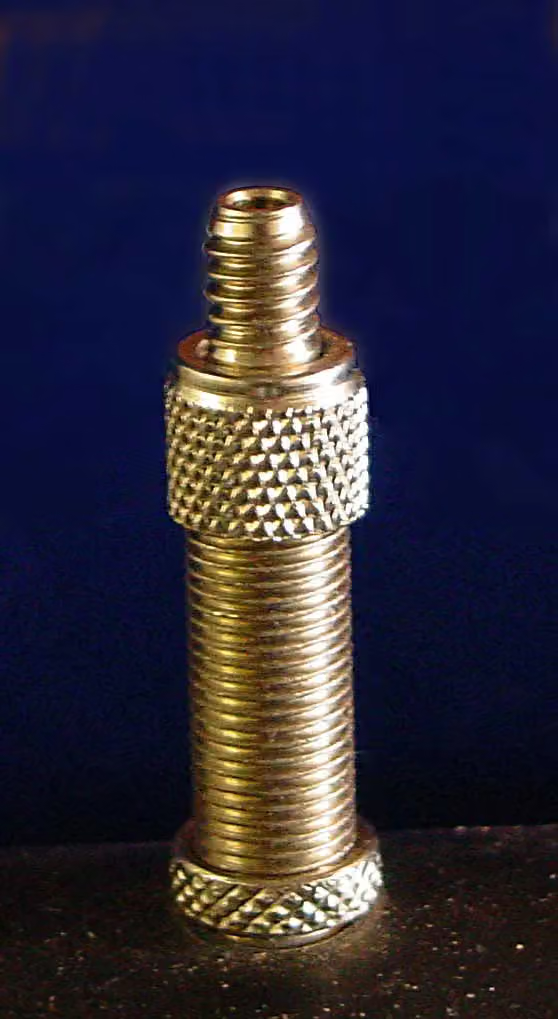
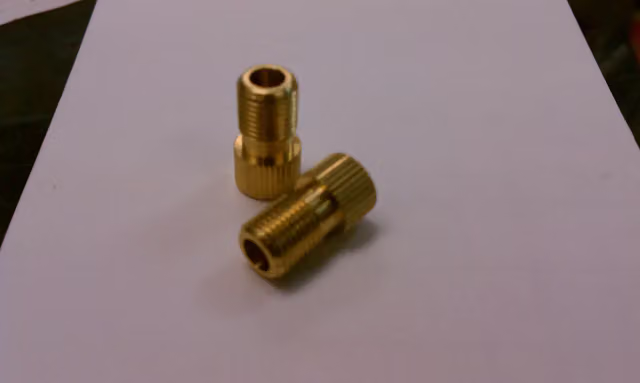
So a Presta bike pump is really a pump with a head that fits Presta. Many pumps have a double head or a head that adapts to each valve, which is handy if your household has different bikes. A valve adaptor is a small brass cap that screws onto a Presta or Dunlop valve so a Schrader pump fits it. More about the three valves is in the guide to bike valves.
How to open a Presta valve
Animatie, 9 seconden, herhaalt zich
Stilstaand beeld: je apparaat staat op minder beweging
- 1
Take off the valve cap.
- 2
Unscrew the knurled locknut as far as it goes and press it briefly.
- 3
Push the pump head on straight and lock it.
Bekijk als video
Valves and adaptors
Electric bike pump: when is it handy?
An electric bike pump is a small compressor with a battery. You set the pressure, fit the hose to the valve and press start; the pump stops when it reaches the number. That suits riders with little strength in their arms, e-bikes with wide tyres, or anyone who also wants to fill balls or an air bed.
What to look for in an electric bike pump:
- The valves: does it come with heads or adaptors for the valve on your bike?
- The battery: charge it after every ride you used it on. A flat pump is no help at the roadside.
- The Dunlop valve: because you cannot measure pressure on it, the pump's reading is unreliable there. Feel the tyre afterwards, or check it with a separate gauge on a valve that allows it.
- The size: a bigger unit for home is quicker; a small, portable one fits in a bag.
If you run tubeless tyres, note what Schwalbe says about converted rims: a track pump often cannot seat the tyre the first time, so expect to need a compressor for that first fitting. For everyday precise pumping, a track pump with a gauge is still the reference; an electric pump is a comfortable extra.
Mini bike pump or CO2: for the road
On a ride you want something small and light. A mini bike pump sits in a bracket beside the bottle cage or in your saddle bag. Pick one that fits the valve on your bike, and preferably one with a short hose, so you lever less on the valve while pumping. That matters most with Presta, whose thin pin bends easily.
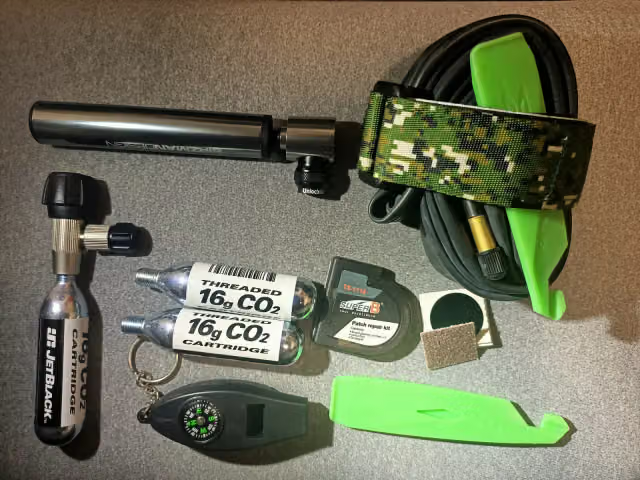
A CO2 inflator is even smaller and much faster, which is why road cyclists like it for narrow, high-pressure tyres. Always carry a spare cartridge: once a tyre is full, the cartridge is empty.
How to fix a puncture at the roadside is in puncture repair. What else goes in a kit for the road is in the guide to the repair kit.
Which bike pump suits your bike?
Which bike do you ride most?
Town bike or e-bike
- Track pump with a head for your valve
- An electric pump if pumping is hard work for you
- Find a public bike pump in the app when you are out
Road bike
- Gauge that reads up to high pressure
- Head that fits Presta
- CO2 inflator and a spare cartridge in the saddle bag
Mountain bike or gravel
- Mini pump that moves a lot of air per stroke
- Head for Schrader and Presta
- A gauge, because low pressures need precision
Cycle touring
- Pump in a bracket on the frame
- Valve adaptor for petrol station air lines
- Spare inner tube and patch kit as well
Not sure? Look at your valve first. A pump with a double head fits every bike in the house.
From our data
Public bike pumps in the United Kingdom
- Public bike pumps
- 647
- in the United Kingdom
- Bike repair stations
- 274
- in the United Kingdom
As of 28 November 2026, from the Outdoor Pitstop database. Repair stations are public pumps with tools on cables. The numbers come from OpenStreetMap and from reports by our users.
Cycle pump on the way: public pumps and repair stations
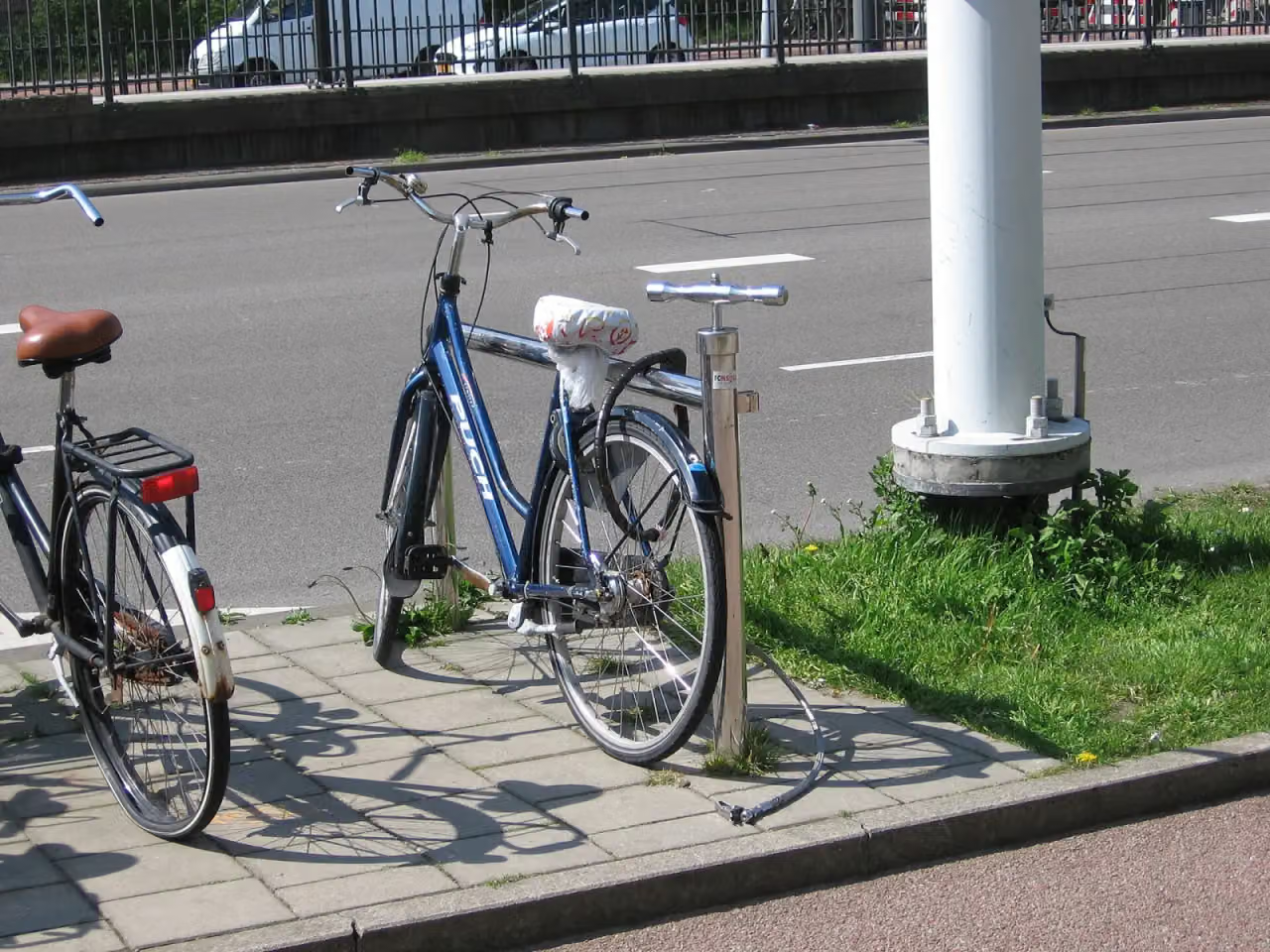
Forgot your pump, or did the mini pump give up? A public cycle pump can save the ride. Some are simple pumps on a post, others are repair stations with a pump and tools on cables. All the ones we know of are on the page bike pumps in the United Kingdom; for the whole map of the UK, start at pitstops in the United Kingdom.
Whether a public pump fits your bike depends on its head, so a valve adaptor in your saddle bag is a small insurance. A petrol station air line works too, Schwalbe notes, as long as your tyre has a Schrader valve or you carry an adaptor.
Planning a longer ride? The same map shows public toilets and water taps, so you can plan your stops around more than air.
In the app I see 647 public bike pumps in the United Kingdom, 274 of them repair stations with tools.
How to use a bike pump: step by step
With a track pump it takes a minute:
- Check the sidewall of the tyre for the allowed pressure range.
- Take the cap off the valve. On a Presta valve, also unscrew the small knurled nut and press it briefly so the valve is not stuck.
- Push the pump head straight onto the valve and flip the lever so the head clamps on.
- Pump with steady, full strokes and watch the gauge.
- Stop at the pressure you want. Flip the lever back and pull the head straight off, without bending the valve.
- Close the Presta nut if you have one and put the cap back on.
With a mini pump the steps are the same, but hold the pump head and the wheel firmly together, so you do not rock the valve with each stroke.
- How often
- At least once a month
- Normal loss
- About 1 bar a month
- Limits
- Printed on the tyre