Skip to content
Outdoor Pitstop logoOutdoor Pitstop

Trail guide · Cycling

Bike accessories: what to put on your bike, and why

The right bike accessories make every ride easier: you carry your things, find the way, are seen after dark and are not stuck with a flat tyre. But you do not need all of them. This overview puts them in five groups, says what each one does and what the law in Great Britain requires, and links to a separate guide for each.

Summary

Bike accessories fall into five groups: luggage, finding the way, seeing and being seen, comfort, and punctures and parking. After dark the law asks for a white front light, a red rear light, a red rear reflector and amber pedal reflectors; everything else you choose by how and where you ride.

· Founder of Outdoor Pitstop

Published · Last updated · 8 min read

Checked in November 2026

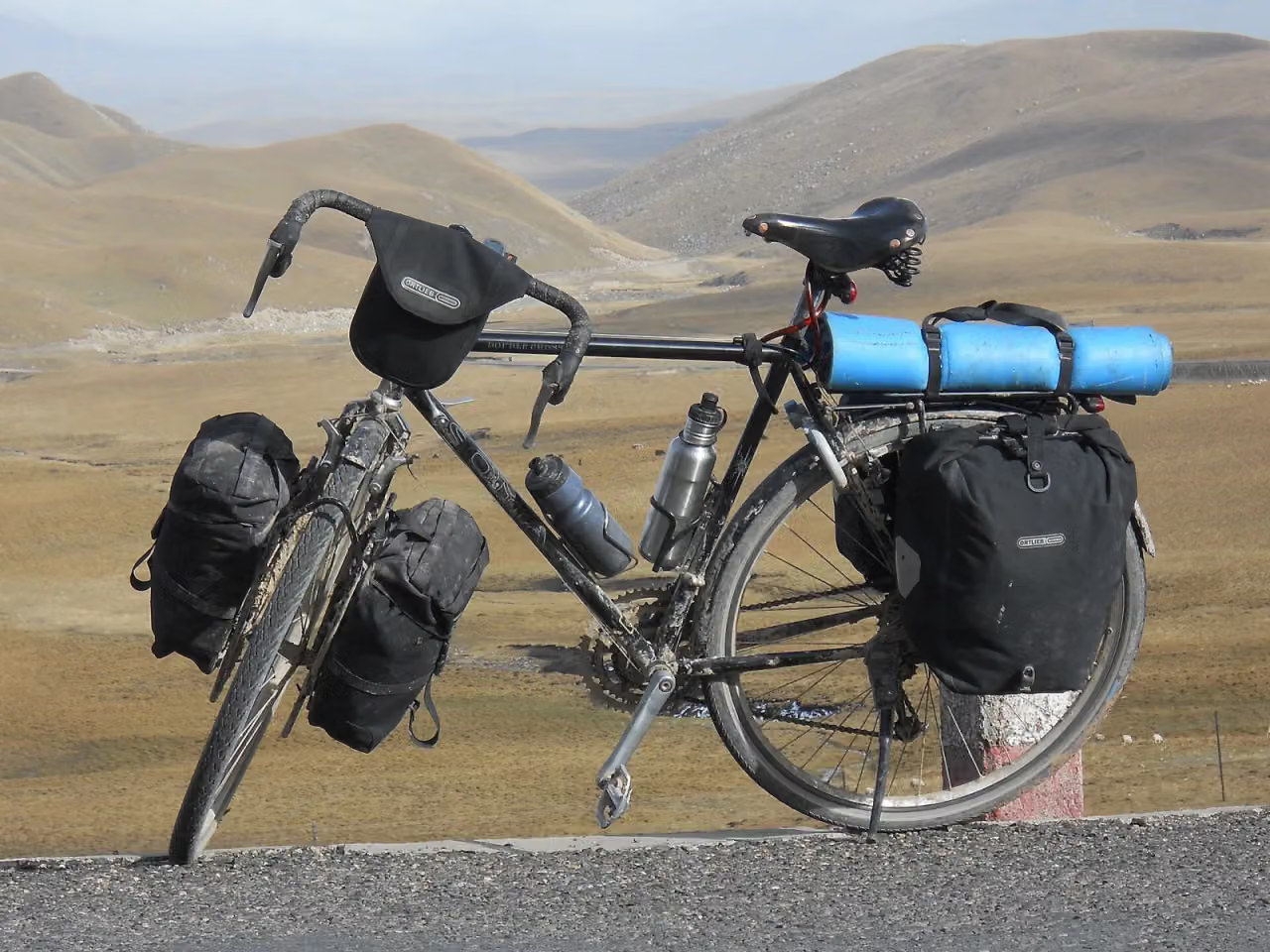
A touring bike with front and rear panniers, a handlebar bag, two water bottles and a sleeping mat
A bike full of accessories: panniers front and back, a handlebar bag and bottles · Photo: Keithonearth via Wikimedia Commons, CC BY-SA 3.0

Bike accessories in five groups

There are hundreds of bike accessories, but each of them does one of five jobs:

GroupAccessoriesWhat for
LuggagePanniers, racks, handlebar bag, saddle bag, frame bag, basket, trailerCarrying things without a rucksack
Finding the wayPhone mount, bike computer, navigationFollowing a route, speed and distance
Seeing and being seenLights, bell, mirrorSafety in traffic and after dark
ComfortSaddle, grips, pedals, bottle and cage, mudguardsSitting well, drinking, staying dry
Punctures and parkingPump, repair kit, lock, kickstand, cover, storageFlat tyres, theft, rain

Start with what you really need: lights, a lock and a pump with a repair kit. Ride long distances or tour, and luggage, a bottle and something to follow the route come next. Below, each group says what an accessory does; the separate guides explain how to choose one.

Required after dark
Lights and reflectors
Every ride
Lock, pump, repair kit
Long rides
Bags and a bottle
Unfamiliar routes
Phone mount or computer

Bike gear: what the law asks for

For most bike gear you are free to choose. Lights and reflectors are the exception. According to Cycling UK, between sunset and sunrise your bike must have a white light at the front and a red light at the rear, fixed to the bike, clean and working, and of an approved type. Flashing lights are allowed if they flash between 60 and 240 times a minute. You also need a red rear reflector and four amber pedal reflectors, one on the front and back of each pedal. Lights are not needed when the bike is standing still or pushed along the roadside.

A bell is a different story. The Pedal Bicycles (Safety) Regulations 2010 say a new bike must be supplied with a bell, but Cycling UK points out that those rules are for the people who sell bikes, not for riders. It still advises keeping the bell, especially if you ride abroad.

These rules are for Great Britain; this page does not cover the rules in Ireland. More in the guides on bike lights and bike bells.

Luggage: bags, racks and baskets

A rucksack on a bike soon gets hot. Bags on the bike carry the weight for you.

  • Panniers and pannier racks: single or double, on a rack. The usual choice for commuting, shopping and touring.
  • Luggage racks: what panniers hang from. Check how much weight a rack may carry.
  • Handlebar bags: small, for what you want to reach while riding.
  • Saddle bags: under the saddle, for a spare tube and tools.
  • Frame bags: inside the frame triangle, common on road and gravel bikes.
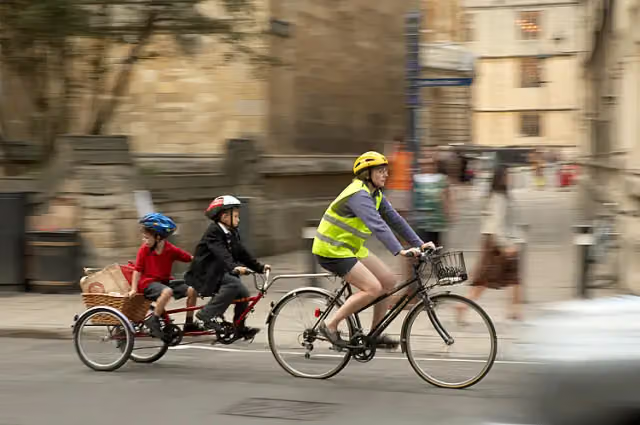
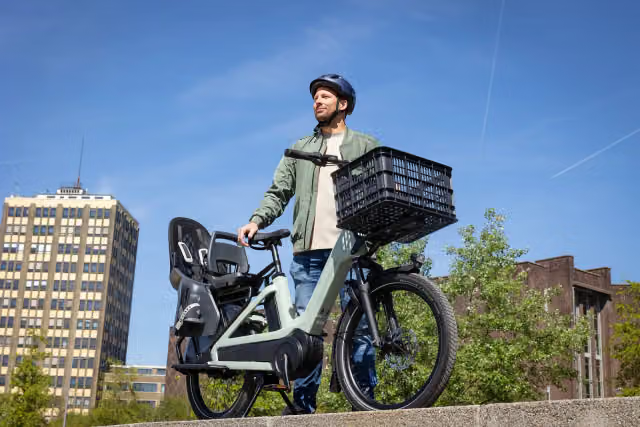
  • Bike baskets, bike trailers and child bike seats for shopping and children.

Finding the way: phone mount, computer and navigation

On an unfamiliar route you want to find the way without stopping all the time.

  • Phone mounts: your phone on the handlebar, so you can follow a route in an app.
  • Bike computers: speed, distance and time, and on some models the route as well.
  • Navigation on the bike: the options side by side, from a phone to a separate GPS unit.

Accessories on a bike
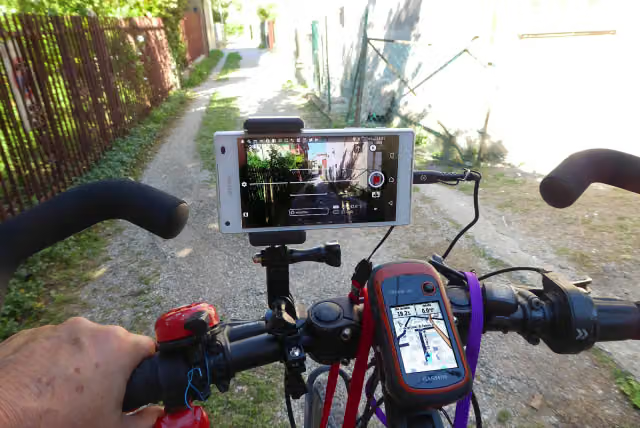
A phone showing a map in a holder on a bike's handlebar, above a small GPS unit
A phone mount on the handlebar · Photo: Voschix via Wikimedia Commons, CC0
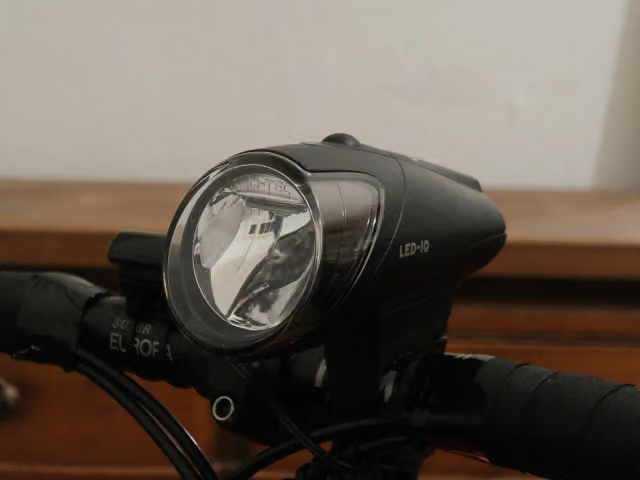
A black rechargeable LED front light clamped to a bike's handlebar
A rechargeable front light · Photo: Singlespeedfahrer via Wikimedia Commons, CC0
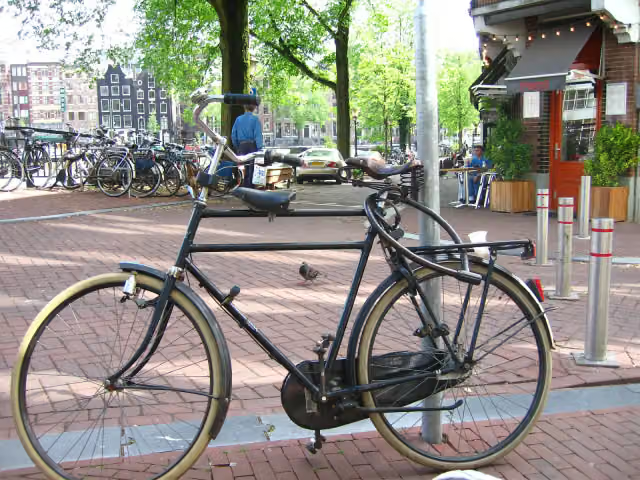
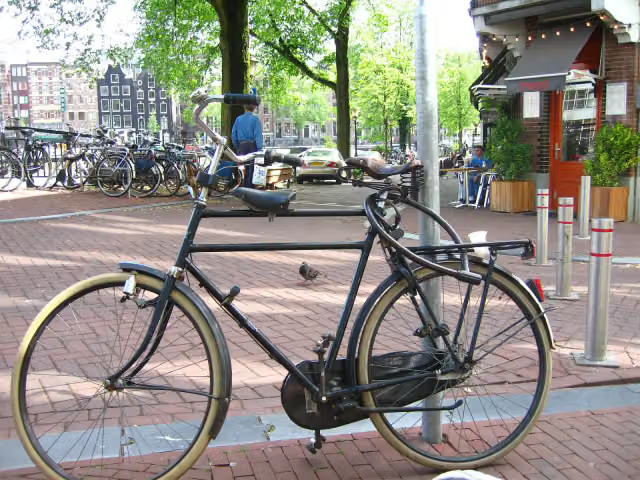
A black town bike with a frame lock around the rear wheel on a square in Amsterdam
A frame lock on a town bike · Photo: Salim Virji via Wikimedia Commons, CC BY-SA 2.0
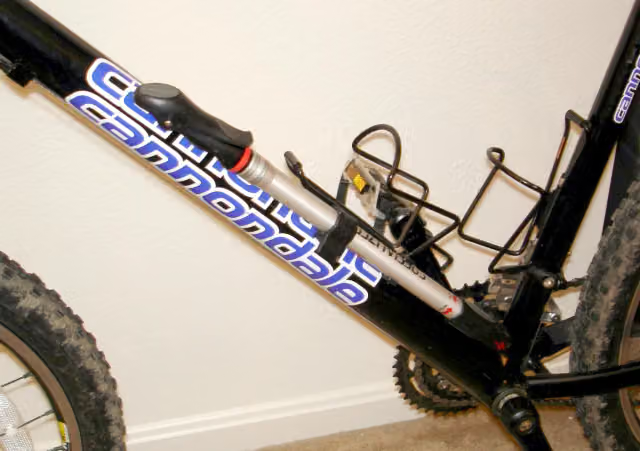
A small bike pump fixed to the frame of a mountain bike
A mini pump on the frame · Photo: Aaron Linville via Wikimedia Commons, Publiek domein
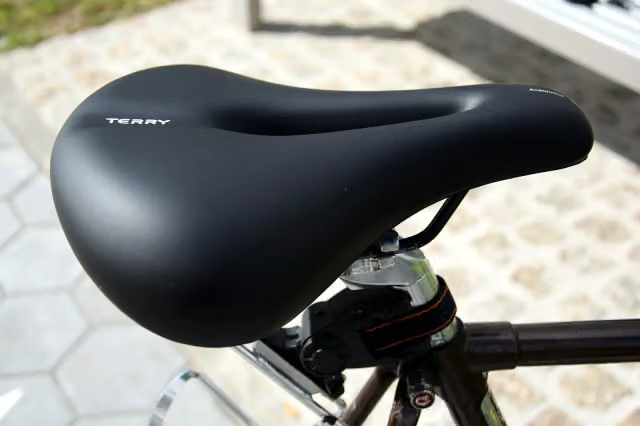
A black bike saddle with a channel down the middle
A saddle with a channel · Photo: Singlespeedfahrer via Wikimedia Commons, CC0
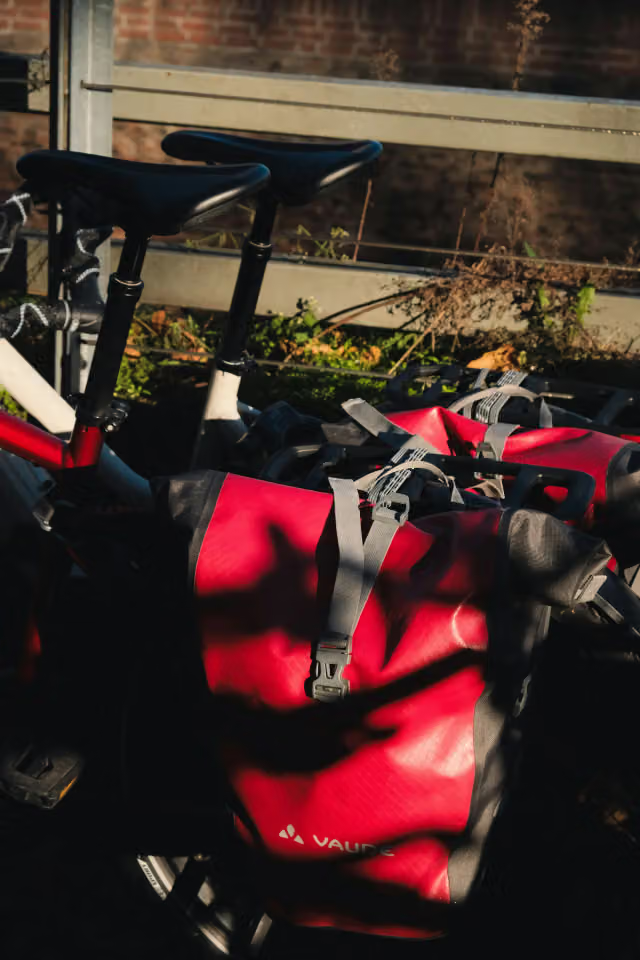
Red waterproof panniers on the racks of two parked bikes
Waterproof panniers · Photo: GONG TY via Unsplash, Unsplash-licentie

Seeing and being seen: lights, bell and mirror

  • Bike lights: required between sunset and sunrise, white at the front and red at the rear.
  • Bike bells: to let walkers and other cyclists know you are coming, on a shared path above all.
  • Bike mirrors: to look behind you without turning round.

Reflective clothing and helmets belong to clothing: see the guide to cycling clothing.

Comfort: saddle, grips, pedals and bottle

Comfort accessories make the difference on a long ride.

  • Bike saddles: a saddle has to suit how you sit. Softer is not always better.
  • Handlebars, grips and bar tape: spread the pressure on your hands.
  • Bike pedals and cleats: flat pedals or clipless pedals with cleats.
  • Water bottles and bottle cages: something to drink within reach.
  • Mudguards: keep you dry and clean on wet roads and paths.

Punctures and parking: pump, repair kit and lock

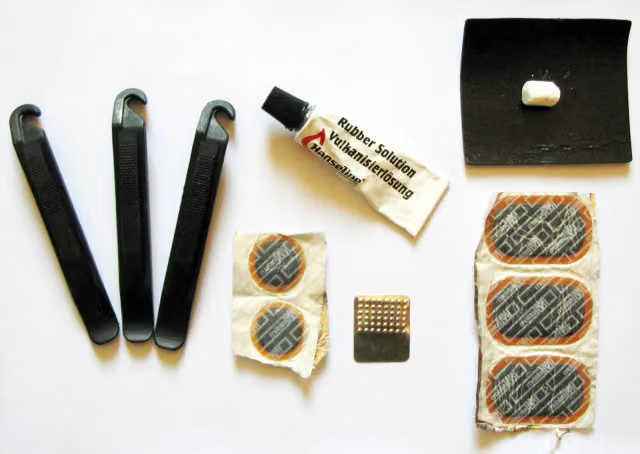
Cycling UK calls punctures one of the most common problems cyclists meet, and easy to fix with the right kit. It suggests taking tyre levers, a spare inner tube or patches, and a pump on every ride.

Cycling gear: accessories or clothing?

Cycling gear can mean two things. Accessories go on the bike: bags, lights, a lock, a different saddle. Clothing goes on you: a helmet, waterproofs, gloves, reflective layers. This guide is about the first; the second is in the guide to cycling clothing, including winter and waterproof cycling gear.

Parts that make the bike run, such as tyres, chain, brakes and gears, are not accessories either. They are in the guides to bike maintenance and bike tyres.

Cycling gear for men and women

Shops sort cycling gear for men and for women, but on the bike the difference is small. A light, a lock, a pump or a pannier works the same for everyone. Where fit does matter, it is about your body and not a label: a saddle that suits how you sit, grips that suit your hands, and clothing in your size. Choose by how and where you ride.

Mountain bike gear: what is different off-road

Mountain bike gear is mostly the same as on any bike, with the weight on punctures and carrying. Off-road you are often far from a shop, so a pump, tyre levers, a spare tube or patches and a multitool matter more. Many riders fit a frame bag or saddle bag instead of a rack.

One point from the law: Cycling UK notes that clipless pedals seldom have or accept the pedal reflectors that are required after dark. If you ride home on the road after sunset, think about that when you choose pedals.

How to adjust bicycle gears on the way

Achterderailleur van achteren gezien: de kabelspanningNa één klik blijft het wieltje tussen het kleinste en het tweede tandwiel hangen. De kabelsteller wordt een kwartslag per keer linksom gedraaid; de kabel komt strakker te staan en het wieltje schuift naar binnen tot het recht onder het tweede tandwiel staat.vanaf de kabel112233← wiel (binnen)buiten →KabelstellerABlijft hangenRecht eronder

Animatie, 9 seconden, herhaalt zich

Stilstaand beeld: je apparaat staat op minder beweging

  1. 1

    Stop somewhere safe, away from the road or trail. Lift the back wheel by the saddle, turn the pedal by hand and click through the gears to see where the shifting goes wrong.

  2. 2

    Find the barrel adjuster on the rear derailleur. If the chain is slow to move to a smaller sprocket (a higher gear), turn it clockwise; if it is slow to climb to a larger sprocket (a lower gear), turn it anticlockwise.

  3. 3

    Turn no more than a quarter turn at a time, then test the shifting again. When the gears change smoothly and quietly, you are ready to ride on.

Bekijk als video
How to adjust bicycle gears on the way (video, 9 seconden, zonder geluid)

Bron: Cycling UK, Video guide: How to adjust your gears. Gears are a part of the bike, not an accessory; more in the guide to [bike maintenance](/en-gb/trail-guide/cycling/maintenance).
All guides to bike accessories

Which bike accessories do you need?

How do you usually ride?

Commuting

Lights, a lock and a bag
  • Front and rear lights for dark evenings
  • A lock for the bike rack at work
  • A single pannier or a basket
Bike lights

Day ride

Route, water and a pump
  • A phone mount to follow the route
  • A bottle in a cage
  • A mini pump and repair kit
Repair kits

Road or gravel

Light and small
  • A saddle bag with a spare tube and levers
  • Small front and rear lights
  • A bike computer or phone mount
Saddle bags

Touring

Bags, lock and punctures
  • Waterproof panniers on a sturdy rack
  • A lock that is easy to carry
  • Pump, repair kit and a multitool
Panniers

Start with lights, a lock and a pump. Add the rest when you find you miss it.

From our data

What you do not have to carry

Public bike pumps
647
in the United Kingdom
Bike repair stations
274
in the United Kingdom
Water points
2,923
in the United Kingdom
Public toilets
13,915
in the United Kingdom

As of 28 November 2026, from the Outdoor Pitstop database. Public bike pumps, repair stations with tools, water points and public toilets in the United Kingdom, from OpenStreetMap and reports by our users.

Carry less: pumps, water and toilets on the way

Not everything has to go in your bags. Some towns have public bike pumps and repair stands with tools, and a refill point saves carrying a second bottle. If you know where they are, you can pack lighter.

The refill points are on water fountains in the United Kingdom and the toilets on public toilets in the United Kingdom; riding in Ireland, see the public toilets in Ireland. We have no cycling routes for the UK and Ireland in the app yet; the pitstops in the United Kingdom show what is on the way.

In the app I see 647 public bike pumps, of which 274 repair stations, and 2,923 water points in the United Kingdom.

Key takeaways

  • Between sunset and sunrise a bike in Great Britain needs a white front light and a red rear light, according to Cycling UK.
  • A bike ridden after dark also needs a red rear reflector and four amber pedal reflectors, which clipless pedals seldom accept.
  • Flashing bike lights are legal if they flash between 60 and 240 times a minute.
  • New bikes must be sold with a bell, but that rule applies to the seller, not to the rider.
  • Cycling UK suggests carrying tyre levers, a spare inner tube or patches, and a pump on every ride.
  • When gears shift badly, a quarter turn of the barrel adjuster on the rear derailleur is often enough, says Cycling UK.

Frequently asked questions

How to adjust bicycle gears?

Use the barrel adjuster on the rear derailleur, a quarter turn at a time. Cycling UK says to turn it clockwise if the chain will not move to a smaller sprocket, and anticlockwise if it will not move to a larger one, testing the shifting after each turn.

How to fix a bike gear shifter that does not shift properly?

Most slow or noisy shifting comes from the cable tension, which you correct with the barrel adjuster on the derailleur or the shifter. If small quarter turns do not help, the cable or derailleur may need more work than a roadside fix.

How do bicycle gears work?

The shifter moves the rear derailleur, which guides the chain across the sprockets of the cassette. Cycling UK explains that a larger sprocket at the back is a lower gear and a smaller one a higher gear.

Which bike accessories are required by law in the UK?

Between sunset and sunrise a bike needs a white front light, a red rear light, a red rear reflector and four amber pedal reflectors. Lights are not needed while the bike stands still or is pushed.

Does a bike need a bell in the UK?

New bikes must be supplied with a bell under the Pedal Bicycles (Safety) Regulations 2010, but that rule is for sellers. Cycling UK still advises keeping it, especially if you ride abroad.

What should you carry for a puncture?

Cycling UK suggests tyre levers, a spare inner tube or patches, and a pump. Keep the punctured tube, as you may be able to patch it at home.

Sources

  1. Cycling UK, What's legal and what's not on your bike · cyclinguk.org · white front and red rear light between sunset and sunrise, fixed and approved, flashing 60-240 per minute, red rear reflector and four amber pedal reflectors
  2. Cycling UK, Cycling within the law · cyclinguk.org · lights and reflectors under Highway Code rule 60
  3. Cycling UK, Lighting regulations (Cycle magazine) · cyclinguk.org · clipless pedals seldom have or accept reflectors
  4. Cycling UK, Lighting regulations · cyclinguk.org · lights not needed when stationary or pushed along the roadside
  5. The Pedal Bicycles (Safety) Regulations 2010 · legislation.gov.uk · new bicycles must be supplied with a bell
  6. Cycling UK, Safety Regulations · cyclinguk.org · the regulations apply to sellers; keep the bell, especially abroad
  7. Cycling UK, Video guide: How to adjust your gears · cyclinguk.org · barrel adjuster on the rear derailleur, quarter turns, clockwise and anticlockwise, larger sprocket is a lower gear
  8. Cycling UK, Video guide: How to repair a puncture on a bike · cyclinguk.org · punctures among the most common problems; tyre levers, inner tube or patches, pump; keep the tube
  9. Outdoor Pitstop · outdoorpitstop.com · public bike pumps, repair stations, water points and toilets in the United Kingdom (live numbers)

Last checked in November 2026. Outdoor Pitstop figures come from our own database; the date is with each block.

Written by

Robin

Founder of Outdoor Pitstop

Robin started Outdoor Pitstop to always know where the next toilet, water tap or bench is on the way.

About this guide

What I write here comes from what we keep track of in Outdoor Pitstop: the pitstops, routes and photos in the app, and what users report on the way. I check rules, opening times and facts about nature with the official sources. Spotted something that is not right? Let me know and I will correct it.

Checked in November 2026 · Last updated

How we work

More about uitrusting

In the app

Pitstops for cyclists

Find water, a toilet or a bike pump on the way in the app, and navigate to the nearest one.

  • Public bike pumps and repair stations on the map
  • Water points and public toilets along your ride
  • Report a pump that is broken or a tap that does not work
Download on the App StoreGet it on Google Play

More from Trail guide

The free app

All of Outdoor Pitstop, in your pocket

Find the nearest pitstop, navigate there, listen to audio tours, earn XP and make routes and lists together.

Download on the App StoreGet it on Google Play
How Outdoor Pitstop works →
The map of the app with pitstops nearby
A pitstop in the app, with a photo, a review and Navigate
Your profile in the app, with level and XP