Outdoor Pitstop

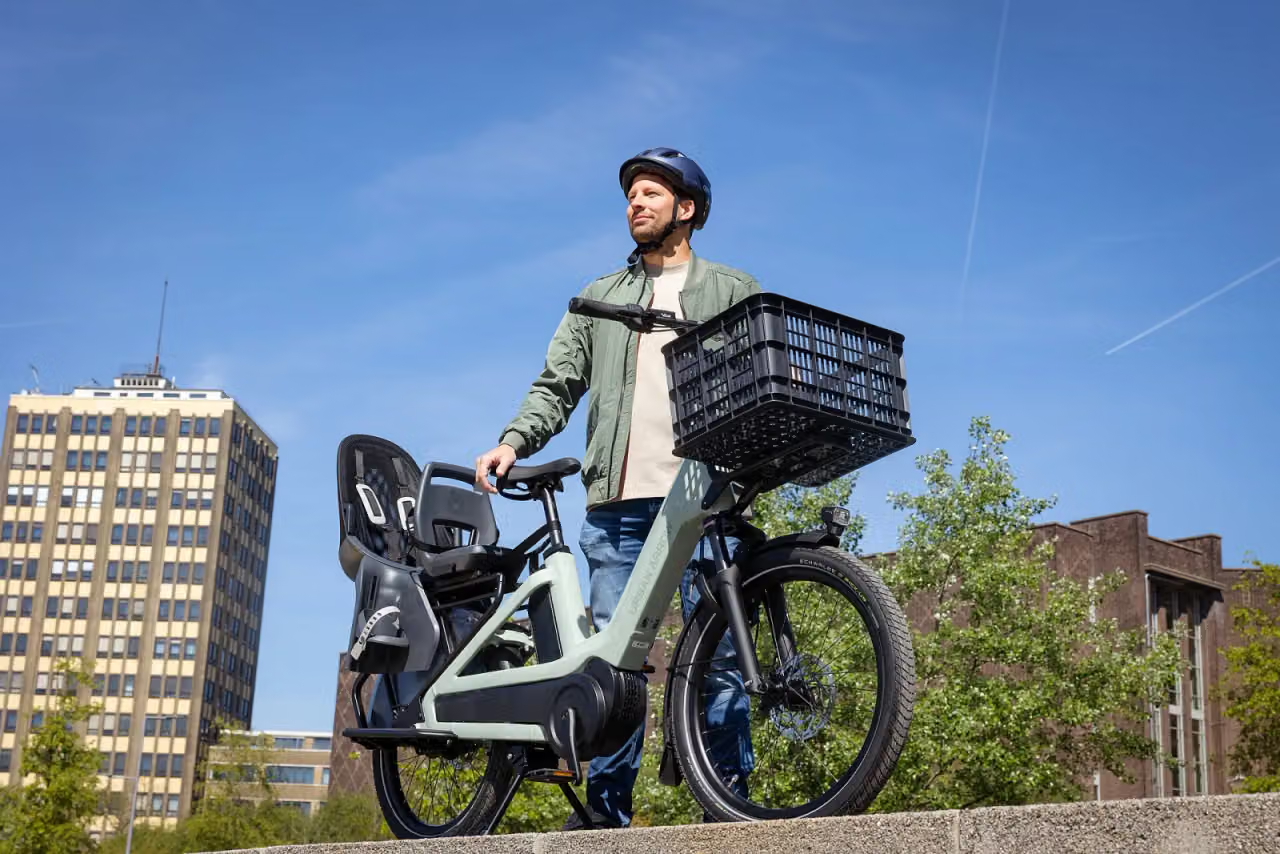
From what age can a baby ride in an infant bike seat?
Age matters less than whether your baby can sit up and how much they weigh.
- Sitting up unaided. RoSPA says a child should only be carried once they can sit up unaided for at least the length of the journey: on the floor, Cycling UK adds, not propped up with cushions.
- Holding the head up with a helmet on. The Walk Wheel Cycle Trust says this is from around 12 months.
- Weight. Seats made to the British Standard BS EN 14344 start at 9 kg, which RoSPA describes as roughly 9 months.
If your baby still slumps or wobbles when sitting, wait a little longer. The upper limit is the maximum weight on the seat's label. Cycling UK says most seats suit children up to about four, and warns against going over the limit even if the seat looks strong: the bike handles worse with every extra kilo.
- Sits up
- unaided, for the whole ride
- Weight
- from 9 kg
- Rough age
- 9 to 12 months
- Upper limit
- the seat's maximum weight
Best infant bike seat: what to look for
The best infant bike seat is not a brand but the one that fits your child, your bike and your rides. RoSPA and Cycling UK give the same checklist:
- BS EN 14344 on the label, the British Standard for child seats for cycles. RoSPA says such seats come in two weight ranges, 9 to 22 kg and 9 to 15 kg.
- A harness with a child-proof buckle. Cycling UK adds that a waist belt or bar helps, as sleeping toddlers can slip out of shoulder straps.
- Foot wells with straps. Footrests alone are not enough, says Cycling UK, because feet slip off or dangle into the spokes.
- Full back and head support, ideally reclining, so a sleeping child does not slump.
- A fit for your bike. Cycling UK says most seats fit best on medium or larger frames with a normal top tube, and seats that bolt to the frame do not fit bikes with rear suspension.
- A strong enough rack for a rack-mounted seat: RoSPA says it should conform to ISO 11243.
Front or rear infant bike seat?
Where will your child sit?
Rear seat
- Cycling UK calls a rear seat the better option when you need only one seat, for pedalling and safety
- Some rear seats recline, so a child can sleep
- Moves the weight behind the rear axle, so the bike feels less stable
- You cannot talk as easily, and your child sees mostly your back
Front seat
- Your child sees more and you can talk to each other
- Easier to get on and off, says the Walk Wheel Cycle Trust
- RoSPA: it must not attach to the handlebars and never sit in front of them
- Your knees may splay out, and your child gets more wind and rain
Two children
- The Walk Wheel Cycle Trust suggests the youngest in front, the eldest behind
- Cycling UK finds the bike cumbersome this way unless your area is flat
- A double trailer is the other option
This is advice, not a product test: check the weight limit and fitting instructions of the seat you choose, and ask a bike shop if you are unsure about your frame.
How to fit an infant bike seat and get ready for the first ride
- Fit the seat by the instructions, or have a bike shop do it. RoSPA says to make sure every bracket is tight.
- Set the position. The seat must not get in the way of pedalling or steering. For a rear seat, Cycling UK suggests keeping the base under 10 cm behind the rear axle; check with a plumb line.
- Guard the fingers. Swap a sprung saddle or fit a guard, and make sure your child cannot reach the brakes.
- Ride with a weight first. Cycling UK suggests 7 to 10 kg on the seat, such as a sack of potatoes.
- Practise getting on and off. With a rear seat, step over the top tube rather than swinging your leg over the saddle.
- Strap your child in. Use the harness and foot straps every time; RoSPA says your child should always wear a cycle helmet.
- Start on quiet ground, off road or on quiet roads, as RoSPA advises.
- Seat base
- under 10 cm behind the rear axle
- Practice weight
- 7 to 10 kg
- Before every ride
- check bolts and straps
Riding with a child in a bike seat
A rear seat puts weight above and behind the rear axle, so the bike wobbles more at low speed. Cycling UK advises staying seated on climbs in a low gear, and walking if that fails. RoSPA adds that stopping takes longer: slow down gradually, well before junctions.
Never leave a child alone in the seat of a parked bike, says Cycling UK; a top-heavy bike tips over easily. Off road, keep to smooth tracks. After dark the Highway Code requires a white front light, a red rear light and a red rear reflector; as a rear seat hides a seat-post light, Cycling UK suggests mounting it on the rack.
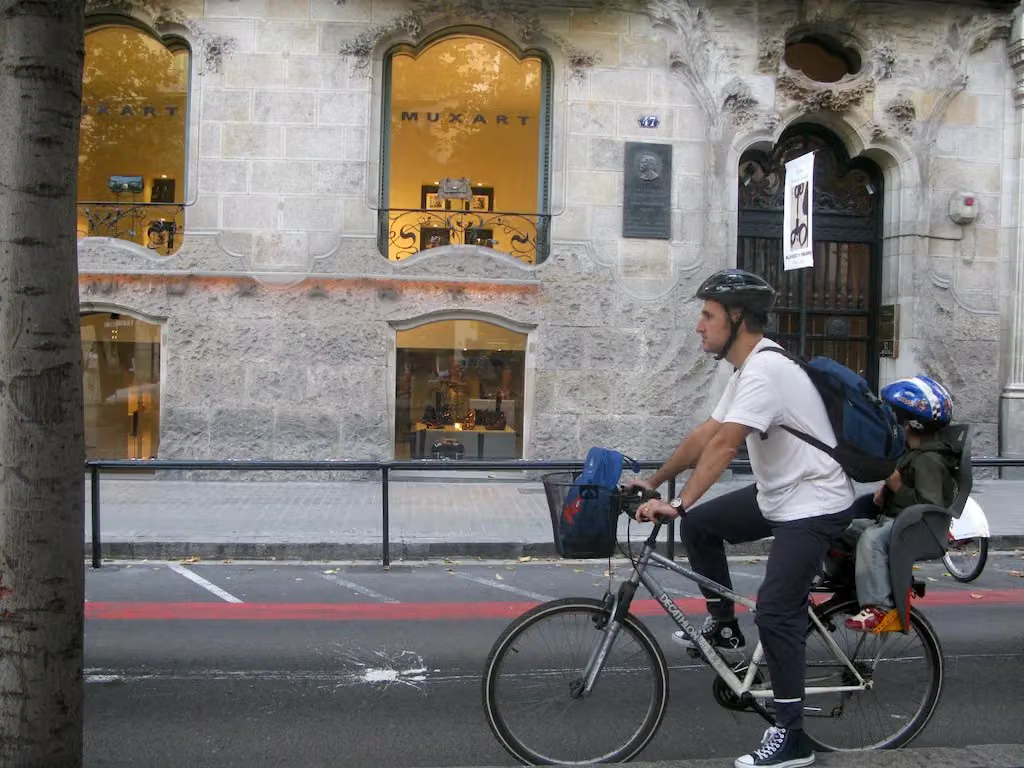
Keeping your child warm, dry and comfortable
Your child sits still while you pedal, so they get cold much faster. Cycling UK suggests at least one more layer on your child than on yourself, plus rain protection and, in summer, sun cream for the back of the neck. Scarves, mittens on strings and long laces must not reach the spokes. Cycling UK also suggests fatter tyres at a slightly lower pressure for a smoother ride, so check your tyre pressure before you set off.
From our data
Water, toilets and bike pumps in the United Kingdom
- Public toilets
- 13,915
- in the United Kingdom
- Water points
- 2,923
- in the United Kingdom
- Benches
- 188,102
- in the United Kingdom
- Public bike pumps
- 647
- in the United Kingdom
As of 28 November 2026, from the Outdoor Pitstop database. The whole United Kingdom, from OpenStreetMap and reports by our users. A public toilet is handy for a nappy change, a bench for a snack break.
Stops on the way with a child on board
With a toddler behind you, rides have more stops. A bench is a good place to lift your child out for a snack, a public toilet helps with nappies and spare clothes, a water tap means carrying less, and a public bike pump lets you adjust your tyres on the way.
See the public toilets in the United Kingdom, the water fountains and refill points in the United Kingdom and the benches in the United Kingdom. Riding in Ireland? See the public toilets in Ireland.
In the app I see 13,915 public toilets, 2,923 water points and 647 bike pumps in the United Kingdom.
Checklist before every ride
Carrying a child on a bike: the law in the UK and Ireland
Rule 68 of the Highway Code says you must not carry a passenger unless your cycle has been built or adapted to carry one. A helmet is advice rather than law: the Highway Code says you should wear one that fits and is securely fastened.
In Ireland the Road Safety Authority says the law does not require a helmet either, but asks that a child seat is fit for purpose and fitted by a competent person, that your child wears a suitable helmet and that the seat has secure foot straps.
Too young for a seat, or two children? Trailers and cargo bikes are covered under bike accessories.