Outdoor Pitstop

When does winter start?
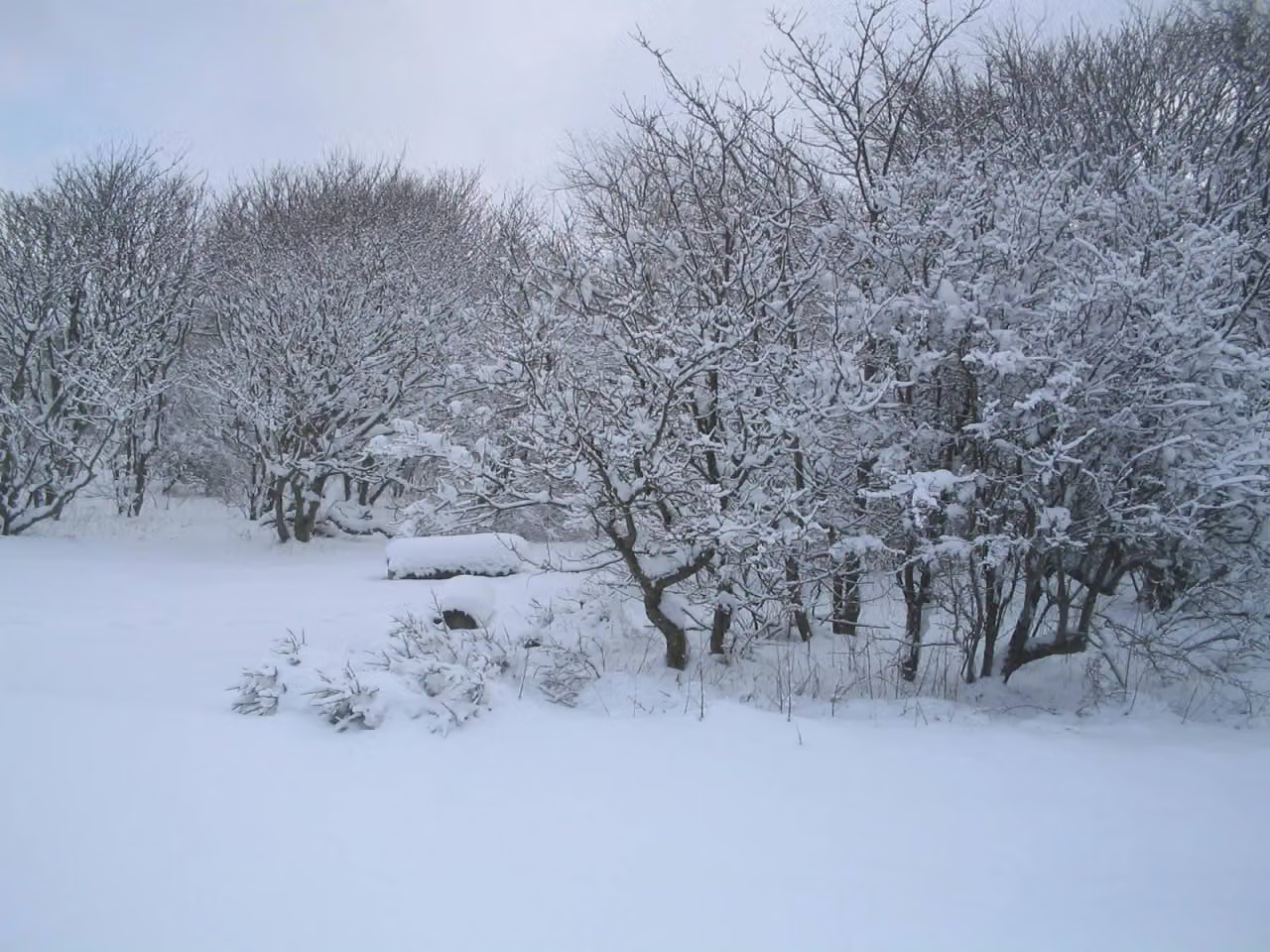
Winter has two starting points. Meteorological winter always starts on 1 December and covers the three whole months of December, January and February; the Met Office marks the start of December as the start of winter in its forecasts. Astronomical winter starts at the winter solstice, when the Northern Hemisphere is tilted farthest away from the Sun.
| Start of winter | 2026 | 2027 |
|---|---|---|
| Meteorological winter | Tuesday 1 December | Wednesday 1 December |
| Astronomical winter (solstice) | Monday 21 December, 8.50pm | Wednesday 22 December, 2.42am |
| End of winter | 28 February 2027 (meteorological), 20 March 2027 (astronomical) | 29 February 2028 (meteorological) |
Times are GMT. The 2026 time comes from Royal Museums Greenwich; it has not yet published its 2027 overview, so the 2027 time comes from a table of solstice times and should be checked again next year.
- Meteorological winter
- 1 December to the end of February
- Solstice 2026
- 21 December, 8.50pm GMT
- Daylight in London on 21 December
- slightly under 8 hours
The first day of winter: 1 December or 21 December?
The first day of winter depends on whom you ask. Weather services work with whole months, so their figures cover the same days every year and one winter can be compared with the next; NOAA notes that meteorological winter lasts 90 days in a year that is not a leap year. Astronomers count from the solstice, which falls around 21 December.
Royal Museums Greenwich says London gets slightly less than eight hours of daylight on the solstice of 21 December 2026. After that the days lengthen again, slowly at first. More about the light, sunrise and sunset is in the guide to the shortest day.
When it is winter outdoors
- Jan: best time
- Feb: possible
- Mar
- Apr
- May
- Jun
- Jul
- Aug
- Sep
- Oct
- Nov (now)
- Dec: possible
Winter in the UK: what to see outdoors
Winter outdoors is quiet, but from December to February there is plenty to look for.
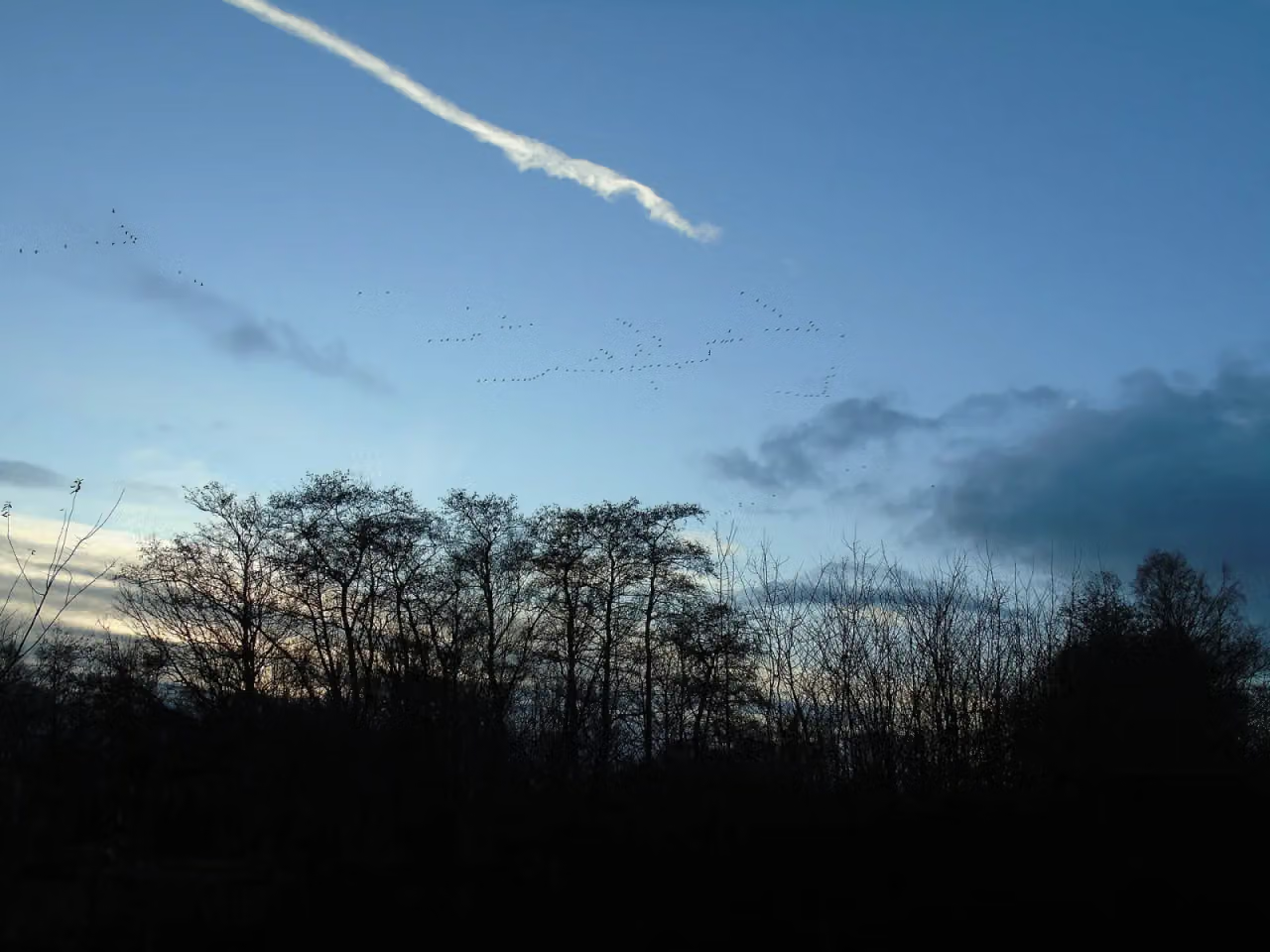
Geese and swans (the whole winter). According to the RSPB, up to 90% of the world's Pink-footed Geese spend the winter in the UK, arriving in autumn from Iceland, Greenland and Spitsbergen. Whooper Swans fly in from Iceland and Bewick's Swans from Siberia, although the RSPB says more of them now stay in Germany and elsewhere in Europe.
Redwings and Fieldfares. These thrushes come from colder parts of Europe to feed on hawthorn, rowan and holly berries in the hedgerows, says the RSPB.
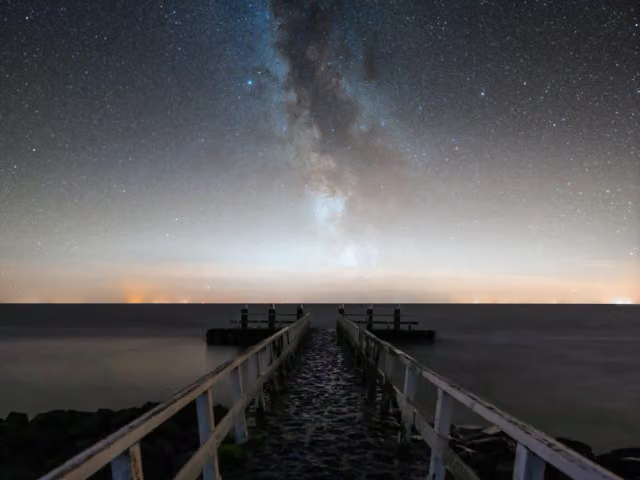
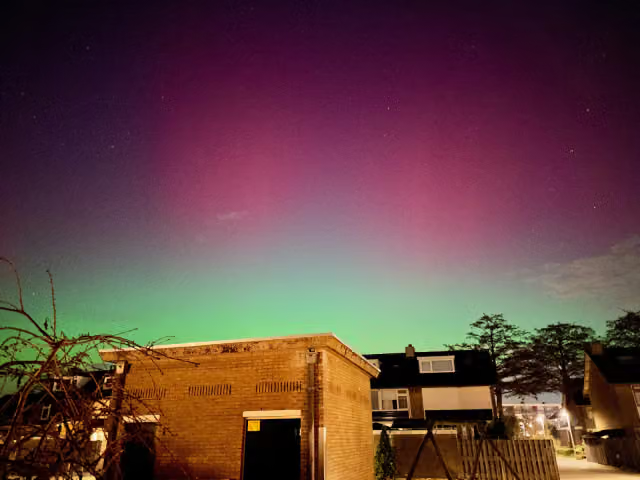
The shortest day and the night sky (December and January). Long nights mean early darkness: see stargazing and dark sky places and, with luck, the northern lights.
Christmas and New Year walks (late December, 1 January). Which pitstops are worth knowing on the bank holidays is in Christmas, Boxing Day and New Year walks.
Snowdrops (late winter). When and where to look is in the guide to snowdrops.
Where to see wintering geese
Three places the RSPB names for Pink-footed Geese, and two for Brent Geese.
- The Wash, NorfolkThe RSPB says The Wash holds the highest numbers of waders and wildfowl in the country; Snettisham is its reserve there.Pink-footed Geese
- Marshside, LancashireAn RSPB reserve with hides on the Lancashire coast.Pink-footed Geese
- Loch of Strathbeg, AberdeenshireA dune loch that the RSPB calls ideal winter habitat for the geese.Pink-footed Geese
- Strangford Lough, Northern IrelandMost pale-bellied Brent Geese from Canada winter here, according to the RSPB.Brent Geese
- Lindisfarne, NorthumberlandPale-bellied Brent Geese from Svalbard spend the winter here.Brent Geese
Winter walks: a bench, water and a toilet
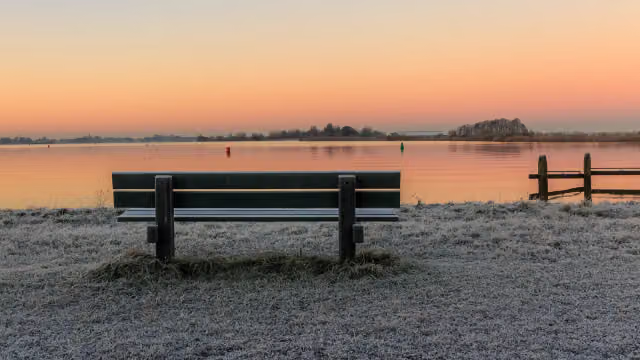
A winter walk is shorter, so a bench with a view is often the goal itself: by a lake, on a coast path or on a hill where you watch the low sun go down. See the benches in the United Kingdom and, for Ireland, the public toilets in Ireland.
Water is harder in winter. Some public taps are seasonal: they are turned off in the cold months against frost. On the water fountains in the United Kingdom you can see which taps are marked as seasonal in our data, so take a full bottle. The public toilets in the United Kingdom are on the map too.
In our data the United Kingdom has 2,923 water points, of which 2 are marked as seasonal and are usually off in winter.
From our data
Pitstops in the United Kingdom
- Benches
- 188,102
- in the United Kingdom
- Water points
- 2,923
- in the United Kingdom
- Water points off in winter
- 2
- in the United Kingdom
- Public toilets
- 13,915
- in the United Kingdom
As of 28 November 2026, from the Outdoor Pitstop database. The whole United Kingdom. A seasonal tap is turned off in winter and back on in spring.
Winter hike boots and what to wear
For winter hike boots the Met Office's advice on icy days is simple: wear footwear with good grip. I do not recommend brands or shops, only what the boots need to do: grip on wet, muddy or frozen ground.
Before you go, check the latest Met Office forecast and any warnings for snow and ice, and plan your walk around the light: in December London has less than eight hours of it. The official sources I read for this page say no more about clothing than that, so for longer routes in the hills follow the advice of the park or estate you visit.
Sledging near me
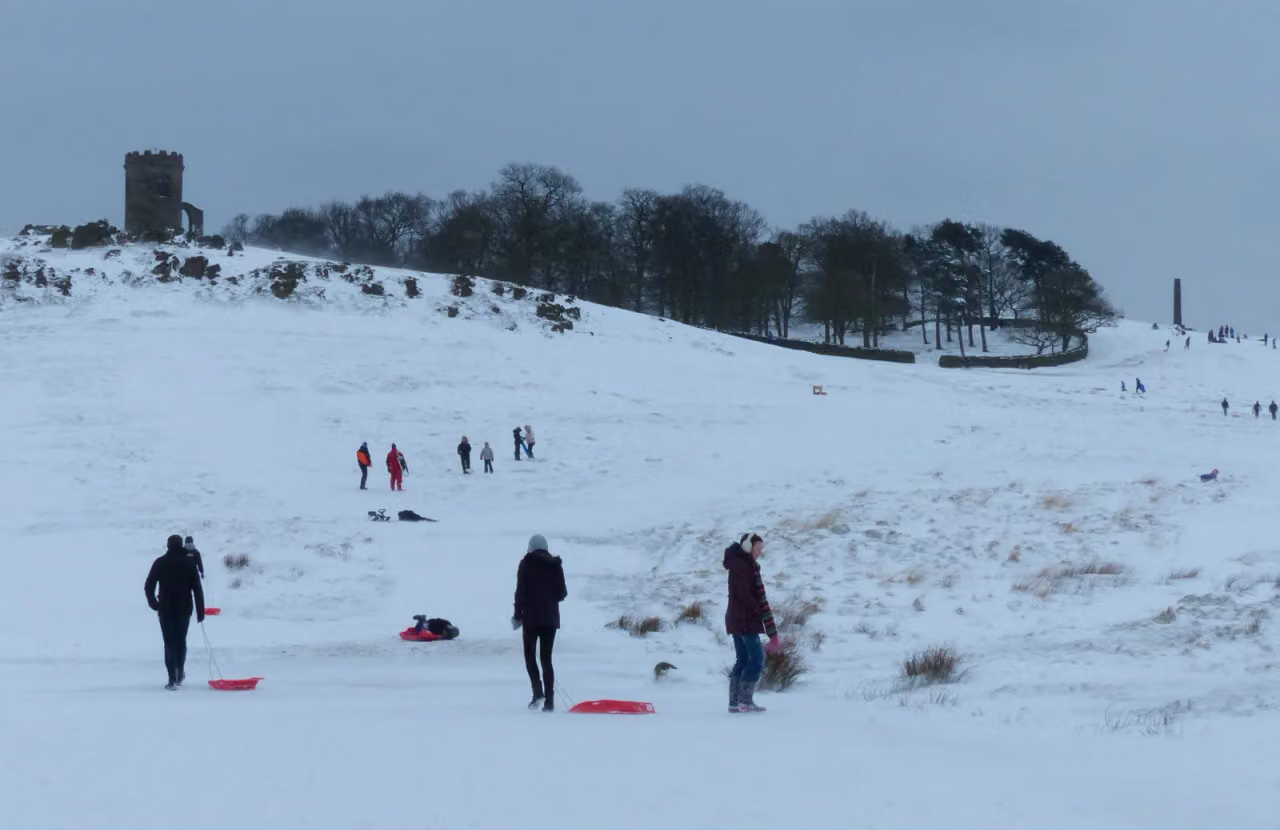
Snow in the UK is never certain, and I have not found an official list of sledging hills, so I do not name any on this page. When snow is forecast, the Met Office issues warnings for snow and ice; keep an eye on them and on the forecast for your area.
What I can help with is the rest of the outing: a bench to sit on and a public toilet nearby. Open the map around your town in the app or start from the pitstops in the United Kingdom.
A short walk in daylight
We do not have walking or cycling routes for the United Kingdom and Ireland in the app yet. The benches, water points and toilets near you are on our location pages, and the app shows which one is closest.
Pitstops in the United Kingdom →Pitstops in Ireland