Outdoor Pitstop

Winter solstice 2026: when is it?
The winter solstice of 2026 is on Monday 21 December at 20:50 GMT. The Dutch meteorological institute KNMI publishes the moment in its sunrise and sunset tables, which use data from the U.S. Naval Observatory. It gives 21:50 Central European Time, which is 20:50 in the UK and Ireland. Because the solstice falls that evening, 21 December is the shortest day of the year.
In 2027 the solstice comes in the middle of the night: Wednesday 22 December at 02:42 GMT. That makes 22 December the shortest day in 2027.
The winter solstice is a moment, not a whole day. The exact time shifts every year, and now and then the date changes too. KNMI explains why: the calendar year has a whole number of days, but the tropical year it is based on does not, and the leap day corrects the difference every four years.
- Winter solstice 2026
- Mon 21 December, 20:50 GMT
- Winter solstice 2027
- Wed 22 December, 02:42 GMT
- Usual date
- 21 December, sometimes 20 or 22
- Source
- KNMI (data: U.S. Naval Observatory)
Winter solstice: when are the days shortest?
- Jan: short days
- Feb
- Mar
- Apr
- May
- Jun
- Jul
- Aug
- Sep
- Oct
- Nov: short days (now)
- Dec: shortest day
December solstice: what is the winter solstice?
At the December solstice the tilt of Earth's axis turns the northern hemisphere furthest away from the sun. Seen from the UK and Ireland, the sun reaches its most southerly point and stands lower in the sky than at any other time of year. At that moment it is directly overhead at the Tropic of Capricorn, south of the equator.
Astronomers count the winter solstice as the start of winter. Meteorologists do it differently: for them winter always begins on 1 December and lasts exactly three calendar months, to the end of February. KNMI uses that split so that seasons can be compared from year to year. So whether winter has started depends on which calendar you mean.
The further north you are, the shorter the daylight in December. KNMI notes that at the North Pole itself the sun stays below the horizon for six months, although it is not dark all that time, thanks to twilight.
The shortest day of the year, and the longest night
The shortest day of the year also brings the longest night. How many hours of daylight you get depends on your latitude: the further north, the shorter the day. For De Bilt in the Netherlands, at 52 degrees north, KNMI gives a sunrise of 08:46 and a sunset of 16:30 Central European Time on 21 December 2026: 7 hours and 44 minutes of daylight.
Sunset is not the same as dark. Civil twilight lasts until the sun is 6 degrees below the horizon, and by then the brightest stars and planets appear. It is only truly dark when the sun is 18 degrees below the horizon, at the end of astronomical twilight. On the shortest day that leaves plenty of evening for stargazing.
The local times for the UK, Ireland and places further north have their own pages, listed below.
Winter solstice when: the days get longer again
Officially the days start to get longer straight after the winter solstice, but you notice it in the evenings first. The earliest sunset does not fall on the shortest day itself, and neither does the latest sunrise.
KNMI explains this with the shape of Earth's orbit. It is an ellipse, not a circle, and Earth moves faster when it is closest to the sun, during our winter. Around 21 December the sun therefore rises a little later each day and also sets a little later each day. In the Netherlands the sun starts setting later again from about 13 December, while the darkest morning only comes around 30 December.
The exact dates depend on latitude. In the south of France, KNMI says, the earliest sunset is as early as 9 December and the latest sunrise is on 3 January. The cause is the same across the northern hemisphere. In the UK and Ireland, too, the evenings start drawing out before the shortest day and the mornings only get lighter after it; just the exact dates shift with latitude.
- Earliest sunset (Netherlands)
- around 13 December
- Latest sunrise (Netherlands)
- around 30 December
- Cause
- Earth's elliptical orbit
The shortest day in the UK, Ireland and the far north
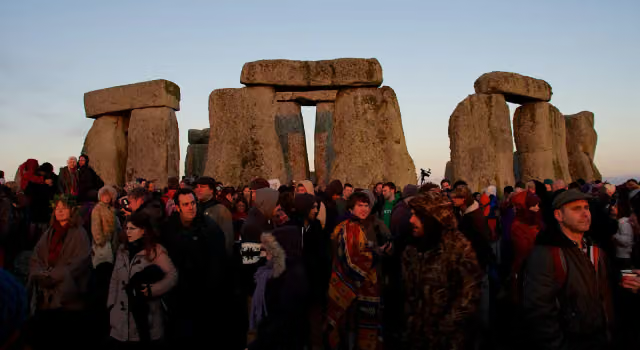
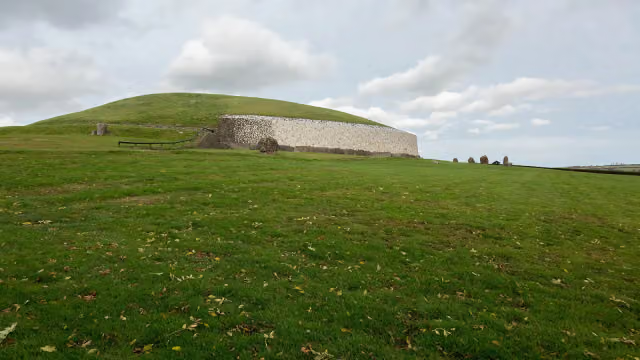
Daylight on the shortest day differs a lot between London and the Arctic. These pages give the times for each place. Solstice gatherings at stone monuments such as Stonehenge and Newgrange are not on this page: I have not yet been able to check their 2026 arrangements with the people who run the sites.
- The shortest day in the UKSunrise, sunset and daylight on 21 December across the United Kingdom.
- The shortest day in EnglandFrom Cornwall to Northumberland: how the short day differs within England.
- The shortest day in LondonThe times for London on the winter solstice.
- The shortest day in IrelandThe winter solstice and the short days in Ireland.
- The shortest day in NorwayHow short the day gets in Norway, from the south to the far north.
- The shortest day in TromsøThe shortest day above the Arctic Circle in Norway.
The shortest day outdoors: a walk in the daylight
If you want to walk in daylight on the shortest day, work backwards from sunset. Set off in good time so that twilight is your safety margin, not part of the walk. A walk of a couple of hours suits the short day best.
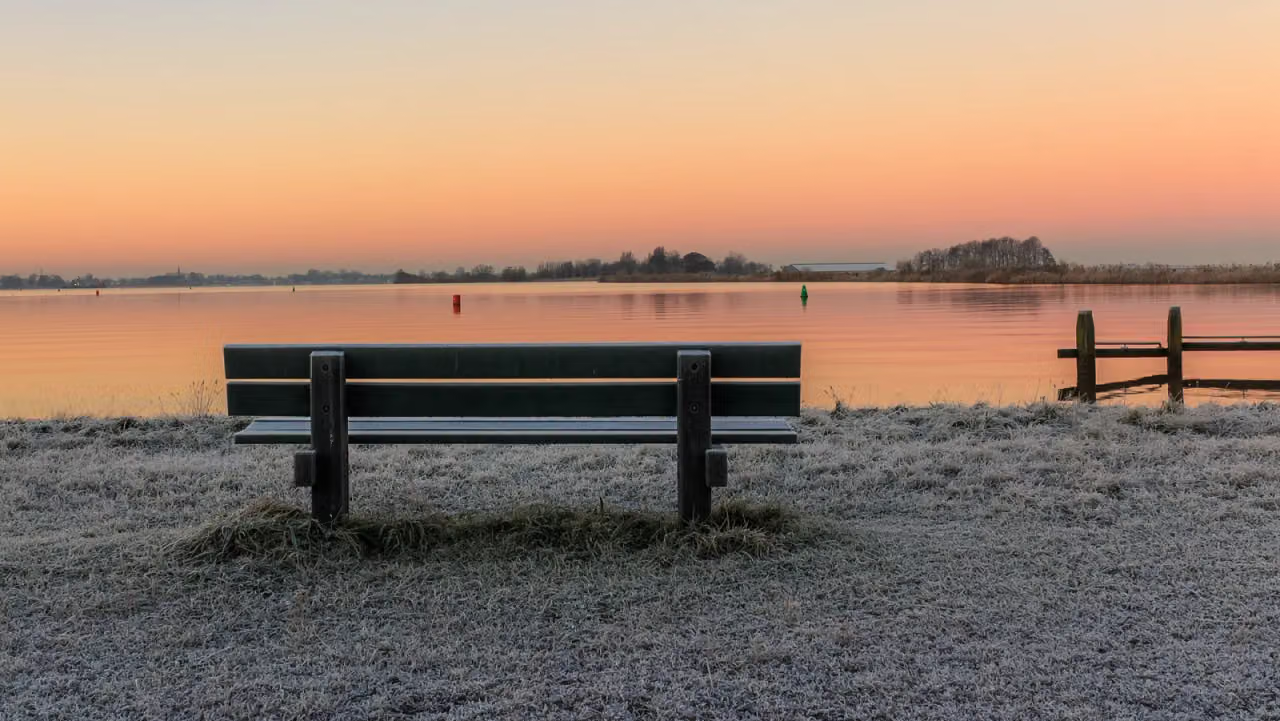
A bench facing west is a good place to end the afternoon. On the shortest day the sun goes down early, and a bench at the edge of open country, on a hill or along the coast gives you a clear view of the sunset. All the benches in the United Kingdom are on the map.
Take your own water in December. Many outdoor taps are switched off in winter so they do not freeze. The water fountains and refill points in the United Kingdom show which taps there are, and the public toilets in the United Kingdom show where you can stop on the way. Walking in Ireland? See the public toilets in Ireland.
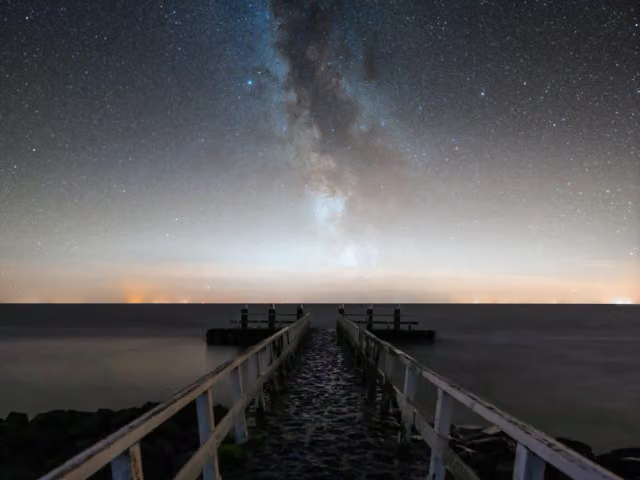
Staying out after dark? The long night around midwinter is a good time for stargazing. You can also use the December daylight for a Christmas walk.
In the app I see 2,923 water points in the United Kingdom, of which 2 are switched off in winter. Check in the app whether the tap on your route is on before you set off.
From our data
Pitstops in the United Kingdom
- Benches
- 188,102
- in the United Kingdom
- Water points
- 2,923
- in the United Kingdom
- Water points off in winter
- 2
- in the United Kingdom
- Public toilets
- 13,915
- in the United Kingdom
As of 28 November 2026, from the Outdoor Pitstop database. The whole United Kingdom. Water points marked as seasonal in our data are usually off in winter.
A walk that fits the daylight
We have no walking routes for the United Kingdom or Ireland in the app yet. The benches, public toilets and water points are on our country pages, so you can plan your own short walk around them.
Pitstops in the United Kingdom →Pitstops in Ireland