Outdoor Pitstop

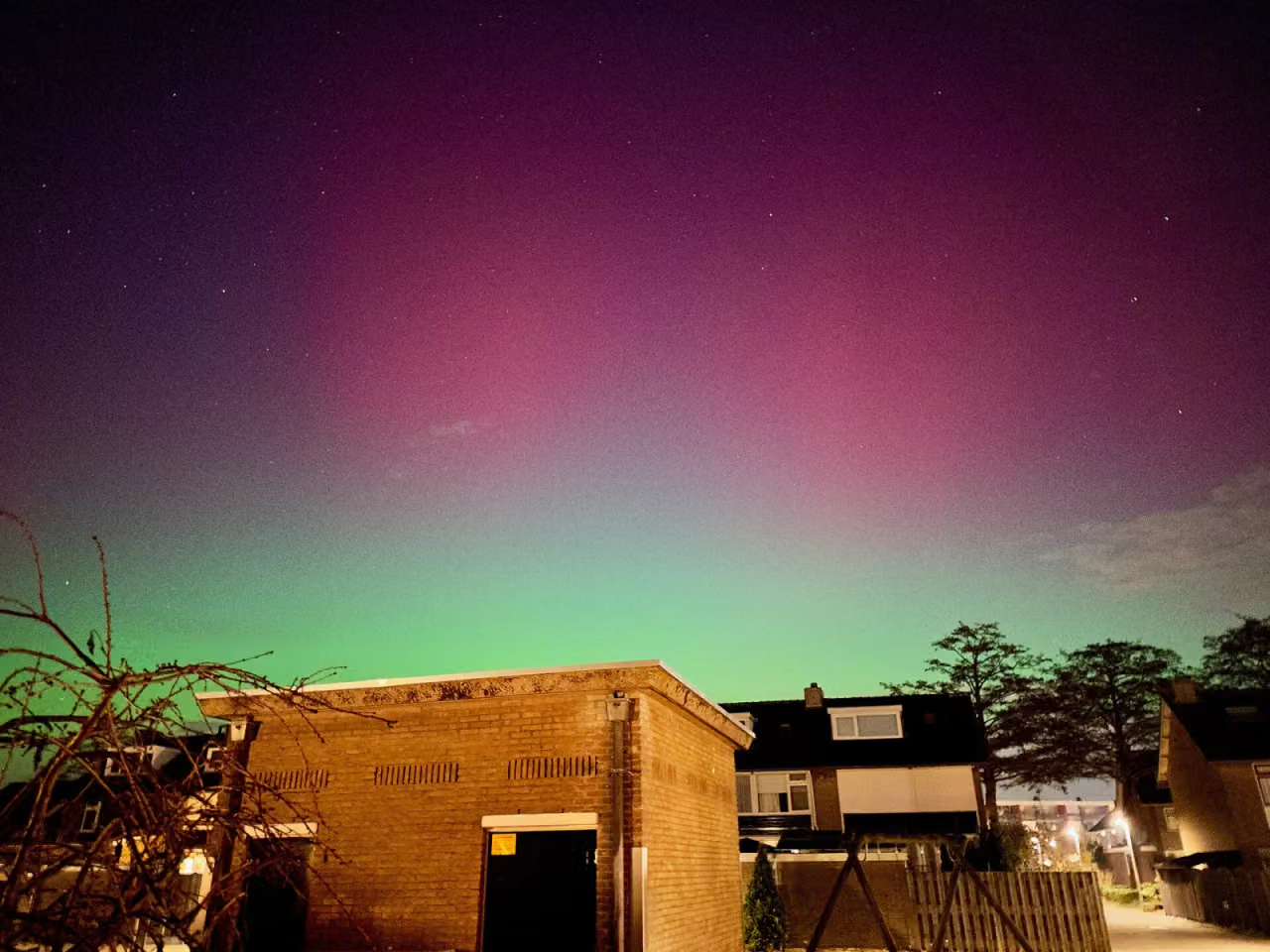
When is the best time to see the northern lights?
The northern lights depend on four things, says the NOAA Space Weather Prediction Center (SWPC) in its viewing tips: how active the Earth's magnetic field is, where you stand, how dark it is and the time of night.
- The season. Larger geomagnetic storms, and so better auroras, tend to happen around the spring and autumn equinoxes. In practice that means March and September to October. SWPC adds a warning for travellers: near the spring equinox the nights shorten quickly, and near the autumn equinox they lengthen quickly.
- Darkness. The aurora is only visible in the dark. In the far north the summer nights do not get dark at all, so a summer trip to the Arctic for the aurora usually does not work.
- The hour. The best displays usually come within an hour or two of midnight, roughly between 10 pm and 2 am local time. On stronger nights that window widens into the evening and early morning.
- The moon and the clouds. A full moon makes the aurora look fainter, and you need a clear sky.
The winter months from November to February give the longest nights. They are not the peak months for storms, but under the auroral oval itself you have many hours in which to be lucky.
- Best seasons
- around the equinoxes (March, September, October)
- Best hours
- 10 pm to 2 am local time
- Needs
- darkness and a clear sky
- Avoid
- full moon and summer nights in the far north
When to see the northern lights, month by month
- Jan: a chance
- Feb: a chance
- Mar: best time
- Apr
- May
- Jun
- Jul
- Aug
- Sep: best time
- Oct: best time
- Nov: a chance (now)
- Dec: a chance
Aurora explained: how the northern lights form
Aurora borealis is the scientific name for the northern lights; in the southern hemisphere the same thing is called the aurora australis, the southern lights. According to NOAA, the light appears when electrons from space collide with oxygen and nitrogen high in the atmosphere. The electrons pass their energy to those atoms and molecules, which give it off again as light, a little like a neon tube. The aurora usually forms between 80 and 500 kilometres above the ground.
The Earth's magnetic field steers the electrons towards the poles, so the aurora forms two rings, or ovals, around the magnetic poles. When the Sun is active, these ovals grow and move away from the poles, and the aurora can then be seen much further south than usual.
Aurora borealis: what you see in the sky
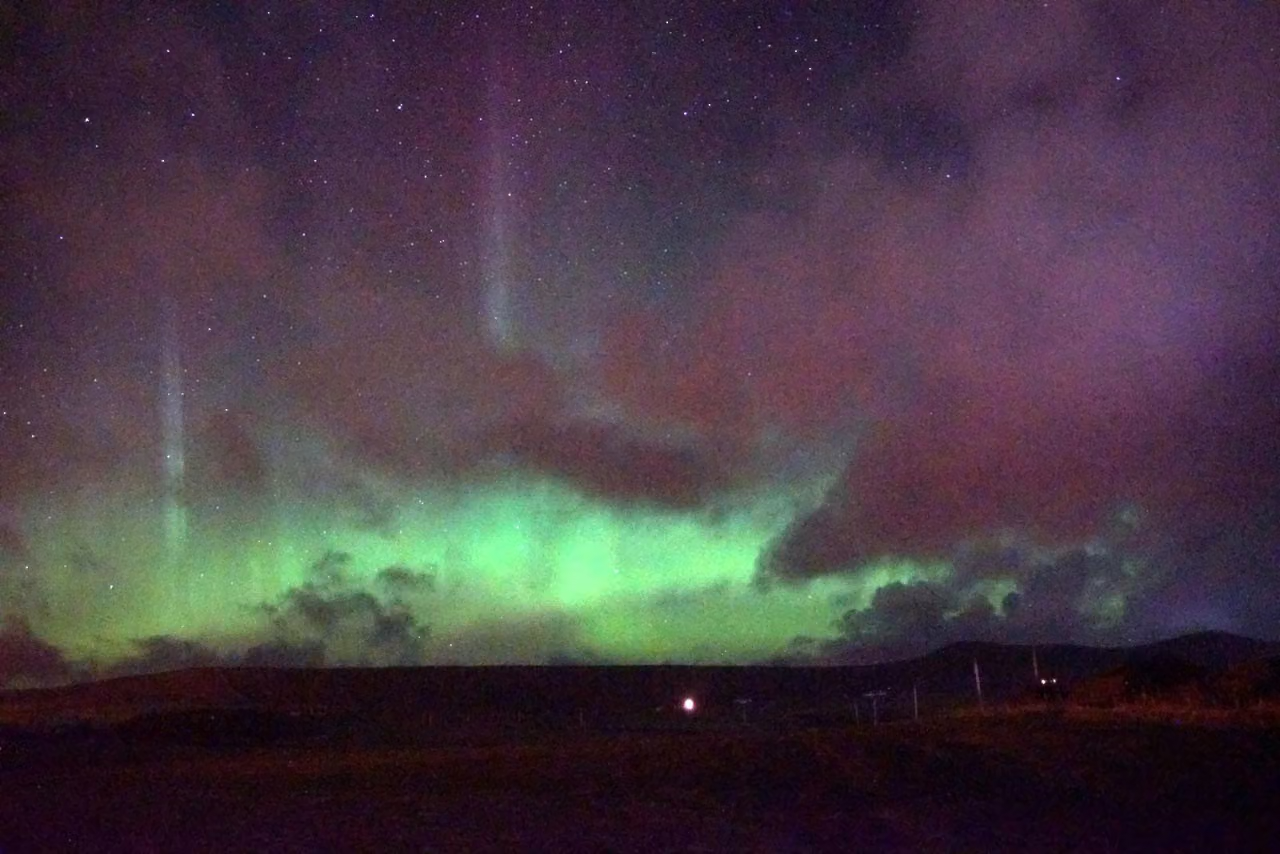
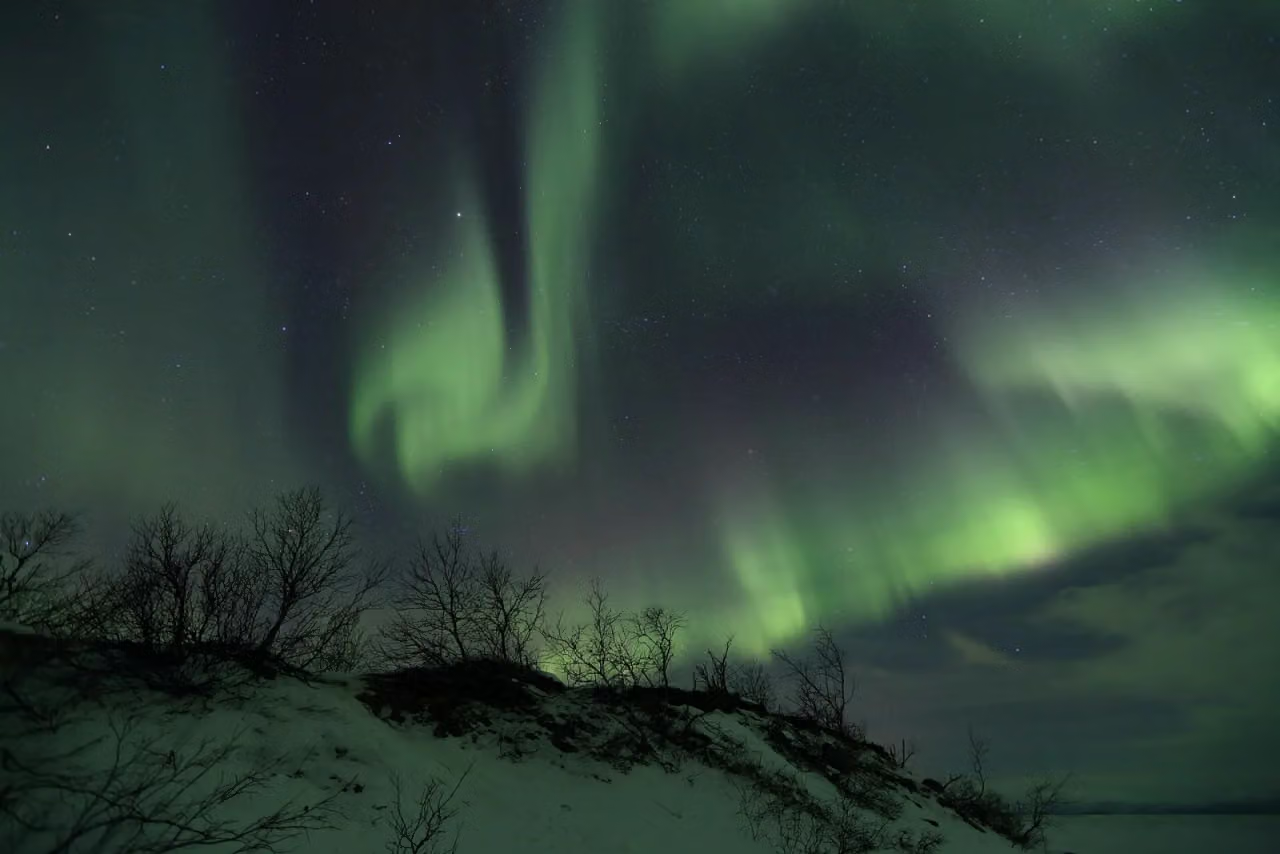
NOAA describes the aurora as often made of tall rays that hang like the folds of a curtain. In the evening the rays can form arcs from one horizon to the other. Around midnight those arcs often start to twist and move, and at the peak of an active spell they can fill the whole sky and become very bright.
Towards morning the aurora often turns into softer, cloud-like patches that switch on and off for hours, until they fade at sunrise. Faint, diffuse aurora is harder to see with the naked eye. Further from the poles, as in most of the UK and Ireland, you usually see the aurora low over the northern horizon rather than overhead, because it can be observed from as far as 1,000 kilometres away when it is bright.
Where to see the northern lights
The best place for the northern lights, says NOAA, is under the oval-shaped zone between about 60 and 75 degrees of latitude. Under that band the aurora can be seen on more than half of the nights in a year. In Europe it runs across Iceland, the Faroe Islands and the north of Norway, Sweden and Finland: the places in our guides to Iceland, Tromsø, Abisko and Lapland.
Further south you need a geomagnetic storm. SWPC gives three rules for where to stand:
- Go as far north as you can, towards the magnetic pole.
- Find a clear view to the north, for example a hill with nothing between you and the horizon.
- Get away from city lights.
In the UK that means the north of Scotland, Shetland and Orkney have the best chance, and the south of England only sees the aurora on the strongest nights. A beach, a coastal path or a hilltop facing north works better than a garden in town.
Northern lights forecast: will I see them tonight?
You cannot plan an aurora night weeks ahead, but you can follow a short-term northern lights forecast. NOAA's Aurora 30-Minute Forecast shows a map of the northern hemisphere with the aurora as a green oval around the magnetic pole, turning red where it is expected to be stronger. It is based on the OVATION model and looks 30 to 90 minutes ahead: the time the solar wind takes to travel from a measuring satellite 1.6 million kilometres away to the Earth.
SWPC notes that the aurora does not have to be right above you: when it is bright and conditions are right, you can see it from up to 1,000 kilometres away. In 2016 NOAA shared the code of its OVATION model with the UK Met Office. So when you check the northern lights tonight, look at three things: the aurora forecast, the cloud forecast for your spot and the moon.
Aurora predict: what the Kp index tells you
Aurora predictions often give a number from 0 to 9: the Kp index, which measures how disturbed the Earth's magnetic field is. NOAA explains roughly what each level means:
- Kp 0 to 2: the aurora stays far north and is dim and quiet.
- Kp 3 to 5: it moves away from the pole, gets brighter and shows more movement. In the right place, under the oval, this is already a fine display.
- Kp 6 to 7: bright and active, and much further from the pole.
- Kp 8 to 9: very bright and very active, and visible to the largest number of people.
As a rule of thumb, the southern edge of the auroral oval sits at about 66 degrees magnetic latitude at Kp 0 and moves about 2 degrees towards the equator for each step, to about 48 degrees at Kp 9. NOAA stresses that magnetic latitude is not the same as the latitude on a map, and that these numbers are averages that do not always hold.
- Scale
- Kp 0 to 9
- Kp 3 to 5
- good under the oval
- Kp 8 to 9
- the widest, brightest aurora
Waiting for the aurora: a bench with a view north
Watching the aurora means standing still in the cold for a long time, often by the coast or on a hill. A bench at a viewpoint facing north is a good place to wait: you sit dry and have a clear horizon. At night almost everything is shut, so use a toilet before you go and take a warm drink with you.
See the benches in the United Kingdom, the public toilets in the United Kingdom and the benches in Ireland. Keep to roads and paths in the dark and do not park on verges.
In the app I see 188,102 benches and 13,915 public toilets in the United Kingdom.
From our data
Benches and public toilets in the United Kingdom
- Benches
- 188,102
- in the United Kingdom
- Public toilets
- 13,915
- in the United Kingdom
- Water points
- 2,923
- in the United Kingdom
As of 28 November 2026, from the Outdoor Pitstop database. The whole United Kingdom. Benches, public toilets and water points come from OpenStreetMap and from reports by our users.