Outdoor Pitstop

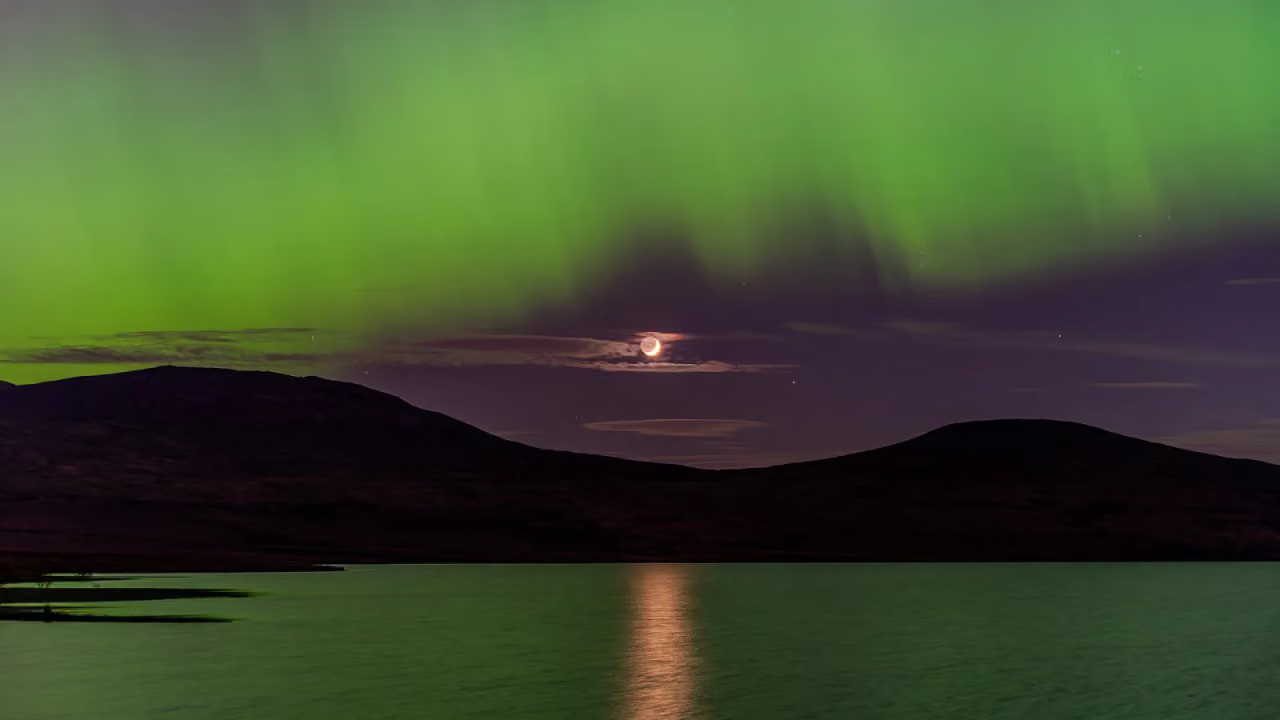
Aurora borealis UK: the months and the places, in short
The aurora borealis is not tied to a season. It follows the activity of the Sun, and a display can come in any month. What changes over the year is darkness. On 5 June 2026 the Met Office warned that the short window of darkness at that time of year limits the chances, even when activity is high. So in practice your chances are best from autumn to early spring, when the nights in Scotland and northern England are long.
The places to aim for, according to the Met Office and AuroraWatch UK:
- Northern Scotland and Shetland. These are the furthest north, closest to the aurora belt over Norway and Iceland. AuroraWatch UK even runs a separate magnetometer and alert service for Shetland.
- Northern Ireland. In AuroraWatch UK's alert table it is grouped with Scotland and northern England, where an amber alert can mean the aurora is visible by eye.
- Northumberland. According to Visit Northumberland, the Northumberland Dark Sky Park covers 572 square miles of Gold Tier skies and is the largest Dark Sky Park in the UK. Dark skies are what you need when the aurora is faint.
The facts on this page were checked on 20 November 2026. Forecasts and alert pages change every night, so always look at the live sources before you set out.
- Best months
- Long dark nights, autumn to early spring
- Where
- Northern Scotland, Shetland, Northern Ireland, northern England
- Look
- Towards the northern horizon
- Alerts
- AuroraWatch UK (Lancaster University)
- Forecast
- Met Office Space Weather
- Checked
- 20 November 2026
When to see the northern lights in the UK: the dark months
- Jan: longest dark nights
- Feb: longest dark nights
- Mar: dark evenings
- Apr
- May
- Jun
- Jul
- Aug
- Sep: dark evenings
- Oct: dark evenings
- Nov: longest dark nights (now)
- Dec: longest dark nights
- AutumnThe nights draw in again. From September there is enough darkness in the north to catch a display.
- WinterThe longest nights of the year. Cloud is the main obstacle, so watch the weather forecast as closely as the aurora alerts.
- SpringStill good in March. By April and May the evenings in Scotland stay light for longer.
- SummerActivity can be high, but the Met Office says short nights make naked-eye sightings hard. A camera may still pick something up.
Aurora watch UK: what the four alert colours mean
AuroraWatch UK is the aurora alert service of Lancaster University. It uses magnetometers across the UK to measure disturbances in the Earth's magnetic field, and it has been sending aurora alerts since September 2000. Its alerts have four colours:
- Green: no significant activity. Aurora is unlikely to be seen by eye or camera anywhere in the UK.
- Yellow: minor geomagnetic activity. It may be visible by eye from Scotland, and by camera from Scotland, northern England and Northern Ireland.
- Amber: possible aurora. It is likely to be visible by eye from Scotland, northern England and Northern Ireland, and perhaps further south. Photos are likely from anywhere in the UK.
- Red: aurora likely. It is likely to be visible by eye and camera from anywhere in the UK.
An alert does not promise a show. AuroraWatch UK stresses that local conditions such as cloud and light still have to be right. Shetland has its own alert service with slightly different meanings: there an amber alert already means the aurora is likely to be visible by eye.
- Run by
- Lancaster University
- Alerts since
- September 2000
- Levels
- Green, yellow, amber, red
Northern lights Britain: where to look
Britain lies south of the natural aurora belt, which runs over Norway, Iceland and Greenland. The Met Office explains that only a severe or extreme geomagnetic storm (Kp 8 to 9) pushes that belt directly over the UK, and that this is very rare. In a moderate to strong storm (Kp 6 to 7) the aurora moves south towards southern Iceland or the Faroes. Because it is so high in the sky, it can then be seen faintly from the UK, low over the northern horizon.
That is why the north has the best chance. Yellow and amber alerts cover Scotland, Northern Ireland and northern England before the rest of the UK, and Shetland is closest to the aurora belt. The Met Office gives three tips: a clear night without cloud, a dark place without light pollution, and a view to the north. A north-facing coast, a hill or a wide moor works better than a town.
In Northumberland, the Northumberland National Park is part of the Northumberland Dark Sky Park, which Visit Northumberland calls the largest in the UK.
In the app I see the benches, public toilets and car parks along the north-facing coasts and moors, so you can pick a dark spot with a toilet nearby.
Northern lights tonight UK: will you actually see it?
Whether you will see the northern lights tonight depends on two forecasts: space weather and the ordinary weather. On 5 June 2026 the Met Office expected a coronal mass ejection to raise aurora activity. But cloud and rain were spreading from the south-west, so the best chances were in northern and eastern Scotland and in Northern Ireland. The chance was lower in northern England and smaller still further south.
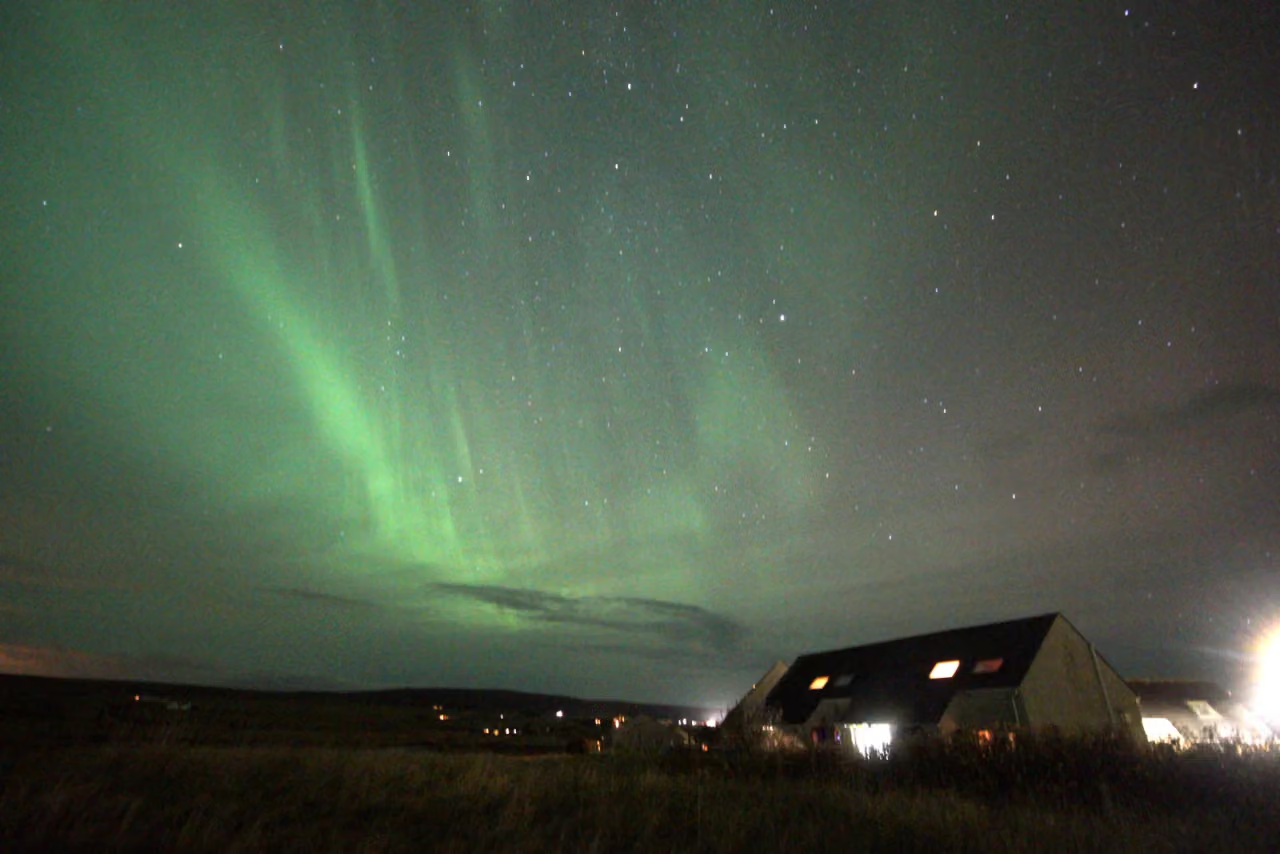
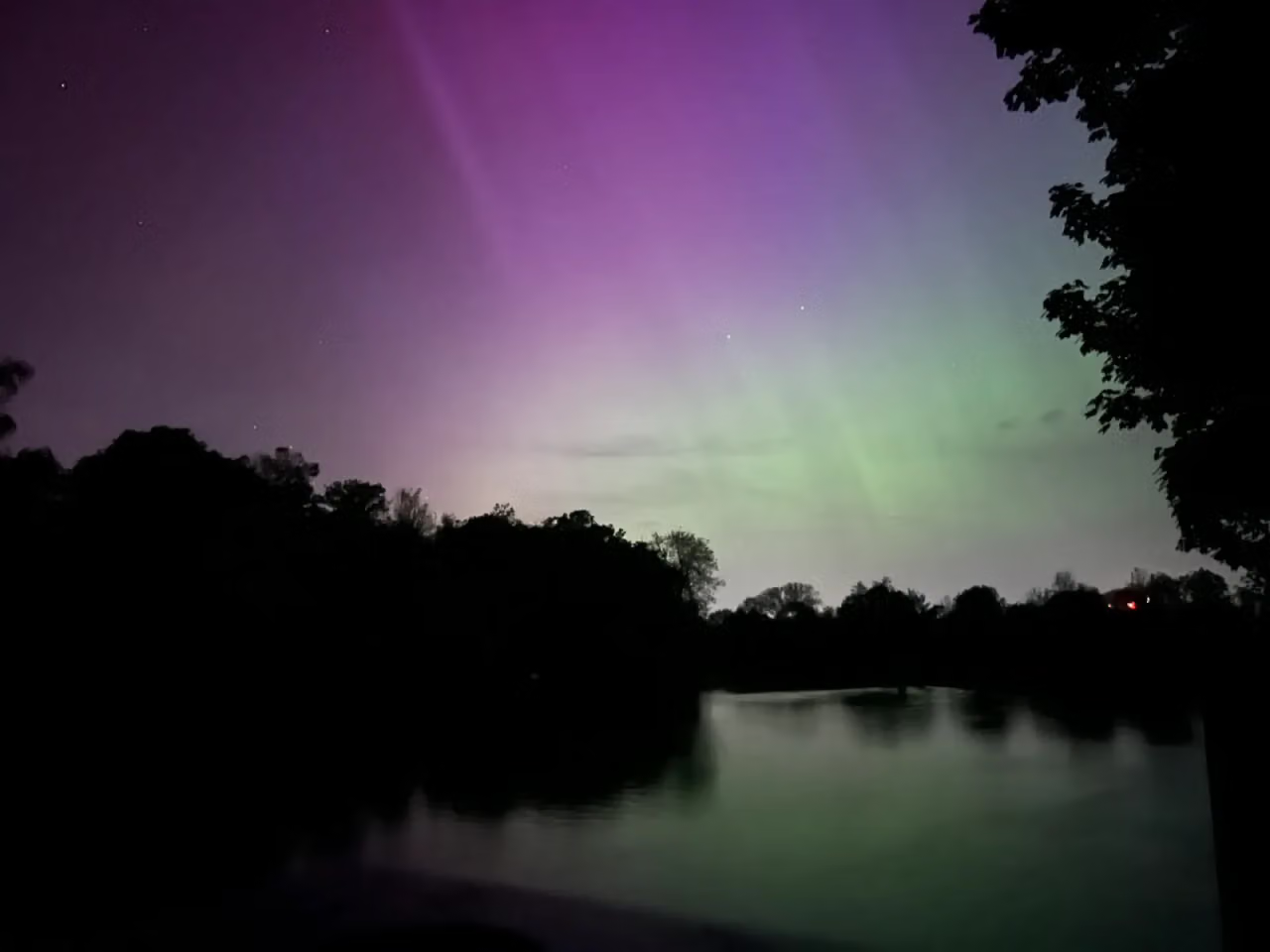
The Met Office also warns that the aurora is often much fainter by eye than in photos. A camera on a tripod with a long exposure collects far more light than your eyes, so a faint glow on the horizon can look bright green on a screen. If you see a faint glow, take a photo and check.
AuroraWatch UK's live map shows sightings reported through the Aurorasaurus citizen science project. A report from somewhere near you is a good sign that it is worth going out.
- Needed
- Clear sky, darkness, view north
- By eye
- Often fainter than in photos
- Tip
- Check a photo on your phone or camera
Aurora forecast UK: the Met Office and the Kp index
The Met Office runs a Space Weather Operations Centre, and its aurora forecasts show when geomagnetic activity could make the aurora visible from the UK. The Met Office points to the Kp index, a scale from 0 to 9. The higher the number, the better the chance, as long as the sky is clear.
Use the forecasts in this order:
- Days ahead: the Met Office Space Weather forecast, for signs of a coming storm.
- The evening itself: AuroraWatch UK's alert colour, which is based on what its magnetometers measure at that moment.
- The next half hour: AuroraWatch UK's map also shows NOAA's Ovation forecast, which estimates the chance of aurora overhead in 30 minutes' time.
- Cloud: the ordinary weather forecast. No aurora forecast helps under thick cloud.
The Met Office adds a practical warning: a geomagnetic storm can disturb satellite navigation, so do not rely on GPS alone on a dark moor.
- Scale
- Kp 0 to 9
- Directly over the UK
- Kp 8 to 9, very rare
- Faint, low in the north
- Kp 6 to 7
Benches, toilets and parking for a night of aurora watching
Aurora watching is mostly waiting, often for hours, in the cold. The Met Office's advice for photographers applies to everyone: dress warmly, take a hot drink and a small head torch, and keep spare batteries warm in a pocket.
The best seat is a bench with an open view to the north: on a coast path, at a viewpoint on a hill or by a lake, where calm water can reflect the sky. Many benches in the countryside stand at viewpoints like these. Before you go, find the nearest public toilet and car park, because facilities in dark sky areas are often far apart. See the benches in the United Kingdom and the public toilets in the United Kingdom.
In the app I see 188,102 benches and 13,915 public toilets in the United Kingdom.
From our data
Pitstops in the United Kingdom
- Pitstops
- 205,713
- in the United Kingdom
- Benches
- 188,102
- in the United Kingdom
- Public toilets
- 13,915
- in the United Kingdom
- Water points
- 2,923
- in the United Kingdom
As of 28 November 2026, from the Outdoor Pitstop database. The whole United Kingdom. Benches, public toilets and water points come from OpenStreetMap and from reports by our users.
Walking to a dark spot
We have no walking or cycling routes for the United Kingdom in the app yet. The benches, public toilets and car parks around the dark places in Scotland, Northern Ireland and northern England are on our pages for the United Kingdom.
Pitstops in the United Kingdom →Benches in the United KingdomPublic toilets in the United Kingdom