Outdoor Pitstop

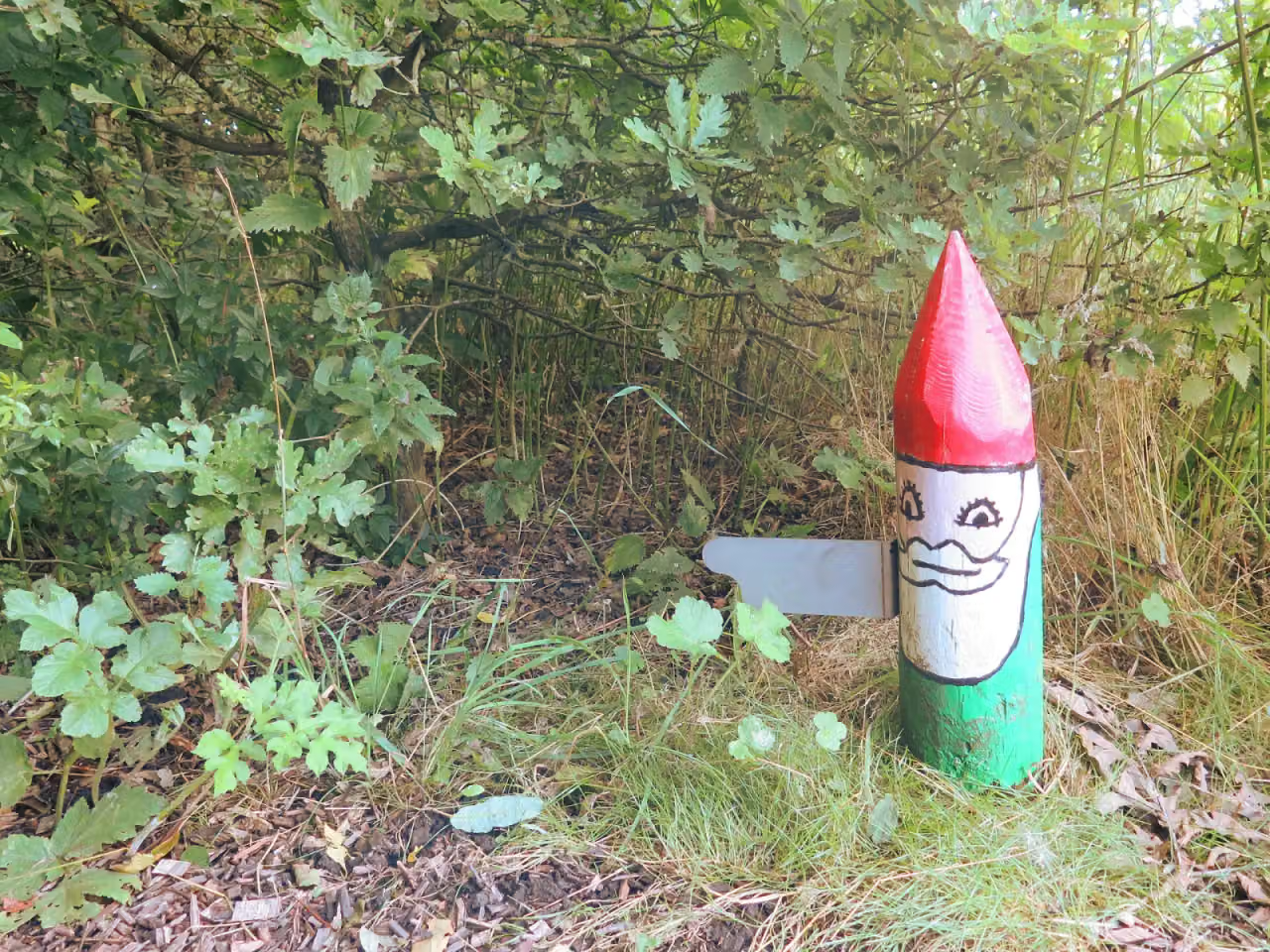
Gruffalo trail: what it is
In England the Gruffalo in the forest is a project of Forestry England, which has worked with Magic Light Pictures, the makers of the Gruffalo films, since 2014. On its Gruffalo page Forestry England shows two kinds of activity:
- Gruffalo sculptures: large wooden figures of the Gruffalo and other characters from the book, hidden among the trees. You walk from one to the next.
- Gruffalo orienteering: a short course where children use a simple map to find Gruffalo markers.
When I checked its list in November 2026, Forestry England showed Gruffalo sculptures in about twenty forests, among them Bedgebury, Delamere, Dalby, Kielder, Cannock Chase, Westonbirt and Moors Valley, and Gruffalo orienteering in about a dozen, such as Delamere, High Lodge, Sherwood Pines, Haldon Forest Park and Grizedale. Use the search on the Forestry England page to find the one nearest to you, because each forest sets up its trail a little differently.
In 2024 Forestry England also ran a one-year birthday trail for the book's 25th anniversary at 26 forests. That was a temporary trail; the sculptures and orienteering courses are the ones on its current list.
- Run by
- Forestry England
- Kinds
- sculptures and orienteering
- Since
- 2014 (with Magic Light Pictures)
- Where
- forests across England
Gruffalo orienteering: how it works
Gruffalo orienteering is a map-reading game for young children. At Delamere Forest in Cheshire, Forestry England describes a course of twelve Gruffalo markers hidden in the wood, suitable for children up to eight years old. Competitive families can run, walk or skip it against the clock.
This is how a Gruffalo orienteering course goes, following the Delamere example:
- Get the leaflet. At Delamere the map and certificate cost £2.50 from the Visitor Welcome Point and the café (November 2026).
- Turn the map so it matches what you see: a path on the map should run the same way as the path in front of you.
- Choose the next marker and let your child point to it on the map.
- Walk to the marker along the paths, turning the map again at each junction.
- Repeat until all twelve are found, then fill in the certificate.
Check the forest's own page before you go: the price, where to buy the leaflet and the number of markers can differ between forests.
Gruffalo sculpture trails: the Bedgebury example
A sculpture trail is less about the map and more about the search. At Bedgebury National Pinetum in Kent, Forestry England has placed seven large wooden sculptures across the 128-hectare pinetum: the Gruffalo, the Gruffalo's Child, Fox, Mouse, Snake, Squirrel and Owl.
What the forest says about walking it:
- The sculptures are not waymarked and stand off the hard paths, so download the map or take a photo of it at the visitor centre. The information point has clues too, and every sculpture has a what3words location.
- The shortest route past all seven is 3.5 km (about 2 miles), with bumpy ground and some steep, grassy slopes, but also many benches.
- Younger children may need more than one visit, or a rest at the café. For easy access, the Squirrel, the Mouse and the Gruffalo's Child are the quickest ones to reach.
- All ages can join in, from four-year-olds to teenagers using the clues.
- The sculptures are not play equipment: Forestry England asks you not to climb on them and to take the same care as at a play area.
Treasure trail: make your own
No Gruffalo forest nearby? A treasure trail works in any wood, park or village. The idea is the same as on an orienteering course: a list of clues leads from one spot to the next, and something waits at the end.
- Keep it short: a loop of about a kilometre is enough for small children.
- Write simple clues: "the bench with the view", "the oldest tree by the pond", "the gate with the blue sign".
- Draw a map with the clues on it, so older children can practise reading it.
- End at a bench or picnic spot, where the treasure can be a snack or a certificate you made together.
For teenagers and adults, swap the clues for questions about what they see along the way: dates on a building, words on a sign, the number of arches on a bridge.
Fairy trail: for the youngest walkers
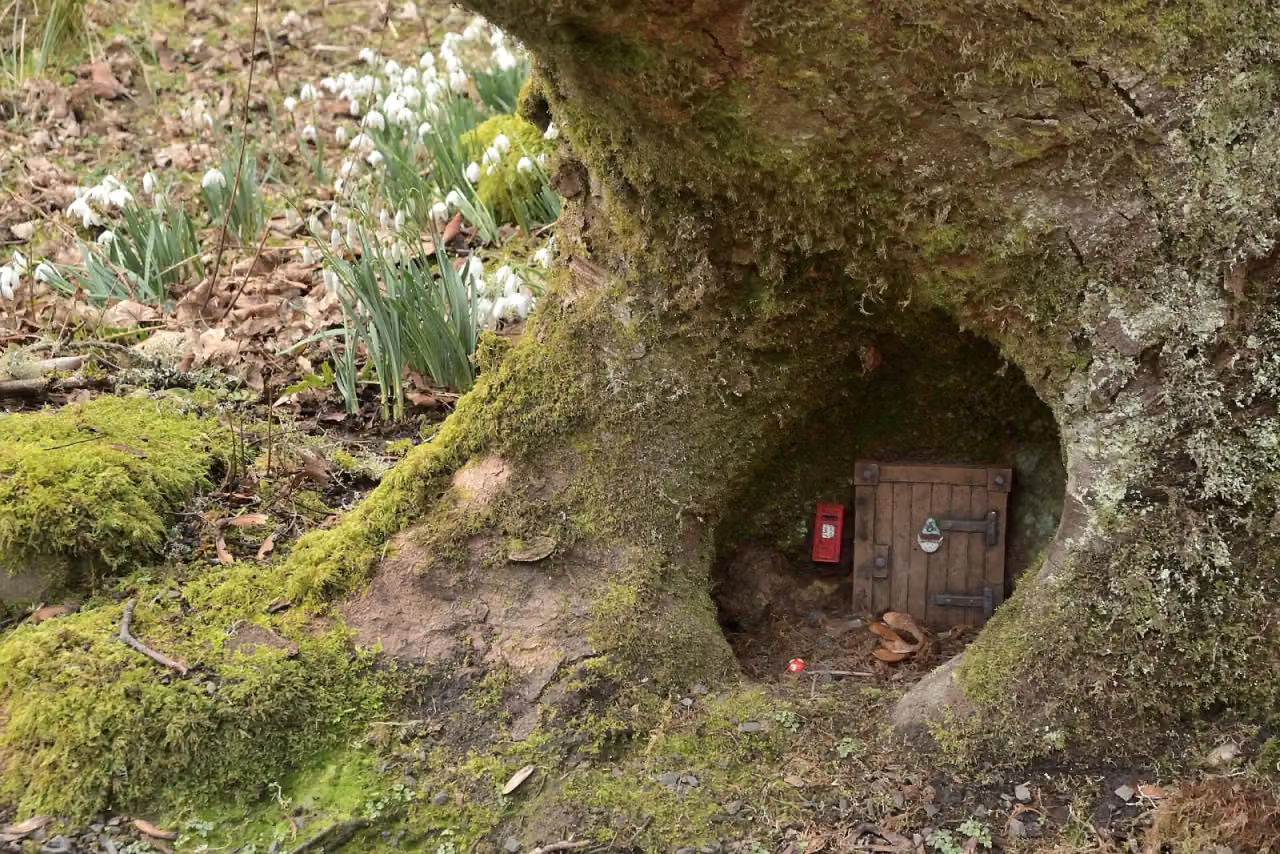
A fairy trail is a short walk where small children look for tiny doors, houses or figures along the path. Some woods and gardens have one, put up by a landowner or by local people; check the site of the place itself for when it is open and whether you can follow it with a pushchair.
You can also make a fairy walk without any props. Take a list of fairy homes to spot: a hole at the foot of a tree, a ring of toadstools, a mossy stone, a spider's web in the morning dew. Leave everything where it is, and do not add your own decorations to a wood: what you bring in, take home again.
Nature trail: a list of things to find
A nature trail asks children to look closely rather than walk far. Make a checklist before you go, with pictures for children who cannot read yet:
- a feather, a pine cone and an acorn or conker;
- three different leaves;
- a bird you can hear but not see;
- a snail, a beetle or a spider's web;
- something smooth, something rough and something soft.
Tick things off rather than taking them, and leave anything alive where it is. In late spring and summer, keep to the path and check for ticks after a walk through long grass; our guide to ticks on a walk explains how.
Nature walks with children: keep it short
Most children's trails are short, but small legs still tire. Plan nature walks around stops: a bench halfway, a place to eat and a toilet at the start or the end. In autumn and winter, take boots and clothes that may get muddy, a drink and a snack, and start early enough to finish before dark and before a forest café or visitor point closes.
For a longer day, add a second trail to the first: a sculpture hunt in the morning and a nature checklist on a quieter path after lunch.
From our data
Public toilets, benches and water in the United Kingdom
- Public toilets
- 13,915
- in the United Kingdom
- Benches
- 188,102
- in the United Kingdom
- Water points
- 2,923
- in the United Kingdom
As of 28 November 2026, from the Outdoor Pitstop database. The whole United Kingdom, from OpenStreetMap and reports by our users.
A toilet and a bench at the start of the trail
Small children need the toilet just as you walk into the wood. A forest with a visitor centre often has toilets, but a trail that starts at a car park may not, so look up the nearest public toilet before you leave home.
A bench at the start or the end is handy for a sandwich or to swap muddy boots. All the toilets, benches and water points we know of are on the pages public toilets in the United Kingdom, benches in the United Kingdom and water fountains in the United Kingdom.
In the app I see 13,915 public toilets and 188,102 benches in the United Kingdom.
Walks after a children's trail
We have no walking routes for the United Kingdom or Ireland in the app yet. The pitstops near your forest are on our pages for each region of the UK.
Pitstops in the United Kingdom →Public toilets in Ireland