Outdoor Pitstop


How to remove a tick: the steps
The quicker you remove a tick, the better: some tick bites can pass on an infection such as Lyme disease. If you spot a tick on a walk and have tweezers in your rucksack, there is no need to wait until you are home.
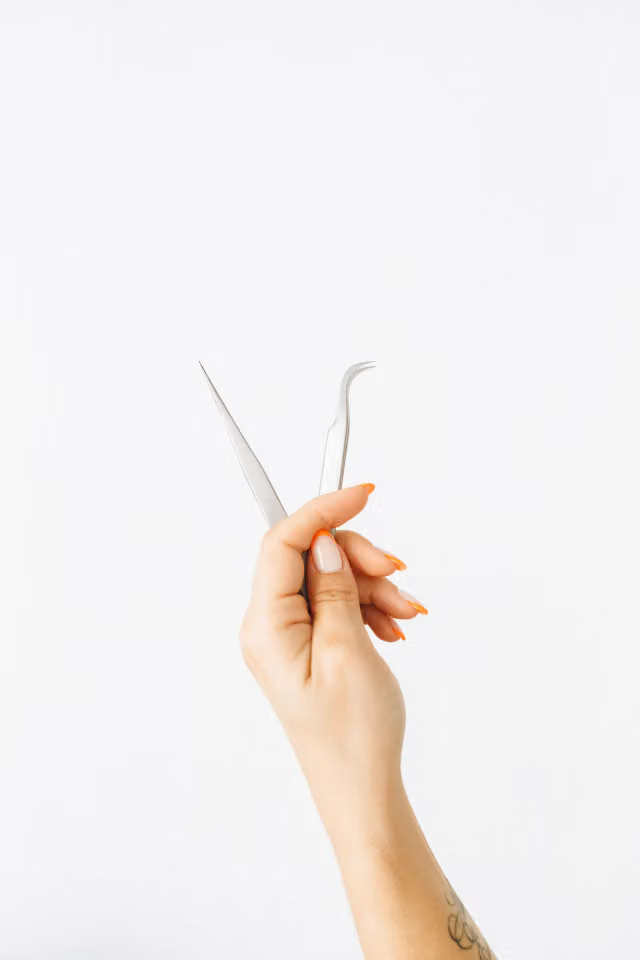
- Use fine-tipped tweezers or a tick removal tool. The NHS says you can buy a tick removal tool from some pharmacies, vets and pet shops.
- Grip the tick as close to the skin as you can.
- Pull upwards slowly and firmly, without squeezing or crushing the tick.
- Dispose of the tick once it is out.
- Clean the bite with antiseptic or soap and water.
- Watch the bite for several weeks. Note the date and where you were walking, so you can tell your GP if you feel unwell later.
The UK Health Security Agency (UKHSA) points out that mouthparts left in the skin can cause a local infection. That is why the grip close to the skin and the slow, steady pull matter more than the tool you use.
- How soon
- as soon as possible
- Tool
- fine-tipped tweezers or tick tool
- Afterwards
- clean, then watch for weeks
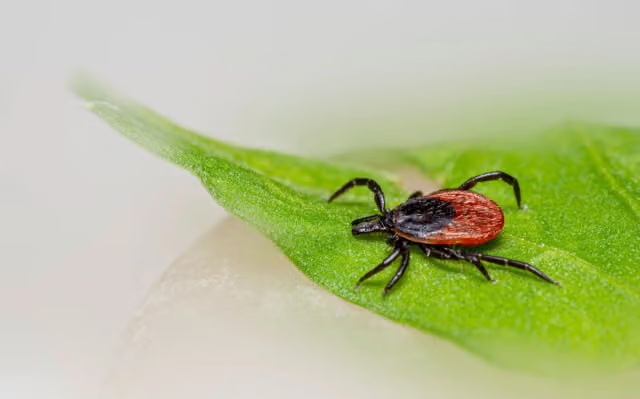
What a tick looks like, and what you need
Ticks on humans: where to check after a walk
Ticks do not fly or jump. According to UKHSA they wait on vegetation for a person or animal to brush past, climb on and then bite and feed for several days before dropping off. A tick bite often does not hurt, so you will not always notice it.
Make a tick check a habit after every walk through grass, bracken or woodland, and again when you get home. UKHSA lists the places ticks are often found on people:
- skin folds, the armpits and the groin;
- around the waistband;
- the back of the neck and the hairline.
UKHSA's Tick Surveillance Scheme shows that adults are commonly bitten on the legs, while children are commonly bitten on the head or neck, so check children all over. More than one tick can be attached at a time. If you walk with a dog, check the dog too.
Tick bite: day 1 and the weeks after
On the day of a tick bite there is usually little to see: a small red mark where the tick was. Remove the tick, clean the skin and note the date. The NHS says you do not need to do anything else unless a rash appears or you feel unwell, and that the chance of getting ill is low. Not all ticks in England carry the bacteria that cause Lyme disease.
What matters is the weeks after the tick bite. The rash linked to Lyme disease usually appears within 1 to 4 weeks, but it can appear up to three months after the bite. It is round or oval, can look like a bullseye, spreads over days and is usually not hot or itchy. On brown or black skin it can be harder to see and may look like a bruise.
- Rash usually
- 1 to 4 weeks after
- Rash up to
- 3 months after
- Chance of illness
- low, says the NHS
From our data
Public toilets and benches in the United Kingdom
- Public toilets
- 13,915
- in the United Kingdom
- Benches
- 188,102
- in the United Kingdom
As of 28 November 2026, from the Outdoor Pitstop database. The whole United Kingdom. A public toilet is the place to check the spots you would rather not check on the path.
Checking for ticks on the way: a bench or a public toilet
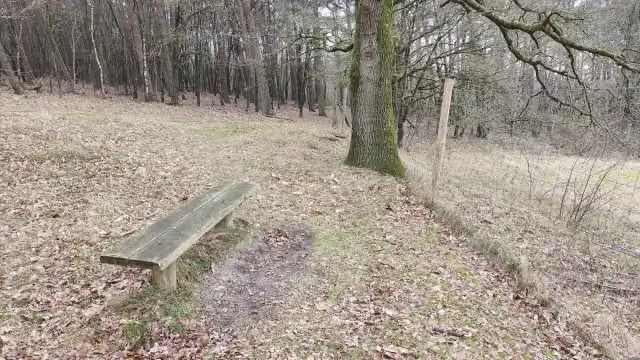
After a long walk through high grass or bracken, you do not have to wait until you are home to look for ticks. On a bench at the edge of the woods you can check your legs, ankles and the backs of your knees. For the groin, waistband and armpits, a public toilet is easier.
All the public toilets we know of are on the page public toilets in the United Kingdom, and the benches are on benches in the United Kingdom. Walking in Ireland? Then see the public toilets in Ireland.
In the app I see 13,915 public toilets and 188,102 benches in the United Kingdom.
How to avoid tick bites on a walk
You cannot rule out a tick bite, but you can make one much less likely. UKHSA describes ticks as most active between spring and autumn, in moist places with leaf litter or longer grass: woodland, grassland, moorland, heathland and some urban parks and gardens. The NHS adds that ticks are found across the UK, with higher-risk areas in grassy and wooded places in southern England and the Scottish Highlands.
The advice of the NHS and UKHSA for walkers:
- Walk on clearly defined paths so you brush against less vegetation.
- Cover your skin and tuck your trousers into your socks.
- Wear light-coloured clothing, so ticks are easier to spot and brush off.
- Use an insect repellent on skin and clothing; the NHS says products containing DEET work best.
- Check yourself, your children and your pets after time outdoors.
Tick bite symptoms: when to call your GP or 111
Most tick bites do no harm. Contact your GP or call 111, the NHS says, if you have been bitten by a tick, or have been somewhere infected ticks could be, in the past three months and you have:
- a round or oval rash, which may spread;
- flu-like symptoms, such as feeling hot or shivery, a headache or aching muscles.
UKHSA also names fatigue, muscle and joint pain, and a persistent headache, confusion or sensitivity to bright light. You may not remember being bitten, so tell the doctor you have been walking in woodland or long grass. Lyme disease can be treated with a course of antibiotics, which is why early detection matters. Tick-borne encephalitis is rare in the UK, according to UKHSA.