Outdoor Pitstop

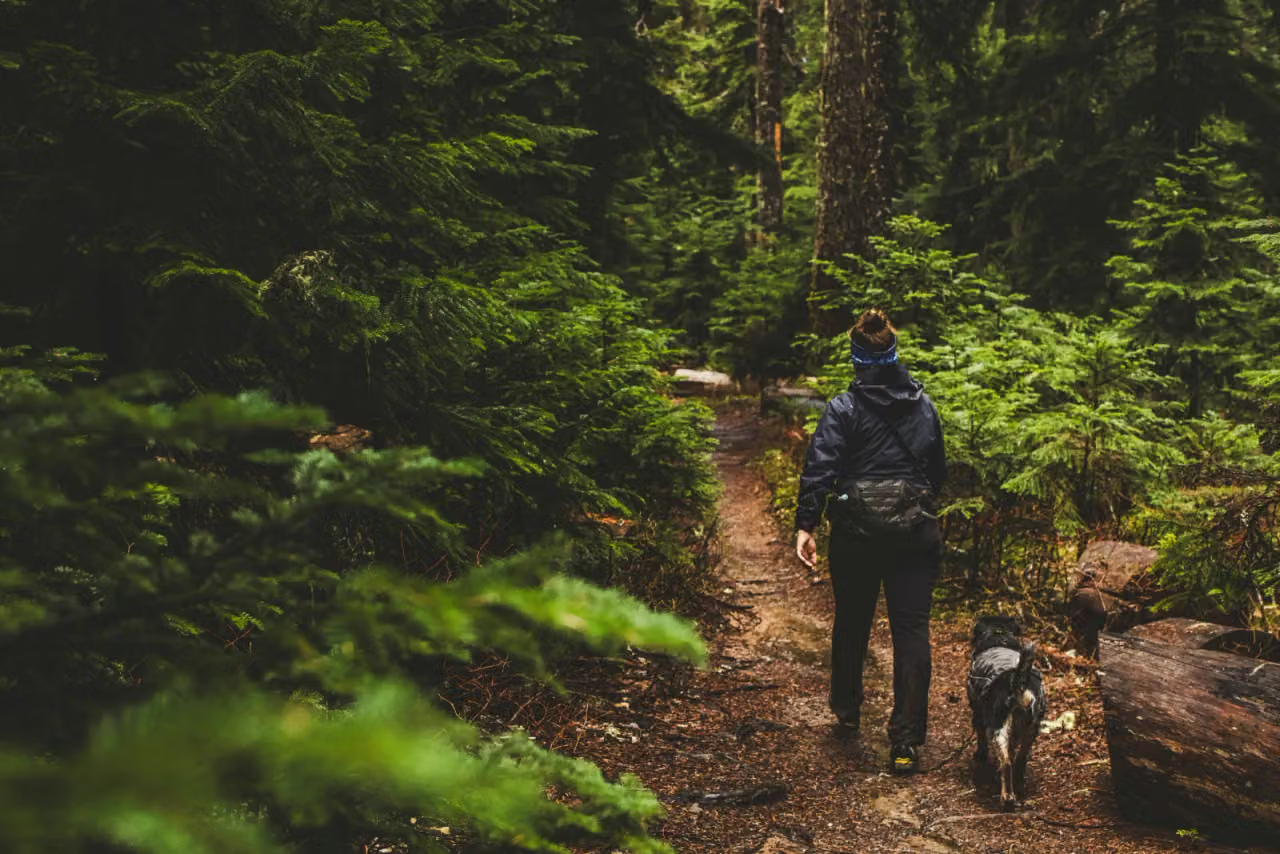
Walking with dogs: the rules in the countryside
The Countryside Code is the official advice for England and Wales from Natural England and Natural Resources Wales. It asks one thing of every dog walker: keep your dog under effective control, so it stays away from wildlife, livestock, horses and other people unless they invite it over. In practice that means:
- your dog is on a lead or always in sight;
- you are confident it comes back when you call;
- it stays on the path or in the area where you have a right of access.
Local signs can go further. The Code says some places need a lead for all or part of the year, and some ban dogs altogether, except for assistance dogs. Read the sign at the gate or car park.
The Code also reminds walkers that a farmer can shoot a dog that is attacking or chasing livestock, and may not have to pay the owner compensation. Scotland has its own Scottish Outdoor Access Code: access rights apply to people with dogs as long as the dogs are kept under proper control.
The Scottish Access Code site also points to the Control of Dogs Order 1992: in public, every dog must wear a collar with the owner's name and address on it, or on a tag attached to it.
- England and Wales
- Countryside Code
- Scotland
- Scottish Outdoor Access Code
- Always
- under control and in sight
- Collar
- name and address of the owner
When your dog must be on a lead
On most paths the lead is up to you, but a few rules are the law. According to the Countryside Code and the government's guidance on open access land in England:
- On open access land your dog must be on a lead between 1 March and 31 July, even when there are no animals on the land.
- Near livestock your dog must be on a lead on open access land and at the coast, all year round. The government guidance says the lead must be short: no more than 2 metres.
- On the King Charles III England Coast Path and its coastal margin, dogs are welcome but must be under effective control at all times.
Landowners can also close small lambing fields and grouse moors to dogs completely, so a sign may send you another way. Everywhere else, the Code calls a lead around livestock good practice.
In Scotland the Access Code asks you to keep your dog on a short lead or close at heel in the breeding season, usually April to July. That applies on moorland, in forests, on grassland, along loch shores and on the sea shore.
- Open access land
- lead 1 March to 31 July
- Near livestock
- short lead, max 2 m
- Scotland, birds
- usually April to July
Cows, sheep and horses: what to do with your dog
Fields with animals are where a walk with a dog can go wrong, for the animals and for you. The Scottish Outdoor Access Code asks dog walkers not to take a dog into a field with lambs, calves or other young farm animals at all. If you do cross a field with farm animals, keep your dog on a short lead or close at heel and stay as far from the animals as you can.
If cattle turn on you, both codes give the same advice: let your dog go. Keep calm and take the shortest, safest route out of the field. The Countryside Code says the same about livestock and horses: do not risk getting hurt protecting your dog, because letting it go makes it easier for you both to reach safety.
In Scotland, only take your dog into fields of fruit or vegetables where there is a clear path, such as a core path or right of way, and keep it on that path.
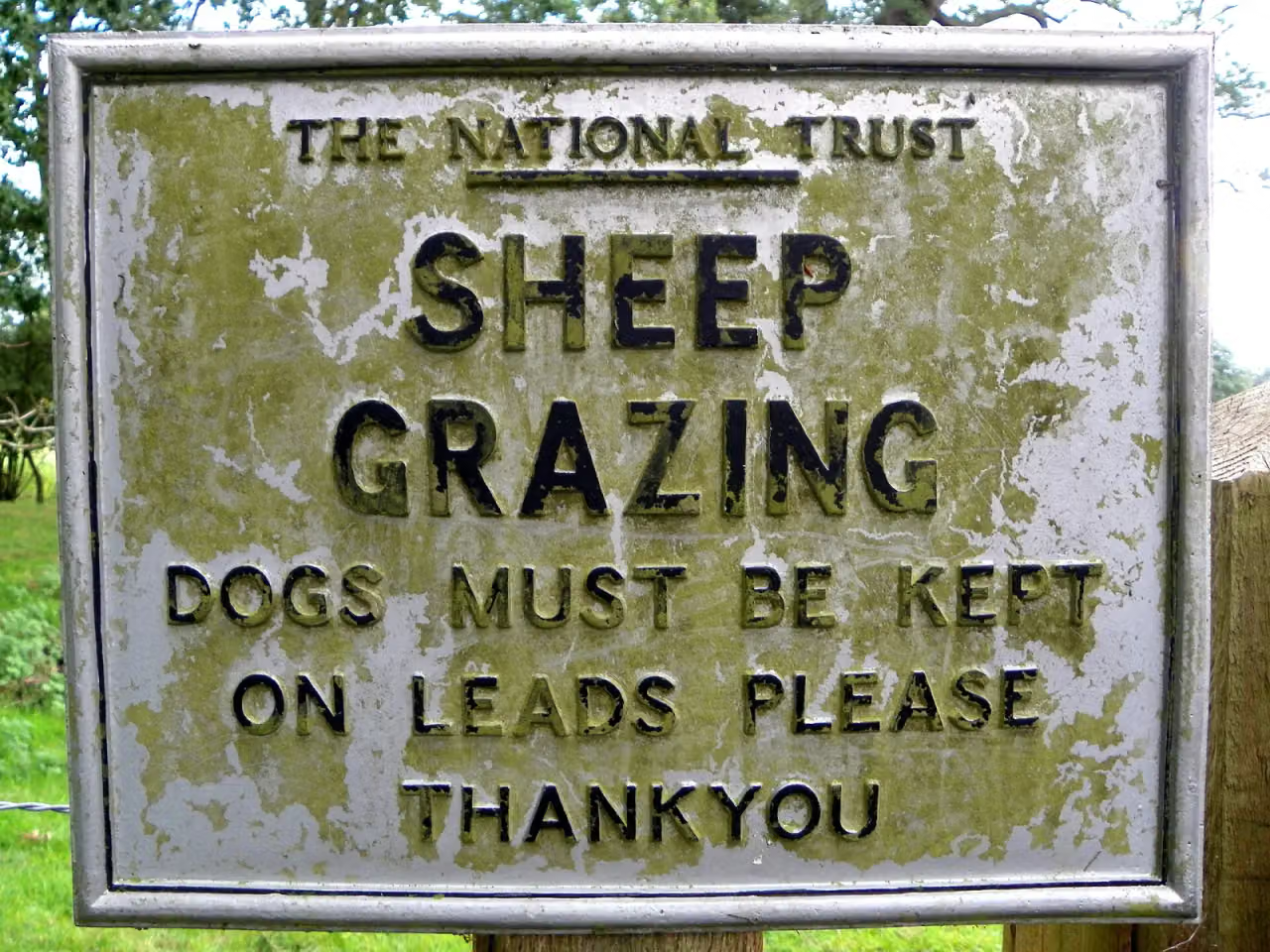
Hiking with a dog: before and during the walk
Hiking with a dog takes a little more planning than a stroll round the block. These steps follow the official codes:
- Check the area before you go. Look for lead rules, dog bans and open access land along the way, especially between 1 March and 31 July.
- Check your dog's collar and tag. Your name and address should be on it.
- Pack a lead, poo bags and water. Plan where you can refill your bottle on a longer walk.
- Read the signs at the start and at every gate.
- Keep your dog close near animals, and on a short lead in fields with livestock.
- Bag the poo and bin it in any public waste bin, or take it home.
- Check your dog for ticks when you are back.
The Countryside Code is firm on step 6: dog poo can make people, livestock and wildlife ill. Never leave a full bag by the path, even if you mean to pick it up on the way back.
What to bring when walking with dogs
Dog friendly walks: what makes a good one
The best dog walks are less about the view and more about practical things: a path where your dog may be off the lead, few fields with livestock, shade on warm days, water to refill, a bin for the poo bag and a bench for a break. A walk that suits one dog may not suit another: an older dog wants shorter loops with benches, and a young dog wants space.
For off lead dog walks, the Countryside Code is clear: let your dog off only where it is allowed, and only when it comes back on command. On open access land that means outside 1 March to 31 July, and never near livestock. Woodland and forest dog walks are often a good choice, but in Scotland forests are among the places where dogs should be kept close in the bird breeding season.
This guide is not a list of routes. For forest and moorland walks, see the guides to walking in the forest and walking on moorland.
In the app I see 2,923 water points and 188,102 benches in the United Kingdom: worth a look when you plan a longer loop with your dog.
From our data
Water, toilets and benches in the United Kingdom
- Water points
- 2,923
- in the United Kingdom
- Public toilets
- 13,915
- in the United Kingdom
- Benches
- 188,102
- in the United Kingdom
As of 28 November 2026, from the Outdoor Pitstop database. The whole United Kingdom. Water points, public toilets and benches come from OpenStreetMap and from reports by our users.
Water for your dog on the way
Carry water for your dog on any walk longer than a short loop, and plan longer walks past a place to refill. Our page of water fountains and refill points in the United Kingdom shows where the public taps are. Where our data notes a dog bowl at a water point, it is listed among the features on that tap's page.
For your own breaks, the public toilets in the United Kingdom and the benches in the United Kingdom are on the map too. Walking in Ireland? See the public toilets in Ireland.
In our data the United Kingdom has 2,923 water points and 13,915 public toilets.
Hot days and ticks: looking after your dog
Heat. The RSPCA says exercise is the leading trigger of heatstroke in dogs in the UK, and that a walk on a hot day can be dangerous. It is fine to skip the walk: games that make your dog think are much safer in the heat, even for very active dogs, and a dog that wants to sleep through the heat can be left to it. The RSPCA adds that cooling jackets, mats or boots are no reason to walk anyway. If a dog does overheat, stop all activity, get it out of the heat and cool it quickly. According to the RSPCA, cold water rarely causes shock in an overheated dog, and fast cooling gives it the best chance.
Ticks. NHS inform advises checking that pets do not bring ticks into the house in their fur. The RSPCA lists the places where ticks often bite dogs: the groin, beneath the collar, under the front legs, under the tail, inside the ears and between the toes. Remove a tick straight away, without squeezing its body or leaving the head in. Dogs can get Lyme disease too; if you think yours has it, contact your vet. How to check yourself is in our guide to ticks on a walk.
Walking routes for you and your dog
We have no walking routes for the United Kingdom or Ireland in the app yet. The pitstops are on our country and region pages, with the water points, benches and public toilets along the way.
Pitstops in the United Kingdom →Water fountains in the United KingdomBenches in the United Kingdom