Outdoor Pitstop

Cycling helmet: why wear one
Your head is the part of you a bike does nothing to protect. The Highway Code, in rule 59, advises everyone who cycles to wear a helmet that conforms to current regulations, is the correct size and is securely fastened. It adds that the evidence suggests a correctly fitted helmet reduces the risk of a head injury in certain circumstances.
The Royal Society for the Prevention of Accidents (RoSPA) strongly recommends a cycle helmet, because it lowers the risk of a serious head or brain injury in a crash. In Ireland the Road Safety Authority (RSA) calls it an essential piece of cycling kit and, in its 2025 Bike Week advice, said a helmet can cut the risk of head, neck and facial injuries by 33%.
Notice what all three have in common: the advice is about fit. A helmet that is the wrong size or sits loose does far less than one that fits. That matters more than the price tag or the look.
- Highway Code
- rule 59: should wear one
- Fit
- correct size, securely fastened
- RSA (Ireland)
- 33% lower risk of head, neck and face injuries
Is it law to wear a bike helmet?
No, not in the UK and not in Ireland. Rule 59 of the Highway Code uses the word should, which makes it advice rather than law. The London Cycling Campaign and the legal guide of the Environmental Transport Association (ETA) both say that helmet wearing is not a legal requirement, for riders of any age.
| Where | Helmet required by law? | Source |
|---|---|---|
| United Kingdom | No; the Highway Code advises wearing one | Highway Code rule 59, London Cycling Campaign |
| Ireland | No; the RSA says you should wear one at all times | Road Safety Authority |
The debate is not settled. Cycling UK wants the helmet advice taken out of rule 59, because it says the rule is used in court cases to blame cyclists who were hit by drivers. The London Cycling Campaign, like Cycling UK and Sustrans, opposes a helmet law and leaves the choice to the rider, or to parents and carers for children. RoSPA and the RSA, on the other hand, strongly advise wearing one. Whichever view you take, if you wear a helmet, wear it properly fitted.
Riding abroad? Helmet rules differ by country, so check the official rules of the country before you go.
Bike helmet size and fit: the steps
Helmet sizes are a head circumference range in centimetres. RoSPA warns that a helmet that is too small sits too high and leaves the lower part of your head unprotected, while one that is too big can shift in a crash. This is how to find and fit your size:
- Measure your head. Run a soft tape measure around your head one or two finger widths above your eyebrows, as RoSPA describes.
- Choose the size range your measurement falls into. If you sit right on the edge of two sizes, try both.
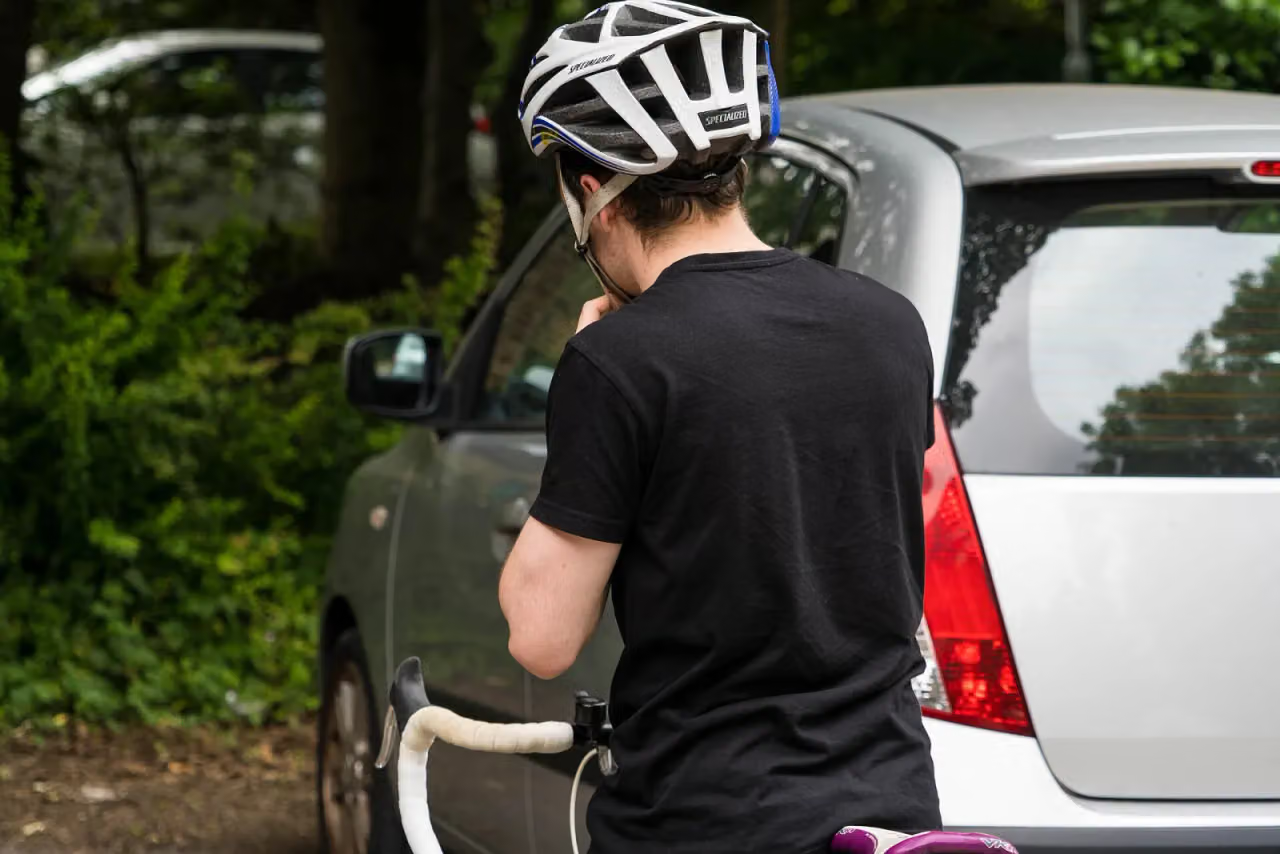
- Put the helmet on level. RoSPA says it should not tilt back or forward and should rest about one to two finger widths above your eyebrows.
- Tighten the adjuster at the back until the helmet feels snug but comfortable and does not move when you shake your head, even before the strap is closed.
- Set the side straps so they meet just below each ear and lie flat, without twists.
- Close the chin strap so it holds the helmet firmly without pinching.
Try helmets on in the shop rather than buying on size alone: two helmets in the same size can have quite different shapes inside.
- Measure
- 1-2 finger widths above eyebrows
- Sits
- level, not tilted
- Too small
- sits high
- Too big
- can shift in a crash
Which bike helmet suits the way you ride?
What do you ride most?
Town bike or e-bike
- Sits level and snug before the strap is closed
- A small visor against sun and rain
- Room for a rear light if you ride in the dark
Road bike
- Light, with plenty of vents
- Works with your cycling glasses
- A dial at the back you can adjust with one hand
Mountain bike
- Deeper over the back of the head
- A visor against branches and sun
- For downhill, ask about a full-face helmet
Child
- Fitted to the head as it is now, not to grow into
- A bright colour
- Check the fit again every season
Torn between two helmets? Take the one that stays put best when you shake your head before the chin strap is done up.
Cycling helmets for road bikes
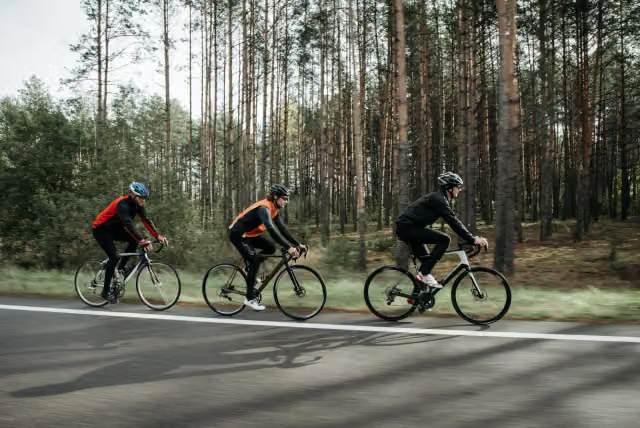
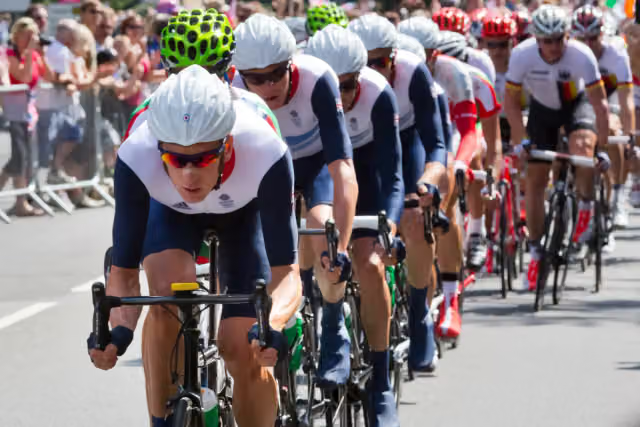
A helmet for the road bike is built for long efforts at speed. It is usually light, with many vents so your head stays cooler on a climb. Rounder aero helmets have fewer openings: they are quicker through the air but warmer to wear.
Take your cycling glasses when you try on a road helmet. The arms of the glasses should slide past the straps without pressing, and the front edge of the helmet should not push the glasses down when you are bent over the bars. More on that in the guide to cycling glasses.
Mtn bike helmet: for trails and woods
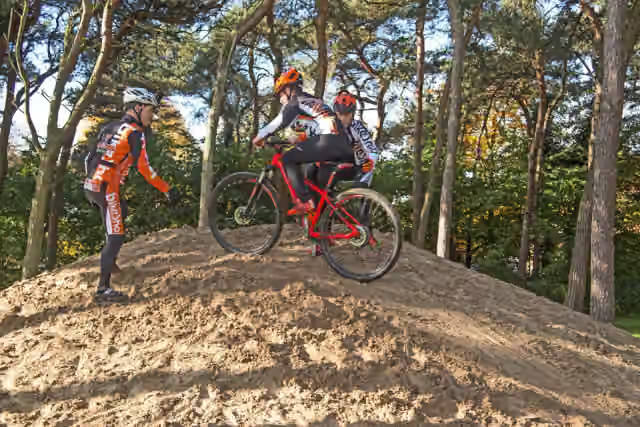
RoSPA points out that not every bike helmet suits every type of riding, so a helmet for the woods is worth choosing separately. A typical mountain bike helmet comes down further over the back and sides of the head than a road helmet, and has a visor to keep low branches and sun out of your eyes.
The fitting rules do not change off-road: the Highway Code's advice of the correct size and securely fastened applies to every helmet, and a helmet that shifts on a rough descent protects you less. Check the label and the maker's instructions for what the helmet is designed for.
Full face MTB helmet: for downhill and bike parks
A full face MTB helmet has a chin bar that wraps around the front of your face, so it covers your jaw as well as your head. Riders use them for downhill, bike parks and steep, technical trails, where a fall forwards is more likely.
The official sources I read for this page, the Highway Code, RoSPA and the RSA, do not give separate advice for full face or downhill helmets. What they do say still counts: pick a helmet made for the riding you do, and make sure it is the correct size and securely fastened. A full face helmet is also warmer and heavier, which is why many trail riders save it for the descents.
Kinds of bike helmets
Childrens helmets: fitting a child's bike helmet
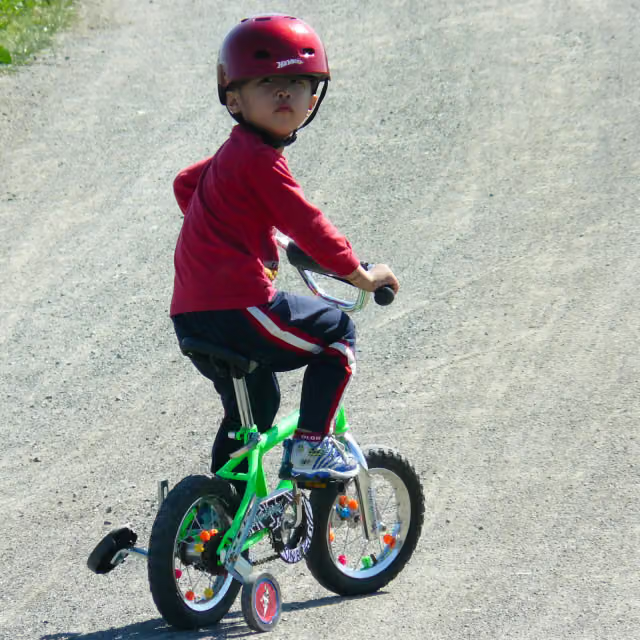
A children's helmet is a smaller bike helmet, and there is no UK or Irish law that makes one compulsory at any age. The RSA asks parents to make sure their child wears a suitable cycle helmet.
Buy for the head your child has now, not one to grow into: RoSPA's warning about a helmet that is too big and shifts applies to children too. Cycling family site Cycle Sprog describes the checks: the helmet sits straight across the forehead just above the brow, the band at the back is tightened until it is snug but not uncomfortable, your child can move their head quickly in every direction without the helmet wobbling, and the straps run either side of the ears. Measure again every spring, because children outgrow helmets quickly.
Infant bike helmets. For a baby or toddler in a child seat, the RSA adds a second check: make sure the seat's restraining straps are in good condition. Also see that the back of the helmet does not push against the seat's headrest, which would tip your child's head forwards. More in cycling with children.
MIPS helmets: what the extra layer does
MIPS is a system fitted inside many bike helmets. According to the company that makes it, it is a low-friction layer between the helmet and your head that lets the two move 10 to 15 millimetres relative to each other.
Why that might help: most falls hit the head at an angle, and an angled hit makes the head rotate. Mips says this rotational motion is a common cause of concussion and more severe brain injury, and that its layer is designed to reduce the rotational motion of certain impacts. Other makers have their own systems with the same aim.
A MIPS helmet is still an ordinary bike helmet with an extra layer, and it has to fit just as well. Mips itself warns that every helmet, including those with its system, has limits to the protection it gives.
When to replace your bike helmet
The RSA's advice is to replace a helmet after any impact. Replace it straight away in these cases:
- After a crash in which the helmet took a knock, even when you see no damage.
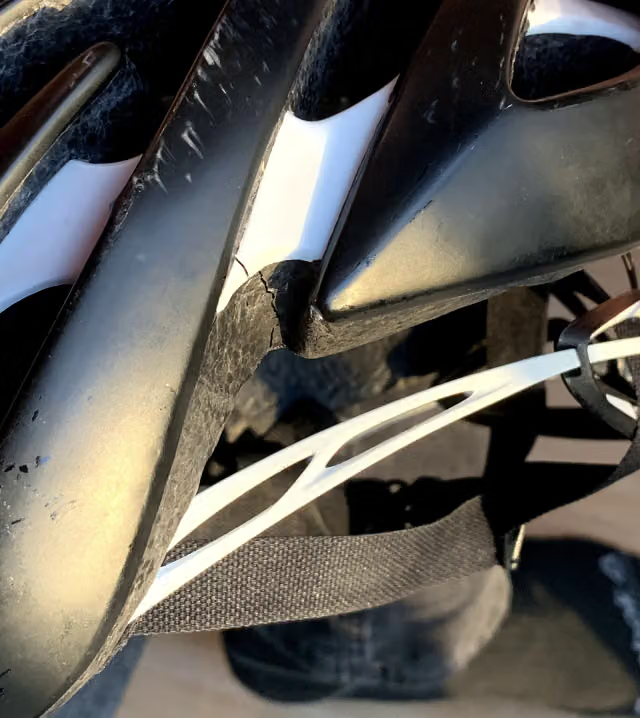
- When you see a crack or dent in the shell or the foam, for example after dropping it on a hard floor.
- When the buckle or adjuster is broken. A helmet that does not stay on does not protect.
- When it no longer fits, as with a child who has grown.
The sources I read do not give a fixed number of years; check the instructions that came with your own helmet for how long the maker says it lasts.
From our data
Water taps, public toilets and bike pumps in the United Kingdom
- Water points
- 2,923
- in the United Kingdom
- Public toilets
- 13,915
- in the United Kingdom
- Public bike pumps
- 647
- in the United Kingdom
- Bike repair stations
- 274
- in the United Kingdom
As of 28 November 2026, from the Outdoor Pitstop database. The whole United Kingdom, from OpenStreetMap and reports by our users.
A warm head under your helmet: water and a stop on the way
Under a helmet your head warms up quickly on a climb or a hot day, so drink before your bottle runs dry. At a stop you can take the helmet off for a moment to cool down; put it back on and close the strap before you ride on.
The public taps we know of are on water fountains and refill points in the United Kingdom, and the toilets on public toilets in the United Kingdom. Riding in Ireland? See the public toilets in Ireland.
In the app I see 2,923 water points, 13,915 public toilets and 647 bike pumps in the United Kingdom.