Outdoor Pitstop

Padded cycling shorts: what the chamois does
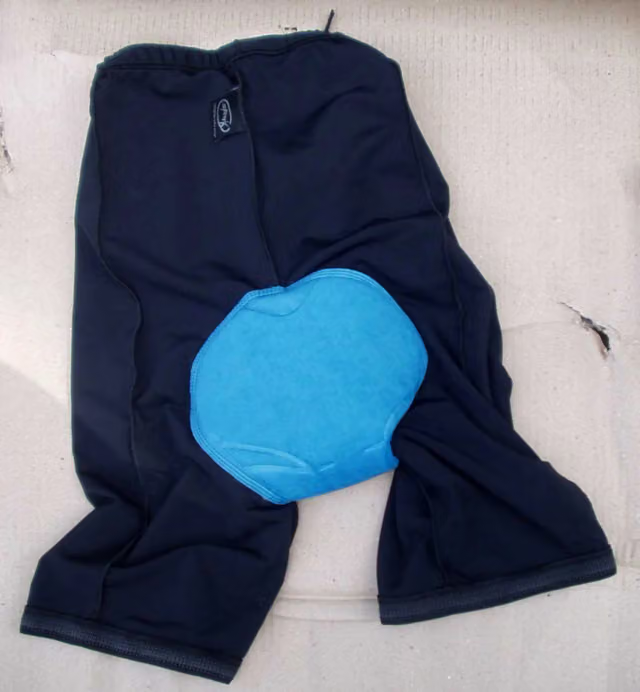
The pad in the crotch of cycling shorts is called the chamois (say "shammy"); Cycling UK notes that padded shorts are also called liners. The shorts around it are usually Lycra, which moves with you and dries faster than cotton.
The chamois works in three ways:
- Fewer seams where you move. Your thighs pass the saddle with every pedal stroke; a seamless pad rubs less.
- A little cushioning. Cycling UK compares it to a small cushion sewn into the shorts against a hard saddle.
- Drier skin. The fabric wicks sweat away, and damp skin chafes sooner.
When do you need them? Cycling UK's Victoria Hazael wears padded shorts for anything further than about 5 miles (8 km). The charity's summer advice is that regular cyclists manage short rides without padding, but full-day rides call for padded shorts or, better still, bib shorts.
- Chamois
- the seamless pad in the crotch
- Underwear
- none: the pad sits on your skin
- Worth it from
- roughly 5 miles (8 km)
- Wash
- after every ride
Do you wear underwear with cycling shorts?
No. Cycling UK calls this the rule beginners most often miss: padded shorts are made to be worn without underwear, just as you would not wear pants under a swimming costume. Seams and elastic would sit exactly where you want nothing to rub.
It follows that you never wear the same shorts twice without washing them. In Cycling UK's saddle-sore column, physiotherapist Phil Burt advises getting out of a wet chamois as soon as the ride is over, washing gently and letting the skin breathe. Many riders also use a chamois cream on the pad and the skin to reduce friction.
If it still hurts, look at the bike as well. More in saddle sores and saddle pain.
Cycling bib shorts or waist shorts?
Cycling shorts differ in length and in how they stay up.
| Kind | When | Watch out for |
|---|---|---|
| Waist shorts | Shorter rides | The waistband can dig in or slip |
| Bib shorts | Long rides, road cycling | Straps get soaked with sweat on hard days |
| Bib tights | Cold days | Too warm on a mild day |
| Liner with baggies | Leisure rides, mountain biking | No underwear under the liner either |
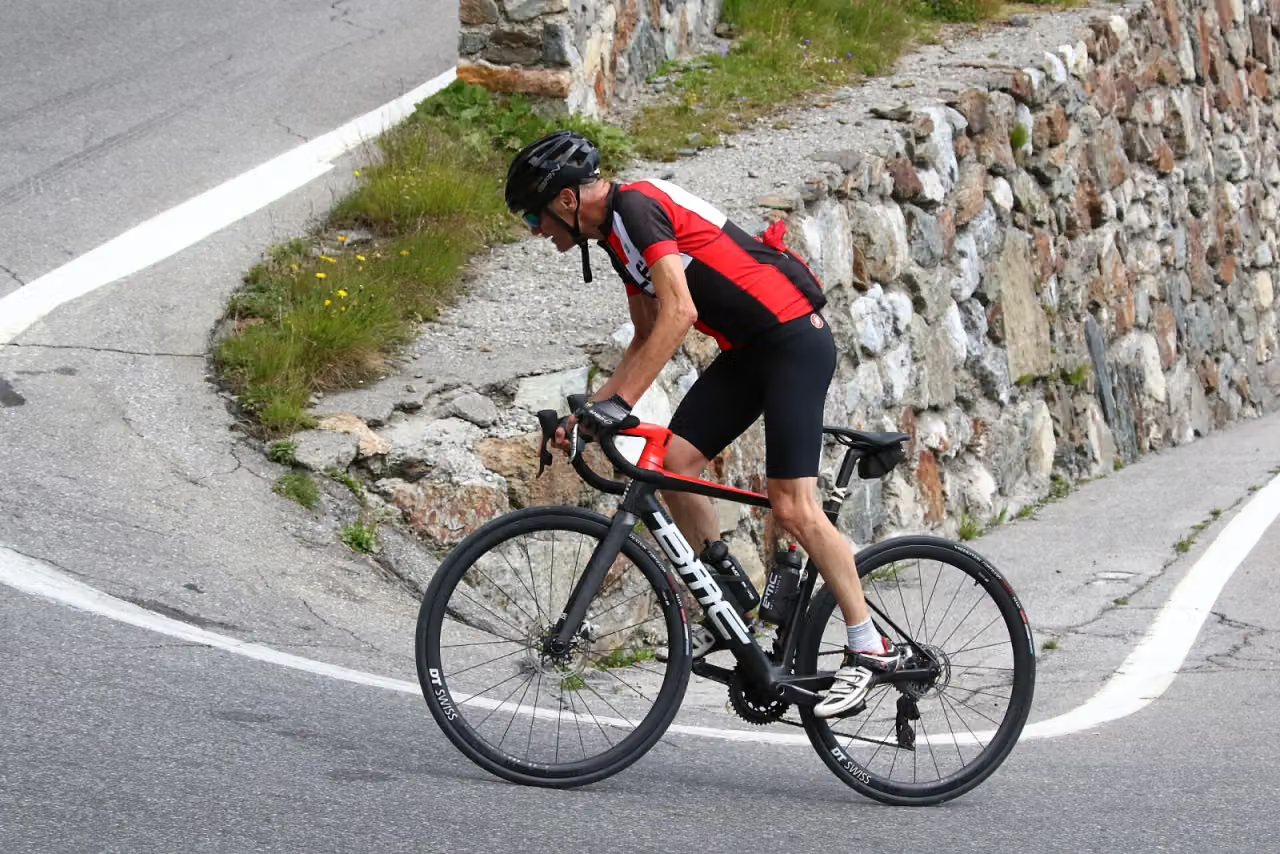
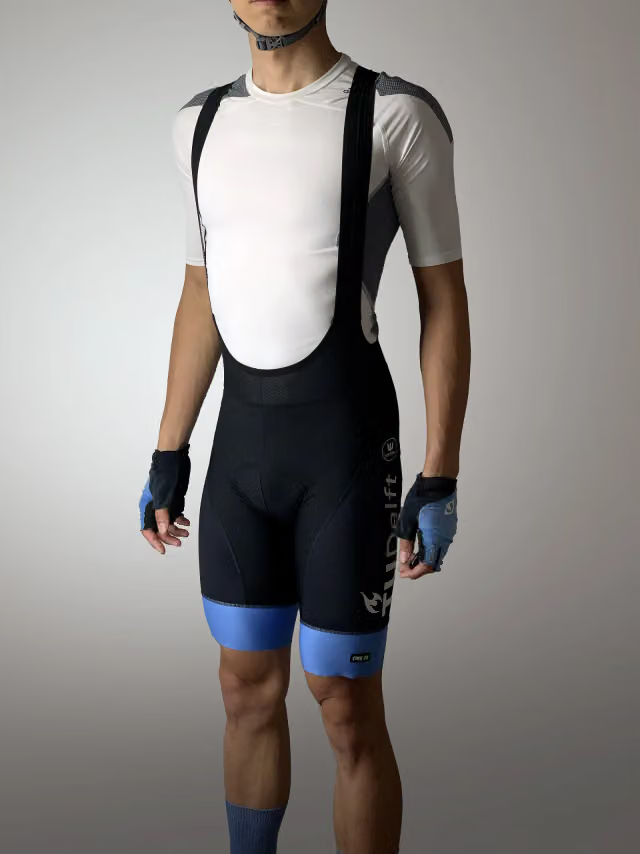
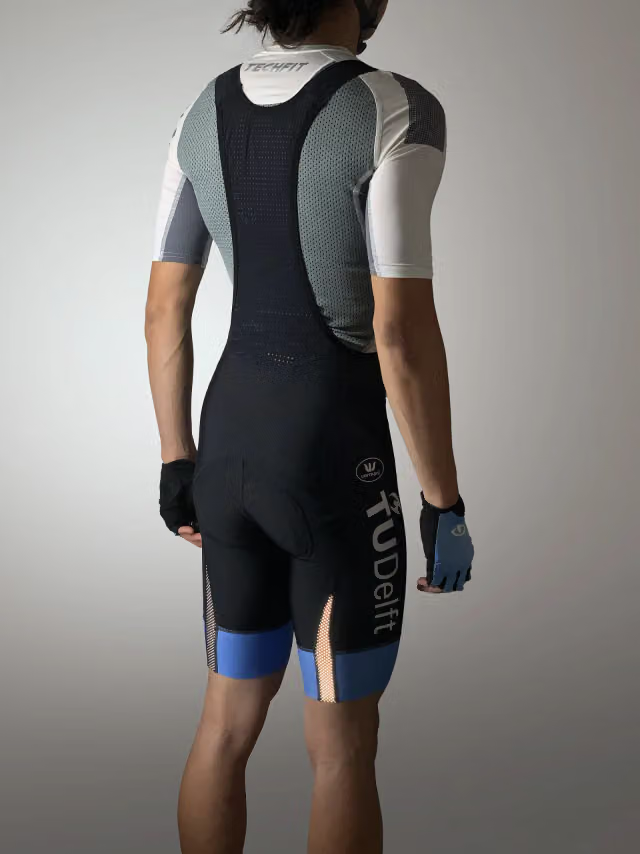
Bib shorts hold the pad in place with shoulder straps instead of an elastic waist. Cycling UK explains that this is the whole point: a pad that moves about makes soreness on a long ride more likely, and straps are generally more comfortable than a waistband pressing into your stomach. For a short beginner's ride you do not need them.
In winter Cycling UK suggests one pair of each length, both with a sensible pad. More in cycling clothing for winter.
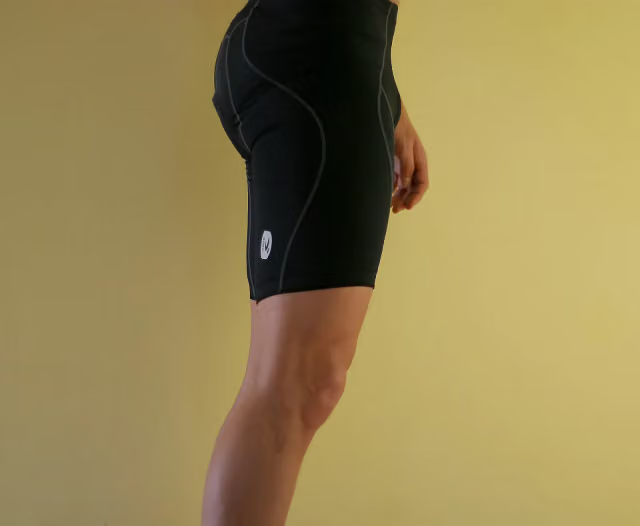
Bib shorts, waist shorts and the chamois
Cycling shorts for women
Cycling UK's advice for women is clear on one point: choose a chamois designed for women, because it will be more comfortable. Beyond that there is no single best option, from liners that look like ordinary knickers to full Lycra bib shorts, and larger sizes are easier to find than they used to be.
Cycling UK's guide to saddle comfort for women says thicker padding is not necessarily better: you want the main padding under the sit bones, with less in the soft tissue area. A consultant gynaecologist quoted there recommends fitted clothes, plenty of chamois cream and washing your kit soon after the ride; keeping things clean and dry helps against saddle sores, thrush and urinary tract infections. The same guide says pubic hair may cushion against friction, so trimming is kinder than shaving or waxing.
Cycling shorts for men
For men the basics are the same: a pad that fits your sit bones, no underwear, a snug fit that does not cut in, and clean shorts every ride. For long rides Cycling UK prefers bib shorts, because straps are kinder than a waistband over many miles.
In Cycling UK's saddle-sore column, Phil Burt, former head of physiotherapy at British Cycling, says some numbness on a long, hard ride is normal if it goes when you stand up. His tip: stand for 10 seconds every 10 minutes, so the chamois can breathe and the pressure eases. Numbness that does not go away needs attention. He adds that a saddle should never point nose up.
Bike pants with padding: liners and baggy shorts
Not everyone wants to sit in a café in tight Lycra. Cycling UK points out that you can wear a padded short or liner under normal baggy shorts, leggings or even a skirt, still without underwear.
For mountain biking, Cycling UK says most trail riders choose knee-length baggy shorts, which protect your skin from branches and brambles and leave room for knee pads. In winter, baggy shorts over bib tights give the comfort of a pad without the road-cycling look.
MTB trousers and waterproof bike trousers
In Cycling UK's mountain biking guide, trousers keep your shins warm and dry in the depths of winter, and waterproof shorts are suggested for wet rides. A breathable waterproof fabric avoids the boil-in-the-bag feeling. Most MTB and waterproof trousers have no pad of their own, so the chamois comes from a liner or padded shorts underneath.
Which cycling shorts suit your rides?
What kind of riding do you do?
Short rides
- Comfortable clothes without thick seams
- Trousers that do not catch in the chain
- Padding starts to matter from about 5 miles
Day rides and touring
- Waist or bib, whatever stays in place
- A pad shaped for your body
- A second pair to swap
Road cycling and long distances
- Straps keep the pad in place
- Main padding under the sit bones
- Breathable straps for hot days
Mountain biking and holidays
- Padded liner, no underwear
- Baggies protect your skin
- Room for knee pads
Winter
- Tights with a sensible pad
- Or trousers over a padded liner
- Waterproof shorts for wet rides
Not sure about the size? Choose the pair that is snug without cutting in: a pad that moves around starts to rub.
How cycling shorts should fit
The best cycling shorts are the pair that fits your body, saddle and rides. When you try them on:
- Check where the pad sits. Lean forward as on the bike: the pad should stay under your sit bones.
- Not too thick. Thick padding feels soft in the shop but can shift and get warm on the bike.
- Snug without cutting in. Cycling UK says Lycra in the right size should not cut in or chafe much.
- Flat seams. Thick seams along the thigh start to rub after a few hours.
The shorts and the saddle work together; see saddle height.
How to wash cycling shorts
Wash cycling shorts after every ride: a bike maker's care guide warns that wearing them a second day can lead to rashes, chafing and even infections. Read your own care label; the general advice is:
- Hang them up if you cannot wash them straight away, rather than leaving them damp in a pile.
- Turn them inside out and put them in a mesh laundry bag.
- Wash at 30 °C at most, on a delicate programme with a low spin.
- Skip fabric softener and bleach: residue stops the fabric moving sweat away.
- Wash them with other cycling kit, not with jeans or towels.
- Dry them flat or on a line; if you must use a tumble dryer, choose the lowest heat.
On a multi-day tour, take two pairs and wash one each evening.
When a saddle sore needs a doctor
Most saddle sores settle with clean shorts, rest and a look at your saddle. Some are a boil: a hard, painful lump filled with pus. The NHS says not to pick, squeeze or pierce a boil, and to see a GP if it has not improved after 2 weeks or keeps coming back. Ask for an urgent GP appointment or contact NHS 111 if the skin around it is hot, painful and swollen, or you feel hot, cold or shivery.
From our data
Public toilets, water and bike pumps in the United Kingdom
- Public toilets
- 13,915
- in the United Kingdom
- Water points
- 2,923
- in the United Kingdom
- Public bike pumps
- 647
- in the United Kingdom
As of 28 November 2026, from the Outdoor Pitstop database. The whole United Kingdom, from OpenStreetMap and reports by our users.
Bib shorts and a toilet on the way
With bib shorts you plan your toilet stops: the straps come off your shoulders and your jersey half off, which is easier in a real toilet than behind a hedge. Do not hang about with the straps down afterwards; in Cycling UK's saddle-sore column, Rebecca Charlton warns that the chamois can then move where it should not.
Before a long ride, check where the toilets and water points are: see public toilets in the United Kingdom, water fountains in the United Kingdom and the public toilets in Ireland.
In the app I see 13,915 public toilets, 2,923 water points and 647 bike pumps in the United Kingdom, so I can check which are along my route before a long ride in bib shorts.