Skip to content
Outdoor Pitstop logoOutdoor Pitstop

Seasons · Summer · Meteor showers

Meteor shower UK: 2027 dates, times and where to watch

Every meteor shower UK stargazers wait for is best seen from a dark place, after midnight, on a night without cloud. The Royal Observatory Greenwich publishes the dates of the main showers every year. The next big ones are the Geminids in December 2026, the Quadrantids in early January 2027 and the Perseids in August 2027. This guide puts those dates together with three dark sky places, Northumberland, Galloway and Wales, and with what our app shows around them: benches to sit on and public toilets for a long night out.

Summary

The biggest meteor shower UK stargazers can see in summer is the Perseids, active from 17 July to 24 August 2027 with a peak on the night of 12-13 August, says the Royal Observatory Greenwich. The Geminids peak on 14 December 2026 and the Quadrantids on 3-4 January 2027. Look between midnight and dawn, somewhere dark.

· Founder of Outdoor Pitstop

Published · Last updated · 8 min read

Checked in November 2026

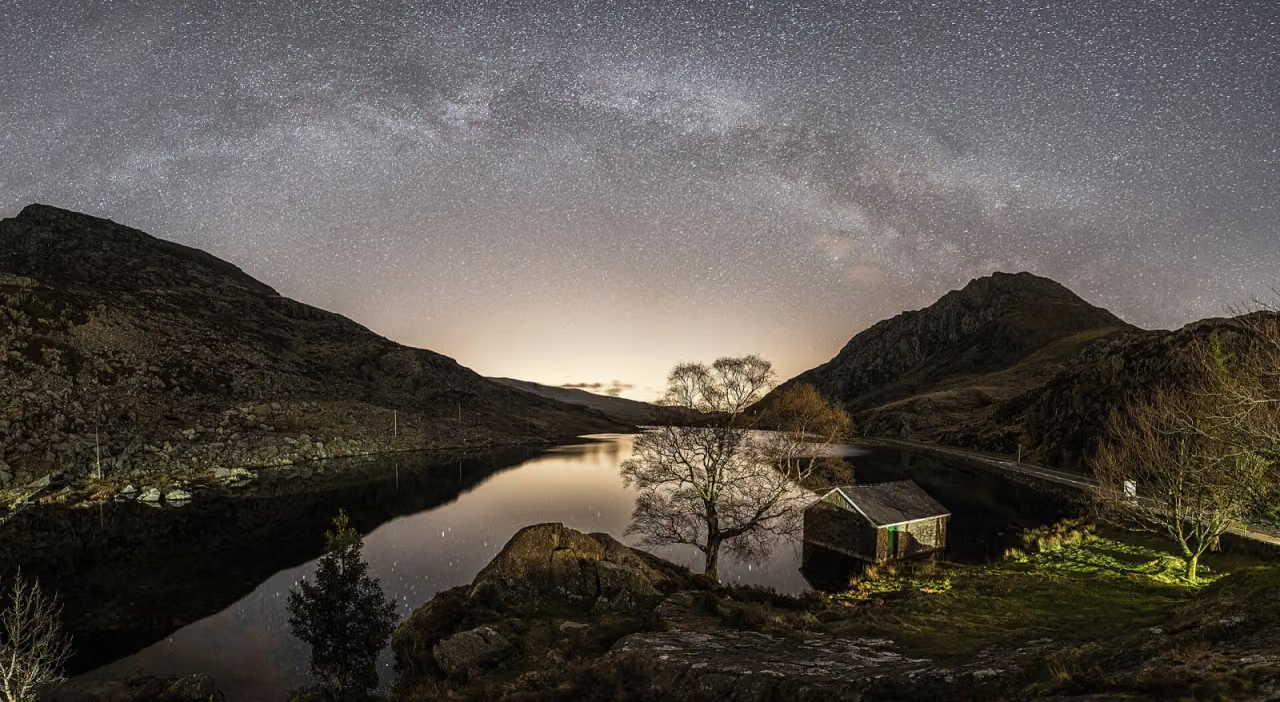
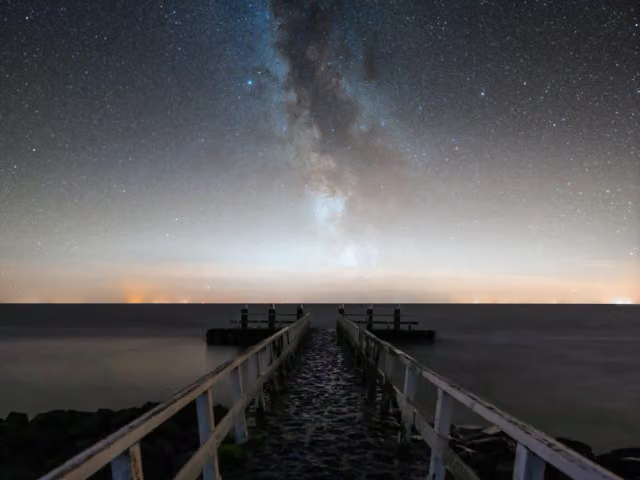
The Milky Way arching over Llyn Ogwen and the mountains of the Ogwen Valley at night
The Milky Way over Llyn Ogwen in Eryri (Snowdonia), Wales · Photo: John Badham via Wikimedia Commons, CC BY-SA 4.0

Meteor shower tonight UK: which shower is active when

A meteor shower lasts longer than one night. Each shower is active for several days or weeks, and it peaks on one night. Outside the peak you still see some meteors, just fewer. The table below uses the Royal Observatory Greenwich dates for the coming year. The rate is the number of meteors per hour it gives for perfect conditions at the peak. You will not see that many under a lit or partly cloudy sky.

ShowerActivePeakRate at peak
Geminids4-20 December 202614 December 2026120
Ursids17-26 December 202622 December 202610
Quadrantids28 December 2026 - 12 January 20273-4 January 2027120
Lyrids16-25 April 202722 April 202718
Perseids17 July - 24 August 202712-13 August 2027100-150
Draconids6-10 October 20279 October 202710

So is there a meteor shower tonight? If tonight falls inside one of these windows, yes, and the closer to the peak, the more meteors. The dates shift by a day or so from year to year, so we check them against the Royal Observatory every year. Then check the Met Office cloud forecast for your area: a clear sky matters more than anything else.

Next big peak
Geminids, 14 December 2026
Summer peak
Perseids, 12-13 August 2027
Dates from
Royal Observatory Greenwich
Equipment
none, just your eyes

The best months for shooting stars in the UK

  1. Jan: good
  2. Feb
  3. Mar
  4. Apr
  5. May
  6. Jun
  7. Jul: good
  8. Aug: at its best
  9. Sep
  10. Oct
  11. Nov (now)
  12. Dec: at its best
  • SpringThe Lyrids peak on 22 April 2027, a modest shower with some bright, fast meteors.
  • SummerThe Perseids are active from 17 July and peak on 12-13 August 2027. Short nights, but mild ones.
  • AutumnThe small Draconids peak on 9 October 2027. Long dark evenings start to return.
  • WinterThe Geminids (14 December) and the Quadrantids (3-4 January) are two of the strongest showers of the year. Dress for frost.

Perseids UK: the big summer shower

The Perseids are the shower most people mean when they talk about shooting stars in August. According to the Royal Observatory Greenwich, the 2027 Perseids are active from 17 July to 24 August, with the peak overnight on 12-13 August. They are known for bright, fast meteors, often with long trails, and there is a good chance of fireballs, which are very bright meteors.

The Met Office explains that the meteors are dust from Comet Swift-Tuttle that burns up as the Earth passes through the comet's trail. They seem to come from one point in the sky, the radiant, in the constellation Perseus, just below the W-shape of Cassiopeia. You do not need to look at that point: meteors appear all over the sky.

There is one catch in 2027. The Royal Observatory says a bright waxing gibbous Moon will be in the sky at the peak, so moonlight will hide the fainter meteors before midnight. Plan your night for the hours after midnight. If the peak night is cloudy, the nights just before and after are still worth a look.

Active in 2027
17 July - 24 August
Peak
night of 12-13 August
Best time
midnight to 5.30am
Moon at peak
waxing gibbous

Meteor shower UK tonight time: when to look

For most showers the best time is the second half of the night. For the Perseids the Royal Observatory gives midnight to 5.30am. Seen from the UK, the Perseids' radiant never sets, so you can see a few as soon as it is dark. The numbers climb as the radiant rises higher towards dawn.

The Geminids are the exception. The Royal Observatory says they are the one major shower with good activity before midnight, so a December evening walk with children can work. The Quadrantids have a sharp peak that lasts only a few hours. In 2027, the Royal Observatory says, the maximum is best seen just after midnight, while the Moon is far below the horizon.

Some tips from Galloway Forest Park, which is run by Forestry and Land Scotland:

  • give your eyes 30 minutes to get used to the dark;
  • use a red light or a red filter on your torch;
  • bring a chair, so you can look up in comfort;
  • check the Moon beforehand, as nights around new moon are darkest;
  • check the weather for cloud before you set off.

Shooting stars UK: three dark places to watch

A shooting star is a meteor. The Royal Observatory describes it as a small piece of space debris that burns up as it enters the atmosphere. Light pollution hides most of them, so the darker the place, the more you see. Three areas stand out, and the body that looks after each one publishes information about its night sky.

Northumberland. In 2013 the whole of Northumberland National Park and most of Kielder Water & Forest Park became England's first International Dark Sky Park. The National Park Authority says the park has the most pristine dark skies in England. It recommends its Dark Sky Discovery Sites. These are away from local lights, have a wide view of the sky and firm ground, and are generally free to visit at any time. Some of them have toilets that are open 24 hours.

Galloway Forest Park. In south-west Scotland, Galloway became one of the world's first International Dark Sky Parks in 2009 and holds Gold Tier status. Forestry and Land Scotland says you can see more than 7,000 stars and planets with the naked eye on a clear night. Its favourite spots are Clatteringshaws Loch, Stroan Loch and Glentrool. The visitor hub at Kirroughtree has information points about the night sky.

Wales. The National Trust says the Brecon Beacons (Bannau Brycheiniog) became the first International Dark Sky Reserve in Wales in 2012, and Eryri (Snowdonia) followed in 2015. On the Pembrokeshire coast the Trust lists car parks that are recognised dark sky sites, such as Broadhaven South, Martin's Haven, Newgale Beach and Poppit Sands. The Trust advises going as a group, which is safer, and wrapping up warm.

England
Northumberland, Dark Sky Park since 2013
Scotland
Galloway Forest Park, since 2009
Wales
Brecon Beacons 2012, Eryri 2015
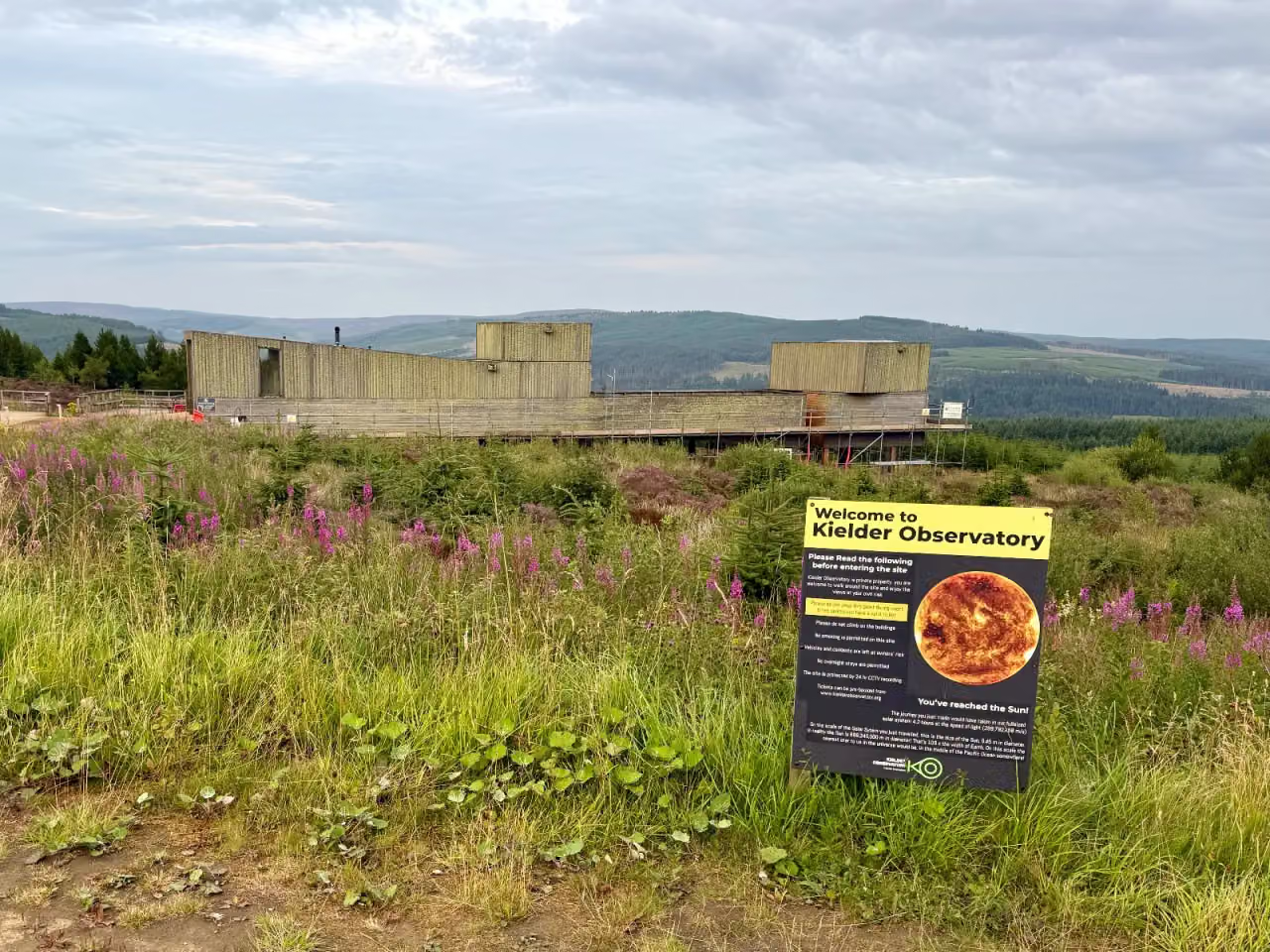
Kielder Observatory, a timber building on a hilltop with heather in front of it
Kielder Observatory in Northumberland, in England's first International Dark Sky Park · Photo: Graham Hogg via Wikimedia Commons, CC BY-SA 2.0
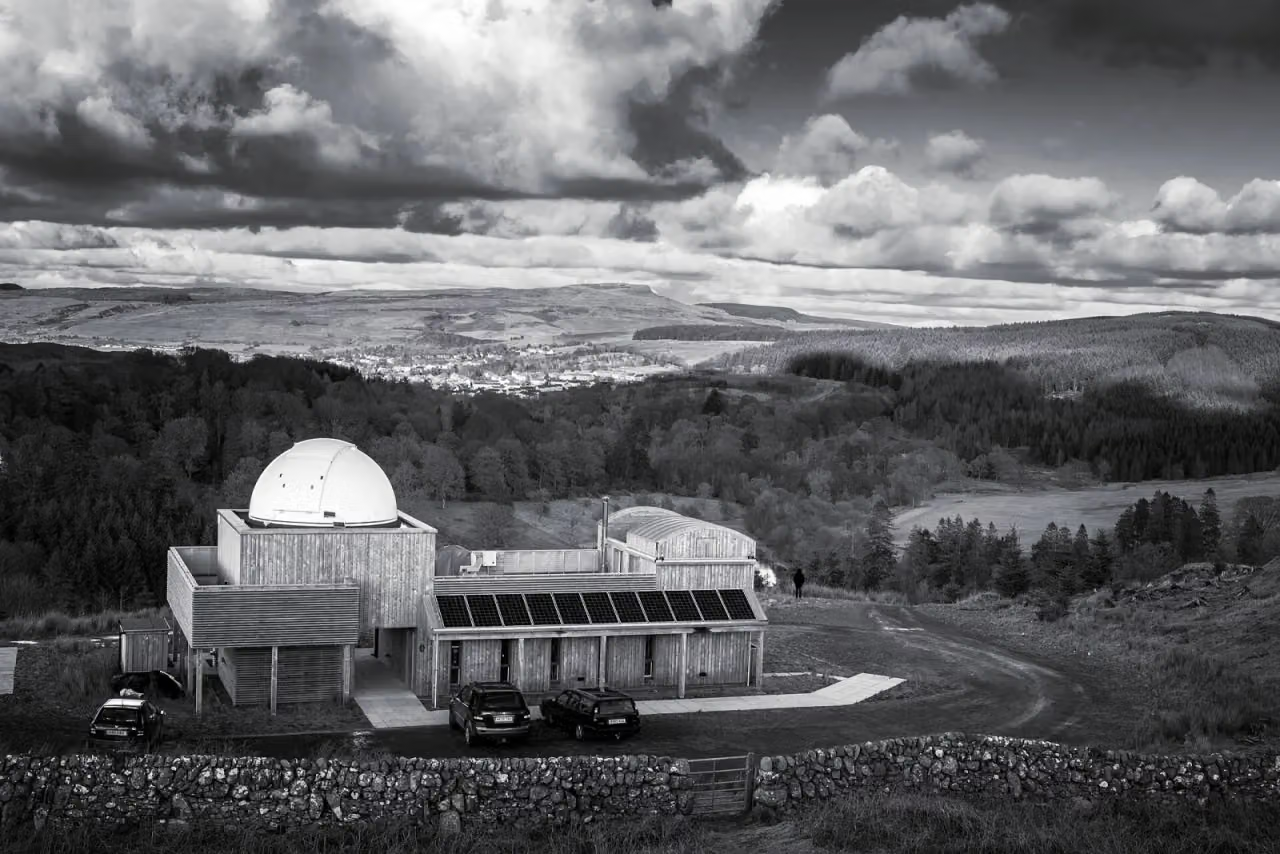
The domes of the Scottish Dark Sky Observatory on a hilltop above wooded hills, in black and white
The Scottish Dark Sky Observatory on the edge of the Galloway Forest Dark Sky Park · Photo: James Johnstone from Ecclefechan, Scotland via Wikimedia Commons, CC BY 2.0

From our data

Pitstops in the United Kingdom

Pitstops
205,713
in the United Kingdom
Benches
188,102
in the United Kingdom
Public toilets
13,915
in the United Kingdom
Water points
2,923
in the United Kingdom

As of 28 November 2026, from the Outdoor Pitstop database. The whole United Kingdom. Benches, public toilets and water points come from OpenStreetMap and from reports by our users.

Benches and public toilets for a night under the stars

Watching a meteor shower means sitting or lying still for an hour or more, so find a bench with an open view of the sky before dark. Look for benches at viewpoints, on hilltops and along the coast, away from street lights and with a wide horizon. Find them in daylight, so you know the way back.

A public toilet nearby makes a long night easier, especially with children. Toilets open 24 hours are especially useful, and Northumberland National Park says some of its Dark Sky Discovery Sites have them. See all benches in the United Kingdom, the public toilets in the United Kingdom and the water fountains and refill points.

In the app I see 188,102 benches and 13,915 public toilets in the United Kingdom.

Walking to a dark spot

We have no walking or cycling routes for the United Kingdom in the app yet. The pitstops near the dark sky places are on our page for the United Kingdom, and every region has its own page.

Pitstops in the United Kingdom →Benches in the United KingdomPublic toilets in the United Kingdom


Key takeaways

  • The Perseid meteor shower of 2027 is active from 17 July to 24 August and peaks on the night of 12-13 August, according to the Royal Observatory Greenwich.
  • A bright waxing gibbous Moon spoils the 2027 Perseids before midnight, so the hours between midnight and 5.30am are the ones to watch.
  • The Geminids are the one major meteor shower with good activity before midnight, which makes them the easiest shower for children.
  • The Quadrantids have a sharp peak of only a few hours, on 3-4 January 2027, so the exact night matters more than for other showers.
  • Northumberland National Park, Galloway Forest Park and the Welsh dark sky reserves are among the darkest places in the UK to watch shooting stars.
  • Galloway Forest Park advises giving your eyes 30 minutes to adjust to the dark and using a red light instead of a white torch.

Frequently asked questions

When is the next meteor shower in the UK?

The next big one is the Geminid meteor shower, active from 4 to 20 December 2026 with a peak on 14 December, according to the Royal Observatory Greenwich. The Quadrantids follow, peaking on 3-4 January 2027.

What time is best to see a meteor shower in the UK?

Usually the second half of the night. For the Perseids the Royal Observatory Greenwich gives midnight to 5.30am. The Geminids are the exception, with good activity before midnight too.

When are the Perseids in 2027?

The Perseid meteor shower is active from 17 July to 24 August 2027 and peaks on the night of 12-13 August, says the Royal Observatory Greenwich. That year a bright Moon gets in the way before midnight, so watch after midnight.

Where is the best place to see shooting stars in the UK?

Somewhere far from street lights. Northumberland International Dark Sky Park, Galloway Forest Park in Scotland and the dark sky reserves of the Brecon Beacons and Eryri in Wales are among the darkest places in the UK.

What is a shooting star?

A shooting star is a meteor: a small piece of space debris that burns up as it enters the Earth's atmosphere. A meteor shower happens when the Earth passes through the dust trail of a comet, such as Comet Swift-Tuttle for the Perseids.

Sources

  1. Royal Museums Greenwich, Meteor shower guide 2026 and 2027 · rmg.co.uk · dates of activity, peaks and hourly rates of the Geminids, Ursids, Quadrantids, Lyrids, Perseids and Draconids
  2. Royal Museums Greenwich, How to see the Perseid meteor shower · rmg.co.uk · Perseids 2027: 17 July-24 August, peak 12-13 August, midnight to 5.30am, waxing gibbous Moon, radiant always up, fireballs
  3. Royal Museums Greenwich, How to see the Geminid meteor shower · rmg.co.uk · Geminids 2026: 4-20 December, peak 14 December, 120 per hour, good activity before midnight
  4. Royal Museums Greenwich, Quadrantid meteor shower · rmg.co.uk · Quadrantids 28 December 2026-12 January 2027, peak 3-4 January, sharp peak of a few hours, best just after midnight in 2027
  5. Royal Museums Greenwich, Comets, meteors and asteroids · rmg.co.uk · what a meteor or shooting star is
  6. Met Office, Perseid meteor shower 2025 · metoffice.gov.uk · Perseids come from Comet Swift-Tuttle; most visible from midnight to dawn; cloud forecast
  7. Northumberland National Park, Discover our dark skies · northumberlandnationalpark.org.uk · most pristine dark skies in England, England's first International Dark Sky Park in 2013 with most of Kielder Water & Forest Park
  8. Northumberland National Park, Where to stargaze · northumberlandnationalpark.org.uk · Dark Sky Discovery Sites, free access, some with 24-hour toilets
  9. Forestry and Land Scotland, Galloway International Dark Sky Park · forestryandland.gov.scot · Dark Sky Park since 2009, Gold Tier, 7,000 stars, stargazing tips, Clatteringshaws Loch, Stroan Loch, Glentrool, Kirroughtree
  10. National Trust, Stargazing in Wales · nationaltrust.org.uk · Brecon Beacons Dark Sky Reserve 2012, Eryri 2015, Pembrokeshire dark sky car parks, go in a group

Last checked in November 2026. Outdoor Pitstop figures come from our own database; the date is with each block.

Written by

Robin

Founder of Outdoor Pitstop

Robin started Outdoor Pitstop to always know where the next toilet, water tap or bench is on the way.

About this guide

What I write here comes from what we keep track of in Outdoor Pitstop: the pitstops, routes and photos in the app, and what users report on the way. I check rules, opening times and facts about nature with the official sources. Spotted something that is not right? Let me know and I will correct it.

Checked in November 2026 · Last updated

How we work

More about zomer

  • Meteor showers and shooting stars
  • Meteor showers and shooting stars in England
  • Meteor showers and shooting stars in Ireland
  • Meteor showers and shooting stars in London
  • Meteor showers and shooting stars in Scotland
  • Meteor showers and shooting stars in Manchester
  • Meteor showers and shooting stars in Birmingham
  • Meteor showers and shooting stars in Dublin
  • Meteor showers and shooting stars in Glasgow
  • Meteor showers and shooting stars in Liverpool
  • Meteor showers and shooting stars in Cornwall
  • Meteor showers and shooting stars in Northern Ireland
  • Meteor showers and shooting stars in Sheffield
  • Meteor showers and shooting stars in Cardiff
  • Meteor showers and shooting stars in Belfast
  • Meteor showers and shooting stars in Newcastle
  • Meteor showers and shooting stars in Bristol
  • Meteor showers and shooting stars in Wales
  • Meteor showers and shooting stars in Edinburgh
  • The longest day: summer solstice
  • Lavender fields: when and where
  • Midges: season and how to avoid them
  • Midnight sun: where and when
  • Sunflower fields: when and where
  • Dolphins and whales: where to see them
  • Poppy fields: when and where
  • Wildflower meadows and orchids
  • Seals: where and when to see them
  • Butterflies: where and when
  • Bioluminescent plankton (sea sparkle)

In the app

Your meteor night in the app

Before you head out, open the map with pitstops or download the app, and find a place to sit and a toilet near your dark spot.

  • Benches with an open view near the dark sky places
  • The nearest public toilet to your stargazing spot
  • Save the benches and toilets for the night in a list
Download on the App StoreGet it on Google Play

More from Seasons

The free app

All of Outdoor Pitstop, in your pocket

Find the nearest pitstop, navigate there, listen to audio tours, earn XP and make routes and lists together.

Download on the App StoreGet it on Google Play
How Outdoor Pitstop works →
The map of the app with pitstops nearby
A pitstop in the app, with a photo, a review and Navigate
Your profile in the app, with level and XP