Outdoor Pitstop

When is midge season?
In Scotland the season starts in late spring. Trees for Life explains that the larvae spend the winter in wet soil and turn into pupae for a day or two between mid-May and July, set off by warmer days and longer daylight. The adults that hatch live for 20 to 30 days.
The height of the season is July and August, when females that have found blood release a scent that draws in others, and attacks by hundreds or thousands at once become possible. Eggs laid early in the season develop quickly and give a second wave of adults in late summer. In September numbers drop, and the first autumn frosts kill the survivors, so the Highlands are free of them until the following May.
The charity's page was last updated in March 2021. Every summer is different, so treat these months as a guide rather than fixed dates.
- Season
- about May to September
- Peak
- July and August
- Adult lifespan
- 20 to 30 days
- Ends
- first autumn frosts
Midge season month by month
- Jan
- Feb
- Mar
- Apr
- May: midges about
- Jun: midges about
- Jul: peak midge season
- Aug: peak midge season
- Sep: midges about
- Oct
- Nov (now)
- Dec
- SpringThe first adults emerge from mid-May, once days get warmer and longer.
- SummerJuly and August are the worst months, with a second generation hatching in late summer.
- AutumnNumbers fall in September and the first frosts end the season.
- WinterNo biting adults: the larvae wait in the wet soil until spring.
The biting midge: what it is
Scotland has 37 recorded species of Culicoides, the biting midges, but one does almost all the damage: the Highland biting midge, Culicoides impunctatus. Trees for Life says it accounts for up to 90% of bites on people. In Gaelic it is the meanbh-chuileag, the 'tiny fly'; elsewhere similar insects are called no-see-ums, biting gnats or sandflies.
Only the female bites. Adults of both sexes feed on flower nectar, but a fertilised female needs a meal of blood to finish her eggs. Her usual hosts are red deer, cattle and sheep; people are bitten when the chance arises. She finds you by the carbon dioxide in your breath, by smells in body odour such as acetone and lactic acid, and by sight: she is attracted to dark-coloured objects that move.
The midge fly: size and how to recognise it
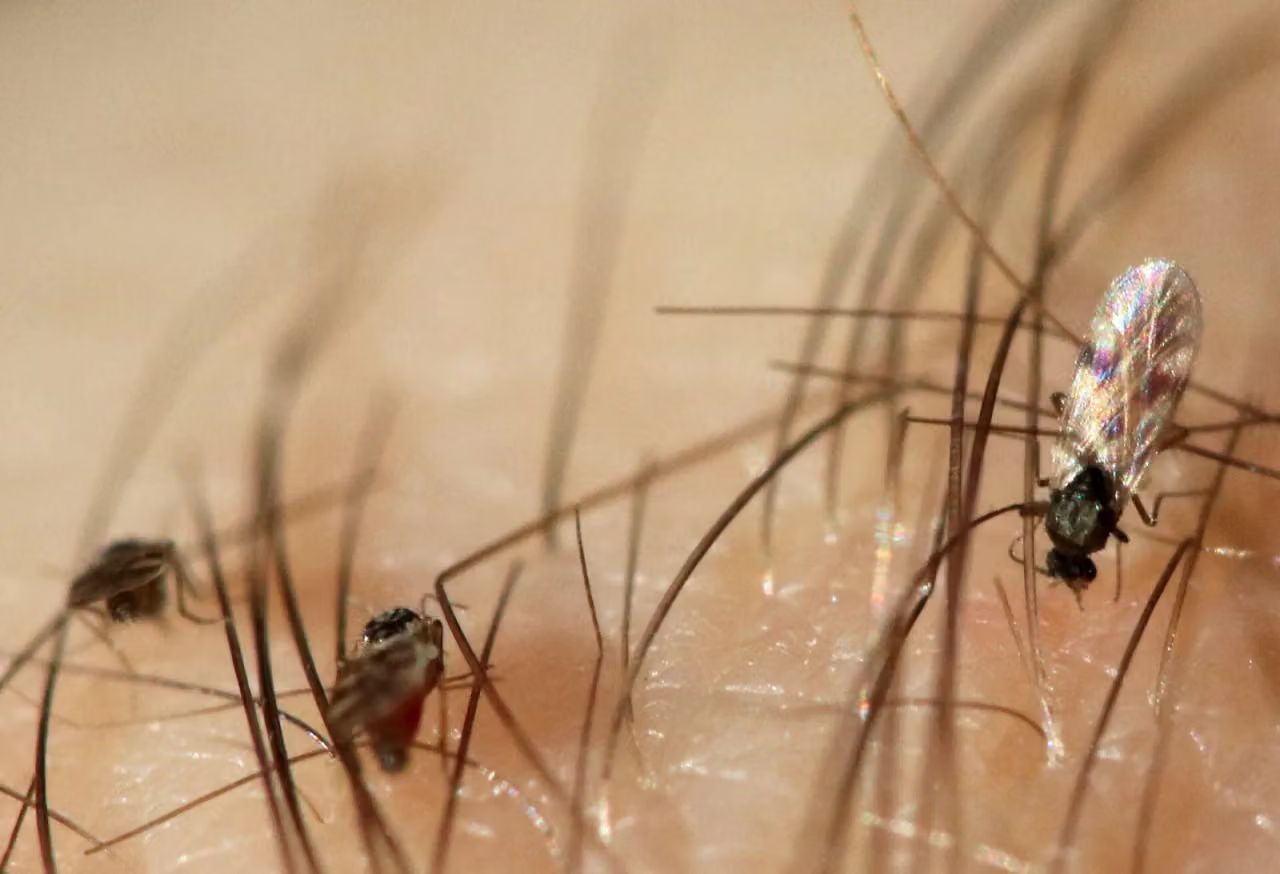
A midge is a true fly with two wings, from the same order as house flies. It is very small: Trees for Life gives a wingspan of about 1.4 mm, a body a little shorter than that and a weight of around half a microgram.
The wings carry six or seven dark blotches, a pattern that tells the Highland midge apart from close relatives such as the garden midge (Culicoides obsoletus). At rest the wings lie flat over the back, one over the other like closed scissors.
Not every tiny fly dancing in a swarm is a biter. Males form swarms too, and they do not take blood.
Midges in Scotland: where they are worst
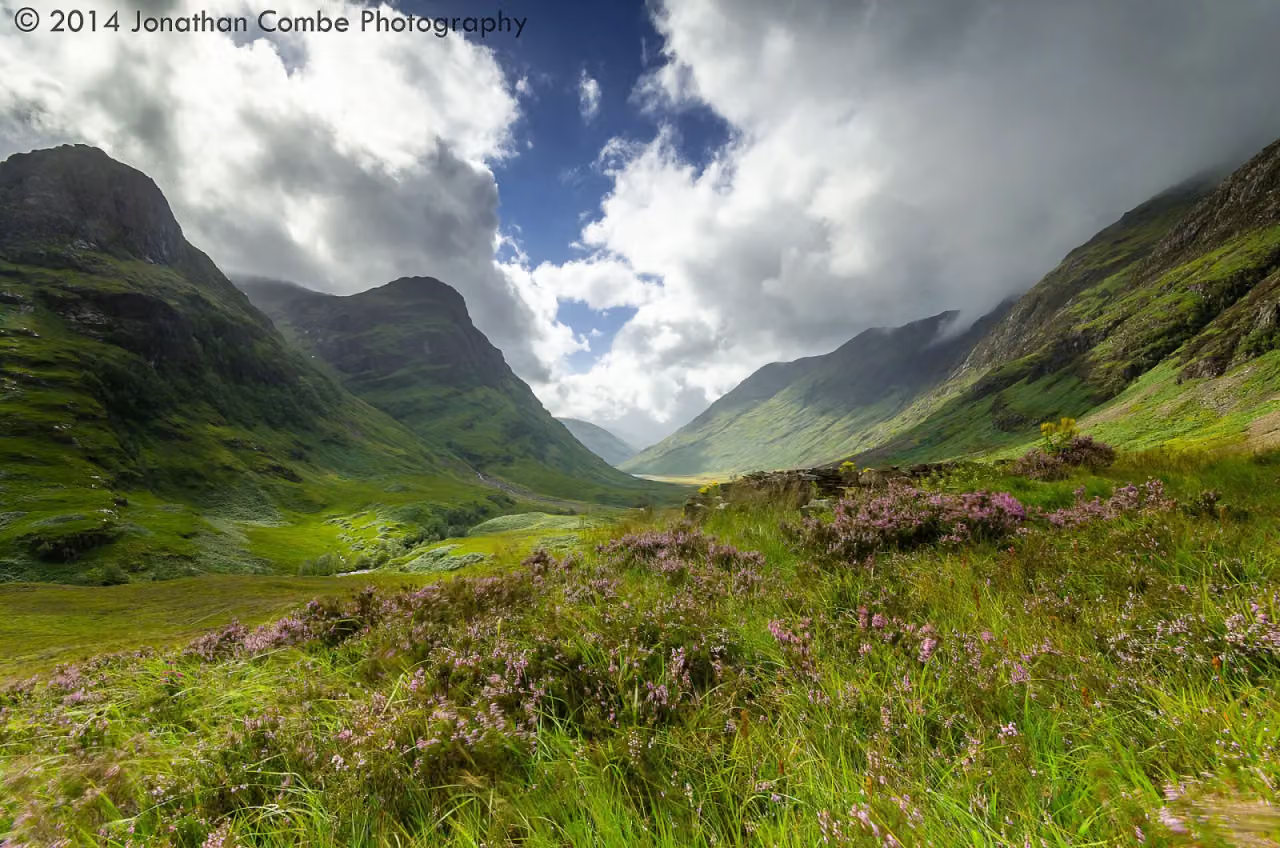
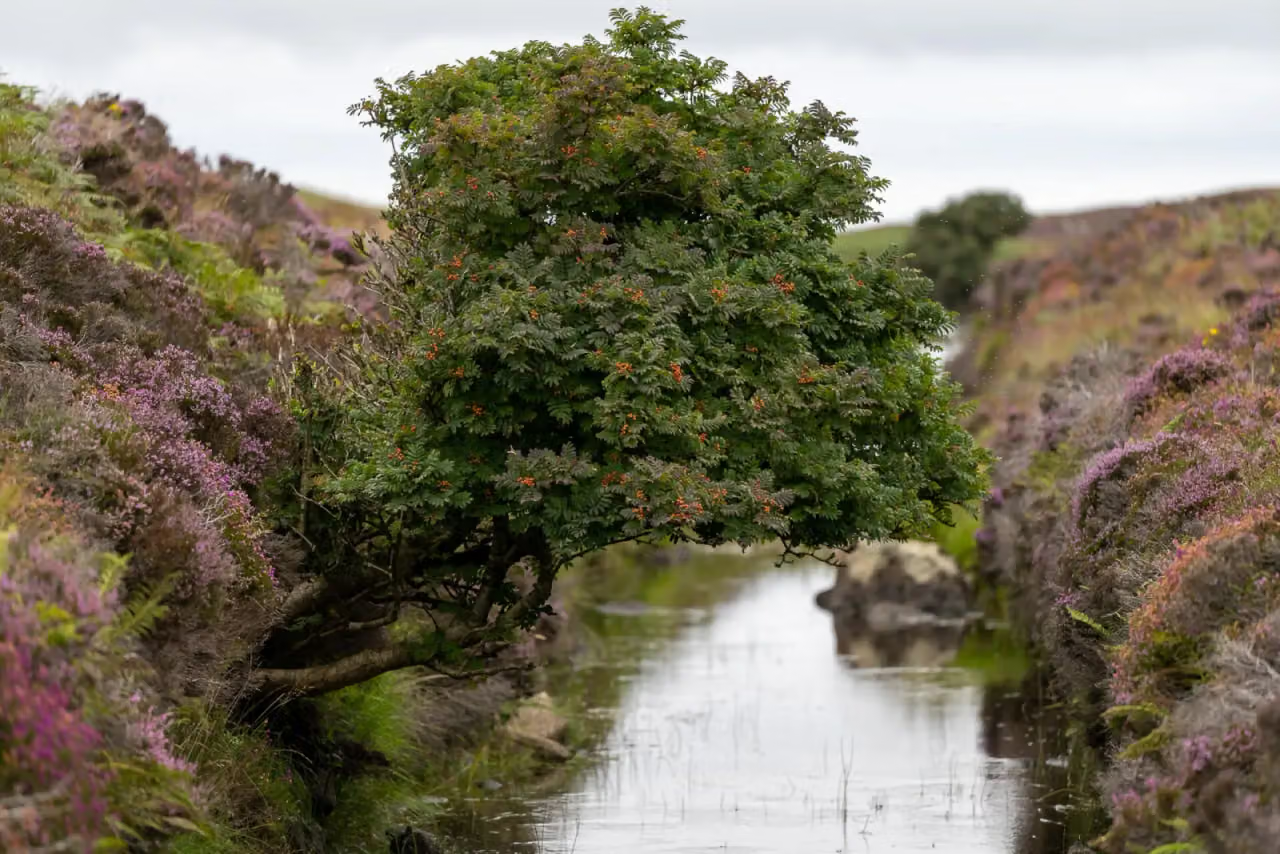
The Highland midge lives throughout Scotland, but it is most abundant in the west and the north, where boggy, acidic ground gives its larvae the wet soil they need. The eggs are laid on moist ground, often among rushes, and conditions can be extraordinary: Trees for Life quotes estimates of up to 24 million larvae per hectare.
Three things on a map help you guess how bad it will be:
- Height. Numbers are highest at lower levels, and you seldom meet them above about 500 metres, where the wind is too strong for them.
- Wet ground. Bogs and rushy, waterlogged fields are where they breed, and they rarely stray far from there.
- Shelter. A sheltered glen or lochside holds still air, which they need to fly.
For places, see the guides to midges in Scotland, the Isle of Skye and the Isle of Mull. The same species has been reported across Europe from Scandinavia to Spain and Portugal, which is why we also have pages on midges in Ireland and Norway.
Midge season in Scotland: the time of day matters
Within the season, the hour and the weather make the biggest difference. Midges are crepuscular: they are most active around dawn and dusk, when the light is low. Light is the strongest factor of all, says Trees for Life. On a bright, sunny day you may meet few of them, but on a dull, overcast day large numbers can bite even at midday.
Wind is the other one. Above about 8.8 km/h (5.5 mph) a midge cannot fly and settles on plants or tree trunks, although a gentle breeze can carry them a kilometre or more. A still, grey evening by a loch in July is the classic worst case; a breezy, sunny afternoon on a ridge in the same month can be almost free of them.
How to avoid midges on a walk
The sources I read describe how midges behave rather than giving a list of tips, and they do not cover repellents or head nets, so I leave those out. What their behaviour does point to:
- Plan the timing. Walk in the middle of the day on bright days, and keep dawn and dusk for places where you expect few midges.
- Look for wind and height. A breezy day, an exposed ridge or ground above about 500 metres all work against them.
- Stop in the right place. Take your break on open, windy ground rather than in a sheltered, boggy hollow.
- Keep moving in the worst spots. A female needs a few minutes to drink; Trees for Life says up to 4 minutes when undisturbed.
- Mind your clothing colour. Midges are drawn to dark moving objects, so dark clothes may make you easier to find.
- Go outside the season. From October to April there are no biting adults.
Midge bites: what they look like and what to do
The NHS describes midge bites as usually small and raised, in groups. Like most insect bites they cause pain and itching and a small swollen lump, which can look red; on black or brown skin the redness is harder to see, but you should be able to feel the lump. They normally get better within a few days.
The NHS advice for easing the symptoms:
- wash the skin with soap and water;
- hold a cold compress or an ice pack wrapped in a cloth on a swollen bite for up to 20 minutes, and keep the area raised if you can;
- use antihistamines for the itching, or a hydrocortisone cream for itching and swelling;
- do not scratch, because the bite could get infected.
See a pharmacist if the skin around a bite is hot, red, painful or swollen, or if pus or fluid comes out. Call 999 for swelling of the lips, mouth, throat or tongue, or for trouble breathing or swallowing: these can be signs of a serious allergic reaction. The NHS page was last reviewed on 1 October 2026.
- Looks like
- small raised bumps in groups
- Heals
- usually within a few days
- Pharmacist
- if hot, red, painful or swollen
From our data
Pitstops in the United Kingdom
- Benches
- 188,102
- in the United Kingdom
- Public toilets
- 13,915
- in the United Kingdom
- Water points
- 2,923
- in the United Kingdom
As of 28 November 2026, from the Outdoor Pitstop database. The whole United Kingdom. Benches, public toilets and water points come from OpenStreetMap and from reports by our users.
Benches, toilets and water in midge country
A bench in the wrong place in July is no place to linger, but a bench on an open viewpoint with a breeze can be the best stop of the day. On our map you can see where the benches are and whether they stand on high, open ground or in a sheltered spot by the water.
Public toilets are mostly in villages and at car parks, which also makes them handy for washing bites with soap and water. Fill your bottle before you head into the hills. See all benches in the United Kingdom, the public toilets in the United Kingdom and the water fountains and refill points in the United Kingdom.
In the app I can see 188,102 benches, 13,915 public toilets and 2,923 water points in the United Kingdom.
Walking in midge country
We have no walking or cycling routes for the United Kingdom or Ireland in the app yet. The pitstops are on our country pages, region by region.
Pitstops in the United Kingdom →Pitstops in Ireland