Outdoor Pitstop
Short answer
The Countryside Code is the official guide to behaving well in the countryside of England and Wales, published by Natural England and Natural Resources Wales. It has three parts: respect everyone, protect the environment, and enjoy the outdoors, with 13 short rules between them. Scotland has its own version, the Scottish Outdoor Access Code, built on the same ideas but backed by a legal right of access.
Rules from the Countryside Code on gov.uk (visitor advice refreshed on 1 April 2021, last updated 26 May 2023) and the Scottish Outdoor Access Code on outdooraccess-scotland.scot. Facility figures from the Outdoor Pitstop database on 25 November 2026, based on OpenStreetMap and additions from our users.
The Countryside Code rules, in one table
The Countryside Code puts its 13 rules under three headings. This is what each one means in practice on a walk, a run or a bike ride.
| Part | Rule | What it means on the way |
|---|---|---|
| Respect everyone | Be considerate to those living in, working in and enjoying the countryside | Keep noise down near farms and houses |
| Leave gates and property as you find them | Close a gate you opened; leave an open gate open | |
| Do not block access to gateways or driveways when parking | Farm vehicles and ambulances need to get through | |
| Be nice, say hello, share the space | On bridleways, cyclists give way to walkers and horse riders | |
| Follow local signs and keep to marked paths unless wider access is available | Use gates and stiles, do not climb walls or fences | |
| Protect the environment | Take your litter home, leave no trace | Including fruit peel and tissues |
| Do not have BBQs or fires, except where signs say you can | Grass and moorland fires spread fast | |
| Always keep dogs under control and in sight | On a lead near livestock and in the nesting season | |
| Dog poo: bag it and bin it, in any public waste bin or at home | Never hang bags on trees or fences | |
| Care for nature: do not cause damage or disturbance | Leave plants, stones and wildlife as you found them | |
| Enjoy the outdoors | Check your route and local conditions | Weather, tides, closures, daylight |
| Plan your adventure: know what to expect and what you can do | Where to stop, eat, drink and find a toilet | |
| Enjoy your visit, have fun, make a memory |
Rules paraphrased from the Countryside Code, gov.uk, Natural England and Natural Resources Wales.
The code has a long history. According to Wikipedia, an early version was published as a booklet in 1951, it was relaunched as the Countryside Code in 2004, and the current wording dates from the refresh of 2021, 70 years after that first booklet.
Respect everyone: gates, parking and sharing the path
The first part of the Countryside Code is about the people who live and work in the countryside, and the others enjoying it. Most of it is common courtesy, but two rules cause the most trouble. Gates: leave them as you find them, because a farmer may have left one open on purpose so animals can reach water. Parking: a car in a field gateway can block a tractor or an emergency vehicle.
The code also asks you to follow local signs and keep to marked paths, unless you are on open access land where you may walk freely. Use the gates, stiles and gaps in a wall rather than climbing over, which can damage the wall and let livestock out.
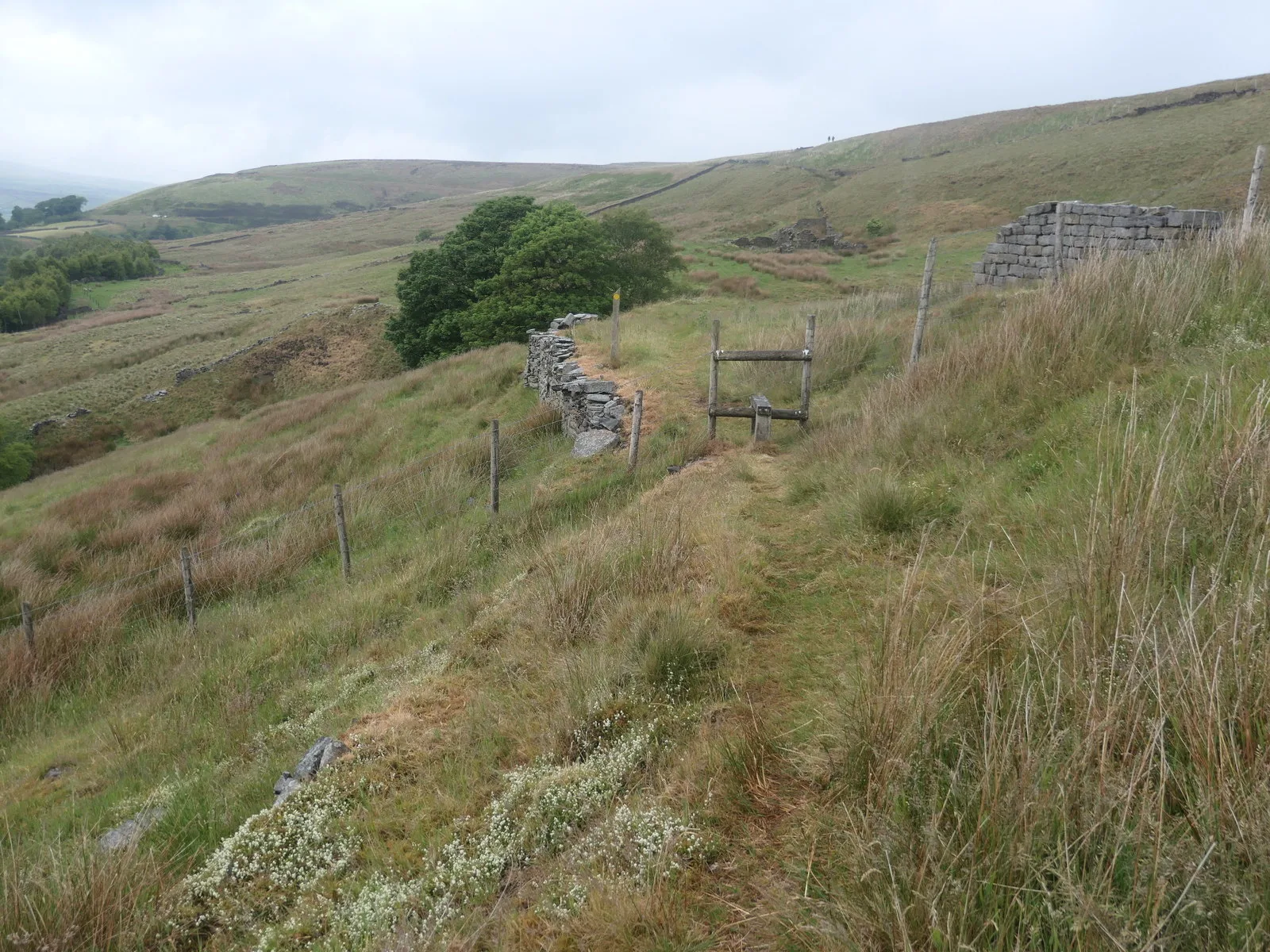
Photo: Christine Johnstone, CC BY-SA 2.0, via Wikimedia Commons
Protect the environment: litter, fires and dogs
The second part of the Countryside Code is the one with legal teeth. Take all your litter home: we do not map litter bins, and on many paths there are none for miles, so carry a bag. Do not light fires, and only use a barbecue where signs say you can.
The dog rules are the most specific in the code. Between 1 March and 31 July you must keep your dog on a lead on open access land, even if there is no livestock, to protect ground-nesting birds. You must also keep it on a lead around livestock and, in some places, on the coast. A farmer can shoot a dog that is attacking or chasing farm animals and may not have to compensate the owner. The code also says that if cattle or horses threaten you, let your dog off the lead so you can both get away.
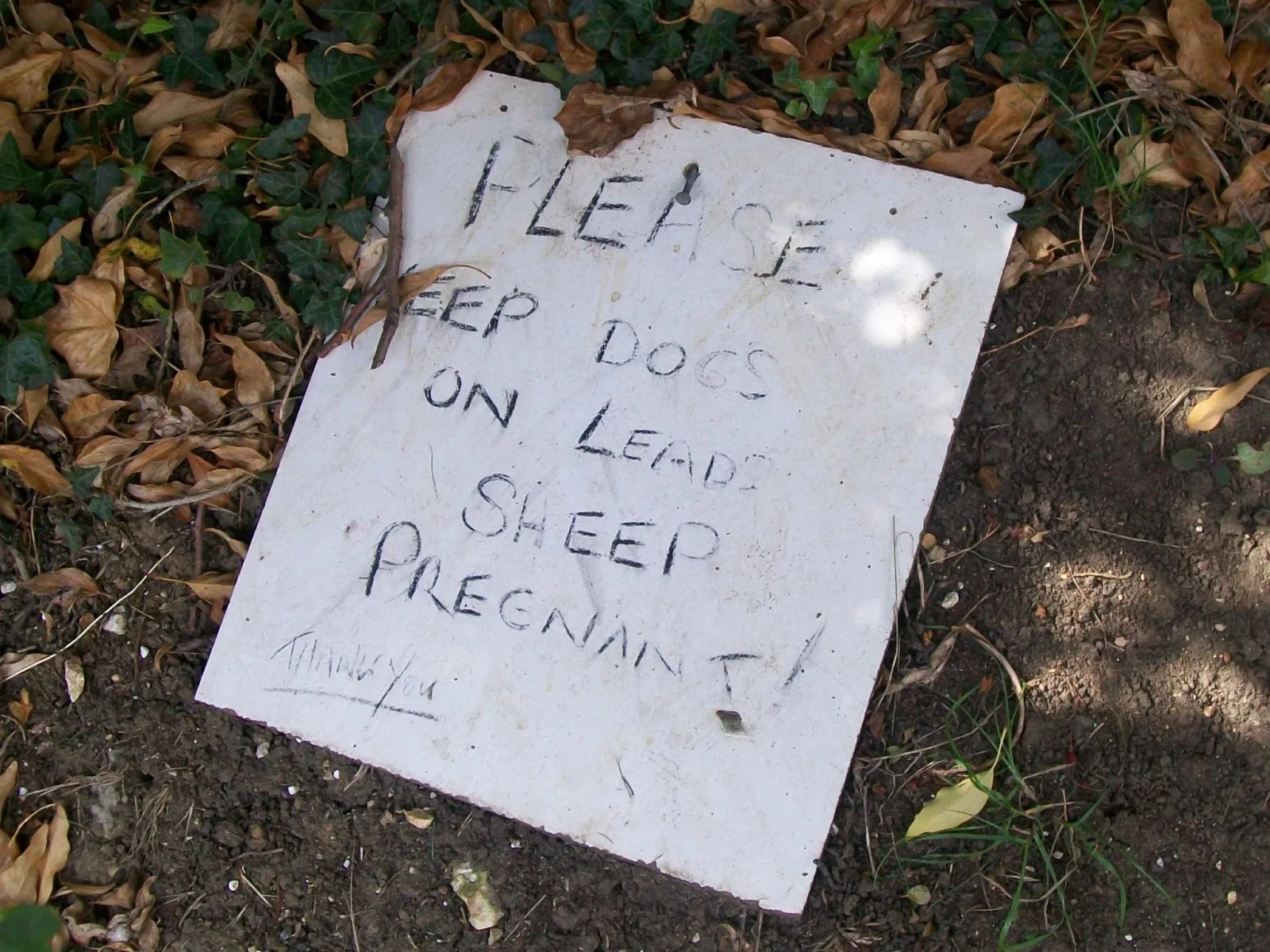
Photo: Peter O'Connor, CC BY-SA 2.0, via Wikimedia Commons
For winter walks with a dog, see our tips on walking your dog in the snow.
Enjoy the outdoors: plan your stops
The third part of the Countryside Code asks you to check your route and local conditions before you go. For a walker or cyclist that includes the practical side: where you can rest, refill a bottle and find a toilet, because the countryside has far fewer of them than a town.
According to Outdoor Pitstop's data (as of 25 November 2026), the United Kingdom has 13,915 public toilets, 188,102 benches and 2,923 drinking water points on our map. In the national parks the numbers are much smaller:
| National park | Public toilets | Drinking water points | Benches |
|---|---|---|---|
| Lake District | 154 | 38 | 1,178 |
| Eryri (Snowdonia) | 101 | 64 | 571 |
| South Downs | 90 | 57 | 1,130 |
| Peak District | 90 | 24 | 1,170 |
| Loch Lomond and The Trossachs | 70 | 27 | 520 |
| Yorkshire Dales | 58 | 21 | 537 |
| Cairngorms | 53 | 8 | 431 |
| Bannau Brycheiniog (Brecon Beacons) | 43 | 12 | 228 |
| Dartmoor | 42 | 6 | 235 |
Outdoor Pitstop data, as of 25 November 2026, counted inside each park's boundary.
Dartmoor, for example, has only 6 drinking water points inside the park on our map, and the Cairngorms 8. Fill your bottle before you leave the last village, and plan a toilet stop at a car park or café on the way.


If something goes wrong on the hills, our guide to mountain rescue in the UK explains how to call for help.
Scotland: the Scottish Outdoor Access Code
The Countryside Code covers England and Wales; Northern Ireland and Scotland have their own. The Scottish Outdoor Access Code, published by NatureScot, is based on the Land Reform (Scotland) Act 2003, which gives everyone a right of access to most land and water, as long as they act responsibly. Its three key principles are: respect the interests of other people, care for the environment, and take responsibility for your own actions.
In practice the Scottish code goes further than the English one. You may walk, cycle and camp on most unenclosed land, including lightweight wild camping for two or three nights in one place. The dog advice is similar: keep your dog in sight and under control, use a lead if in doubt, and let it go if cattle threaten you. Read more in our post on the wild camping rules in Europe.
On the map
Benches and public toilets in the United Kingdom (202,017)
Take Outdoor Pitstop along on your phone
Free · 3.4 million pitstops in 44 countries