Skip to content
Outdoor Pitstop logoOutdoor Pitstop

Nature areas · National parks

Lake District National Park: where it is, getting there and the rules

The Lake District is England's largest national park, in Cumbria in the north-west of England, between Manchester and Carlisle. Lake District National Park has 16 lakes and tarns, hundreds of fells and Scafell Pike, the highest mountain in England. It is open all day, every day, with no gates, entrances or tickets.

Summary

The Lake District is a national park in Cumbria, north-west England, of 2,362 square kilometres. Oxenholme, Penrith and Windermere are the handiest railway stations, and buses and lake boats link the valleys. There is no entrance and no ticket, but parking almost always costs money. May, June and September are good months; in winter the high fells need experience.

· Founder of Outdoor Pitstop

Published · 7 min read

Checked in November 2026

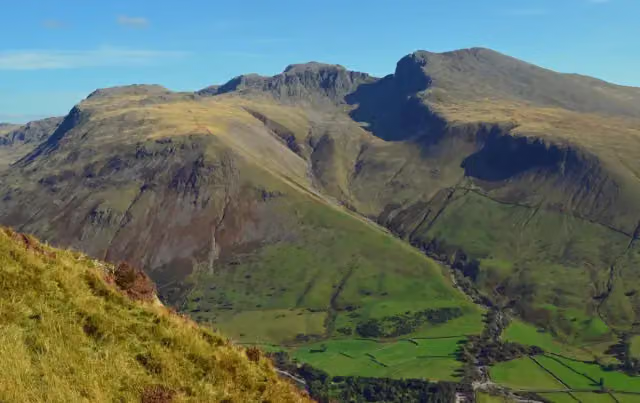
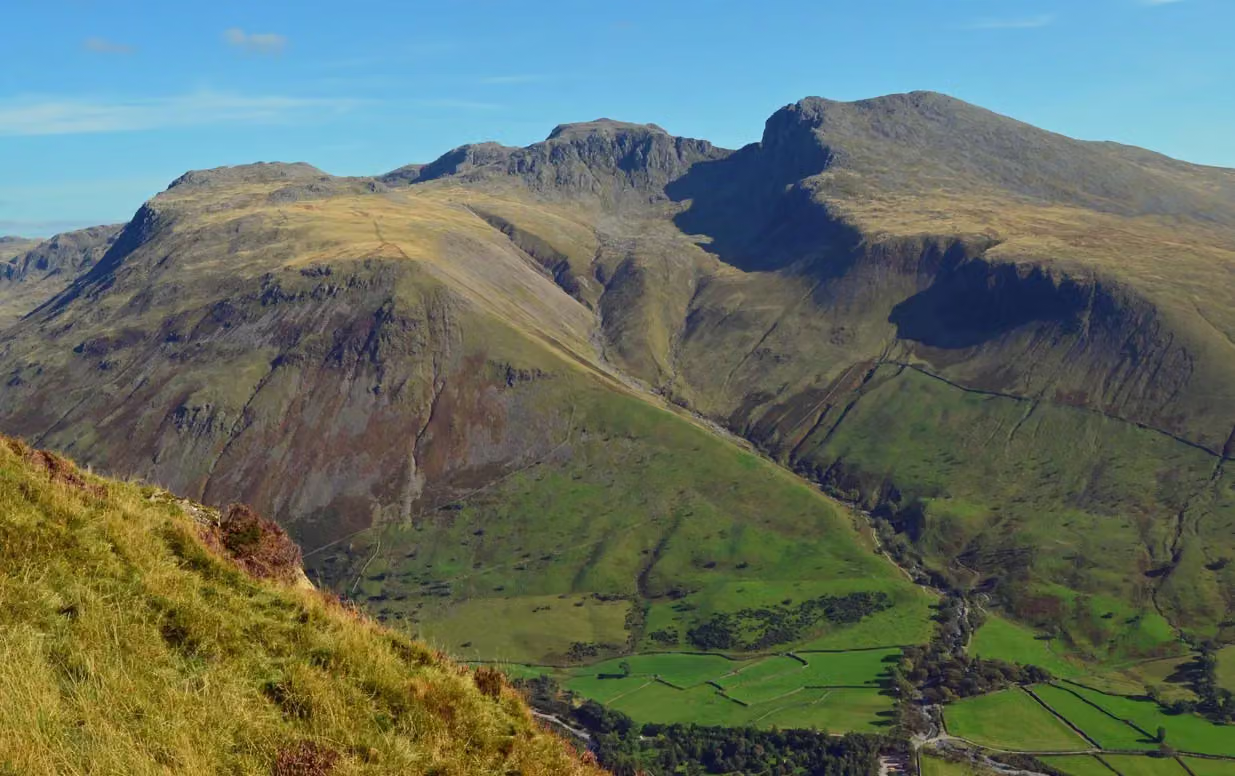
Green valley floor with dry-stone walls below high, bare fells with a rocky summit
The Scafell massif in the Lake District, with Scafell Pike, the highest mountain in England · Photo: Doug Sim via Wikimedia Commons, CC BY-SA 4.0

Where is the Lake District?

The Lake District is in Cumbria, in the north-west of England, with Manchester to the south and Carlisle to the north. Lake District National Park was established in 1951, extended in 2016 and became a UNESCO World Heritage Site in 2017.

According to the National Park Authority, the park covers 2,362 square kilometres (912 square miles): 58 kilometres from west to east and 64 kilometres from north to south. On its west side it has 42 kilometres of coastline and estuaries. Around 39,000 people live in the park (Census 2021), and the authority counted 17.45 million visitors in 2025.

Country
United Kingdom (England)
County
Cumbria
Managed by
Lake District National Park Authority
Area
2,362 km²
Entry
Free, open every day
Best months
May, June, September
Nearest towns
Windermere, Keswick, Ambleside
Dogs
On a lead near livestock

Lake District map: the valleys and lakes

On a Lake District map the lakes run out like the spokes of a wheel from the high fells in the middle. Windermere in the south-east is the busiest part, with Windermere, Bowness-on-Windermere and Ambleside. Keswick and Derwentwater are in the north, Ullswater with Glenridding in the east, Coniston in the south and Wasdale, with Wastwater and Scafell Pike, in the west. On the west side the national park meets the Cumbrian coast.

The pitstops around the Lake District are on our map of Westmorland and Furness and in the app. The sights with their own page are under points of interest in Westmorland and Furness.

Lake District National Park: getting there and around

Lake District National Park is open to the public all day, every day, with no gates or barriers and no official entrance. You do not need a ticket.

By train. The West Coast Main Line between London and Glasgow stops at Oxenholme (near Kendal), Penrith and Carlisle. From Oxenholme a local train calls at Kendal, Staveley and Windermere, and a direct Northern train runs from Manchester to Windermere. Along the Cumbrian coast, Northern runs between Barrow-in-Furness and Carlisle.

By bus and boat. The National Park Authority says all bus fares are currently capped at £3 for a single journey (November 2026). The 555 is the core bus through the heart of the Lake District and runs all year. In summer shuttle buses run to Wasdale Head and, from May to September, from Cockermouth to Buttermere. Passenger boats with several stops sail on Windermere, Ullswater, Coniston and Derwentwater.

Parking. Car parks are run by councils, the park authority, the National Trust, schools, private firms and charities, each with its own charges on a sign. Many take coins and cards, some only one of the two, and many use RingGo. Some car parks have no signal, so card payment is impossible there: bring coins. Bowness and Ambleside town centres are busiest from mid-morning to mid-afternoon, and Buttermere, Aira Force and the east side of Derwentwater fill quickly. Never park on verges or block roads.
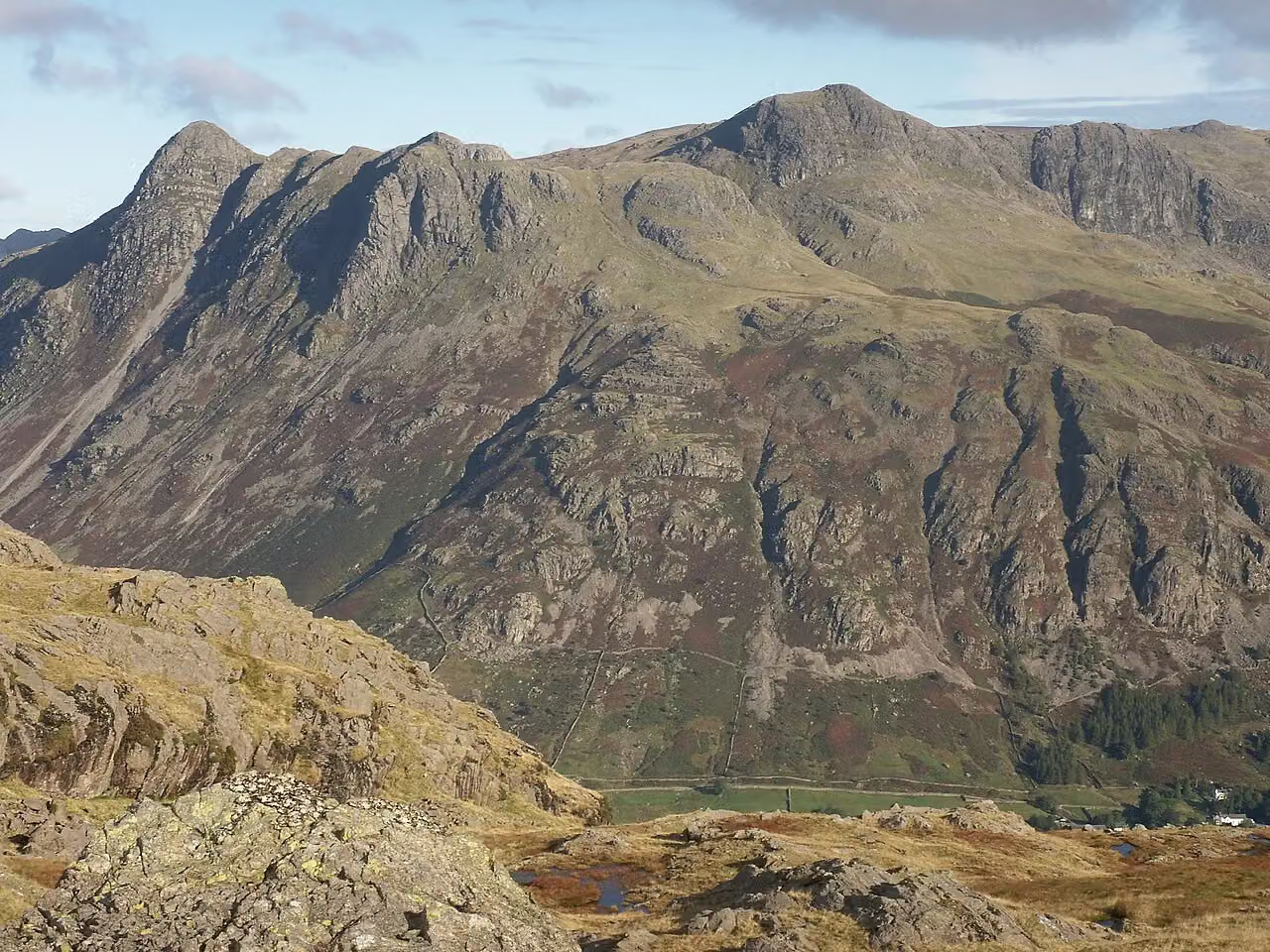
Rocky fell tops with steep slopes above a green valley
The Langdale Pikes in the Lake District · Photo: Bobble Hat at English Wikipedia via Wikimedia Commons, CC BY-SA 3.0

Lake District: Lake Windermere

Windermere is the longest lake in England: 17 kilometres (10.5 miles), according to the National Park Authority. It is also the busiest part of the Lake District, with the towns of Windermere and Bowness-on-Windermere on its east shore and Ambleside at its northern tip. Windermere station is the end of the line from Oxenholme and Manchester, so you can reach the lake without a car.

On Windermere you share the water with motorboats and sailing craft, and every powered boat needs a current Windermere Registration. Passenger boats stop at several piers, and one of the park's four information centres is in Bowness-on-Windermere. Wray Castle stands on the quieter west shore.
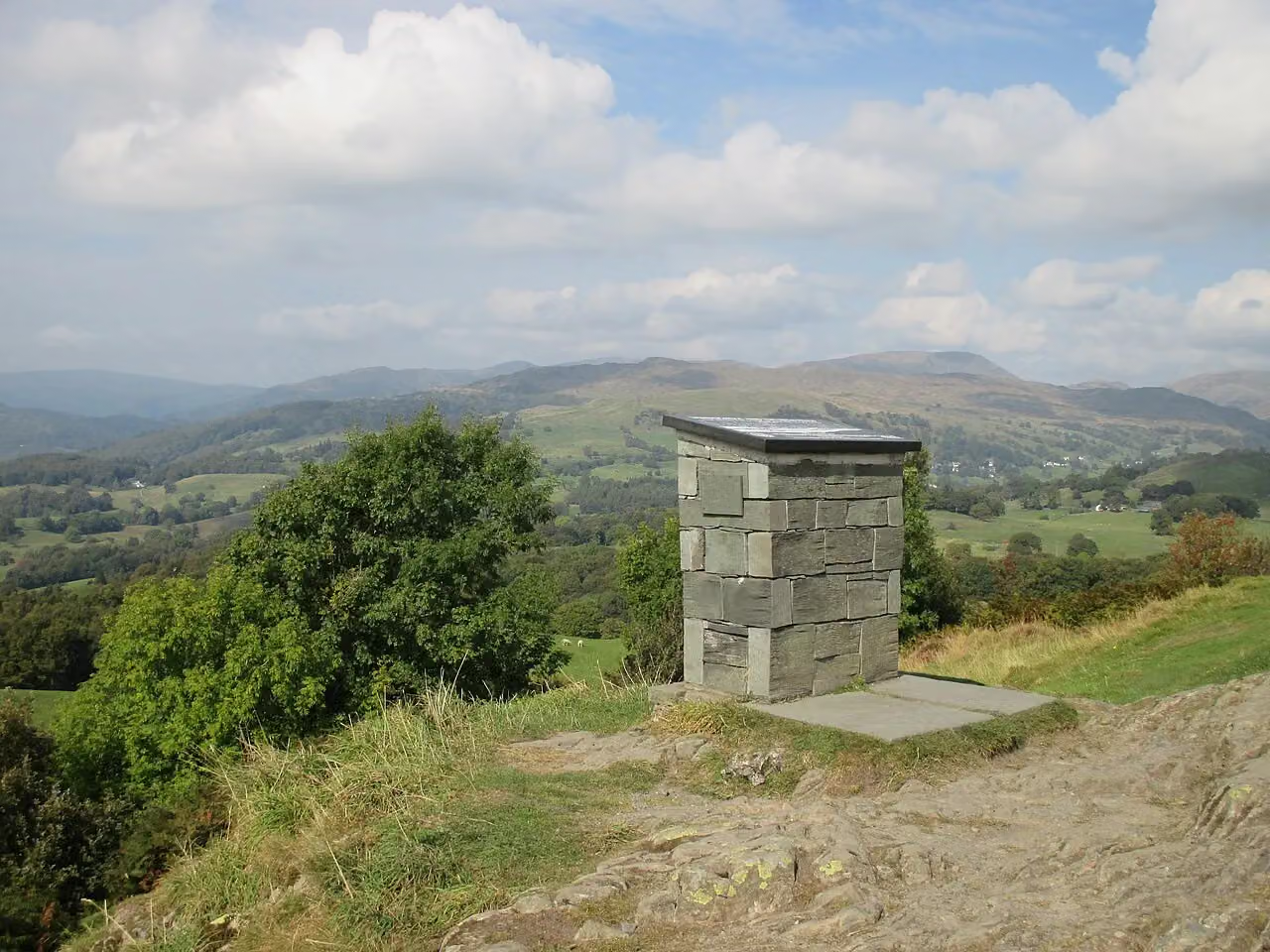
A stone viewpoint marker on a grassy hilltop looking out over wooded valleys and distant fells
The view from Orrest Head above Windermere, a short climb from the station · Photo: Antiquary via Wikimedia Commons, CC BY-SA 4.0

Where to go in the Lake District: sights with their own page

The best-known sights of Lake District National Park are the lakes and fells themselves. These places have their own page with us.

  • Scafell PikeAt 978 metres the highest mountain in England, above Wasdale.Mountain
  • Castlerigg Stone CircleA stone circle on a hill near Keswick, ringed by fells.Prehistoric
  • Hardknott Roman FortRemains of a Roman fort by the Hardknott Pass in the west.Roman
  • Dove CottageThe home of the poet William Wordsworth in Grasmere.Museum
  • Wray CastleA castle on the west shore of Windermere, with a boat pier.Castle
  • Muncaster CastleA castle near Ravenglass, on the west side of the park.Castle

The Lake District with children, and things to do

What to do in the Lake District depends on how high you want to go. For families, wheelchairs and pushchairs the National Park Authority has more than 50 routes called Miles without Stiles: paths without stiles. From Easter to October volunteers of the park lead guided walks.

The park has four information centres: at Ullswater (Glenridding), Bowness-on-Windermere, Hawkshead and Coniston. They are the places to ask about the weather on the fells and about which walks suit you.
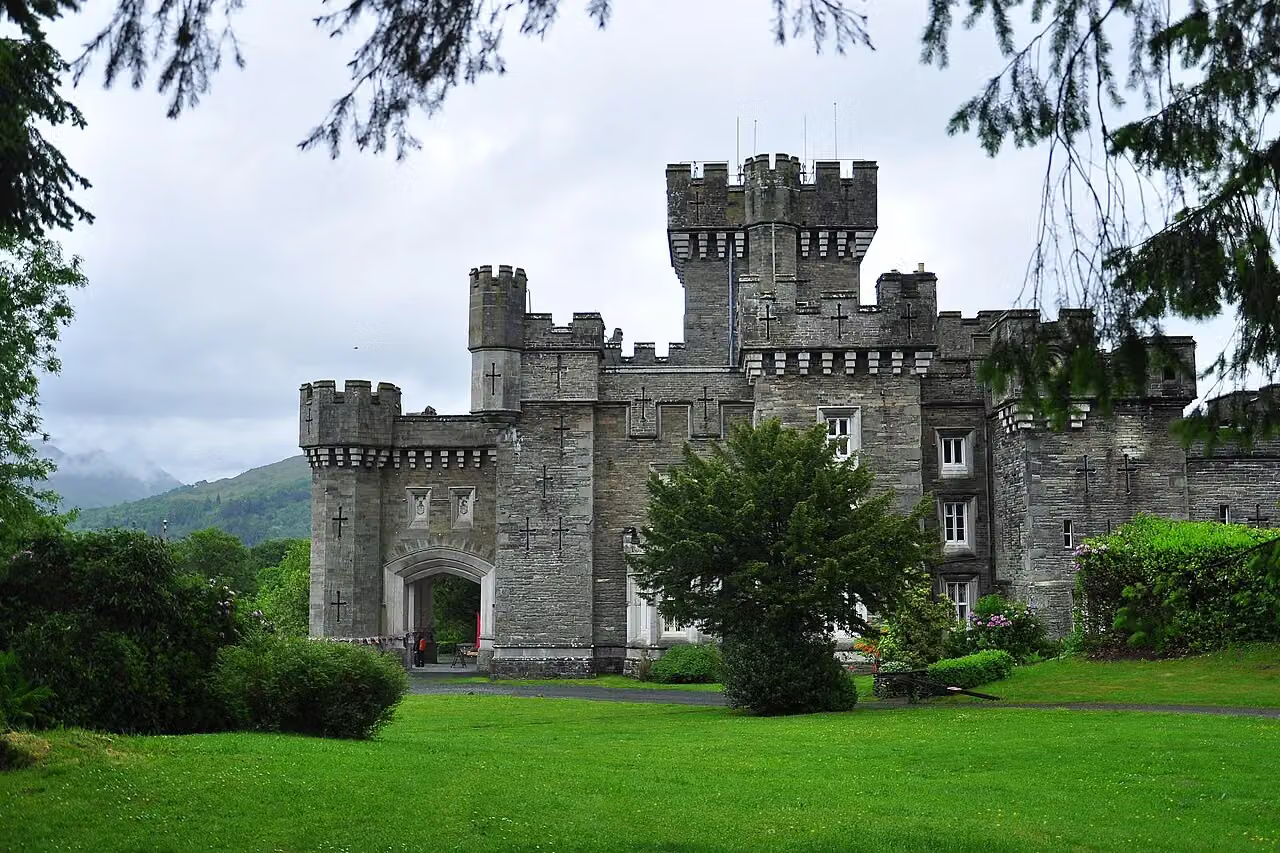
A grey Victorian mock castle with towers above a lawn and trees
Wray Castle on the western shore of Windermere · Photo: CellsDeDells via Wikimedia Commons, CC BY-SA 3.0

Can you swim in the Lake District?

Yes, in most of the Lake District. The National Park Authority says you can swim in most lakes, tarns and rivers in the park, but not in Ennerdale Water or the Haweswater, Thirlmere and Kentmere reservoirs. For a calmer swim it suggests the lakes with few or no motorboats, such as Buttermere, Crummock Water, Grasmere, Rydal Water, Loweswater, Bassenthwaite and Wastwater.

The water is cold, even on a hot day, and tarns are usually colder than lakes. The authority's advice: go in slowly, do not swim alone, take a tow float or flotation device and wear a bright swim cap. On the busy lakes, Windermere, Ullswater, Coniston and Derwentwater, stay close to the shore and away from jetties, marinas and ferry routes. Do not swim where you suspect blue-green algae; it can be lethal for dogs.

Rules in the Lake District: dogs, wild camping and fires

Dogs are welcome in the Lake District, but keep them on a lead or under close control at all times, especially near sheep and other livestock. Take poo bags home or to a bin.

Wild camping is not permitted in Lake District National Park without the landowner's permission. According to the National Park Authority it is normally tolerated for one night if you pitch above the highest fell wall, well away from villages and lake shores, arrive late, leave early, keep to one or two tents and leave no trace. Camping in car parks or on roadside verges is never allowed.

Fires: do not light any, says the park, even where you see signs of an earlier fire. In winter the authority publishes the conditions on the summit of Helvellyn every day from December to April (Weatherline), and it recommends experience, the right kit and a paper map for the high fells.
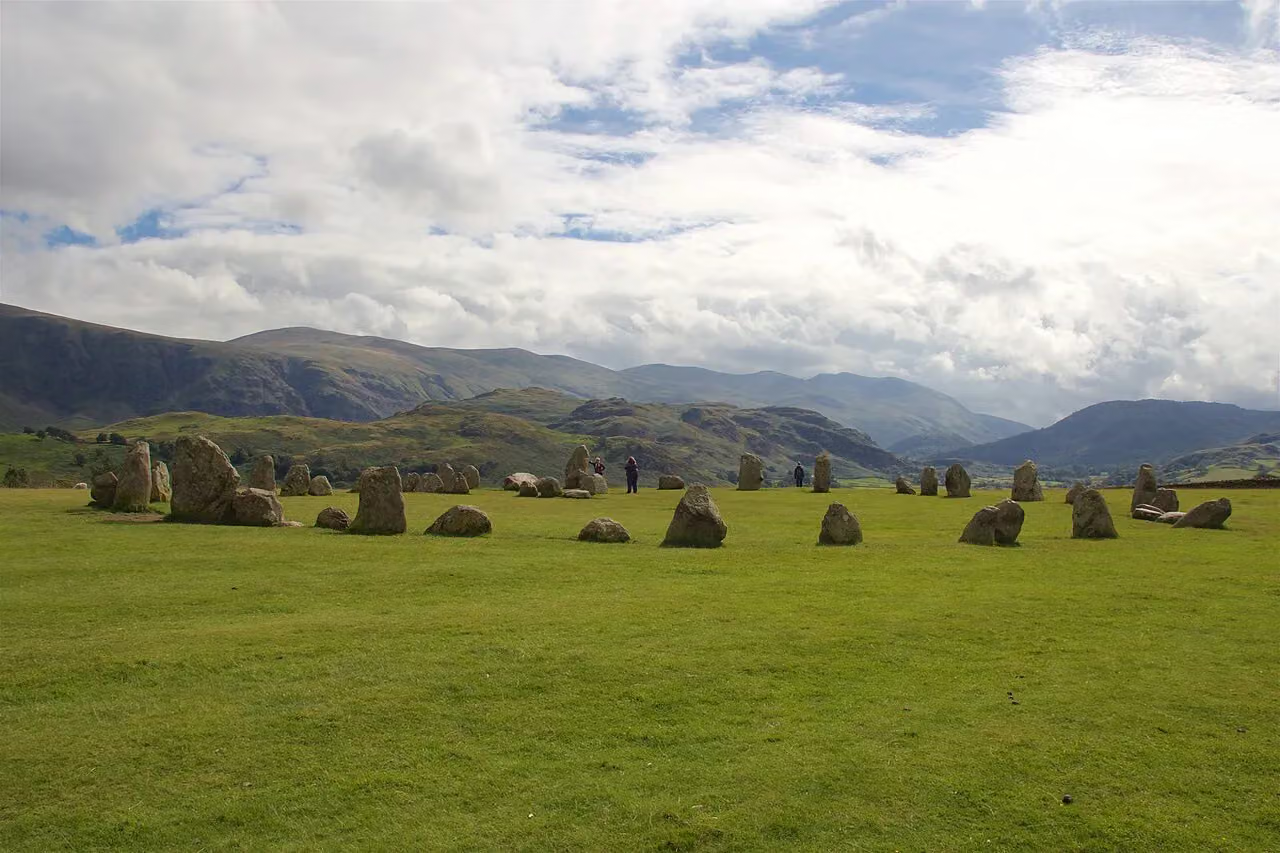
A circle of standing stones on a grassy field with fells behind
Castlerigg Stone Circle near Keswick in the Lake District · Photo: Mike Peel (www.mikepeel.net) via Wikimedia Commons, CC BY-SA 4.0

The best time to visit the Lake District

  1. Jan
  2. Feb
  3. Mar
  4. Apr: good
  5. May: at its best
  6. Jun: at its best
  7. Jul: good
  8. Aug: good
  9. Sep: at its best
  10. Oct: good
  11. Nov
  12. Dec
  • SpringThe park's guided walks start at Easter. The high fells can stay wintry into April.
  • SummerThe busiest time. Shuttle buses run to Wasdale and Buttermere; arrive early for a parking space.
  • AutumnQuieter than summer. The guided walks run until October.
  • WinterShort days and snow on the tops. Check Weatherline before you go high and carry a paper map.


Map of Lake District National Park

  • Boundary of Lake District National Park
  • Parking
  • Visitor centre
  • Water point
  • Toilet
  • Bench
  • Bike pump
  • Food stand

In and around Lake District National Park: 993 car parks (265 paid), 1 visitor centre, 1,382 pitstops. Tap a point for its name and whether parking is paid.

Car parks and entrances with a name
  • Abbey Visitor Car Park
  • Abbey Visitor Car Park
  • Armboth · paid
  • Armboth · paid
  • Ash Landing · paid
  • Ash Landing · paid
  • Beckside Car Park · paid
  • Beckside Car Park · paid
  • Beckside Car Park · paid
  • Beckside Car Park · paid
  • Beech Hill car park
  • Beech Hill car park
  • Bell Close Car Park · paid
  • Bell Close Car Park · paid
  • Birks Bridge
  • Birks Bridge
  • Blea Tarn National Trust Parking · paid
  • Blea Tarn National Trust Parking · paid
  • Bleach Green Car Park · free
  • Bleach Green Car Park · free
  • Blind Lane Car Park
  • Blind Lane Car Park
  • Bluebird Car & Coach Park · paid
  • Bluebird Car & Coach Park · paid
  • Bogle Crag · paid
  • Bogle Crag · paid
  • Booths Coach Park
  • Booths Coach Park
  • Bowness Knott Car Park · paid
  • Bowness Knott Car Park · paid

From our data

Pitstops in Lake District National Park

Pitstops
1,382
in Lake District National Park
Car parks
993
in Lake District National Park
Benches
1,178
in Lake District National Park
Public toilets
154
in Lake District National Park
Water points
38
in Lake District National Park
Public bike pumps
8
in Lake District National Park

As of 29 November 2026, from the Outdoor Pitstop database. Pitstops inside the national park boundary as OpenStreetMap draws it. Benches, public toilets and water points come from OpenStreetMap and from reports by our users.

Benches, public toilets and water in the Lake District

Benches are by far the most common pitstops in the Lake District. Many stand along the lake shores and at viewpoints above the water: places to sit after a climb or just look out over a lake. Quite a few are memorial benches with a small plaque.

Public toilets are mostly in the villages and at car parks. Water points are rare, so fill your bottle in a village before you head up the fells. See all benches in the United Kingdom, the public toilets in the United Kingdom and the water fountains and refill points in the United Kingdom.

In the app I see 1,178 benches and 154 public toilets inside Lake District National Park.

Walking in the Lake District

We have no walking routes for the United Kingdom yet. The pitstops of the Lake District are on our page for Westmorland and Furness, and every region of the UK has its own page.

Pitstops in Westmorland and Furness →Pitstops in the United KingdomWater fountains in the United Kingdom

Key takeaways

  • Lake District National Park covers 2,362 square kilometres and has been a UNESCO World Heritage Site since 2017.
  • The Lake District has no gates, entrances or tickets: the national park is open all day, every day.
  • Parking in the Lake District charges vary by owner, and some car parks have no signal for card payment, so bring coins.
  • Windermere is the longest lake in England at 17 kilometres, and Wastwater the deepest at 74 metres.
  • You can swim in most lakes, tarns and rivers of the Lake District, but not in Ennerdale Water or the Haweswater, Thirlmere and Kentmere reservoirs.
  • In the data of Outdoor Pitstop, benches are by far the most common pitstop inside Lake District National Park.

Frequently asked questions

Where is the Lake District?

In the county of Cumbria in north-west England, between Manchester and Carlisle. On its west side the national park has 42 kilometres of coast and estuaries.

Where is the Lake District located for travel by train?

Oxenholme, Penrith and Carlisle are on the West Coast Main Line; from Oxenholme and Manchester trains run to Windermere, inside the park.

Where to go in the Lake District?

Windermere and Bowness for the lake boats, Keswick and Derwentwater in the north, Ullswater in the east and Wasdale with Scafell Pike in the west. Families can follow the Miles without Stiles routes.

Can you swim in the Lake District?

Yes, in most lakes, tarns and rivers, says the National Park Authority, but not in Ennerdale Water or the Haweswater, Thirlmere and Kentmere reservoirs. The water is cold all year.

Do you have to pay to visit the Lake District?

No. Lake District National Park has no entrances or tickets and is open every day. Parking does cost money almost everywhere.

What is the highest mountain in the Lake District?

Scafell Pike, at 978 metres also the highest mountain in England.

Sources

  1. Lake District National Park, Facts and figures · lakedistrict.gov.uk · area, size, 1951, 2016, World Heritage 2017, 16 lakes and tarns, Scafell Pike 978 m, Windermere 17 km, Wastwater 74 m, visitors 2025, population, coast
  2. Lake District National Park, Visitor FAQs · lakedistrict.gov.uk · open every day, wild camping, four main lakes, Windermere Registration, Miles without Stiles, guided walks, dogs, information centres
  3. Lake District National Park, Car parks and parking · lakedistrict.gov.uk · owners, coins and cards, RingGo, no signal, busy times, verges (November 2026)
  4. Lake District National Park, Getting to and around · lakedistrict.gov.uk · trains, £3 bus fare cap, 555, shuttle buses, lake boats (November 2026)
  5. Lake District National Park, Swimming in the Lake District · lakedistrict.gov.uk · where you may and may not swim, quieter lakes, cold water, boats, blue-green algae
  6. Lake District National Park, Wild camping · lakedistrict.gov.uk · rules for wild camping and fires
  7. Lake District National Park, Plan your winter visit · lakedistrict.gov.uk · Weatherline on Helvellyn from December to April, winter advice, paper map

Last checked in November 2026. Outdoor Pitstop figures come from our own database; the date is with each block.

Written by

Robin

Founder of Outdoor Pitstop

Robin started Outdoor Pitstop to always know where the next toilet, water tap or bench is on the way.

About this guide

What I write here comes from what we keep track of in Outdoor Pitstop: the pitstops, routes and photos in the app, and what users report on the way. I check rules, opening times and facts about nature with the official sources. Spotted something that is not right? Let me know and I will correct it.

Checked in November 2026 · Last updated

How we work

More about vk en ierland

In the app

The Lake District in the app

Open the map around the Lake District and see where the benches, public toilets and water points are.

  • The nearest public toilet to a car park or village
  • Benches with a view along the lakes
  • Report a toilet that is closed or a tap that does not work
Download on the App StoreGet it on Google Play

More from Nature areas

The free app

All of Outdoor Pitstop, in your pocket

Find the nearest pitstop, navigate there, listen to audio tours, earn XP and make routes and lists together.

Download on the App StoreGet it on Google Play
How Outdoor Pitstop works →
The map of the app with pitstops nearby
A pitstop in the app, with a photo, a review and Navigate
Your profile in the app, with level and XP