Outdoor Pitstop
Short answer
To call mountain rescue in the UK, dial 999 or 112, ask for the police and then ask for mountain rescue. The police take your details and alert the nearest volunteer team. Before you dial, have your location, the number of people in your group, what has happened and your mobile number ready, and stay where you are until the team contacts you.
How to call mountain rescue in the UK
Mountain rescue in England, Wales, Scotland and Northern Ireland is not a separate phone number. It is called out through the police, so the steps are the same everywhere:
- Dial 999 or 112. Both work from any mobile phone, also without credit.
- Ask for Police.
- When you are put through, ask for Mountain Rescue.
- Give the details below, calmly and in order.
- Stay put and keep your phone switched on, so the team can call you back.
Scottish Mountain Rescue puts it in one line on its website: call 999 and ask for Police, then Mountain Rescue. Keswick Mountain Rescue Team in the Lake District adds that you should not change your position until the rescue team has contacted you, and repeat the full procedure if you need to call again.


What to tell mountain rescue
Keswick Mountain Rescue Team lists the information it needs. Write it down or think it through before you dial, because a poor signal can cut the call short.
| What | Example |
|---|---|
| Location | A grid reference, a what3words address or a clear description: "on the main path, 200 m below the summit cairn, north side" |
| The casualty | Name, sex and age |
| What happened | "Slipped on wet rock, painful ankle, cannot walk" |
| Group | How many people are with you and how they are doing |
| Your phone | Your mobile number, and that of a second phone in the group |
A grid reference from a map or a GPS app is the most reliable way to give your location. Phone apps that show your position offline help too, as long as your battery lasts. Save battery by closing other apps and keeping your phone warm in an inside pocket.
Emergency SMS: text 999 when you cannot call
In the mountains, a text often gets through where a call fails. The UK emergency SMS service lets you text 999, but only if you have registered your phone beforehand. To register, send the word "register" by text to 999 and follow the instructions in the reply. It is free and takes a minute.
Photo: Arthur C Harris, CC BY-SA 2.0, via Wikimedia Commons
An emergency text should say which service you need (Police, then Mountain Rescue), what has happened and exactly where you are. Do this registration at home, not on the hill: once you need it, it is too late.
Who runs mountain rescue in the UK?
Mountain rescue teams in the UK are charities run by trained volunteers. According to Mountain Rescue England and Wales, there are 48 volunteer teams and eight regional bodies in England and Wales, and their teams received 3,968 calls for assistance in 2025. The service is free for the person being rescued, paid for mostly by donations.
In Scotland, Scottish Mountain Rescue represents 26 volunteer teams with over 850 volunteers, alongside police and RAF teams. Northern Ireland has its own teams, called out through the police in the same way. In the Republic of Ireland you also dial 999 or 112 and ask for the Gardaí, who alert mountain rescue.
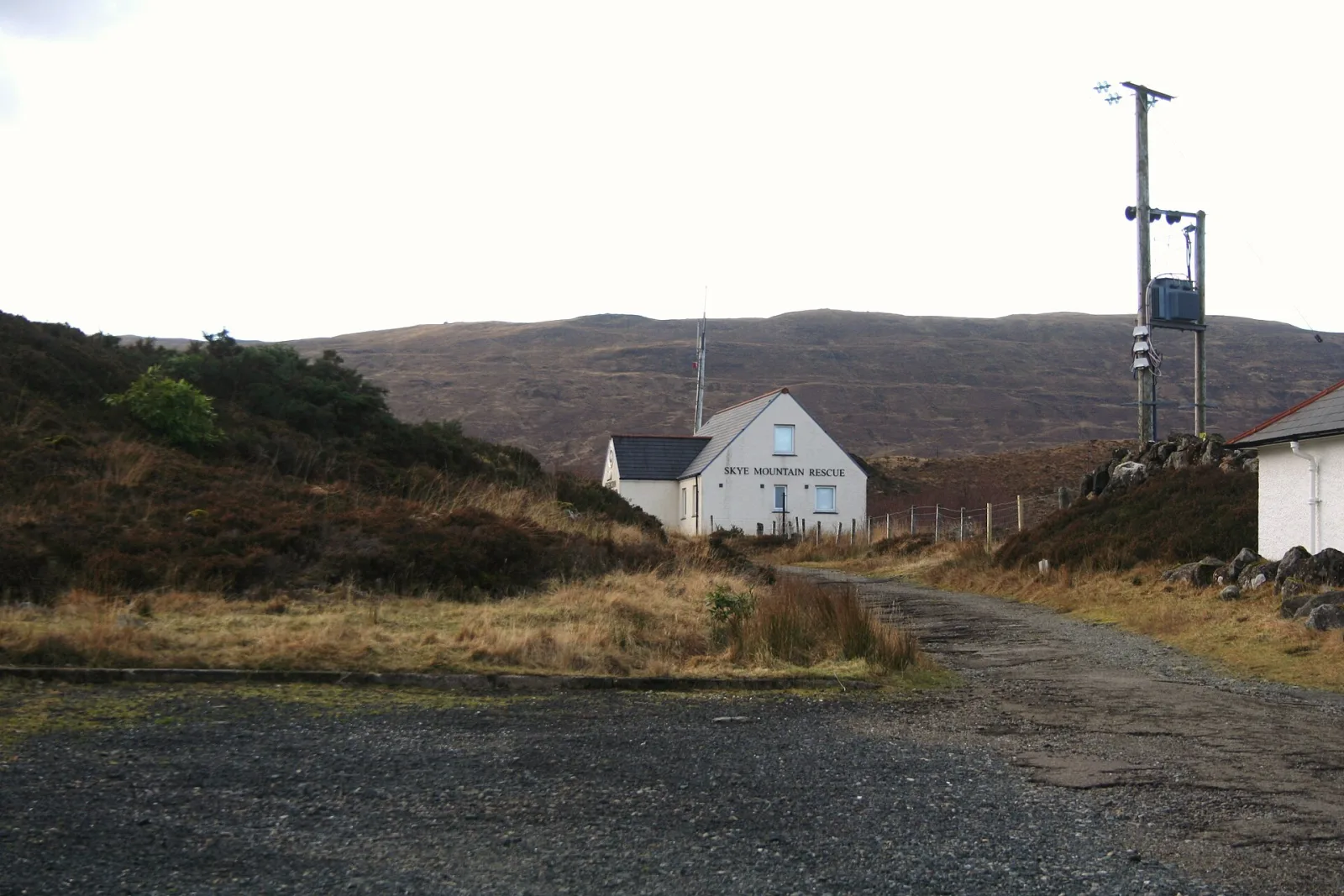
Photo: Andrew Wood, CC BY-SA 2.0, via Wikimedia Commons
Mountain rescue teams also answer calls from people who are lost, cold or caught out by the dark, not only from the injured. If you are unsure whether to call, call: the police and the team decide what help is needed.
Plan your walk with water and toilets on the way
Good planning prevents many rescues: check the mountain weather forecast, tell someone your route and the time you expect to be back, carry a map, a head torch and spare warm layers, and turn back in time. Knowing where you can refill water or find a toilet also helps you plan a realistic day.
According to Outdoor Pitstop's data (as of 25 November 2026), these are the public toilets and drinking water points inside the boundaries of the UK's busiest mountain national parks:
| National park | Public toilets | Drinking water points |
|---|---|---|
| Lake District | 154 | 38 |
| Eryri (Snowdonia) | 101 | 64 |
| Peak District | 90 | 24 |
| Loch Lomond and the Trossachs | 70 | 27 |
| Yorkshire Dales | 58 | 21 |
| Cairngorms | 53 | 8 |
| Bannau Brycheiniog (Brecon Beacons) | 43 | 12 |
Most of these are in villages, at car parks and at visitor centres, not on the summits; our guide to toilets on hiking trails covers what to do in between. On a hill day in the Cairngorms, with 8 water points across more than 4,500 km² (about 1,750 square miles), you carry what you need. Look up the parks in our overview of all 15 national parks in the UK, or start with the Lake District national park and Eryri (Snowdonia). For the highest hills, see Ben Nevis and the mountains and hills of the UK.
In winter, ice on the paths adds risk. Our guide to walking on ice and when ice grips help explains the difference between microspikes and crampons.
On the map
Water fountains and refill points and public toilets in United Kingdom and Ireland (18,677)
Take Outdoor Pitstop along on your phone
Free · 3.4 million pitstops in 44 countries