Outdoor Pitstop
Short answer
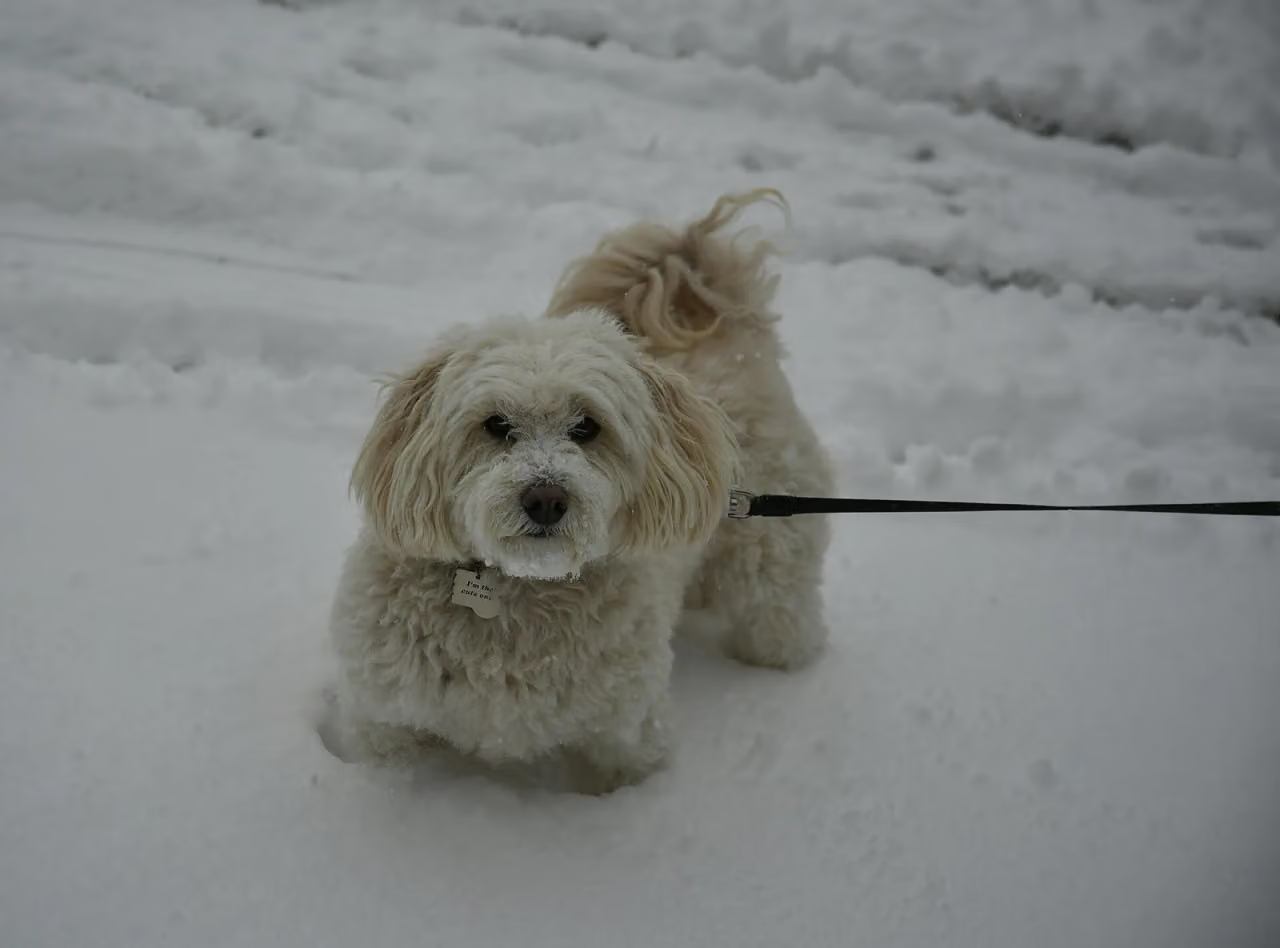
Walking your dog in snow is fine for most healthy dogs, as long as you keep them on a lead near frozen water, wipe grit and rock salt off their paws and belly afterwards, and shorten the walk if they start lifting their paws or shivering. The RSPCA warns that grit, rock salt and antifreeze are poisonous to dogs if licked. If your dog goes onto the ice, UK fire services say never to follow it: call 999 and ask for the fire service.
This article collects advice from UK animal charities and fire services. It is not veterinary advice: if your dog seems unwell, call your vet.
Walking your dog in snow: the main risks
Snow itself is rarely the problem on a winter dog walk. What causes trouble is what comes with it. According to the RSPCA and the PDSA, the main risks are:
| Risk | What happens | What the charities advise |
|---|---|---|
| Grit and rock salt | Sore, cracked pads; poisonous if licked | Wipe or wash paws and tummy after the walk |
| Antifreeze | Highly toxic, sweet-tasting | Clean up spills; call a vet at once if licked |
| Frozen ponds and lakes | Thin ice breaks under the dog's weight | Keep your dog on a lead near frozen water |
| Ice balls between the toes | Painful lumps of snow in the fur | Trim the fur between the pads; soak snow off in warm water |
| Slippery ice | Falls and injuries, worse with arthritis | Walk slowly, avoid icy slopes |
| Deep snow | Hides holes and unsafe ground | Keep your dog on a lead |
| Dark afternoons | Dog and walker hard to see | Reflective or LED gear, stick to lit paths |
Protecting your dog's paws from snow, grit and rock salt
Paws take the most punishment on a walk in snow. The RSPCA says grit and rock salt are poisonous to dogs and that swallowing them can cause thirst, vomiting and lethargy, so wipe down your dog's paws and tummy after every walk on gritted pavements. The PDSA adds that salt and grit can make pads sore, and that a thin layer of paw butter may help stop the pads from cracking.
Long-haired dogs collect snow in the fur between their toes, where it freezes into hard balls. The PDSA advises trimming that fur and checking between the pads after a walk, and soaking off any lumps in warm water rather than pulling them out. Dog boots are another option for dogs that will wear them, according to the RSPCA.
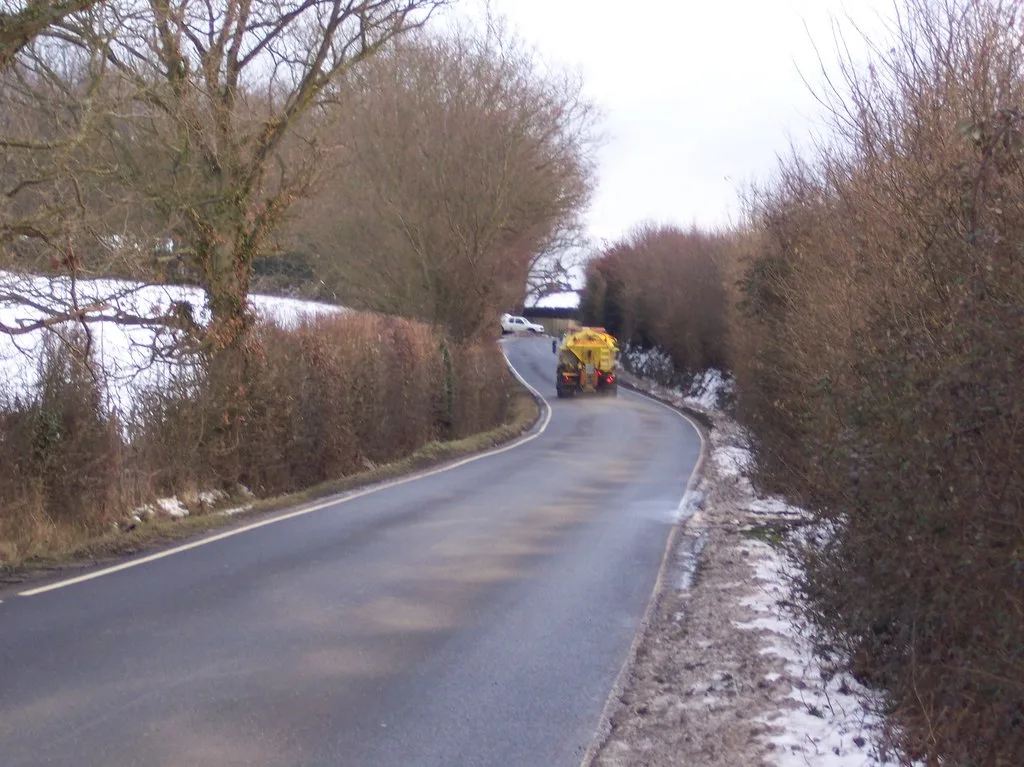
Photo: David Anstiss, CC BY-SA 2.0, via Wikimedia Commons
Frozen ponds and ice: keep your dog on a lead
Frozen water is the biggest danger on a winter dog walk. The RSPCA and the PDSA both advise keeping dogs away from frozen ponds and lakes and on a lead near them, because thin ice can break under their weight. Fire services such as Manchester Fire and Rescue also ask walkers not to throw sticks or balls onto the ice.
If your dog does go through the ice, London Fire Brigade and Buckinghamshire Fire and Rescue Service give the same advice: do not go onto the ice yourself. Call 999 and ask for the fire service, stay on solid ground, and call your dog so that it swims towards you. North Yorkshire Fire and Rescue points out that a person who goes onto the ice to save an animal risks ending up in the freezing water as well.
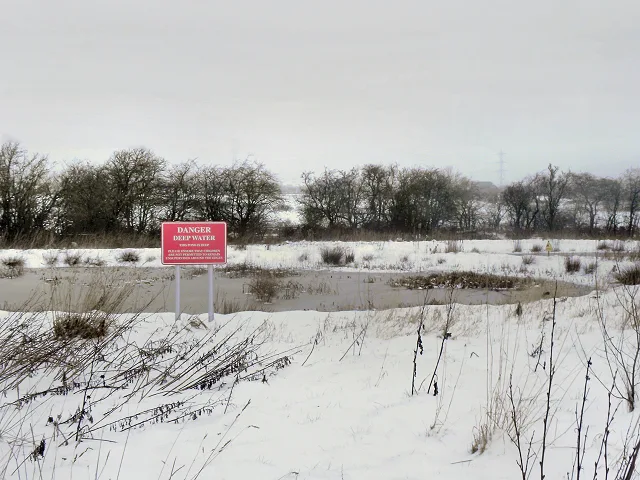
Photo: David Dixon, CC BY-SA 2.0, via Wikimedia Commons
Coats, cold and shorter walks
Not every dog needs a coat. The RSPCA says a winter coat helps elderly, young, small, thin-furred or medically vulnerable dogs, and that it should be snug without restricting movement. The PDSA notes that cold weather can make stiff joints worse in older dogs, and that walks may need to be shorter in bad weather, with extra play indoors instead.
Watch your dog during the walk. A dog that keeps lifting its paws, slows down or tries to turn back is telling you it is cold.
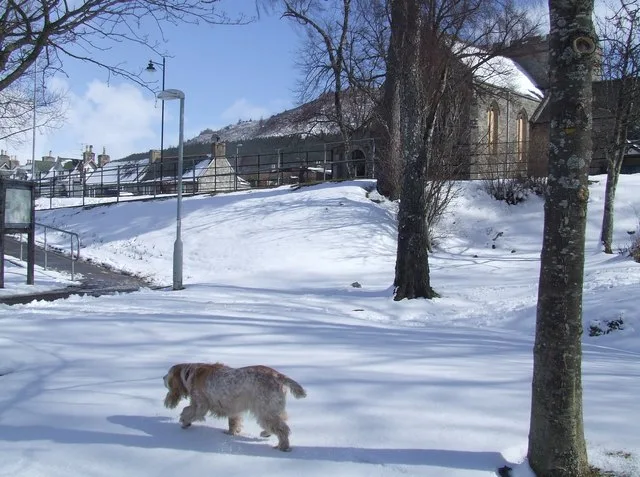
Photo: Gwen and James Anderson, CC BY-SA 2.0, via Wikimedia Commons
Dark afternoons: staying visible with your dog
In December the sun sets before 4 pm in much of the United Kingdom, so many winter dog walks end in the dark. The PDSA advises walking in daylight where possible and, after dark, using an LED collar, a hi-vis lead or coat and a good torch, and not letting your dog off the lead. The RSPCA adds that reflective gear for you and your dog helps drivers see you.
Water and rest stops on a winter dog walk
Dogs need water in winter too. Outdoor drinking water points are harder to find in the cold months. According to Outdoor Pitstop's data (as of 25 November 2026):
| Country | Drinking water points | Marked as seasonal | Marked for dogs |
|---|---|---|---|
| United Kingdom | 2,923 | 5 | 32 |
| Netherlands | 2,866 | 224 | 8 |
| Ireland | 374 | 0 | 3 |
"Seasonal" means the tap is known to be switched off for part of the year, usually in winter to stop frost damage. In the Netherlands that applies to at least 224 taps, so take a bottle and a folding bowl on a winter walk. You can find the 2,923 drinking water points in the United Kingdom and the drinking water points in the Netherlands on our map.


A bench is also welcome on a long winter walk, for you if not for the dog. Outdoor Pitstop maps 188,102 benches in the United Kingdom (as of 25 November 2026). For more on walking with a dog all year round, including leads, livestock and dog-friendly routes, see our trail guide to walking with dogs.
On the map
Water fountains and refill points in United Kingdom, Ireland and Netherlands (6,163)
Take Outdoor Pitstop along on your phone
Free · 3.4 million pitstops in 44 countries