Outdoor Pitstop

Starling murmuration: when to see one
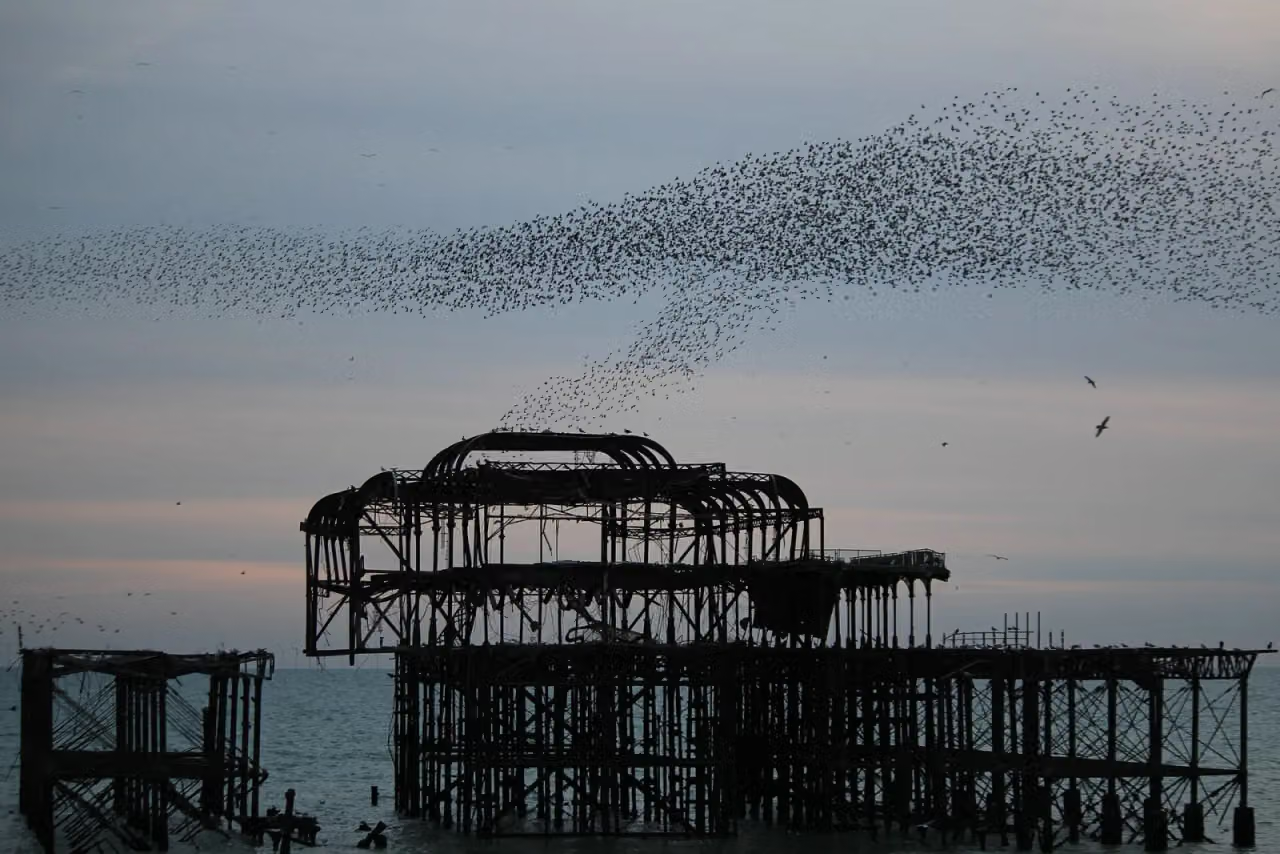
Starlings live in the UK all year, but the big gatherings belong to the cold months. The RSPB says murmurations start from November, as the birds settle at their roost sites, and can carry on until February, when the migrant starlings head back to Scandinavia and the resident birds spread out to breed. The Woodland Trust gives the same window and adds early March; Sussex Wildlife Trust puts the start of the season as early as October. So the first small flocks are an autumn sight, and the largest are a winter one.
On the day itself the show is short. At RSPB Ham Wall in Somerset the starlings spend the day feeding, some up to 20 miles away, and the murmuration can begin an hour or so before sunset. On a cloudy day they tend to come back earlier; on a bright day they stay out feeding for longer. Once the light goes, the birds pour down into the reeds and it is over within minutes.
At Ham Wall the RSPB also points to the morning: about half an hour before sunrise, tens of thousands of birds can burst out of the reedbed at once.
- Best months
- November to February
- Time of day
- the hour before sunset
- Also
- leaving the roost, about 30 minutes before sunrise
- Roost
- reedbeds, piers, cliffs, woods
When to see a starling murmuration
- Jan: best time
- Feb: best time
- Mar: possible
- Apr
- May
- Jun
- Jul
- Aug
- Sep
- Oct: possible
- Nov: best time (now)
- Dec: best time
Bird murmuration: why starlings flock together
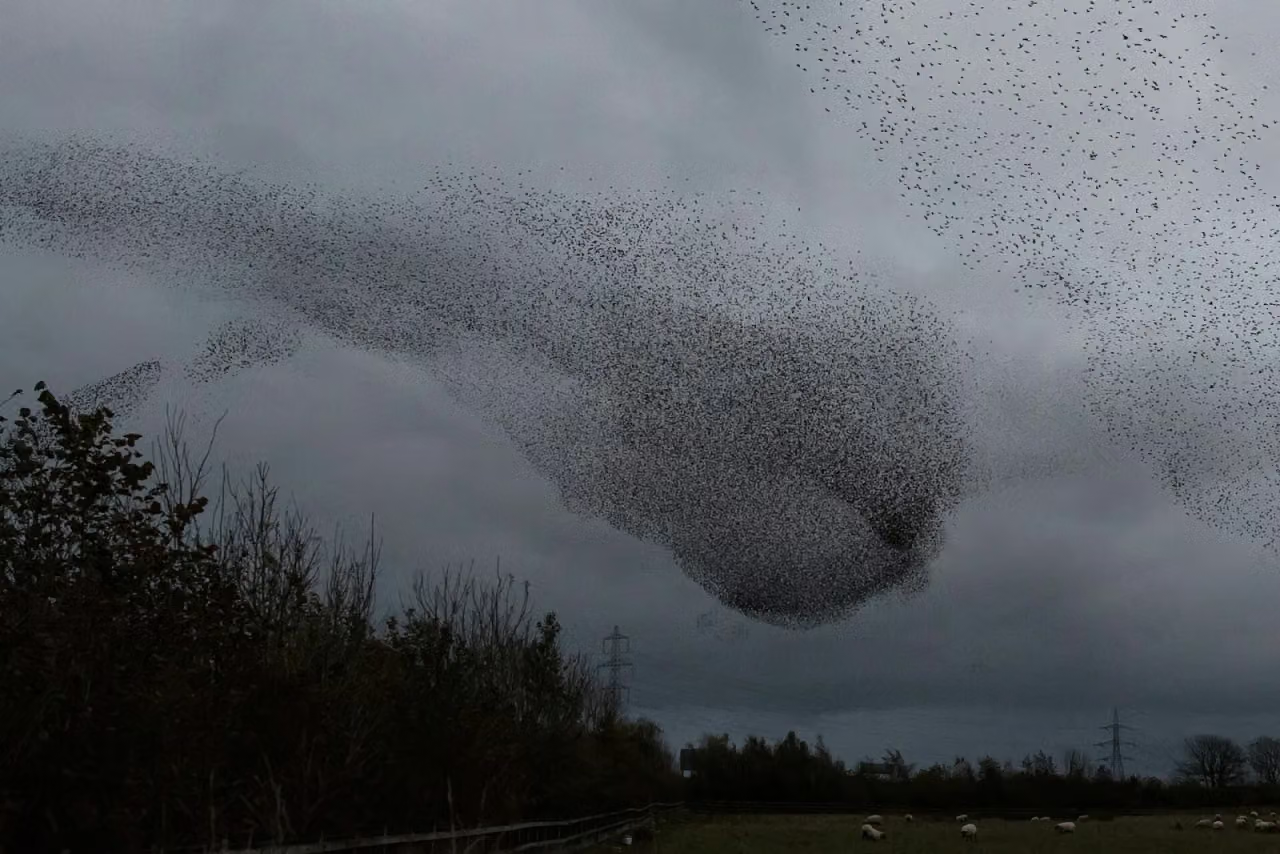
Murmuration is the collective noun for a group of starlings, and the Woodland Trust notes it is also the word for the shapes the flock makes in the sky. Sussex Wildlife Trust explains the name: it comes from the constant rustle of thousands of wings, like the murmur of a crowd.
The RSPB, the Woodland Trust and BirdWatch Ireland give much the same reasons for a bird murmuration:
- Safety. Thousands of birds arriving at one place at once attract predators such as peregrines and sparrowhawks. A moving mass of birds makes it hard to single one out, and birds take turns at the risky edge of the flock.
- Warmth. Packed together at the roost, the starlings stay warmer on long winter nights.
- Information. The roost is where the birds learn about good feeding grounds.
The shapes come from very fast reactions: when one starling turns, its neighbours turn with it, and the movement ripples through the flock. Sussex Wildlife Trust adds honestly that exactly how they do it is still not fully understood.
Where to see a starling murmuration in the UK and Ireland
A murmuration happens over the roost, so look for places with shelter: reedbeds, cliffs, woods and structures such as piers. The Woodland Trust and the RSPB name these well-known sites:
- Somerset Levels: RSPB Ham Wall and Shapwick Heath in the Avalon Marshes. See starling murmurations in Somerset.
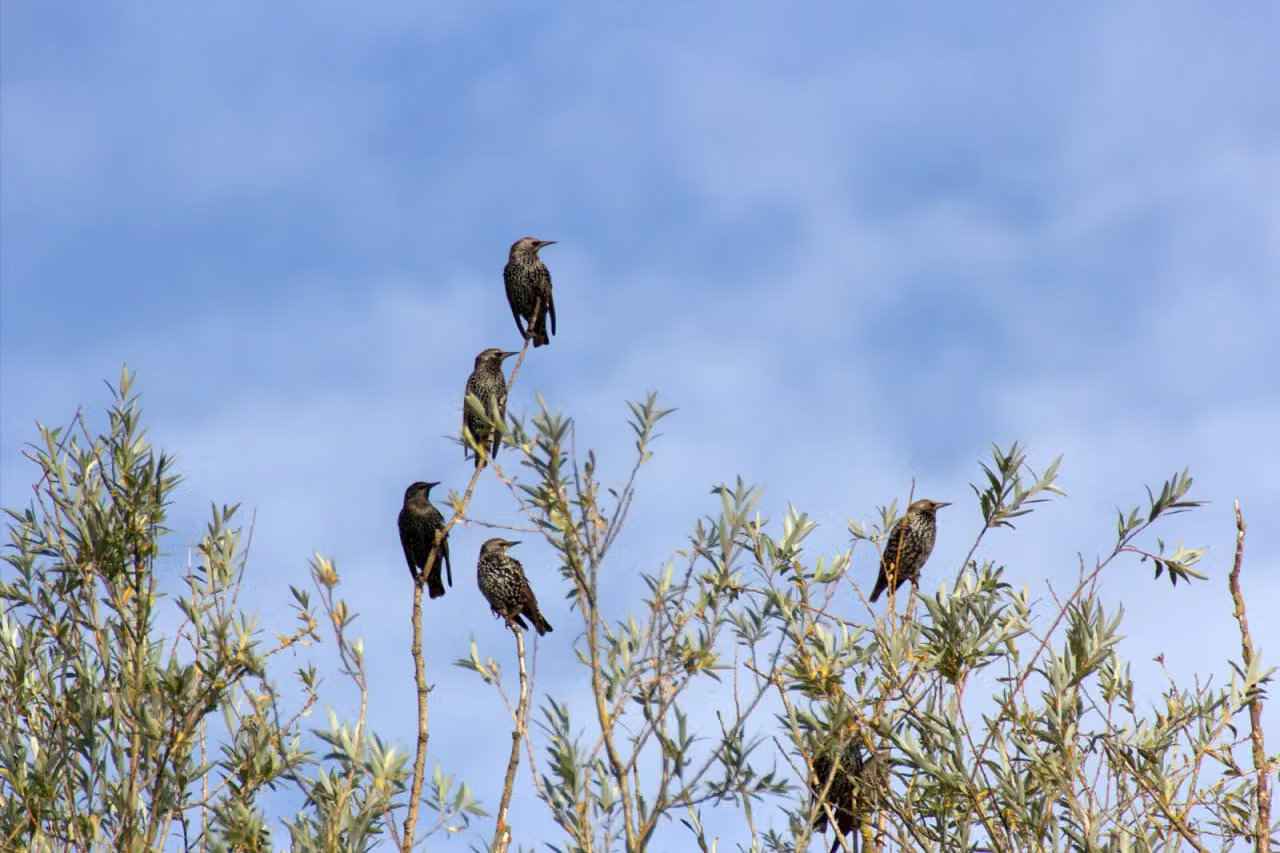
- Brighton Pier, Sussex: the starlings roost under the pier; Sussex Wildlife Trust suggests arriving about half an hour before sunset. See starling murmurations in Brighton.
- Lancashire and the north: RSPB Leighton Moss, Blackpool, and RSPB Fairburn Ings and St Aidan's in West Yorkshire.
- Wales: Aberystwyth Pier in Ceredigion and RSPB Newport Wetlands in Gwent.
- East and south of England: RSPB Minsmere in Suffolk, Fen Drayton in Cambridgeshire, RSPB Frampton Marsh in Lincolnshire, RSPB Dungeness in Kent, the Exe Estuary in Devon and Marazion Marsh in Cornwall.
In Ireland, BirdWatch Ireland names Lough Ennell in Westmeath, Borrisokane in Tipperary, near Nobber in Meath, Timoleague in Cork, Lackagh in Galway and Lough Ree. The largest Irish murmuration in its survey so far was over 100,000 starlings, in Galway. More in starling murmurations in Ireland, and the whole list for Britain is in starling murmurations in the UK.
A roost is not fixed. The Woodland Trust warns that numbers at well-known sites vary from year to year, and on the Somerset Levels the RSPB says the roost shifts regularly between reserves.

Starling murmuration near me: finding a roost
You do not need a famous reserve. The Woodland Trust says flocks can often be seen coming in to roost over towns across the UK, and the RSPB notes that starlings are found almost everywhere in the UK except parts of Scotland.
Three ways to find a murmuration near you, from the sources I read:
- Check recent sightings. The RSPB and the Woodland Trust both advise checking online before you set out; the RSPB points to social media and the starlingsintheuk.co.uk website. In Ireland, BirdWatch Ireland's Irish Starling Murmuration Survey puts reported roosts on an online map.
- Follow the flocks. BirdWatch Ireland suggests watching where your local starlings head as sunset approaches, and working out from that where their roost is.
- Ring ahead in Somerset. For Ham Wall and the Avalon Marshes the RSPB runs an automated Starling hotline from 1 November to 28 February, saying which reserve the birds used the night before. The number is on the RSPB's starling roost page.
European starling migration: where the extra birds come from
The UK's own starlings are resident, but they are joined each winter by migrants. The RSPB says the extra birds come mainly from Scandinavia, and the Woodland Trust adds Eastern Europe; they come to escape the harsher cold further north and east. BirdWatch Ireland says the birds that reach Ireland come from as far away as Russia, Finland and Estonia, and that Irish murmurations peak in December and January. In spring the migrants fly back to breed.
The big flocks hide a decline. The BTO puts the fall in the UK breeding population at 61% between 1995 and 2024, and the starling is on the UK Red List of birds of conservation concern. In Ireland it is Amber-listed, according to BirdWatch Ireland.
How to watch a murmuration without disturbing it
- Arrive early. At Ham Wall the RSPB asks visitors to be in the car park by 3.30pm at the latest, and recommends 2pm. Check the sunset time for your site.
- Expect a walk. At Ham Wall it can be up to 30 minutes on foot to where the starlings are roosting, and the way back is in the dark: bring a torch.
- Do not park on the road. If the car park is full, the RSPB says the site is at capacity; come back another day or pick another roost. Weekends and the Christmas period are busiest, so a weekday is calmer. Ham Wall can also be reached on the Bittern Trail from Glastonbury, with bike racks at the car park and viewing platforms.
- Stay on the paths and keep dogs on a lead. At Ham Wall dogs are only allowed on the main track along the canal, and not on Shapwick Heath NNR.
- Dress for the cold. Warm layers, sturdy footwear and thick socks; a reedbed at dusk in winter is colder than it looks.
On the way: a bench, a toilet and water
A murmuration is a good reason for a short walk at the end of the afternoon, and a bench on a sea wall, a pier or the edge of a reedbed is the place to wait. Look up the benches in the United Kingdom before you go and save one with a view in the app, so you can find it again when the light is going.
Toilets are scarce near reedbeds, and you may be out for two or three hours: see the public toilets in the United Kingdom or the public toilets in Ireland on your way. For a drink, the water fountains in the United Kingdom show where you can refill a bottle; on a winter evening a flask is just as useful.
In the app I see 188,102 benches and 13,915 public toilets in the United Kingdom.
From our data
Pitstops in the United Kingdom
- Benches
- 188,102
- in the United Kingdom
- Public toilets
- 13,915
- in the United Kingdom
- Water points
- 2,923
- in the United Kingdom
As of 28 November 2026, from the Outdoor Pitstop database. The whole United Kingdom. Benches, public toilets and water points come from OpenStreetMap and reports by our users.
From our data
Pitstops in Ireland
- Benches
- 13,034
- in Ireland
- Public toilets
- 1,465
- in Ireland
- Water points
- 374
- in Ireland
As of 28 November 2026, from the Outdoor Pitstop database. The whole of Ireland.
An evening walk to the starlings
We have no walking routes for the United Kingdom and Ireland in the app yet. The benches, public toilets and water points near the roosts are on our country pages; open the map in the app to navigate to them.
Pitstops in the United Kingdom →Pitstops in Ireland