Outdoor Pitstop

Autumn colours: when do leaves change colour?
There is no fixed date for autumn colours in the UK. In a Woodland Trust film on its blog (updated October 2026), Kate Lewthwaite of Nature's Calendar says a tree can reach full tint (all its leaves turned, with almost no green left) at any time from the end of September to November, and sometimes in early December. She describes the timing as very dependent on the weather.
A tree does not reach full tint every year. In a windy or frosty spell a tree may drop its leaves before it has fully changed colour. In practice this means:
- Late September to October: the first trees start to turn.
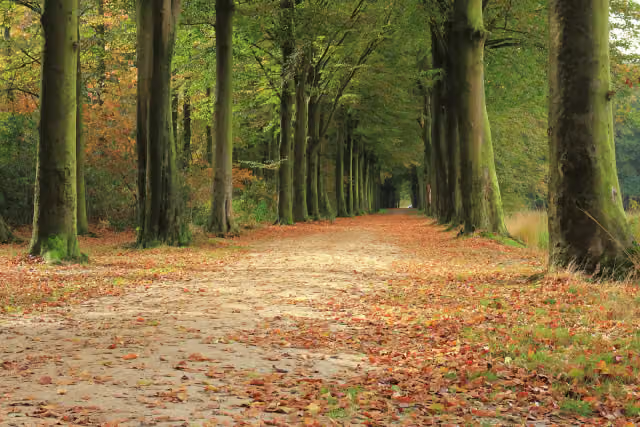
- October and November: the most likely weeks for a wood in full colour.
- Early December: in some years there is still colour, after a mild autumn without strong winds.
Because the timing moves from year to year, check the weather of the past weeks before a trip. A calm, dry spell with chilly nights is a good sign. A storm can strip a wood in a single day.
- Earliest full colour
- end of September
- Most likely
- October and November
- Latest
- early December in some years
- Depends on
- the weather
When to see autumn leaves in the UK
- Jan
- Feb
- Mar
- Apr
- May
- Jun
- Jul
- Aug
- Sep: possible
- Oct: most likely
- Nov: most likely (now)
- Dec: possible
Fall colours leaves: why they turn yellow, orange and red
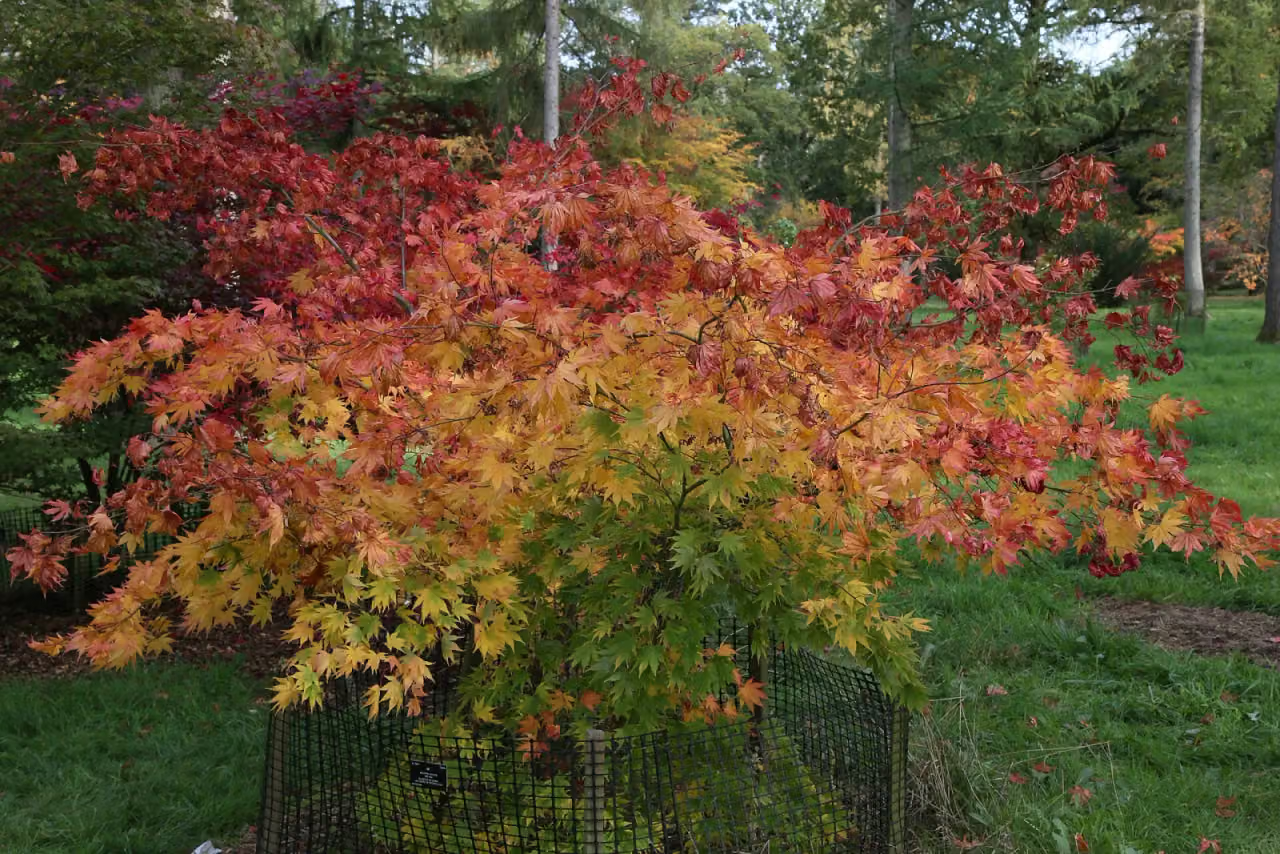
Americans say fall, Britons say autumn, but the leaves change for the same reason. The Woodland Trust explains that deciduous trees get ready for winter by breaking down chlorophyll, the green pigment they use for photosynthesis. As the green fades, the other pigments in the leaf start to show.
The Trust divides leaf pigments into three main groups:
- chlorophyll: green;
- carotenes: yellow;
- anthocyanins: reds and pinks.
The yellows are in the leaf all year and are simply hidden by the green until autumn. The reds work differently. According to the Woodland Trust, they form only in certain weather, when sugars build up in the leaf.
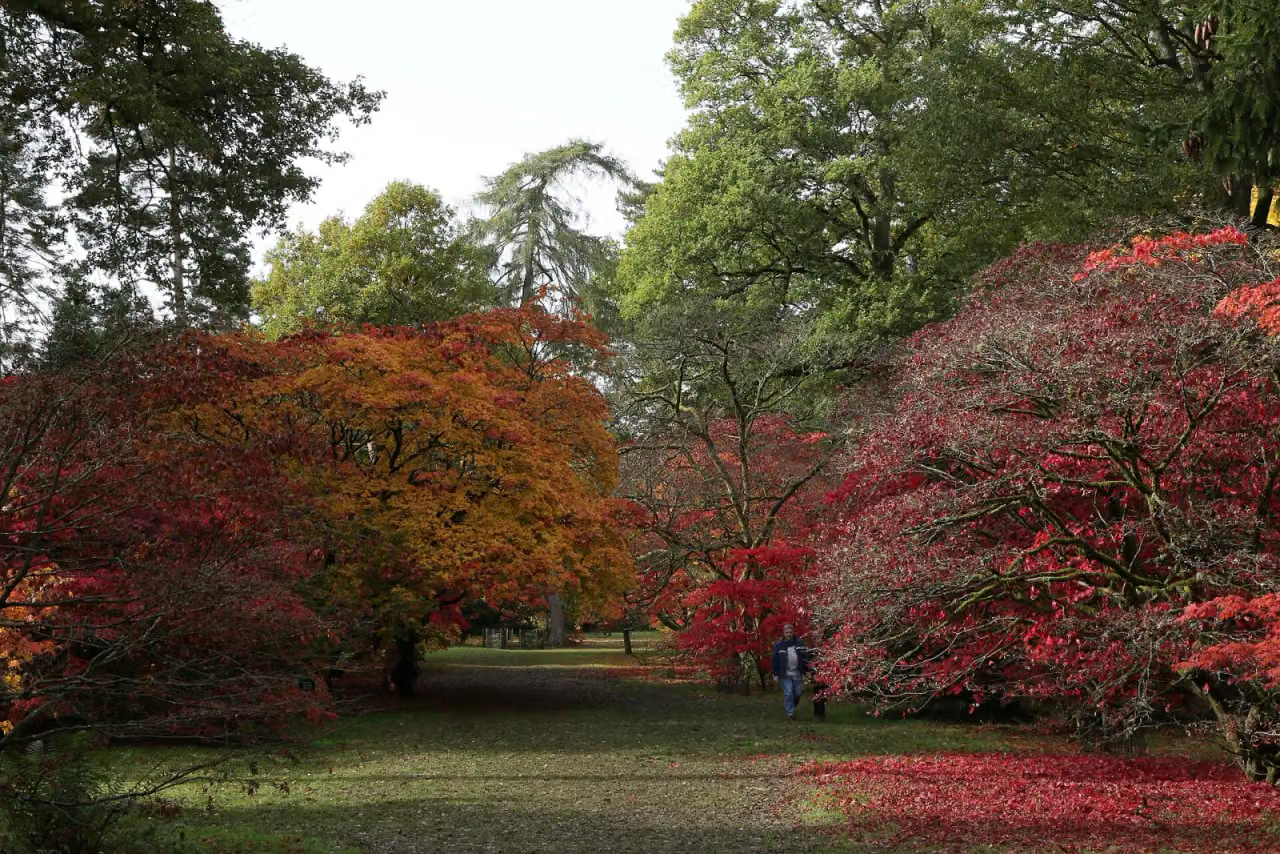
Each tree species holds a different mix of these pigments, which is why some trees colour more brightly than others. The Trust names beech as an example of a tree known for a bright autumn display. Even trees of the same species can be at different stages: one may be nearly bare while the next has hardly turned.
- Green
- chlorophyll
- Yellow
- carotenes
- Red and pink
- anthocyanins
Why autumn colours are brighter in some years
According to the Woodland Trust, the depth of colour comes from both the chemistry in the leaf and the weather. That is why one autumn can be dull and the next spectacular:
- Cold nights: low temperatures break down chlorophyll, so the leaves fade to yellow. If the nights stay above freezing, the tree makes more anthocyanin and the leaves turn red.
- Dry weather: sugars build up in the leaves, more anthocyanin forms and the leaves become redder.
- Sunny days: a tree stops making new chlorophyll in autumn but can still photosynthesise with what is left. The extra sugar again means redder leaves.
In short, a sunny, dry autumn with cold nights and no frost gives the best colours. Strong wind and hard frost do the opposite and can bring the leaves down early.
Why leaves fall. The Woodland Trust explains that as the days shorten and cool, leaves produce less of the hormone auxin. Cells at the base of the leaf stalk then stretch and break apart, until the wind or the leaf's own weight brings it down. A bare tree keeps moisture in its branches and trunk, uses less energy and copes better with winter storms.
Autumn foliage UK: where to look
You do not need to travel far to see good autumn colour. Any wood with broadleaved trees such as beech will change colour, while conifer plantations stay green. The Woodland Trust says it has thousands of woods across the UK that are free to visit. Its own autumn pages feature two of them:
- Fingle Woods, which the Trust shows as an example of how colourful a wood becomes in autumn;
- Hackfall, whose trees illustrate the Trust's explanation of why leaves change colour.
Rather than send you to a paid attraction, this page points you to a wood near home. Places by country are in the guides to autumn colours in the UK and autumn colours in England. For what else to look out for this season, see autumn: what to see outdoors.
While you are in the woods, the Woodland Trust suggests looking out for fungi such as fly agaric. Many are poisonous, so look at them without touching.
Fall colours near me: find a wood close to home
If you are searching for autumn colours near you, start with the Woodland Trust's Find a wood tool on its website, which lists the woods open to visitors. Then check the area in Outdoor Pitstop to see what is on the way.
Because trees of the same species can be at different stages, Nature's Calendar suggests looking for three trees of one species that are doing the same thing before you call it full tint. You can send your sightings to the project. The Woodland Trust uses these records to help scientists understand how climate change is affecting the timing of the seasons.
In November the days are short, so set off early enough to be out of the trees before dark.
On the way: benches, water and toilets
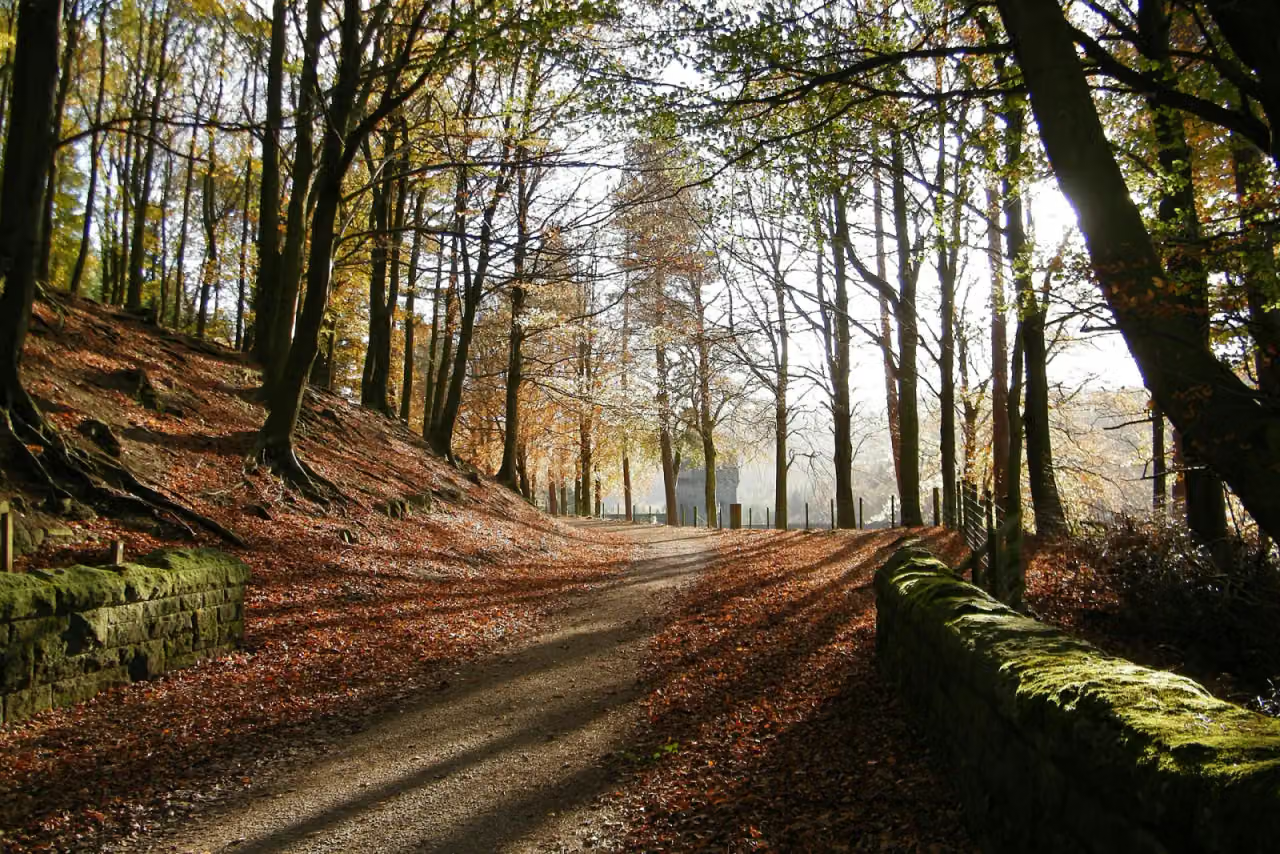
On an autumn walk, a bench at the end of a beech avenue or at the edge of a wood is a good place to stop and look up into the trees. The benches in the United Kingdom page shows where they are.
Toilets are mostly found at car parks, visitor centres and villages on the edge of a wood rather than inside it. See the public toilets in the United Kingdom, or the public toilets in Ireland if you are walking there. Some outdoor taps are turned off in winter. Check the water fountains and refill points in the United Kingdom before you go, or fill your bottle at home.
In the app I see 188,102 benches and 13,915 public toilets in the United Kingdom.
From our data
Pitstops in the United Kingdom
- Benches
- 188,102
- in the United Kingdom
- Public toilets
- 13,915
- in the United Kingdom
- Water points
- 2,923
- in the United Kingdom
- Water points off in winter
- 2
- in the United Kingdom
As of 28 November 2026, from the Outdoor Pitstop database. The whole United Kingdom. Seasonal taps are turned off in winter; check before a late-autumn walk.
Woodland walks in autumn
We do not have walking or cycling routes for the United Kingdom or Ireland in the app yet. The pitstops near your wood (benches, toilets and water) are on our pages for the United Kingdom, and every region has its own page.
Pitstops in the United Kingdom →Benches in the United KingdomPublic toilets in the United Kingdom