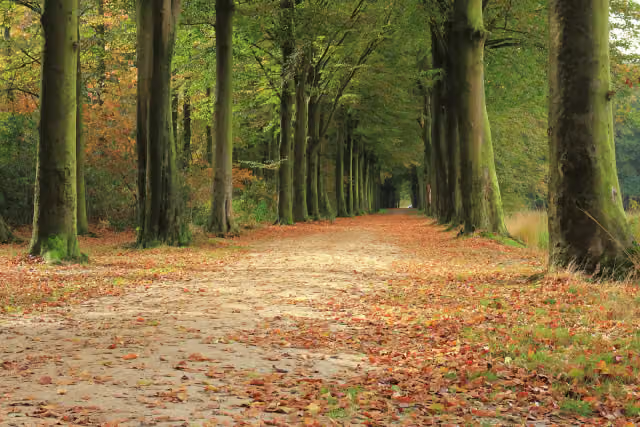
Outdoor Pitstop

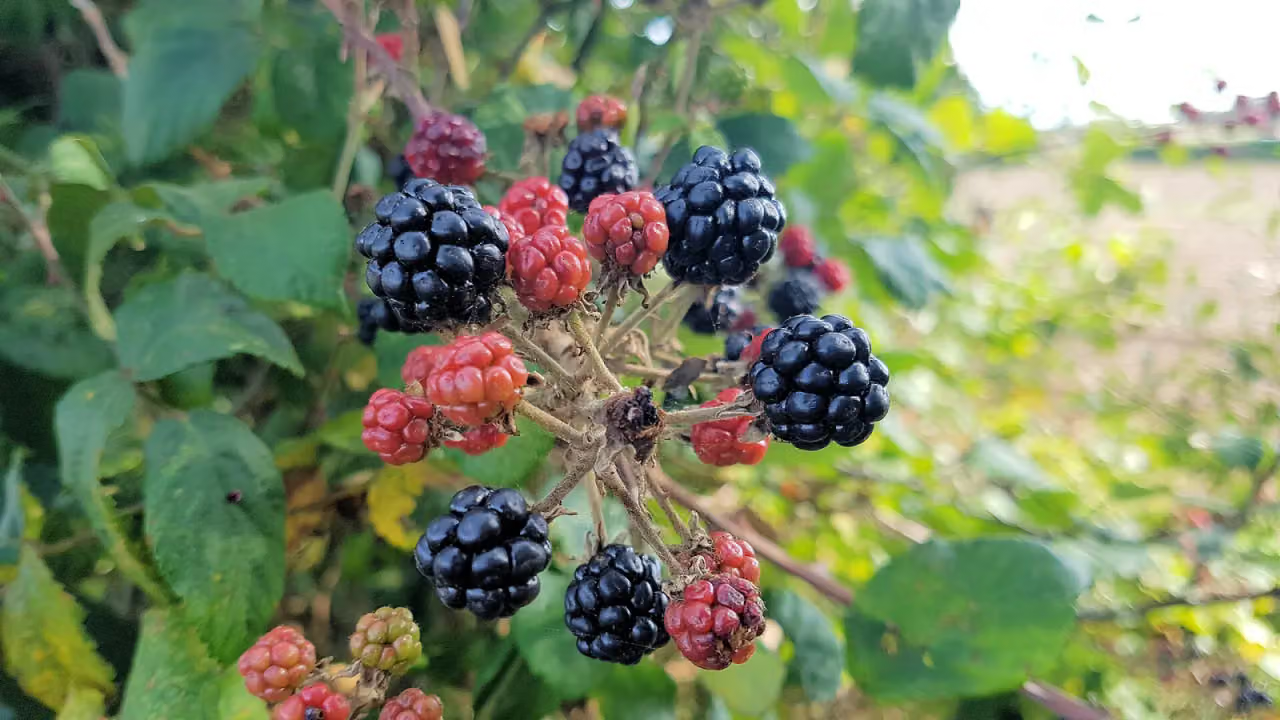
When to go foraging in autumn
- Jan
- Feb
- Mar
- Apr
- May
- Jun
- Jul
- Aug: good
- Sep: best time
- Oct: best time
- Nov: good (now)
- Dec: good
- Late summerHazelnuts from late August, elderberries from July to October.
- SeptemberSloes, rosehips, haws and beech nuts start to ripen.
- OctoberSweet chestnuts drop, bullace ripens and sloes are still on the blackthorn.
- November and DecemberSloes and juniper berries last into December; rosehips until November.
Foraging calendar: what to forage in autumn
Autumn is the richest season for foraging. The Woodland Trust calls early autumn the best time of all, when hedgerows and trees are heavy with fruit and nuts. Its monthly guides give these rough windows:
- September: sloes, rosehips, hawthorn berries (haws), elderberries, hazelnuts and the first beech nuts.
- October: sweet chestnuts, bullace (a wild plum), beech nuts, juniper berries and walnuts, with sloes and rosehips still going.
- November and December: the last sloes, bullace until November and juniper berries into December.
Use these months as a rough guide, not a fixed timetable. The Woodland Trust points out that climate change and the weather shift when wild food comes into season, so check what is happening near you. Elderberries show why you need to know the plant: the trust says they must be cooked, because raw berries are mildly poisonous and upset the stomach.
- Sloes
- end of September to December
- Sweet chestnuts
- from October
- Rosehips
- September to November
- Hazelnuts
- from late August
Sloe picking: when sloes are ready
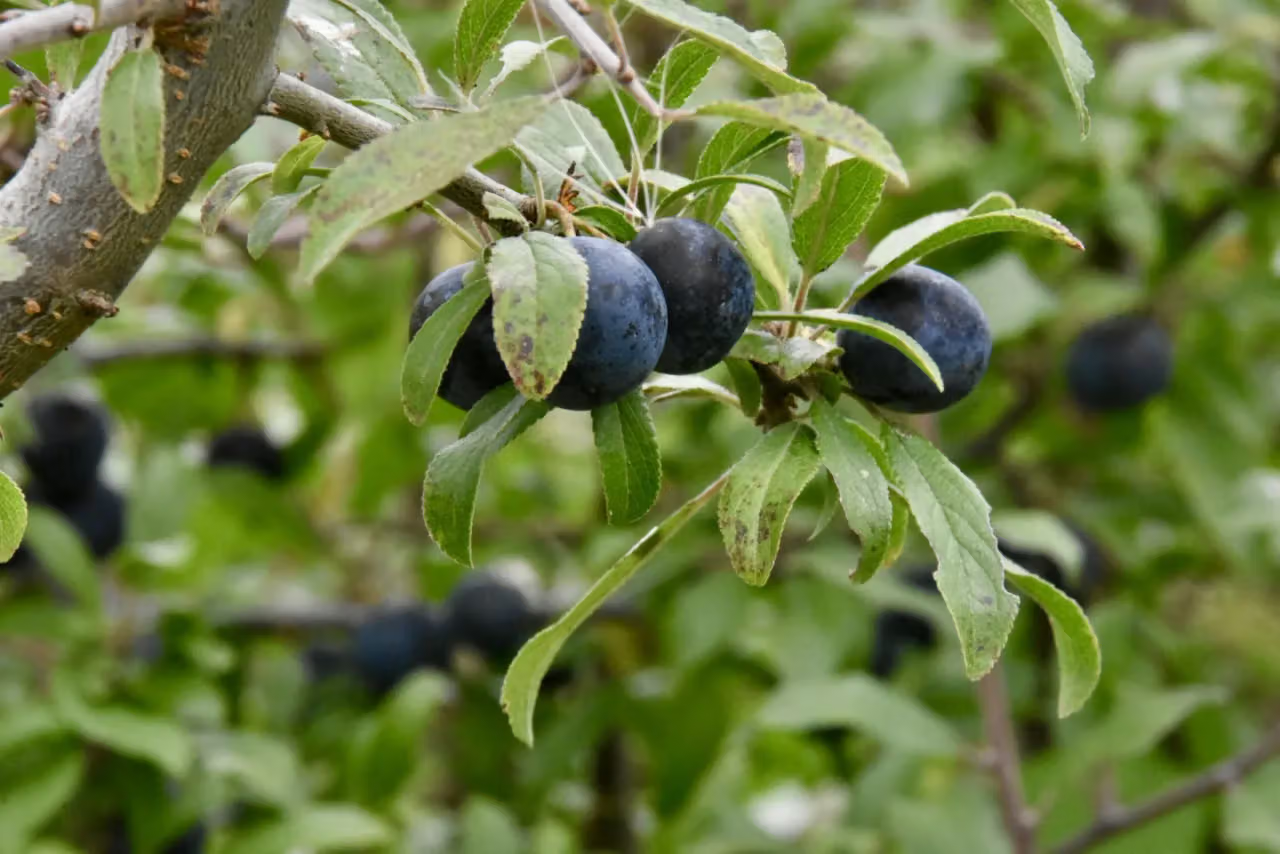
Sloes are the small, sour fruits of the blackthorn, a relative of plums and cherries. They are too bitter to eat raw and are best known as the base of sloe gin. According to the Woodland Trust they turn blue-black when ripe, starting in September, and you can pick them from the end of September until December along hedgerows and field edges.
The best time to pick sloes is traditionally after the first frost, which softens the skins and helps the juice come out. You do not have to wait for a frost: the Woodland Trust suggests picking them earlier and putting them in the freezer at home instead.
Some years the blackthorn is laden and some years it is almost bare. The trust links this to the weather of the previous spring: sloes are most plentiful after the right mix of warmth and rain.
Chestnuts near me: where sweet chestnuts fall
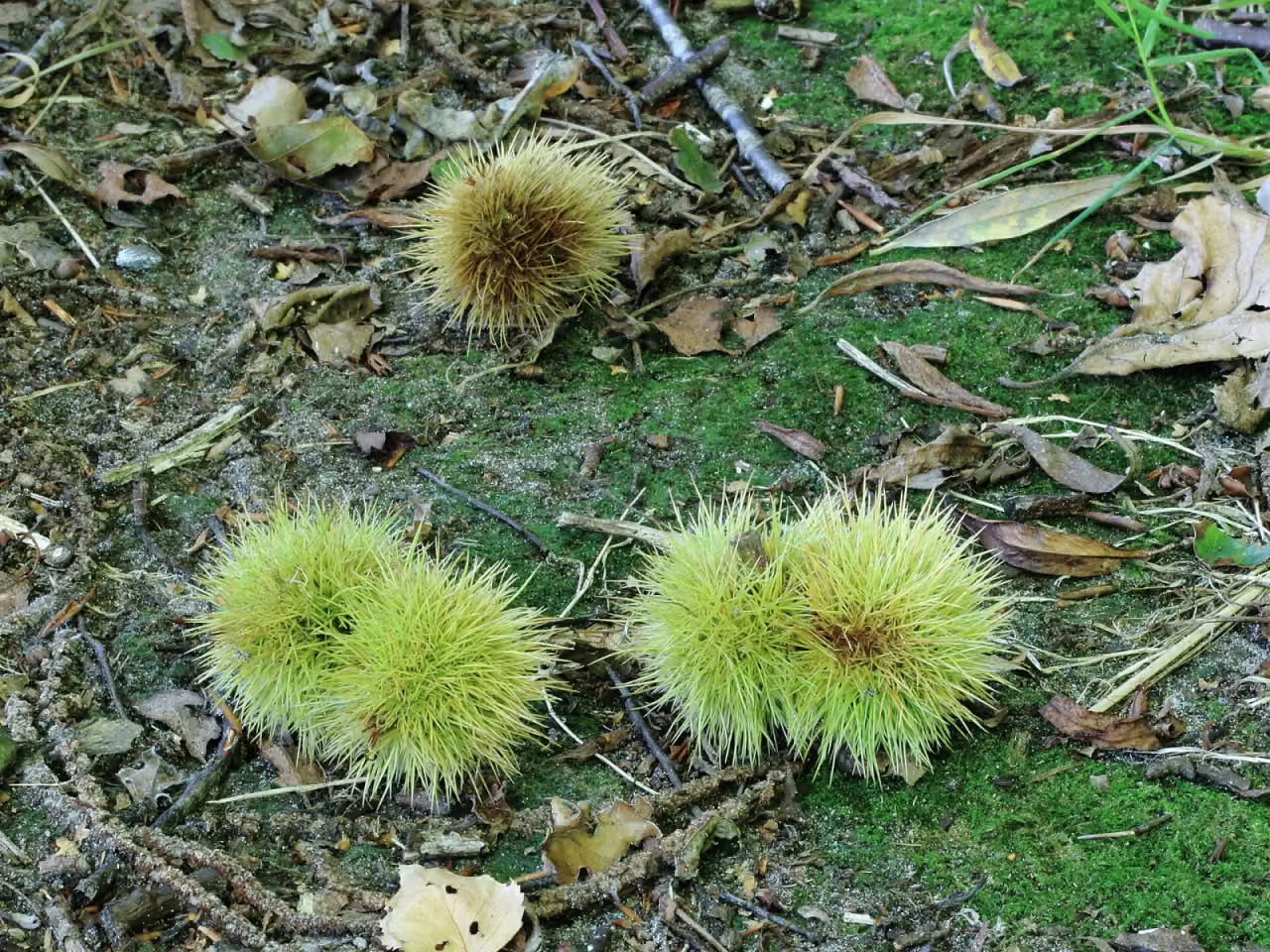
Sweet chestnut trees grow in woods, in parkland and along roads, says the Woodland Trust, and October is one of the best months to collect their shiny, reddish-brown nuts. The best crop lies at the foot of large, established trees, which keep dropping nuts from October into late autumn and early winter.
A tip from the trust for chestnut picking: go out after a windy day and look for husks that have already split open. Before cooking, cut a cross into each nut so it does not burst.
You may also find walnuts. The Woodland Trust writes that the Romans brought walnut trees to the UK. Today you will mostly find them in large gardens and parks, and the nuts are picked in late autumn when the green husk starts to split. On private land, ask the owner first.
Conker season: sweet chestnuts and conkers
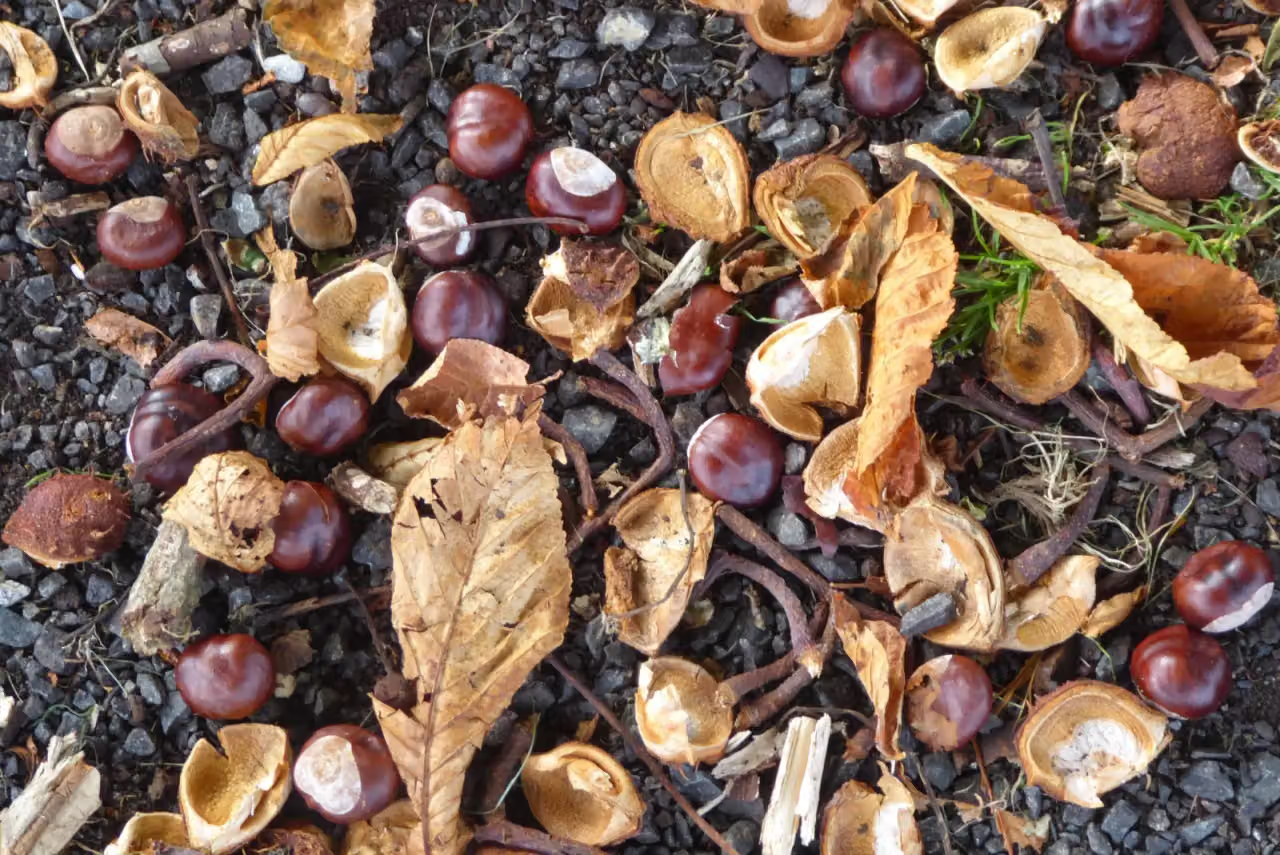
Conkers and sweet chestnuts both fall in autumn, but they grow on different trees: conkers come from the horse chestnut, edible chestnuts from the sweet chestnut. The Woodland Trust's monthly foraging guides list the sweet chestnut as an October find. Conkers do not appear in any of the guides I read for this page.
The simplest rule: collect conkers for a game if you like, but only eat a nut you can identify with certainty. The Woodland Trust's rule is never to eat a wild plant or fungus unless you are absolutely sure what it is.
Foraging in the UK: what is allowed
You cannot simply take whatever you find. The Woodland Trust sums up the law and good practice like this:
- The law. All wild plants are protected under the Wildlife and Countryside Act 1981. Digging up or removing a plant, including fungi, lichens and algae, from the land it grows on without the permission of the landowner or occupier is illegal. The species on Schedule 8 of the act are specially protected against picking, uprooting, damage and sale.
- Permission. On Woodland Trust sites you may forage for personal use only, never commercially. On some sites that are important for conservation or suffer from over-picking, the trust asks you not to forage at all. Signs on site tell you, but check before you set off.
- Minimise damage. Stay on paths, do not trample the area you pick from, and never pull up roots.
- Only from plenty. Pick only where a fruit, nut or leaf grows in abundance, and avoid rare species, especially in ancient woodland.
- Leave plenty behind. Wild food is vital for birds and other wildlife, and you are probably not the only forager.
The trust also refers to Natural England's Countryside Code. Foraging in Scotland and Ireland has its own guides.
Foraging near me: urban foraging and local hedgerows
You do not need a remote forest for local foraging. Sloes grow in hedgerows along fields, rosehips along hedgerows and woodland edges, and sweet chestnuts and walnuts in parks and along roads. The Woodland Trust has thousands of woods across the UK that are free to visit. At each one, check the signs for local rules.
The same rules apply to urban foraging: only take from bushes that are full of fruit, stay on the paths and leave plenty for the birds, as the Woodland Trust asks. For the capital, see foraging in London, and for the south-west, foraging in Cornwall.
Foraging course near me: learning with a guide
A foraging course or a guided foraging walk is the safest way to learn which plants you can pick. The sources I read for this guide do not list any courses, so I cannot give you names or dates. Ask the organisation that manages the woods or park near you whether it runs foraging walks.
If you go on your own, the Woodland Trust advises taking a good field guide and checking each find against it on the spot. For fungi in particular, it says to leave anything you are not sure about.
Farm strawberries near me, and blueberries
Picking strawberries and cultivated blueberries on a farm is not autumn foraging: what you may pick there, and when, is up to the farmer. The Woodland Trust's autumn guides do not cover them. For fresh strawberries near you, ask the farm itself: its website or sign gives the season and opening times.
In the app you can find farm stalls, where farms sell their own produce at the roadside. What a stall sells changes through the year, and our data does not show what is on sale on a given day.
In the app I can see 126 farm stalls in the United Kingdom.
On the way: benches, water and toilets
A foraging walk is slow: you stop at every hedge. A bench at the edge of a wood or with a view over the fields is a good place to sort what you have picked and have a drink. See the benches in the United Kingdom and the water fountains and refill points, where you can rinse your hands and refill your bottle. You can also find the public toilets in the United Kingdom. In Ireland, see the public toilets in Ireland.
In the app I can see 188,102 benches and 2,923 water points in the United Kingdom.
From our data
Pitstops in the United Kingdom
- Benches
- 188,102
- in the United Kingdom
- Water points
- 2,923
- in the United Kingdom
- Public toilets
- 13,915
- in the United Kingdom
- Food stalls
- 126
- in the United Kingdom
As of 28 November 2026, from the Outdoor Pitstop database. The whole United Kingdom. Benches, water points, public toilets and farm stalls come from OpenStreetMap and from reports by our users.