Outdoor Pitstop

Birds of prey in the UK: when and where
Most birds of prey in the UK do not migrate, so the question is less when than where. The RSPB rates them by how hard they are to find:
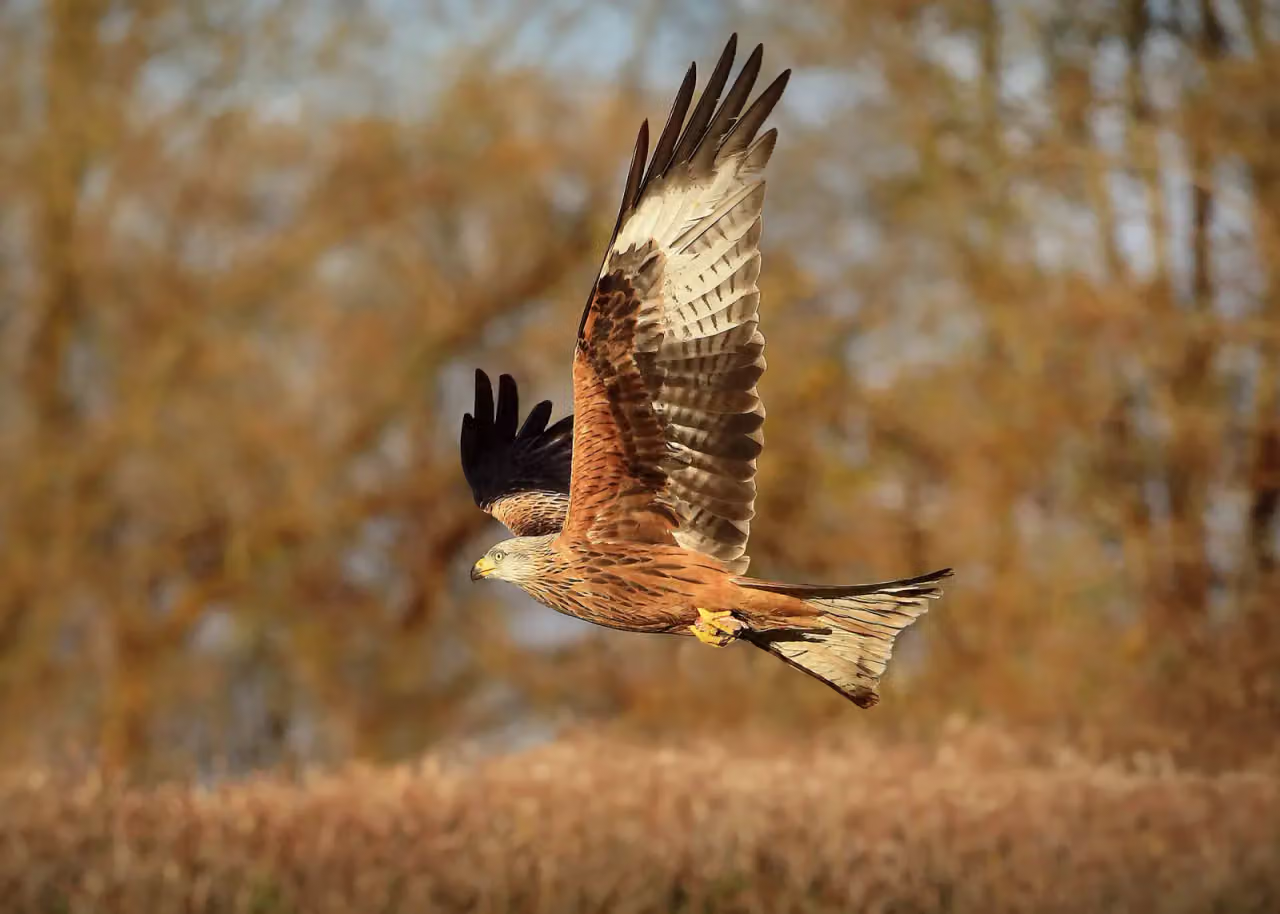
- Red kite: easy. Look for a long, deeply forked tail and white patches under angled wings.
- Buzzard: easy. The most common bird of prey in the UK, often on fence posts and lampposts by country roads.
- Kestrel: easy. The bird hovering over a road verge before it drops.
- Peregrine: moderate. Sea cliffs, crags and quarries, and more and more city buildings.
- White-tailed eagle: a challenge. Coasts in the west of Scotland and the south of England.
For autumn and winter there is a bonus: at the red kite feeding station in mid Wales, Natural Resources Wales says there are often more kites in the winter months.
- Seen
- all year (residents)
- Easiest
- red kite, buzzard, kestrel
- Hardest
- white-tailed eagle
- Checked
- 20 November 2026
Red kite feeding stations
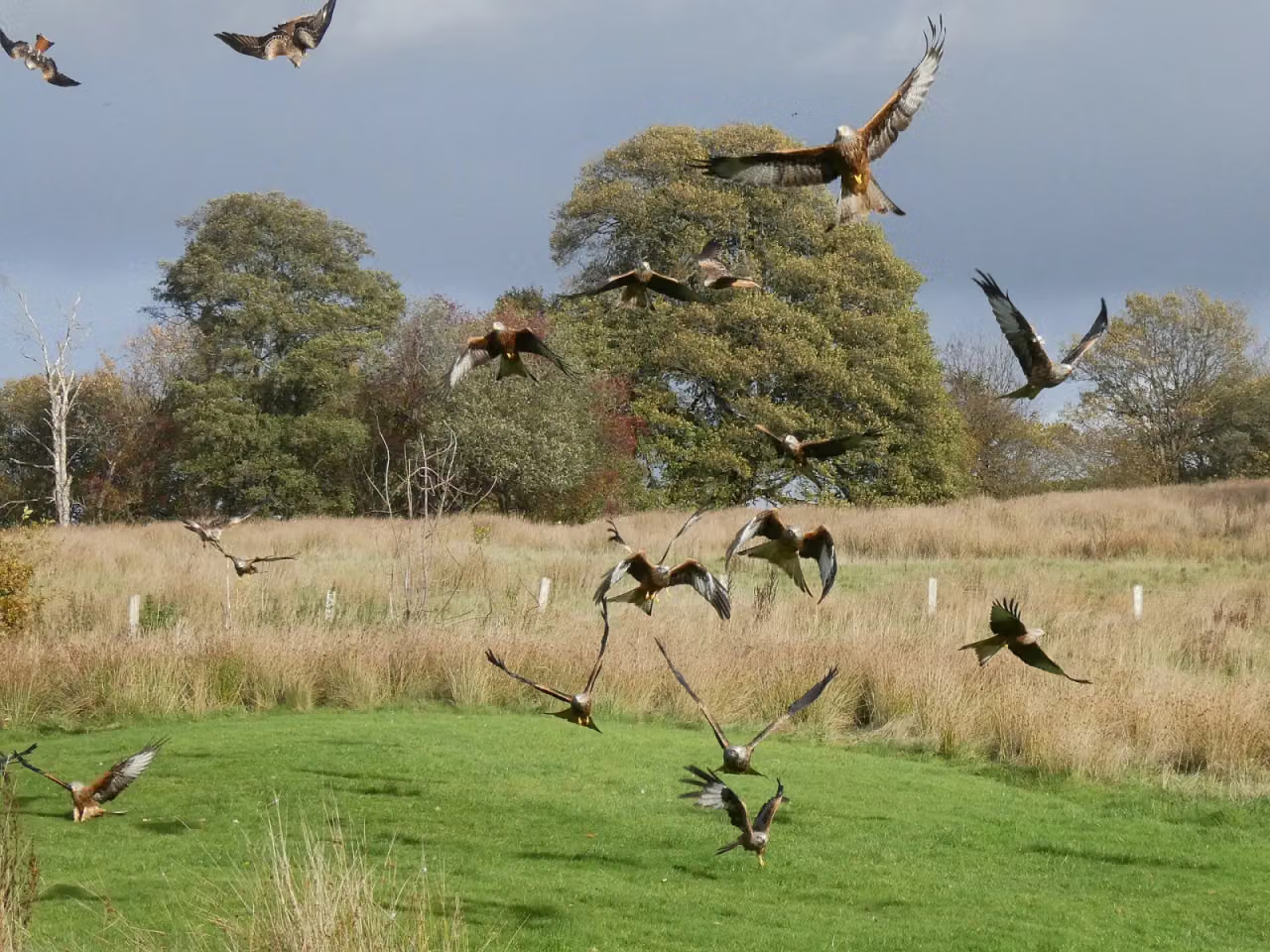
A red kite feeding station is a place where meat is put out at a set time, so dozens of kites come down at once. Red kites have fairly weak talons and live mostly on carrion, says the RSPB, which is why feeding draws them in.
Bwlch Nant yr Arian, 9 miles east of Aberystwyth on the A44, is run by Natural Resources Wales. The kites are fed by the lake every day at 2pm, and there is no charge to watch; parking is paid, by contactless or RingGo, not cash. Natural Resources Wales says you can expect up to 150 kites. Walk the Barcud Trail around the lake (1.3 km, step-free, suitable for wheelchairs and pushchairs) to the viewpoint, or go on to the large bird hide for a closer look. There are portable toilets in the car park, open every day. The X47 bus between Aberystwyth and Llanidloes stops on request at the car park entrance.
Check the feeding time on the Natural Resources Wales page before you go; we checked it on 20 November 2026.
- Feeding
- every day, 2pm
- Watching
- free
- Managed by
- Natural Resources Wales
- Trail
- Barcud Trail, 1.3 km, step-free
Red kite feeding: watching kites in the wild
You do not need a feeding station to see red kites. The RSPB says they were extinct in Scotland, England and Ireland by the end of the 19th century, with only a few pairs left in Wales. After reintroductions, numbers rose by 2,464% between 1995 and 2023, and the UK now holds about 13% of the world population.
Today they fly over woodland, open countryside and even towns, and often circle above roads looking for roadkill. Red kites start nesting in March and lay from late March to April, in high, untidy nests in woodland. Listen for a whistling call. A buzzard flies in a similar way, but it has no forked tail and holds its wings in a raised V.
Birds of prey near me: where to look
The birds of prey nearest to you are probably along the road. Kestrels hover over verges and perch on lampposts; buzzards sit on fence posts or walk through fields; a sparrowhawk is the bird of prey most likely to visit a garden. Small birds giving alarm calls are a sign one is near.
In towns, look up at cathedrals and tall buildings. The RSPB names London, Manchester, Durham, Cambridge and Winchester among the cities where peregrines have settled. For red kites near you, the RSPB map covers much of Wales, central and eastern England and parts of northern England, Scotland and Northern Ireland.
Each region has its own page in this guide, such as Wales, Scotland, England and Northern Ireland.
White-tailed eagles in the UK
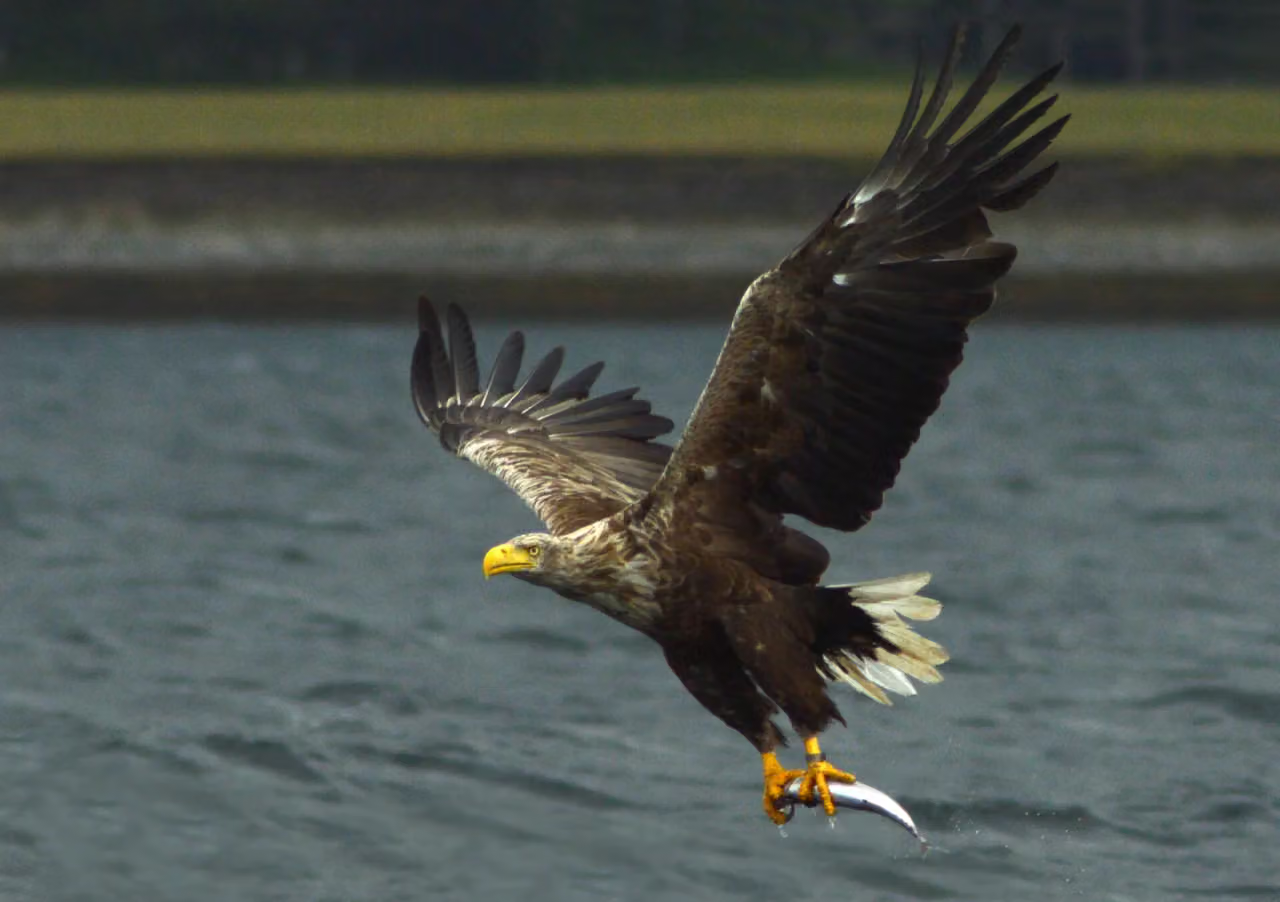
The white-tailed eagle, or sea eagle, is the largest bird of prey in the UK, nicknamed the flying barn door. The RSPB describes broad, almost rectangular wings held flat, a pale head and, in adults, a white tail; the wingspan can reach 2.4 metres.
The last one in Scotland was shot in 1918. A reintroduction by the RSPB and Scottish Natural Heritage brought them back in 1975, and in 2019 birds were released on the Isle of Wight. The RSPB says you are most likely to find them on the west coast of Scotland and the Scottish islands, with regular sightings along the south coast of England. As a best place it names Loch Druidibeg on South Uist. They nest from March to July; keep well away from any nest. See Scotland and the Isle of Wight.
Golden eagles near me: Scotland and Northern Ireland
Golden eagles soar over moorland and mountains with their wings in a shallow V. They were once found as far south as Derbyshire, but because of persecution the RSPB now places them only in parts of Northern Ireland and in the Scottish Highlands and islands; around 48 fly over southern Scotland. Many walkers who think they saw one have seen a buzzard, which is far smaller and much more common.
The best time to see birds of prey
- Jan: most kites at feeding
- Feb: most kites at feeding
- Mar: good
- Apr: good
- May: good
- Jun: good
- Jul: good
- Aug: good
- Sep: good
- Oct: good
- Nov: most kites at feeding (now)
- Dec: most kites at feeding
- AutumnRed kites, buzzards and kestrels stay all year; a good time to learn them before winter.
- WinterNatural Resources Wales often sees more kites at the 2pm feeding.
- SpringPeregrines and red kites lay eggs from late March; keep away from nests.
- SummerYoung peregrines leave the nest and white-tailed eagles raise their chicks.