Outdoor Pitstop
Short answer
Changing Places toilets are large accessible toilets with a ceiling hoist, a height-adjustable adult-sized changing bench and enough room for a wheelchair and two carers. According to the UK government, more than 250,000 people in the UK cannot use a standard accessible toilet and need one. Since 1 January 2021, many large new public buildings in England must include a Changing Places toilet.
Figures from the Outdoor Pitstop database on 25 November 2026, based on OpenStreetMap and additions from our users. Facts about the rules come from GOV.UK press releases of July 2020 and March 2021.
What is a Changing Places toilet?
A Changing Places toilet is built for people who need help to use the toilet or to be changed: for example people with profound and multiple learning disabilities, motor neurone disease, multiple sclerosis or cerebral palsy. A standard accessible toilet, the one with the grab rails and the pull cord, has no space or equipment for them. Without a Changing Places toilet, carers often have to change an adult on the floor.
According to GOV.UK, a Changing Places toilet has:
- a floor area of about 12 m² (around 130 sq ft), much larger than a standard accessible toilet;
- a hoist on the ceiling or a mobile hoist;
- an adult-sized changing bench;
- a privacy curtain or screen;
- room for the person, a wheelchair and up to two carers.
The Changing Places Consortium, set up in 2005 according to Wikipedia, campaigns for these toilets and keeps a register of facilities that meet the standard.
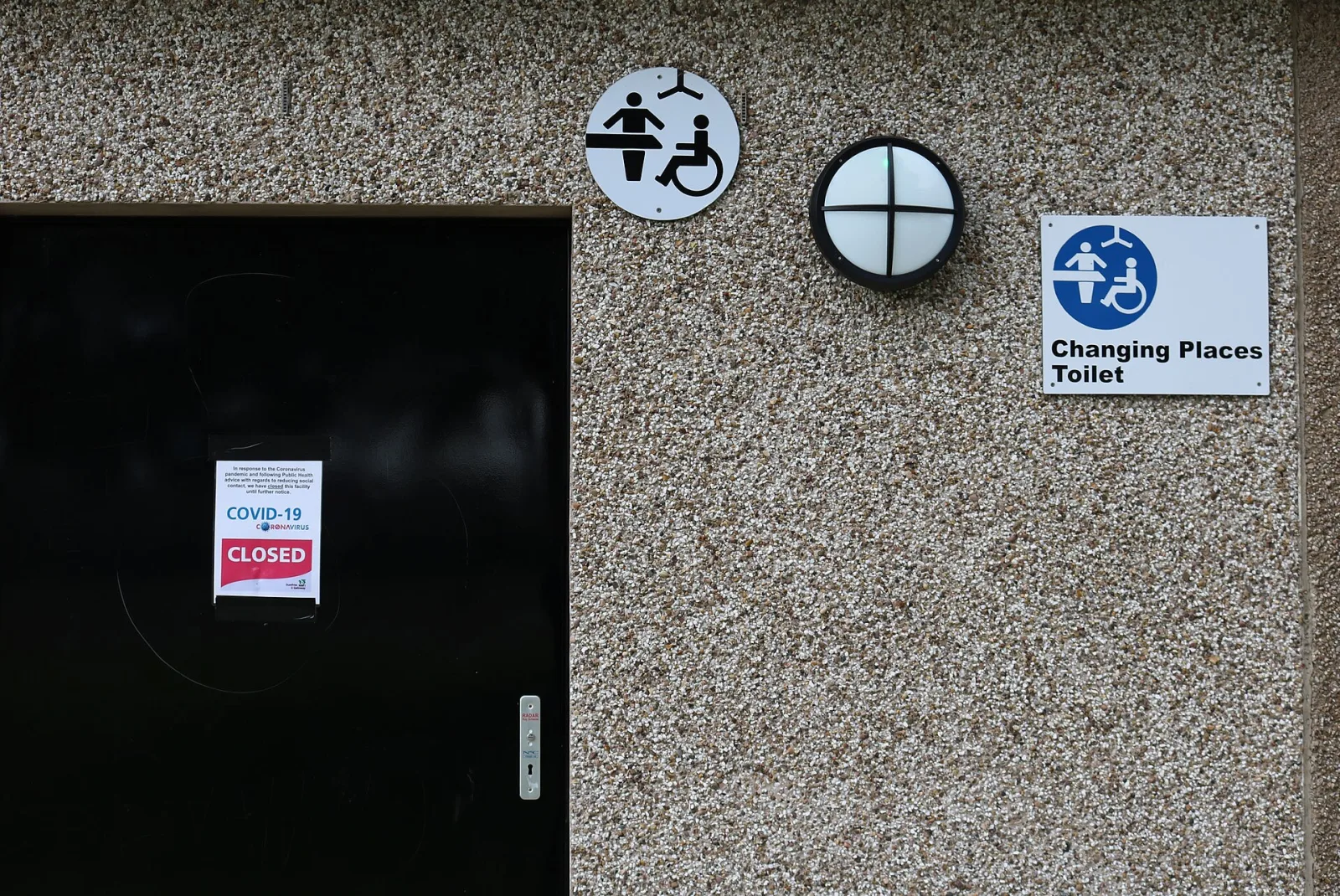
Photo: Billy McCrorie, CC BY-SA 2.0, via Wikimedia Commons
Which buildings must have a Changing Places toilet?
Since 1 January 2021, the building regulations in England (Approved Document M) require a Changing Places toilet in new buildings and major refurbishments of:
- places of assembly, recreation and entertainment for 350 people or more, such as cinemas, theatres, museums, libraries and places of worship;
- large shopping centres and retail parks;
- sport and leisure buildings larger than 5,000 m²;
- stadiums, theme parks, zoos and exhibition centres for more than 2,000 people.
The government added a £30 million fund in March 2021 (about €35 million) to put Changing Places toilets in existing buildings in England, such as leisure centres, cinemas and tourist attractions. Councils could bid for a share. At the time GOV.UK counted more than 1,400 Changing Places toilets in the UK, up from 140 in 2007.
How many Changing Places toilets are on the map?
According to Outdoor Pitstop's data (as of 25 November 2026), 49 of the 13,915 public toilets in the United Kingdom are marked as a Changing Places toilet or as having an adult changing bench. That is far fewer than really exist: OpenStreetMap, where our data comes from, rarely records this detail.
| Public toilets on the map (25 November 2026) | United Kingdom | Ireland |
|---|---|---|
| All public toilets | 13,915 | 1,465 |
| Wheelchair accessible | 4,646 | 412 |
| Baby changing table | 1,927 | 145 |
| Changing Places or adult changing bench | 49 | 0 |
The zero for Ireland says more about the map data than about Ireland itself: Changing Places toilets exist there too, but none are marked yet. You can see all 1,465 public toilets in Ireland and filter on wheelchair access.

Photo: Mr Ignavy, CC BY-SA 2.0, via Wikimedia Commons
How to plan a day out around a Changing Places toilet
For many families, the Changing Places toilet decides where a day out can go. A few steps make planning easier:
- Start from the toilet, not the walk. Find a Changing Places toilet at a country park, a visitor centre or a large shopping centre, and plan a route that starts and ends there.
- Check the opening hours. Most Changing Places toilets are inside a building, so they close when the building closes. Some are locked with a RADAR key; read our guide to the RADAR key and the toilets it opens.
- Call ahead. Ask whether the hoist works and whether you need to bring your own sling.
- Look for accessible toilets along the way. Between two Changing Places toilets, a wheelchair-accessible toilet can still help a carer or another member of the group. On the map of facilities in the UK you can see which toilets are accessible and free.


Help us put Changing Places toilets on the map
If you know a Changing Places toilet that is not on our map, or one that is no longer there, you can add it or report it in the Outdoor Pitstop app. A photo of the room and the sign helps others see what is there. The more toilets are marked, the easier it becomes to plan a walk, a ride or a day at the coast for everyone. You can follow the totals per country in the United Kingdom in numbers.
On the map
Public toilets in United Kingdom and Ireland (15,380)
Take Outdoor Pitstop along on your phone
Free · 3.4 million pitstops in 44 countries