Outdoor Pitstop

Vehicle bike rack: towbar, boot or roof
There are three kinds of vehicle bike rack. Which one suits you depends on your car, your bikes and how often you use it.
| Kind | Fits on | Bikes | Watch out for |
|---|---|---|---|
| Towbar rack | The tow ball | 2 to 4, including e-bikes | Needs a towbar; mind the tow ball load |
| Rear (boot) rack | Straps on the boot lid | Up to 3 lighter bikes | No access to the boot; plate and lights hidden |
| Roof rack | Roof bars | Light bikes you can lift | Height in car parks; more wind |
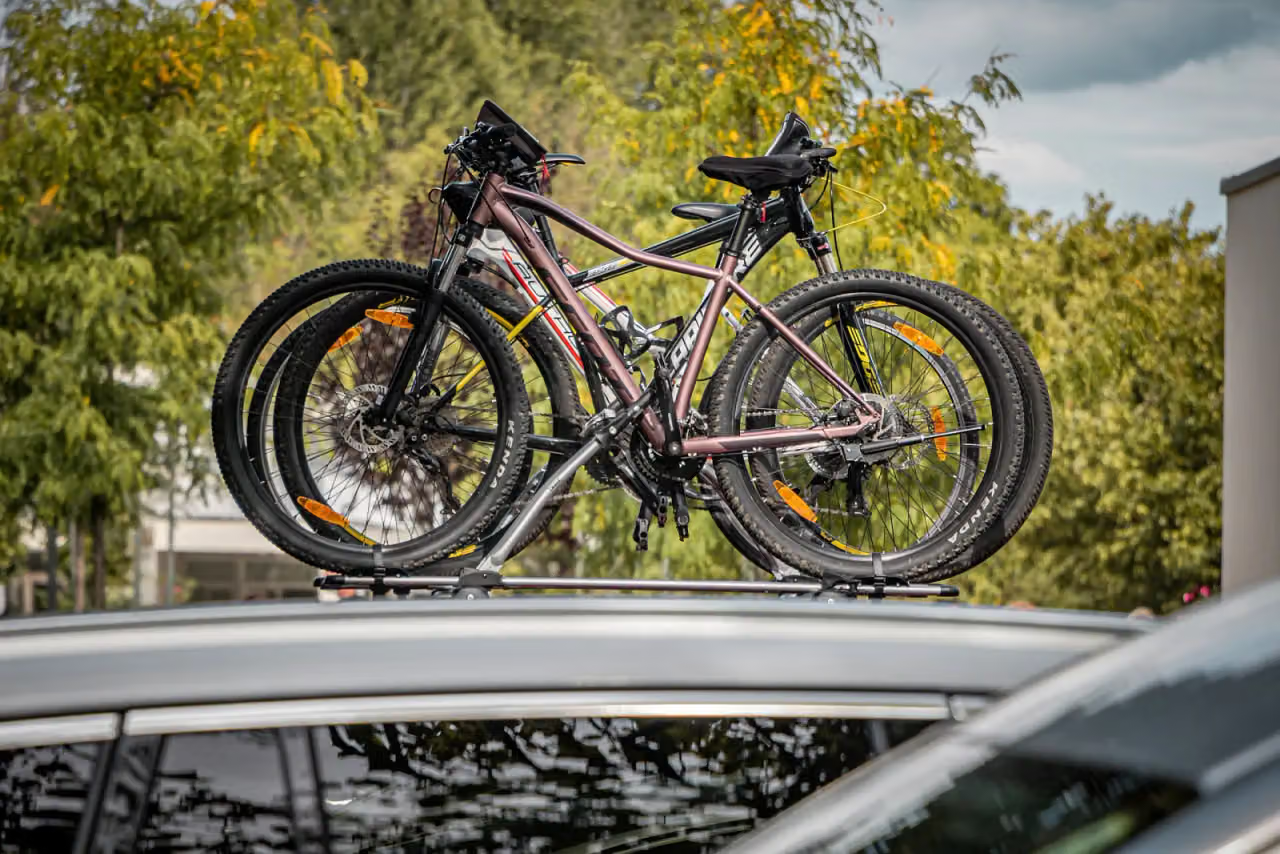
Spain's traffic authority, the DGT, sets out the differences clearly. A towbar rack is the quickest to fit and load, and the platform kind still lets you open the boot with the bikes on. A rear cycle rack on the boot lid is the simplest and carries up to three bikes, but once they are on you cannot open the boot, and the bikes must not hide the number plate or lights. A roof bike rack leaves the back of the car free and your view clear, but you have to lift the bikes up, and the DGT notes it can make the car sway and use more fuel.
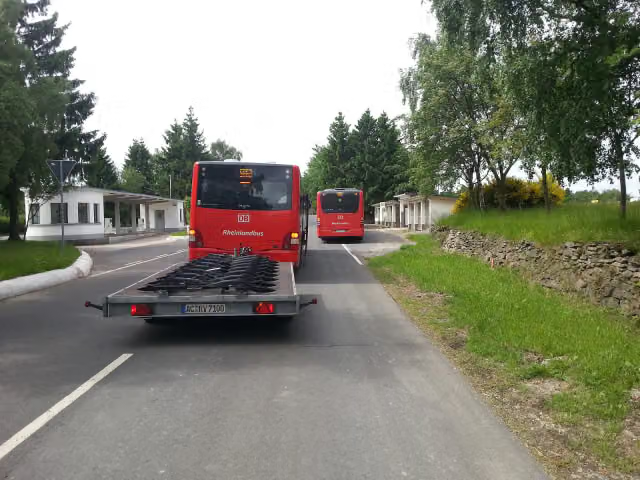
The DGT also mentions a fourth option for big groups: a small trailer with a bike platform, for up to seven bikes.
- Easiest to load
- Towbar rack
- For e-bikes
- Towbar rack
- No towbar
- Boot or roof rack
Towbar bike rack: work out the weight first
A towbar bike rack sits on the tow ball, and the tow ball can only take so much weight pressing down on it. The Highway Code says the manufacturer's recommended weight and tow ball load should not be exceeded. With a bike rack everything counts: the rack itself plus the bikes.
- Find your car's tow ball load. The car maker sets it; look in your car's handbook. If the towbar has its own limit, use the lower figure.
- Weigh your bikes. The DGT puts an adult bike at 12 to 15 kg and a child's bike at 8 to 10 kg. E-bikes are heavier.
- Add the weight of the rack. It is in the rack's description or manual.
- Compare. Rack plus bikes must stay under the tow ball load, and under the rack's own maximum.
An example with made-up round numbers: a 15 kg rack with two 23 kg e-bikes comes to 61 kg. With a tow ball load of 75 kg that fits; with 50 kg it does not. Taking the batteries off saves a few kilos and keeps them safer inside the car.
Tow bar cycle carrier: number plate and lights
A tow bar cycle carrier with bikes on it almost always hides the rear number plate. The Road Vehicles (Display of Registration Marks) Regulations 2001 say the rear plate must be fixed so that its characters are easily readable from behind in daylight, and that it must be lit between sunset and sunrise. The regulations do not name bike racks, but if your rack hides the plate it is no longer readable, so the plate has to move onto the rack: a second plate with your car's registration in the rack's holder, lit at night.
The same goes for your lights. When the bikes cover the car's rear lights and indicators, the driver behind cannot see you brake or turn. That is why towbar racks have a light board that plugs into the towbar socket.
Before every trip:
- check that the plate on the rack is your car's registration and easy to read;
- check the indicators left and right, the brake lights and the rear lights on the rack;
- make sure the plug sits firmly in the socket.
A loose plug or a dead bulb is something you do not notice from the driver's seat; the car behind does.
Roof bike rack and rear cycle rack
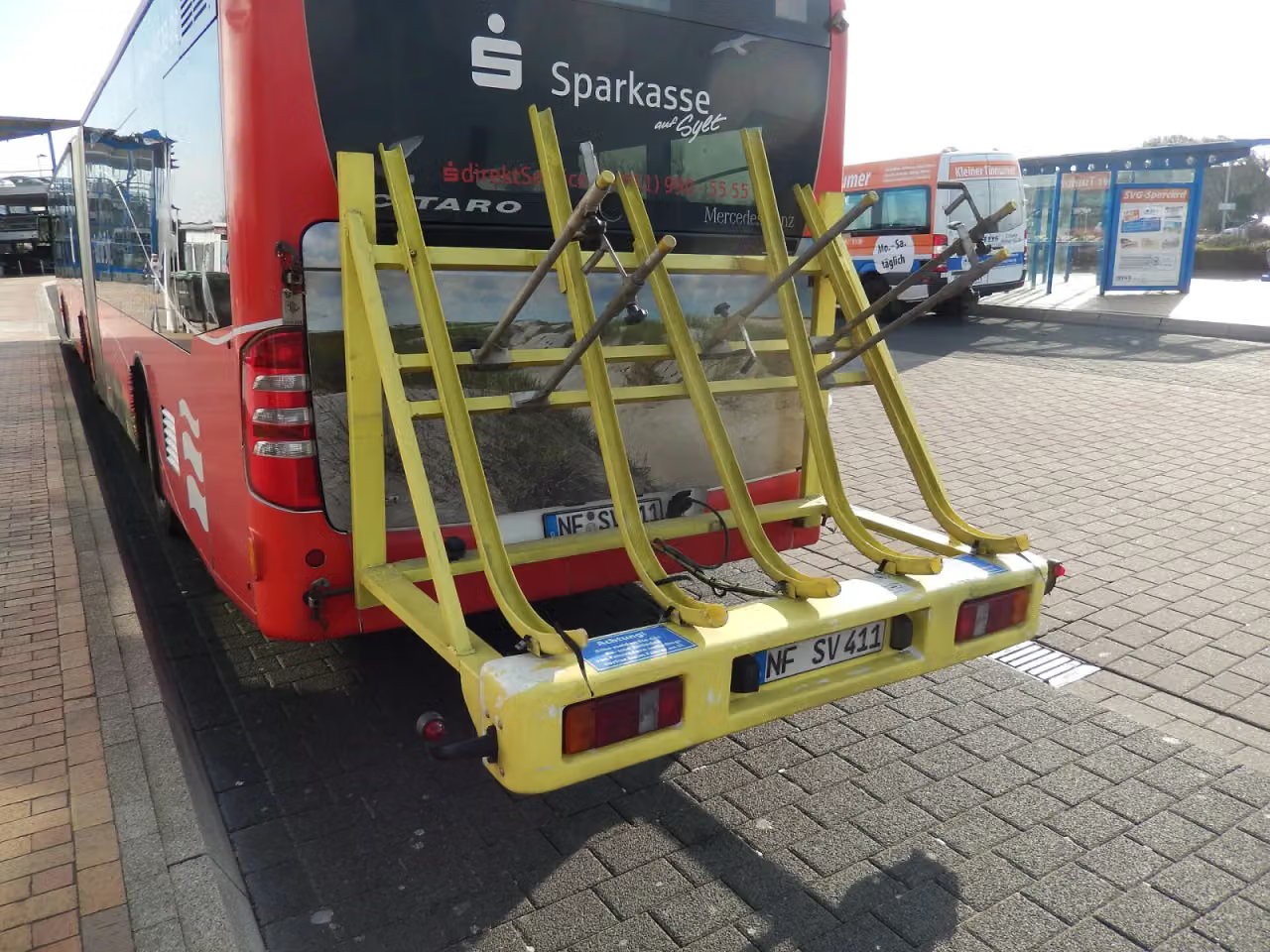
A roof bike rack is the choice when you have no towbar and light bikes: road bikes, children's bikes, a lighter mountain bike. You lift each bike over your head onto the roof bars, so it is hard work with heavy bikes. Remember the extra height: a roof full of bikes does not fit under every height barrier or into every multi-storey car park.
A rear cycle rack is strapped to the boot lid. According to the DGT it carries up to three bikes, but you cannot open the boot once they are on, and the bikes must not hide the number plate and rear lights. Check which cars the maker of the rack says it fits; not every boot lid or spoiler can take the straps.
How to transport a bike in a car
No rack? A bike fits inside many cars with the rear seats folded down and the front wheel off. The rule that matters is the same as for any load: the Highway Code says you must secure your load, because in a collision heavy or sharp objects can hit someone inside the car. So:
- lay the bike down or strap it so it cannot move;
- put the loose wheel and anything sharp, like the chainring, where it cannot fly forward;
- protect the seats and the frame with a blanket.
In a van it is the same: tie the bikes to the lashing points so they cannot slide or fall over.
Putting the front wheel back: closing a quick release
Animatie, 9 seconden, herhaalt zich
Stilstaand beeld: je apparaat staat op minder beweging
- 1
Open the lever and turn the nut on the other side until you feel resistance.
- 2
Close the lever: halfway you should already feel firm pressure.
- 3
Closed, the lever lies along the fork, not pointing forwards.
Bekijk als video
Dog bike carrier, or the dog in the car
A dog bike carrier is a basket or small trailer that carries a dog behind or on your bike; it is a different product from a bike rack for your car, and this guide does not cover it.
If your dog travels in the car while the bikes are on the rack, the Highway Code rule on loads applies here too: make sure animals are secured safely, so they cannot be thrown forward in a collision.
Bike rack rules abroad: the V-20 board in Spain
Rules for bike racks differ per country. Spain is the best-known example. According to the DGT:
- a load that sticks out at the back, including bikes on a rack, must carry the V-20 board, a square sign with red and white diagonal stripes;
- if the bikes stick out over the whole width of the car, you need a board at each end, with the red stripes forming an upside-down V;
- bikes may stick out at the back by up to 15% of the car's length, so 60 cm on a 4-metre car, and never at the sides;
- if the rack hides your plate or rear lights, you need an extra plate and lights;
- if you cannot see through your inside mirror, you need an outside mirror on the right.
Driving to Spain through France? Take the board with you; it weighs little. For other countries, check the rules of that country before you leave. I have not checked the rules for Ireland for this page.
Which bike rack for your car?
What are you taking?
Two e-bikes
- Add up rack plus bikes against your tow ball load
- Take the batteries off before you drive
- A rack that tilts keeps the boot reachable
Two ordinary bikes, no towbar
- Boot: check which cars the maker lists
- Roof: only if you can lift the bikes
- Mind the height in car parks
Three or four bikes
- Often heavier: check the tow ball load twice
- The rearmost bike sticks out further
- In Spain a V-20 board goes on
Road bike or carbon frame
- Choose a rack that holds the wheels or the fork
- Clamping a carbon tube can damage it
- Protect the frame against rubbing
Your car's tow ball load and the rack's own maximum always come first.
How to set up a bike rack and drive with it
Every rack is different, so follow the maker's instructions for fitting it. These steps apply to all of them:
- Fit the rack to the towbar, roof bars or boot lid as the instructions say, and check it does not move.
- Take off loose parts: pumps, bags, bottles and e-bike batteries.
- Fix every bike so it cannot fall, shift, rattle or drag; the DGT names all four.
- Check the plate and lights on the rack, or check that the bikes do not hide the car's own.
- Stop after the first few miles and check that the straps are still tight.
A car with a full rack drives differently. It is longer or taller, heavier at the back and catches more wind. Take bends and crosswinds calmly and allow for the extra length when you park. Not driving at all? The guide on taking your bike with you covers the train, the ferry and the plane.
From our data
Pitstops at your destination
- Public bike pumps
- 15,208
- in 44 countries
- Water points
- 246,983
- in 44 countries
- Public toilets
- 176,057
- in 44 countries
As of 29 November 2026, from the Outdoor Pitstop database. All countries in the app together.
Open the map with pitstopsOn arrival: tyres pumped and water on board
After a long drive on the rack your bikes are often dusty, and the tyres can be softer after the changes in temperature. Check the tyre pressure before you ride off. No pump with you? Look for a public bike pump near your starting point.
Fill your bottles at a water point before you set off, and see where you can find a public toilet along the way. In the UK, see the public toilets in the United Kingdom and the water fountains and refill points in the United Kingdom.
In the app I see 15,208 public bike pumps and 246,983 water points across all countries together.