Outdoor Pitstop
Short answer
Canicross is cross-country running with your dog, with the dog in a harness and attached to a belt around your waist by a stretchy bungee line. It started in Europe as off-season training for sled dogs and is now a sport of its own, with races across the UK. Wikipedia dates the first UK canicross event to 2000. To start, you need a dog that is fully grown, the right kit and a route with water on the way: according to Outdoor Pitstop's data (as of 25 November 2026), there are 2,923 drinking fountains and refill points on our map of the United Kingdom.
What canicross is, and how it differs from running with a lead
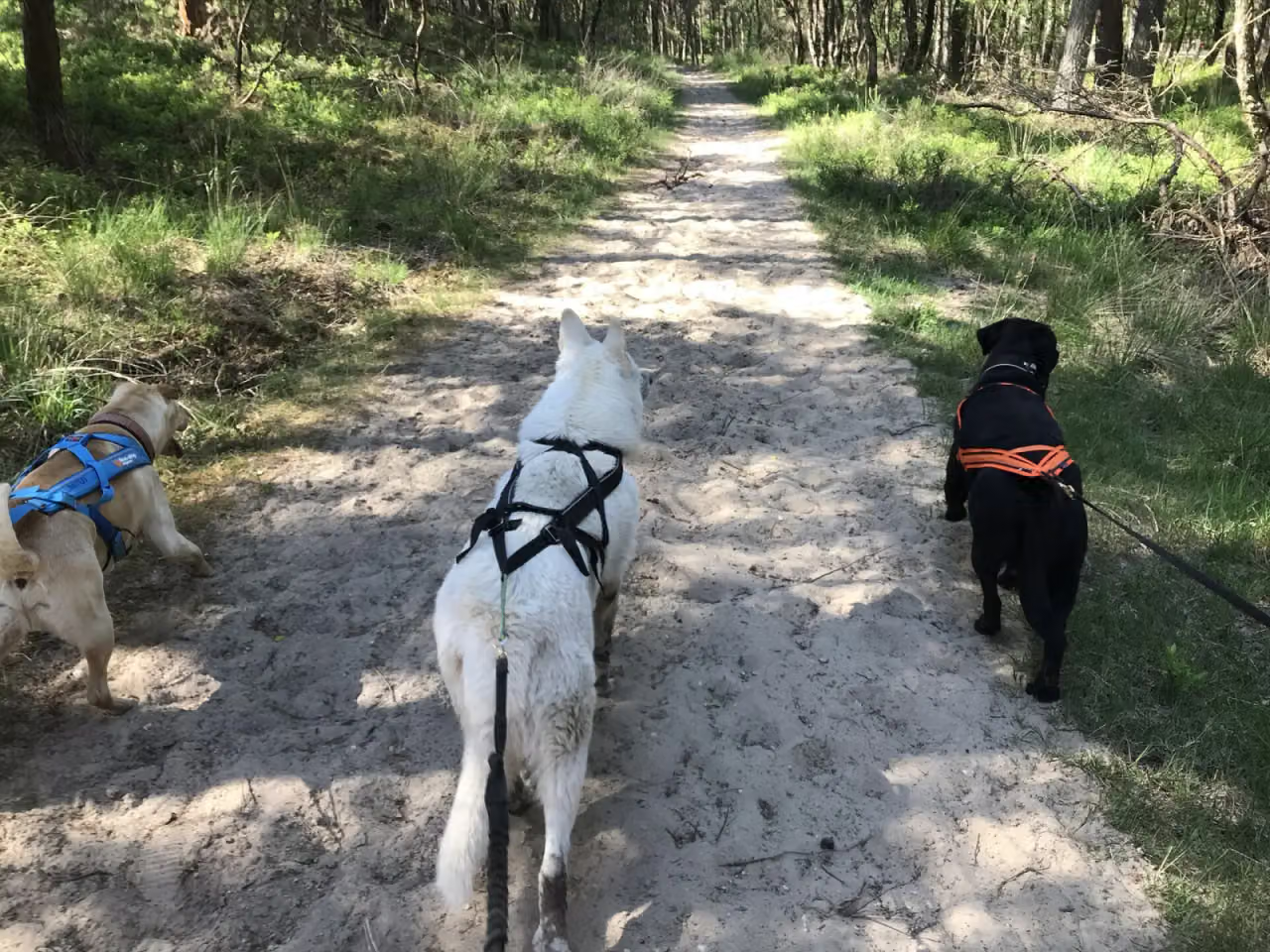
In canicross the dog runs in front and may pull. That is the difference with simply running with your dog on a lead: the harness spreads the pull over the dog's body, the belt puts it on your hips instead of your arm, and the bungee line takes the jolt out of every tug for both of you, as Wikipedia describes. Sled-dog breeds such as huskies were the first canicross dogs, but all kinds of breeds now take part.
Related sports use the same idea with wheels: bikejoring (a bike) and scooter (a kick scooter), for which race organisers often set a higher minimum age for the dog.
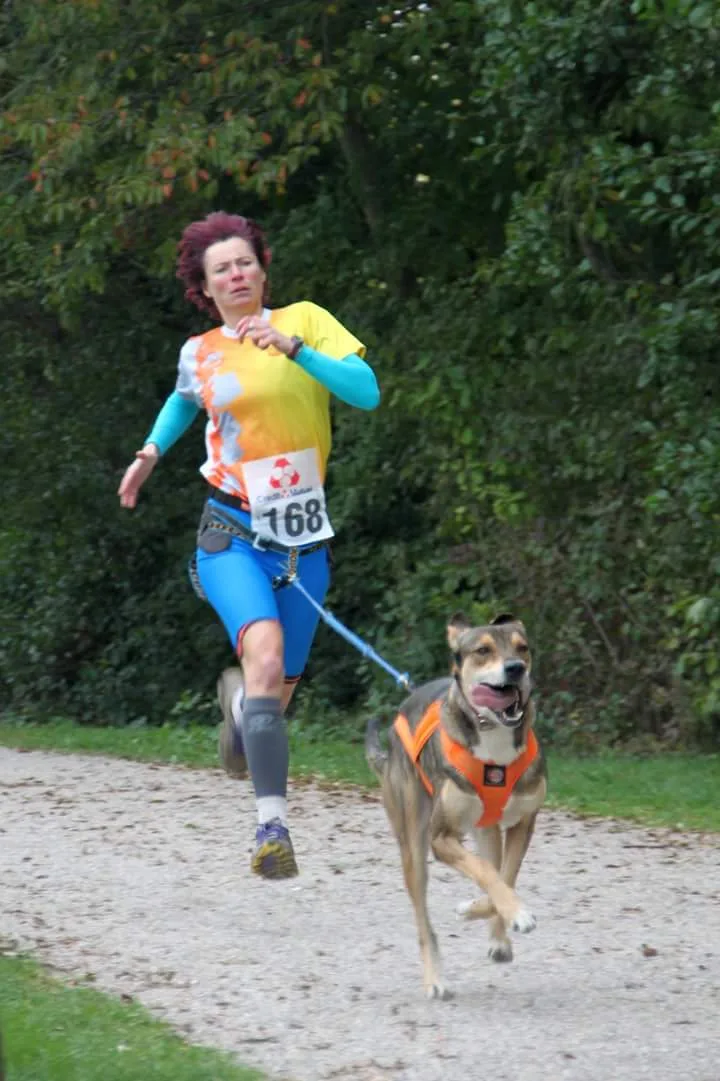
Photo: Hameury, CC BY-SA 4.0, via Wikimedia Commons
Canicross kit: harness, belt and line
You need three things, all made for the purpose. The rules of CaniX UK, which runs canicross races and championships in the UK, give a good idea of what is expected:
| Kit | What it does | What the CaniX UK rules say |
|---|---|---|
| Running harness for the dog | Spreads the pull over the chest and back, not the neck | Recommended |
| Waist belt for the runner | Puts the pull on your hips, keeps your hands free | Recommended |
| Bungee line | Absorbs the jolt when the dog pulls or stops | Line and belt together no longer than 2 to 2.5 metres (about 7 to 8 feet); no metal snap on the handle |
| Not allowed | Choke chains, haltis, shock collars, flexi leads |
A collar and normal lead are accepted at CaniX races, but the harness, belt and line are what make canicross comfortable. A harness has to fit well; specialist shops measure the dog or tell you how to.
How old your dog should be for canicross
The CaniX UK rules say a dog must be at least one year old on race day, and that dogs aged one to two may run up to 10 km (about 6 miles). The Royal Kennel Club's canicross regulations add that the total race distance for a dog must not exceed 10 km a day. These are race rules, but they are a sensible guide for training too: a puppy's joints are still growing. Ask your vet if you are unsure whether your dog is ready, especially with a large breed or a dog with joint problems.
Canicross and heat: the 16°C rule
Dogs overheat much faster than people, and canicross is hard work for them. CaniX UK advises not to train for long distances above 16°C (61°F), and its races may start earlier, be shortened or be run without dogs in hot weather. On a warm day, run early or late, choose shade and water, and keep it short. In winter, mud and ice are the risks: on a slippery downhill, a pulling dog makes a fall more likely.
Planning a canicross run with water on the way
On a canicross run, water is for two. Carry a bottle and a fold-up bowl, and plan a route past a place to refill. According to Outdoor Pitstop's data (as of 25 November 2026):
| Water and toilets on the map (25 November 2026) | United Kingdom | Ireland |
|---|---|---|
| Drinking fountains and refill points | 2,923 | 374 |
| Of which recorded as having water for dogs | 32 | 3 |
| Public toilets | 13,915 | 1,465 |
Few fountains are recorded with a bowl or tap for dogs, so take your own bowl; any fountain with a tap you can reach will do. You can find them on the maps of drinking fountains and refill points in the United Kingdom and water fountains in Ireland. For yourself, the public toilets in the United Kingdom are on the map too.
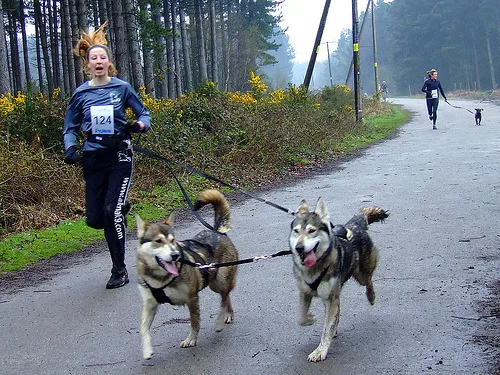
Photo: Akna, CC BY-SA 3.0, via Wikimedia Commons
Where to start with canicross
- Start with walks in the harness. Let the dog get used to the harness and line on a normal walk before you run.
- Run short and soft. A forest track or grass path is kinder to paws and joints than tarmac. Build up the distance slowly, for you and the dog.
- Keep the dog in front. The CaniX UK rules say runners should not go ahead of their dog, except for safety.
- Mind other path users and livestock. In the countryside the same rules apply as on any walk with a dog; our guide to walking with dogs: lead rules, livestock, heat and ticks explains them.
- Join a group. Local canicross clubs and race organisers often run taster sessions where you can try a harness before you buy one.
If you have never run before, build up your own running first. The NHS has a free Couch to 5K plan for beginners.


On the map
Water fountains and refill points and public toilets in United Kingdom and Ireland (18,677)
Take Outdoor Pitstop along on your phone
Free · 3.4 million pitstops in 44 countries