Outdoor Pitstop
Short answer
The average 5K time at a parkrun is about 29 minutes. In a study of 45,662 UK parkrunners, the median runner finished in 29 minutes 20 seconds, which is a pace of just under 6 minutes per kilometre, or about 9 minutes 26 seconds per mile. Front runners finish in under 20 minutes; walkers take 50 minutes or more.
What is the average 5K time?
The best figures for ordinary runners come from parkrun, the free weekly 5K held in parks across the UK, Ireland and beyond, because every finish is timed and published. In 2022 the researchers Steve Haake, Helen Quirk and Alice Bullas published an analysis in the British Journal of General Practice. They matched a 2018 survey of parkrunners to the participants' own parkrun results, giving 45,662 runners aged 16 or over with a known average 5K time.
The middle runner in that group, the median, finished in 29 minutes 20 seconds. Half of the parkrunners were faster, half were slower. That is a sensible answer to "what is the average 5K time" for anyone who runs for fun rather than for a club.
Two points to keep in mind. First, parkrun includes walkers and families with buggies, so its average is slower than that of a club race. Second, average parkrun times are getting slower over the years, and that is good news: research by Andre Gilburn of the University of Stirling found that the mean performance at Scottish parkruns fell while the gender gap narrowed, a sign that the events attract more people who are new to running.
5K times from walkers to front runners
The same study grouped runners by their average 5K time. The table shows the main groups and what the researchers found about them:
| Group | Average 5K time | Women in the group | Median age |
|---|---|---|---|
| Front runners | under 20 minutes | 4.2% | 37.8 years |
| Median runners | 27.5-30 minutes | not reported | not reported |
| Slower runners | 42.5-45 minutes | not reported | not reported |
| Runners/walkers | 45-50 minutes | not reported | not reported |
| Walkers | 50 minutes or more | 80.3% | 56.9 years |
Source: Haake, Quirk and Bullas, British Journal of General Practice, 2022. Slower runners, runners/walkers and walkers together made up 4.3% of the group.
The big differences between the groups are age and sex. Front runners were mostly younger men; walkers were mostly older women. That is why one average number says little about your own time, and why parkrun also gives every finisher an age grade.
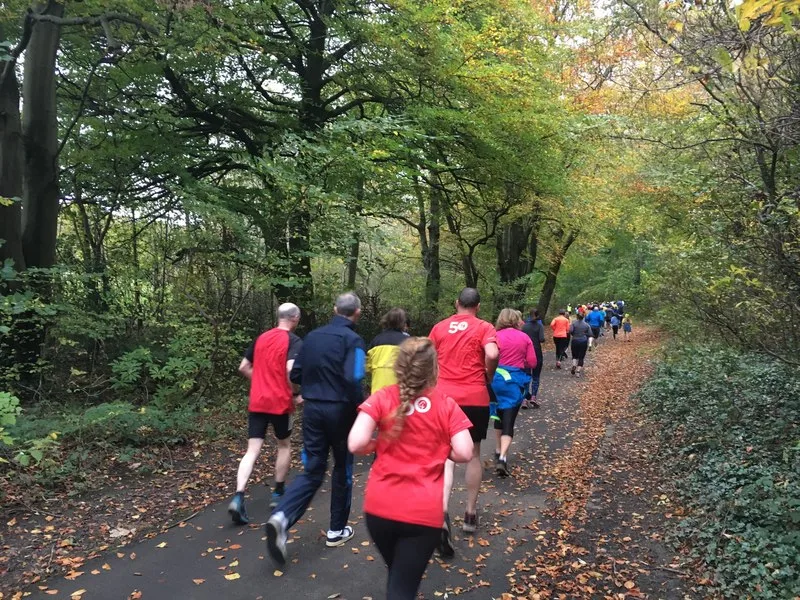
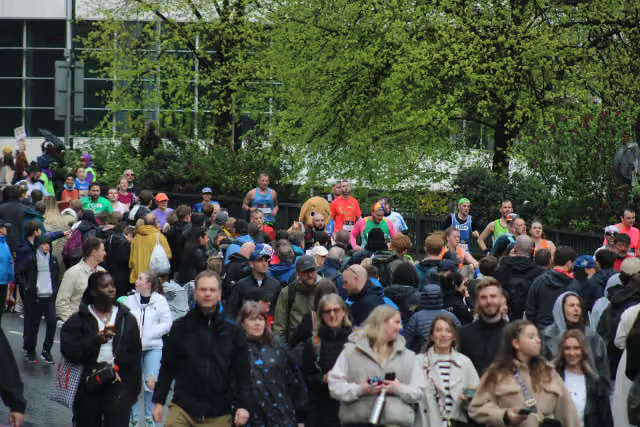
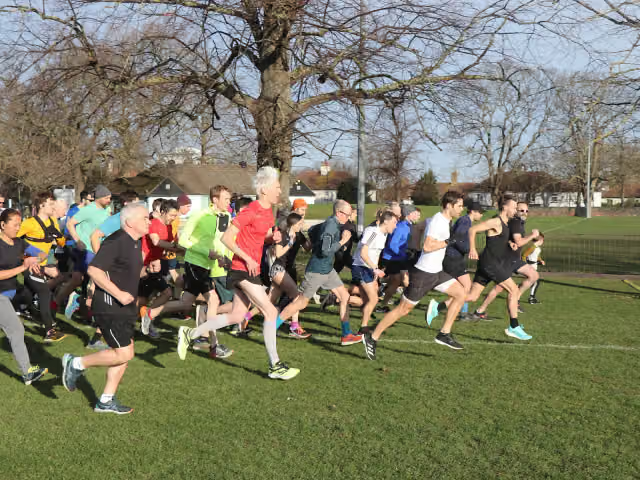
Photo: Graham Hogg, CC BY-SA 2.0, via Wikimedia Commons
Average 5K time by age: why age grading is fairer
Age grading compares your time with the world's best time for your age and sex, and gives a percentage. A 60-year-old woman and a 25-year-old man who both score 60% have run equally well for their age, even if their clock times are minutes apart. Parkrun shows the age grade next to every result, so you can track your progress as you get older without comparing yourself with people half your age.
The age-grading tables come from World Masters Athletics, which labels 60% as local class, 70% as regional class, 80% as national class and 90% as world class. An age grade of 100% equals the best possible time for your age and sex. If you want to know what a good 5K time is for your age, your age grade answers that better than any table of averages.
5K pace table in minutes per km and per mile
Your 5K time depends on your pace. This table converts the most common finish times; the paces are simple arithmetic (5 km is 3.107 miles).
| 5K finish time | Pace per km | Pace per mile | Speed |
|---|---|---|---|
| 20:00 | 4:00 | 6:26 | 15.0 km/h (9.3 mph) |
| 25:00 | 5:00 | 8:03 | 12.0 km/h (7.5 mph) |
| 29:20 (parkrun median) | 5:52 | 9:26 | 10.2 km/h (6.4 mph) |
| 30:00 | 6:00 | 9:39 | 10.0 km/h (6.2 mph) |
| 35:00 | 7:00 | 11:16 | 8.6 km/h (5.3 mph) |
| 40:00 | 8:00 | 12:52 | 7.5 km/h (4.7 mph) |
| 50:00 (brisk walk) | 10:00 | 16:06 | 6.0 km/h (3.7 mph) |
| 60:00 (steady walk) | 12:00 | 19:19 | 5.0 km/h (3.1 mph) |
The NHS describes brisk walking as about 3 miles an hour (4.8 km/h), so walking a 5K at that pace takes just over an hour. For more on distances, see our guide how many miles is a 5K, with finish times for running and walking.
What is a good 5K time for a beginner?
For a first 5K, finishing is the goal and the clock comes second. Anything under 40 minutes is a solid first run; around 29 minutes puts you in the middle of a typical parkrun field. Many beginners start with a run-walk plan such as the NHS Couch to 5K app: three runs a week for nine weeks, building up from short running intervals to 30 minutes without stopping.
Most runners get faster in their first year simply by running regularly. Comparing yourself with your own last run, or with your age grade, is more useful than comparing yourself with an average.
Toilets and water on a 5K route
A 5K takes most people half an hour to an hour, which is long enough to need a toilet before or after, especially on a cold morning. According to Outdoor Pitstop's data (as of 25 November 2026), our map shows 13,915 public toilets in the United Kingdom, 5,761 of them marked as free, and 2,923 drinking water points. In Ireland there are 1,465 public toilets and 374 water points on our map.
Many parkrun venues are in parks with toilets nearby, but not all are open at 9 am on a Saturday. Check the opening hours on the pitstop page before you go, and use the map to find water on a training loop.


Find the 13,915 public toilets in the United Kingdom, the water fountains and refill points in the United Kingdom or the public toilets and facilities in Ireland. If you are training for a longer race, our guide how long is a marathon covers the step up from 5K.
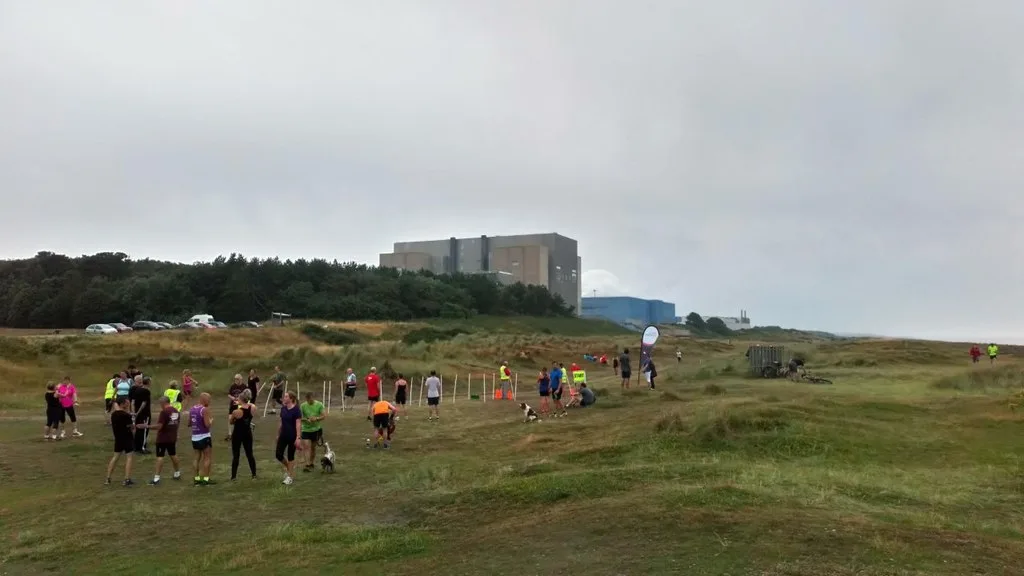
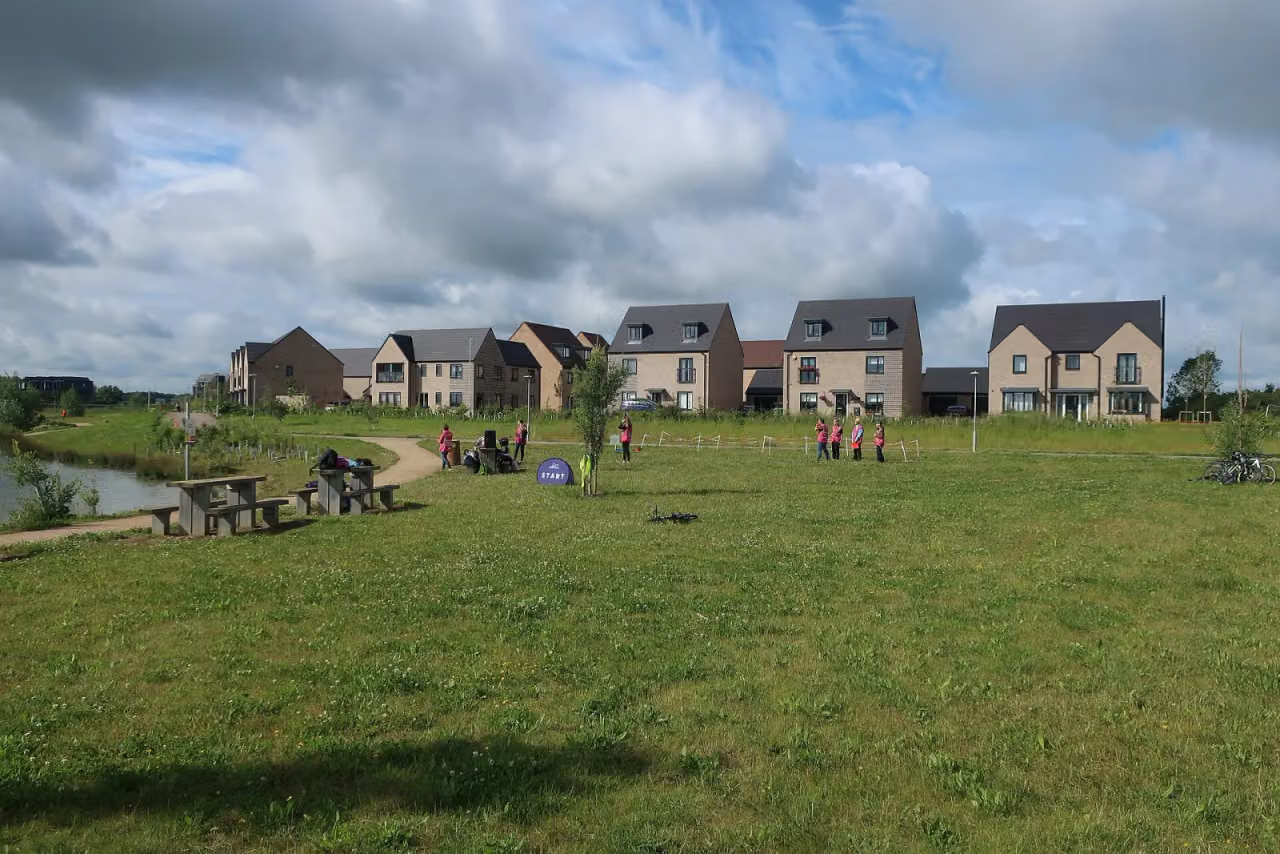
Photo: Stuart Shepherd, CC BY-SA 2.0, via Wikimedia Commons
On the map
Water fountains and refill points and public toilets in United Kingdom and Ireland (18,677)
Take Outdoor Pitstop along on your phone
Free · 3.4 million pitstops in 44 countries