Outdoor Pitstop

Walking boots: start with your walk, not the label
No single pair of walking boots is right for every walk. A soft, light shoe is pleasant on a towpath or in a park, but on loose stones and steep descents it gives little support. A stiff mountain boot does the opposite: steady on rough ground, heavy and unbending on tarmac. So before you look at colours or names, answer three questions.
- The ground. Mostly surfaced paths and tracks, or also rough paths, scree and steep slopes?
- Your load. A daypack weighs little; a full pack for several days puts far more weight on your feet and ankles.
- The weather. Wet grass and mud call for different footwear from a dry summer path. The guide to waterproof walking boots goes into membranes and wet feet.
If your walks vary, choose for the hardest ground you walk on regularly. Meindl, the German boot maker that introduced the A to D categories in 1976, advises taking the sturdier boot when in doubt, because it gives you more options. Its fitting advice adds that boots soften over time and that a stable boot noticeably takes strain off your muscles on hard terrain.
- Ground
- Paths, rough tracks, scree or snow
- Load
- Daypack or full pack
- Weather
- Dry paths or wet grass and mud
- When in doubt
- The sturdier boot
Hiking boots: the A to D categories
Shops in the UK use walking boots and hiking boots side by side, and makers add words such as trekking. The categories A to D say more than the name on the box, because they describe the use and the ground a boot is built for. As Meindl describes them:
| Category | Made for | Ground |
|---|---|---|
| A | leisure, travel, everyday walking | good paths, parks |
| A/B | easy walks in lowland and lower hills | good and less good paths |
| B | longer, demanding walks, light trekking | poor paths too |
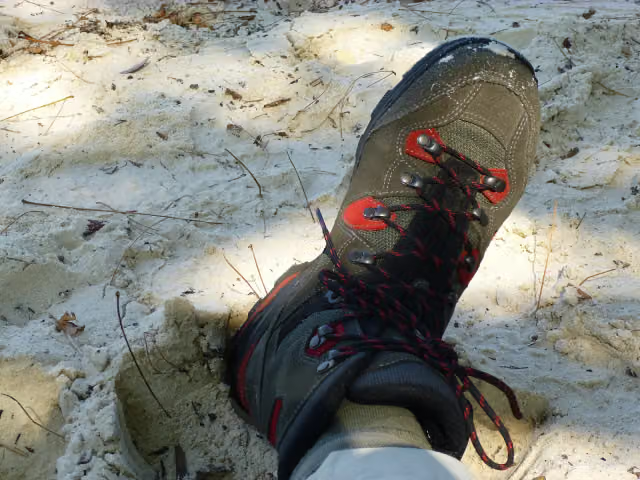
| B/C | demanding trekking, harder mountain walks | rough trails, scree, via ferrata; light crampons possible |
| C | high mountains, glaciers | scree, glaciers, off-path; takes crampons |
| D | extreme mountain use, ice | glaciers, ice climbing; fully crampon-proof |
For the B1, B2 and B3 ratings and boots for crampons, see mountain boots and boot categories.
From low walking shoe to mountain boot
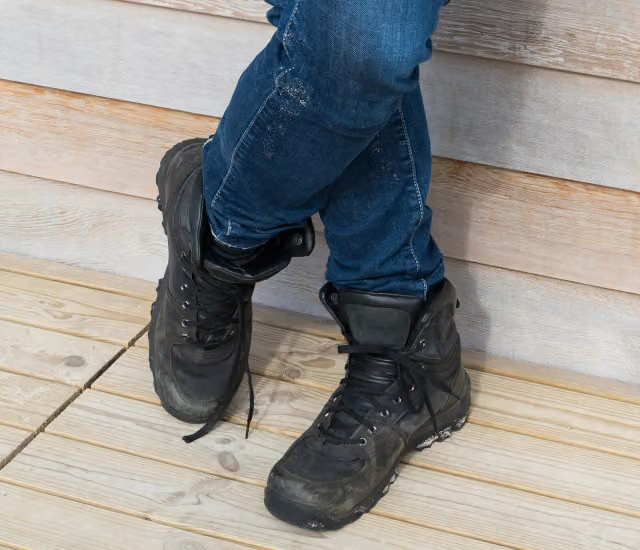
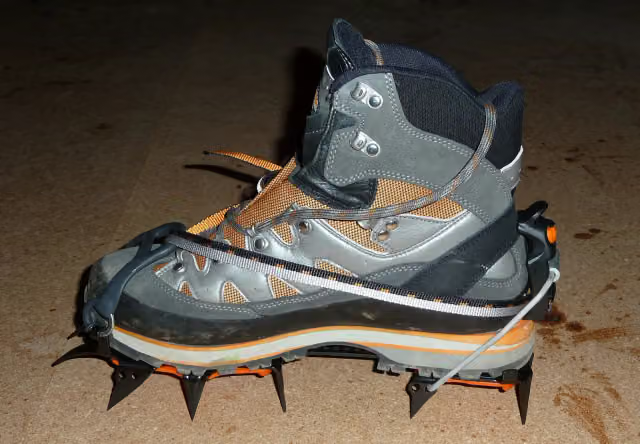
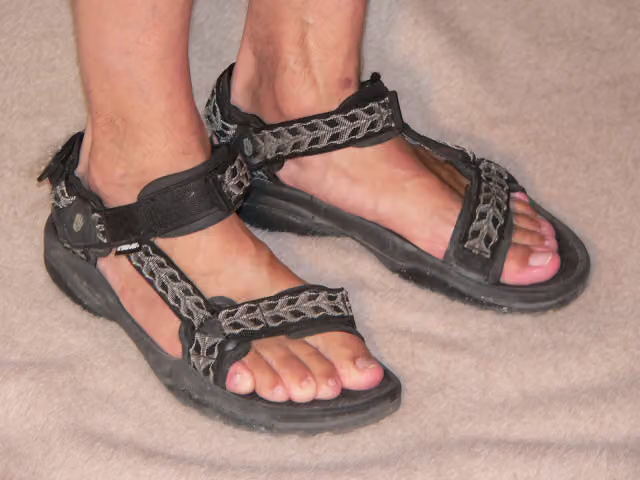
Which walking boot suits your walks?
Where do you usually walk?
Parks, towns and good paths
- Made for leisure, travel and everyday walking
- For good paths and parks
- Not meant for rough or loose ground
Lowland and lower hills
- The entry level for proper walking
- For good and less good paths
- Choose B instead if your paths are often rough
Rough paths and long days
- For longer, demanding walks and light trekking
- Copes with poor paths too
- For demanding walks in hills and lower mountains
Scree, steep mountain paths
- For demanding trekking and harder mountain walks
- Rough trails, scree and via ferrata
- Light crampons possible
Glaciers and ice
- Very stable underfoot on rock, scree and glacier
- C takes crampons, D is fully crampon-proof
- Only for high mountains and ice
Torn between two categories? Take the sturdier one, as the boot maker behind the categories advises. Tell the shop where you walk and what you carry, so they can bring the right boots.
Hiking shoes: low, light and for good paths
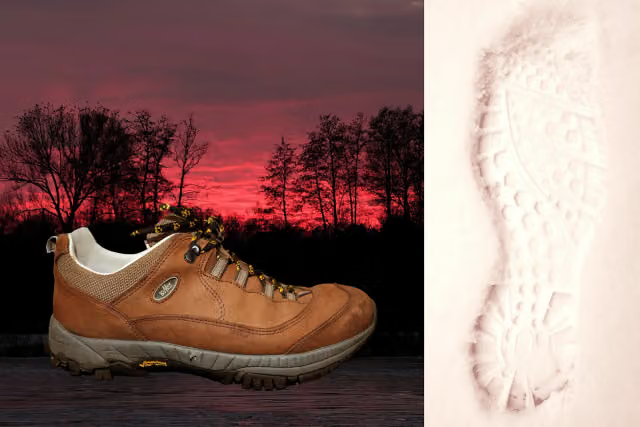
Hiking shoes and walking shoes are low models that leave the ankle free. Most of them fall in category A or A/B: made for leisure, travel and everyday walking on good paths and in parks, or for easy walks in lowland and lower hills on good and less good paths. On those walks a low shoe is lighter and more flexible than a boot.
Once the path turns rough, loose or steep, a shoe for good paths is out of its depth. Meindl's advice is that the harder the ground, the more resistant to twisting and the more stable sideways a boot must be. Wondering about the line between a shoe and a boot for your own walks? See walking boots or walking shoes. Prefer a thin, flexible sole? Then read barefoot walking shoes, and for hot days walking sandals.
Walking shoes in winter: wellies or boots?
British winters bring mud, puddles and wet grass, and many walkers reach for wellies. The Ramblers point out that wellies, with their slip-on design and tread that grips less well, can become a chore to walk in. For longer walks or rough ground they suggest a boot with a snugger, adjustable fit: it helps you keep your footing and makes rubbing and blisters less likely.
For most winter walks on paths, a waterproof walking boot or shoe with a good tread is the in-between. More on membranes, leather and keeping feet dry is in waterproof walking boots and shoes, and on looking after them in cleaning and waterproofing walking boots.
How should a walking boot fit? The steps
The best walking boot is the one that fits. These steps follow the fitting advice of Meindl:
- Go in the afternoon. Feet swell a little during the day, just as they do on a walk.
- Bring your own walking socks. Thick and thin socks change both the volume and the length you need. If you wear orthotic insoles, bring those too.
- Put the boot on properly. Push your heel to the back, centre the tongue and lace up.
- Do not insist on your usual size. Try a size up and down. Feet are smaller in the morning, and with age the arch flattens and the foot gets longer and wider. When in doubt, take the slightly larger boot.
- Check the toes. About 1 cm of room in front of your toes is the rule of thumb; many boots are bought too small. Boots that are too big, and above all too wide, are no good either.
- Walk in both boots for at least 10 minutes, uphill and downhill on the shop's test ramp. Leather and foam warm up and adapt. A little room is fine, but a heel that slides up and down soon causes blisters.
- Test a descent. Lace firmly over the forefoot and instep, and check your toes do not hit the front.
Width can still be stretched a little, or the boot gives during breaking in; length cannot. With wide feet or children's feet there is more to know, and the walking boot size and fit guide goes deeper.
- Try on
- In the afternoon
- Socks
- Your own walking socks
- Toe room
- About 1 cm
- Walk in them
- At least 10 minutes
Hiking boots for women (and men): fit before label
Hiking boots for women and for men come in separate ranges, but the fitting advice I used for this page is the same for everyone: length, width, heel hold and toe room decide whether a boot fits. If a model from the other range suits your foot better, it is the better boot for you.
Once the boot fits, the details make the difference: lacing walking boots to hold the heel, and insoles for walking boots if you need more support.
Breaking in walking boots
New boots need some time on your feet before a long walk. Meindl's tips:
- Wear the socks you walk in, also while breaking them in.
- Centre the tongue and lace it in from the very first time; a tongue that slips to one side tends to stay there.
- Do not tie the top of the boot too tight at first. You can lace in two zones: firm over the foot, a little looser at the ankle.
- Wear the boots at home first, then on short walks, and only after that on a long day out.
- Still pinching? Walking through dewy grass softens leather, so it adapts faster. A cobbler can help with width.
How long it takes depends on the boot and your feet; the steps and tips are in breaking in walking boots.
- First
- At home
- Then
- Short walks
- Leather pinches
- Dewy grass, or a cobbler for width
From our data
Benches in the United Kingdom
- Benches
- 188,102
- in the United Kingdom
As of 28 November 2026, from the Outdoor Pitstop database. The whole United Kingdom, along paths, in villages and in towns. Benches come from OpenStreetMap and from reports by our users.
A bench to sort out your boots on the way
Even well-fitting walking boots need attention on a walk: a stone to shake out, laces tightened before a long descent, or loosened again on the flat. That is easier sitting on a bench than hopping on one leg at the side of the path.
All the benches we know of are on benches in the United Kingdom; walking in Ireland, see benches in Ireland. Topping up your bottle on the way? The water fountains and refill points in the United Kingdom are on the map too.
In the app I can see 188,102 benches in the United Kingdom, so I know where along the way I can sit down to retie my laces.