Outdoor Pitstop

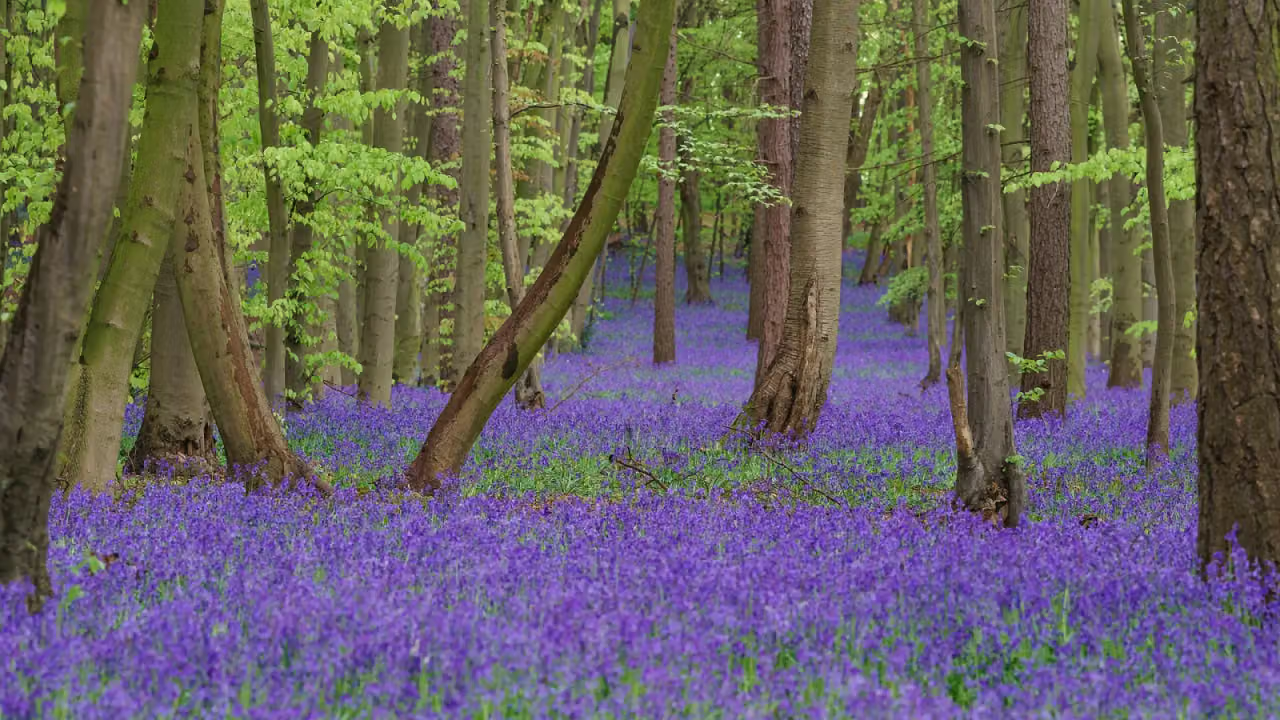
When do bluebells flower?
Bluebells usually flower from late March to May. The Woodland Trust says most flowering happens in April, and each display lasts a few weeks, depending on the weather. Its species page gives a slightly later window, from mid-April to late May, so the honest answer is: April, with a few weeks either side.
The moment shifts from year to year. Records of Nature's Calendar, the Woodland Trust's citizen science project, give 9 April as the average first-flowering date in the UK between 2001 and 2025. Bluebells often come out first in southern England, which is slightly warmer, and a mild spring brings them out earlier. They flower before the trees close their canopy and shade the woodland floor; in a warm spring, when the trees leaf early, that window gets shorter.
- Season
- late March to May
- Most flowering
- April
- Average first flowering
- 9 April (2001-2025)
- First in
- southern England
When you can see bluebells
- Jan
- Feb
- Mar: possible
- Apr: best time
- May: possible
- Jun
- Jul
- Aug
- Sep
- Oct
- Nov (now)
- Dec
Bluebell woods: where bluebells grow
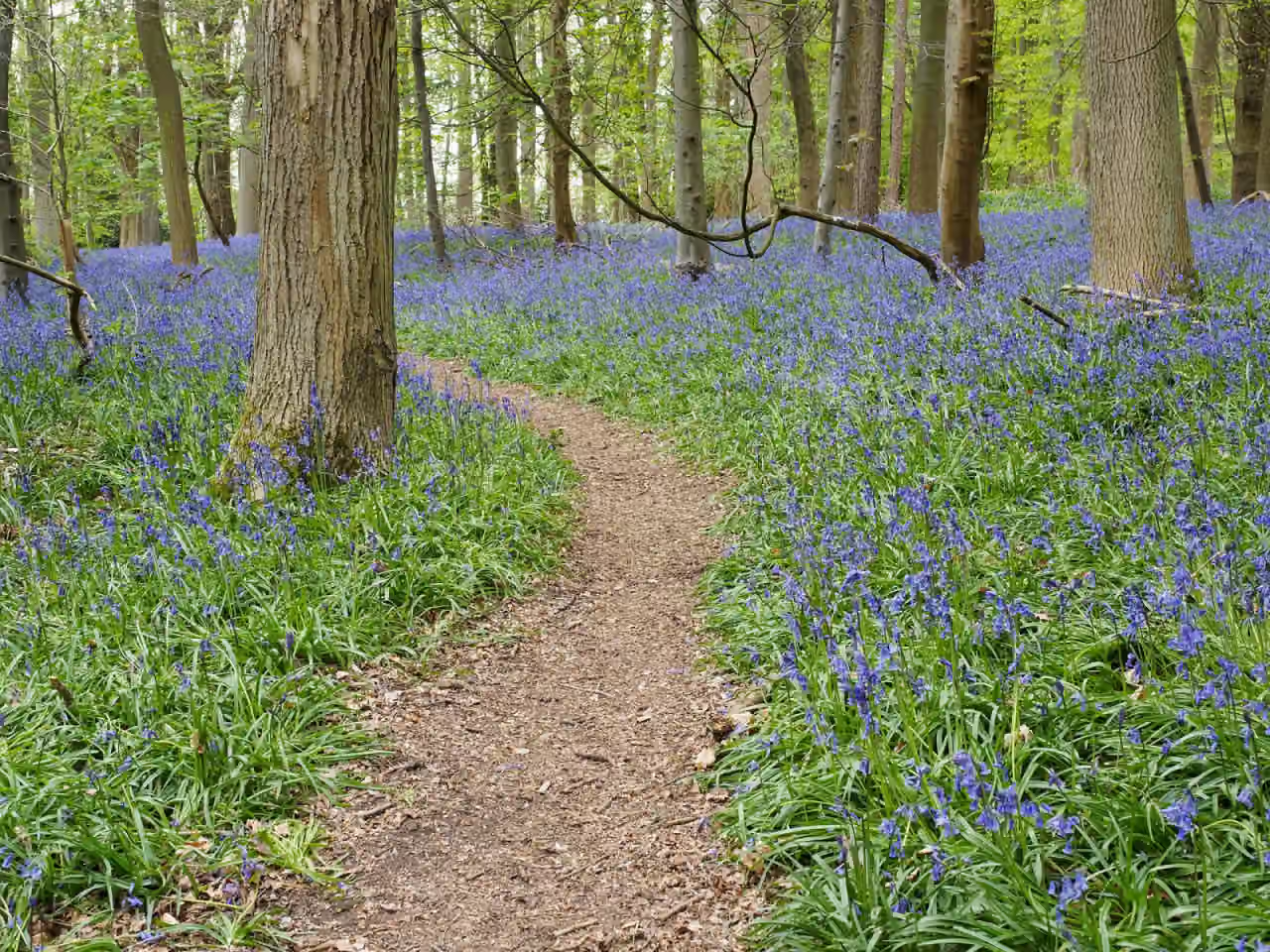
Bluebells grow best in old, long-established woods, especially ancient woodland. The Woodland Trust calls the bluebell an ancient-woodland-indicator plant: a carpet of bluebells is a sign that a wood has been there for a very long time. You also find them along hedgerows, in fields and in gardens.
The Woodland Trust lists its own bluebell woods in England, which are free to visit. Four of them, spread over the country:
| Wood | Near | Size | Our page |
|---|---|---|---|
| Hackfall | Grewelthorpe, North Yorkshire | 48 ha | North Yorkshire |
| Brede High Woods | Cripps Corner near Battle, East Sussex | 262 ha | Rother |
| Hardwick Wood | Plympton, near Plymouth | 22 ha | Plymouth |
| Burroughs Wood | Ratby, near Leicester | 37 ha | Hinckley and Bosworth |
The sizes are those the Woodland Trust gives. Check the wood's own page before you go for parking and paths.
English bluebells and Spanish bluebells
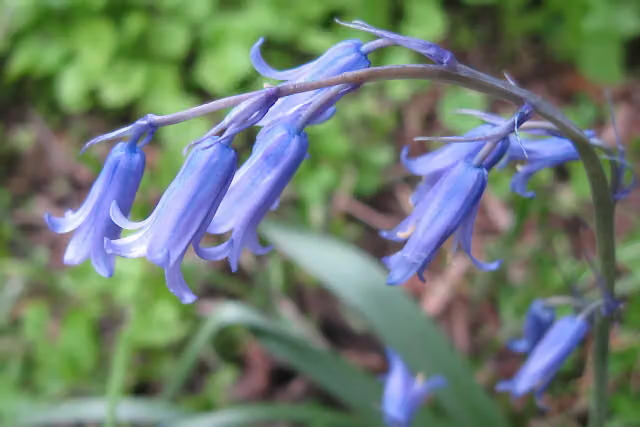
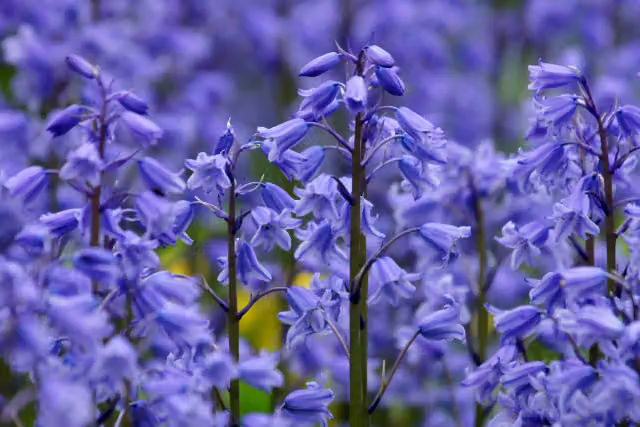
The native bluebell, often called the English bluebell, is easy to recognise once you know what to look for. According to the Woodland Trust its flowers nod or droop to one side of the stem, they smell sweet and they have creamy white pollen inside.
Spanish bluebells look very similar, but their stems stand upright with flowers all round the stem. They come from gardens, and the hybrid of the two looks much like the native bluebell. The Woodland Trust warns that the hybrid may outcompete the native bluebell, which is one reason to leave garden bluebells out of the countryside.
- English bluebell
- droops to one side
- Pollen
- creamy white
- Spanish bluebell
- upright, flowers all round
English or Spanish bluebell?
How to visit a bluebell wood
A bluebell wood in flower is fragile. Bluebells are slow to recover from trampling, and the Woodland Trust says a patch can take more than five years to establish. So:
- Stay on the path, also for a photo. Bluebells are slow to recover from trampling.
- Do not pick the flowers or dig them up. Native bluebells are protected under the Wildlife and Countryside Act 1981: digging up wild bulbs without the landowner's permission is illegal, landowners may not dig them up to sell, and trading in wild bulbs and seeds is an offence.
- Record what you see. You can add your first bluebells of the year to Nature's Calendar on the Woodland Trust website.
Bluebell wood near me: benches, water and public toilets
A bench at the edge of a bluebell wood is the place to look at the blue for a while without leaving the path. Most woods have no café, so bring water and check where the nearest tap or public toilet is before you set off.
Our pages show the pitstops around the four woods above: North Yorkshire, Rother, Plymouth and Hinckley and Bosworth. Looking for a bluebell wood near you somewhere else? Then see the benches, water fountains and public toilets in the United Kingdom.
In the app I see 6,560 benches and 436 public toilets in the four areas of these bluebell woods; save one near your starting point.
From our data
Pitstops around the bluebell woods
- Benches
- 6,560
- in North Yorkshire, Rother, Plymouth and Hinckley and Bosworth
- Public toilets
- 436
- in North Yorkshire, Rother, Plymouth and Hinckley and Bosworth
- Water points
- 73
- in North Yorkshire, Rother, Plymouth and Hinckley and Bosworth
- Water points off in winter
- 0
- in North Yorkshire, Rother, Plymouth and Hinckley and Bosworth
As of 28 November 2026, from the Outdoor Pitstop database. The whole of the four areas these bluebell woods are in, not just the woods themselves. Water points include taps that are turned off in winter.
More to see in spring
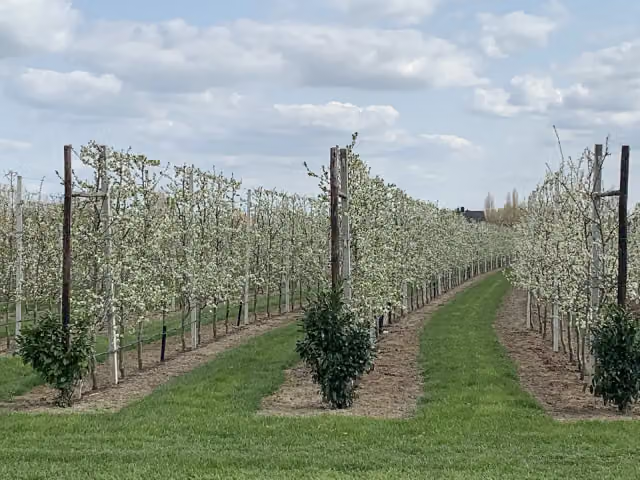
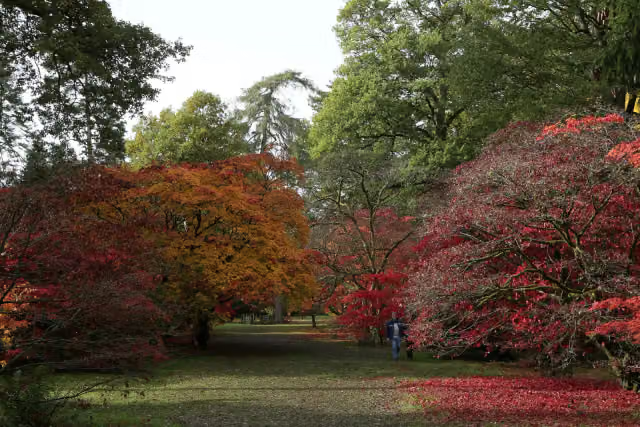
In the same weeks as the bluebells, the first leaves of the trees and the spring flowers of the woodland floor appear, and fruit trees come into blossom. When the bluebells have gone grey-blue and the canopy has closed, the wood turns green for the summer; it colours again in autumn.