Outdoor Pitstop
The story
Audio tour · Convento de San Esteban
2:11
- en
- nl
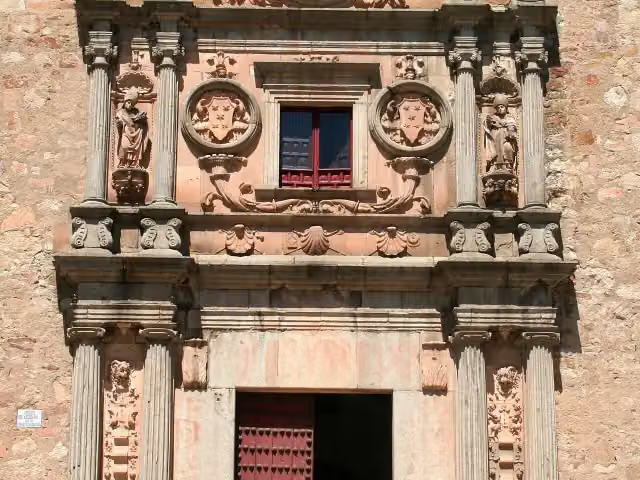
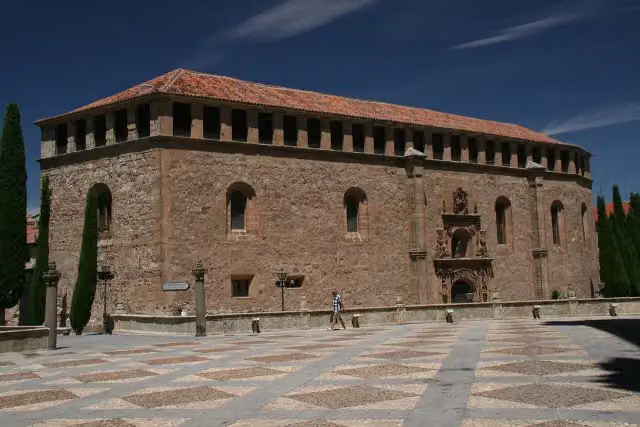
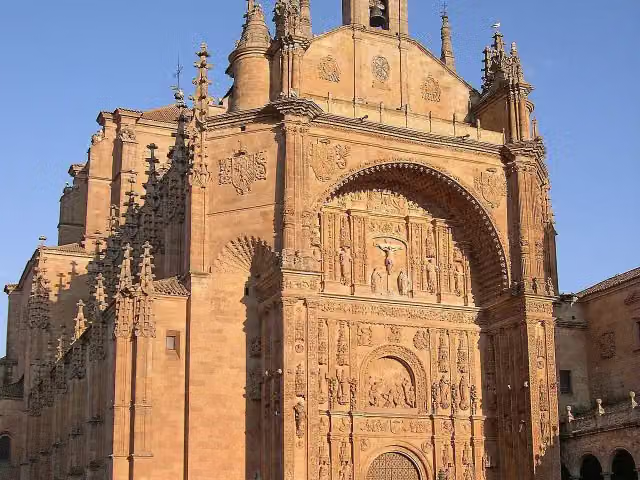
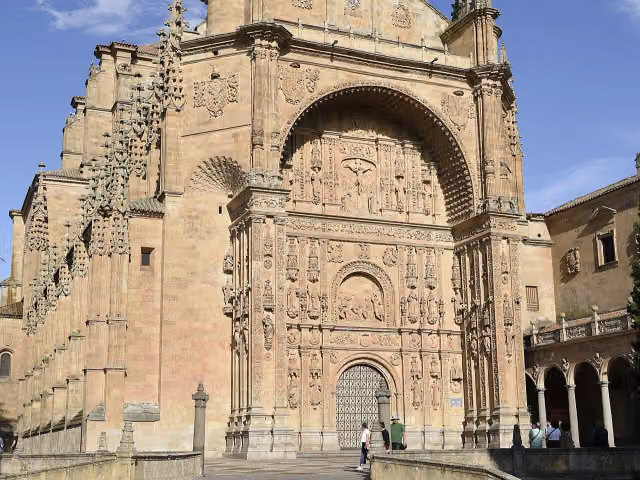
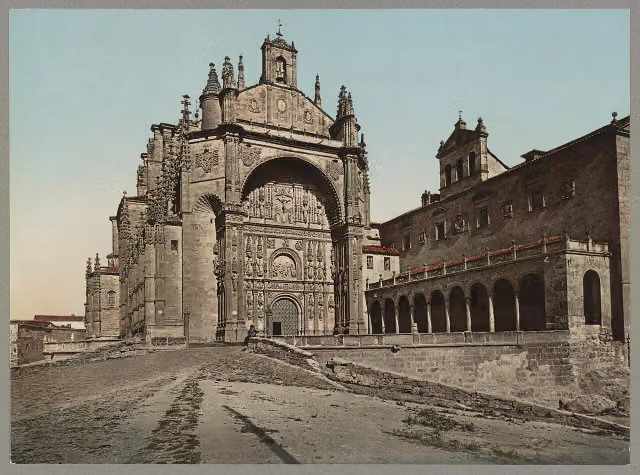
You're standing on the Plaza del Concilio de Trento in Salamanca, in front of the Convento de San Esteban, a Dominican monastery. Start with the church front. It's designed like a giant altarpiece carved in stone, set under one huge triumphal arch. This richly decorated style is called Plateresque. In the middle you can see the martyrdom of Saint Stephen, with a Calvary above it. Juan Antonio Ceroni carved those reliefs in the early seventeenth century.\n\nNow look to the side, at the open gallery with rounded arches. It's much plainer and borrows from Italian Renaissance loggias. The contrast with the lavish church front is striking.\n\nThe place has a long history. The Dominicans settled in Salamanca between 1255 and 1256. The current monastery was started in 1524, on the initiative of Cardinal Juan Álvarez de Toledo, a Dominican himself. Juan de Álava drew up the plan. It wasn't finished until 1610, which is why you'll spot a mix of styles, from late Gothic to Baroque. Tradition says Columbus stayed here, though in the older convent. He came to convince the university's scholars that you could reach the Indies by sailing west. Later, San Esteban became an important centre of the School of Salamanca, led by Francisco de Vitoria.\n\nSo what's inside? The church has a single big nave and a dome rising 44 metres. The main altarpiece by José Benito de Churriguera is completely gilded and covered in ornament, a truly Spanish Baroque showpiece. There's also the cloister, which blends Gothic and Renaissance elements. And don't miss the Staircase of Soto from the sixteenth century. It's held up only by the walls, and seems to float almost miraculously. The Duke of Alba is buried here too.\n\nTwo more cloisters are closed to visitors, because the monastic community still lives there.
Listen to the first 30 seconds
0:00 / 0:30
Read and hear the whole story in the Outdoor Pitstop app: check in at this place and it is yours (with Pro; new users are Pro for the first 4 weeks).