Outdoor Pitstop
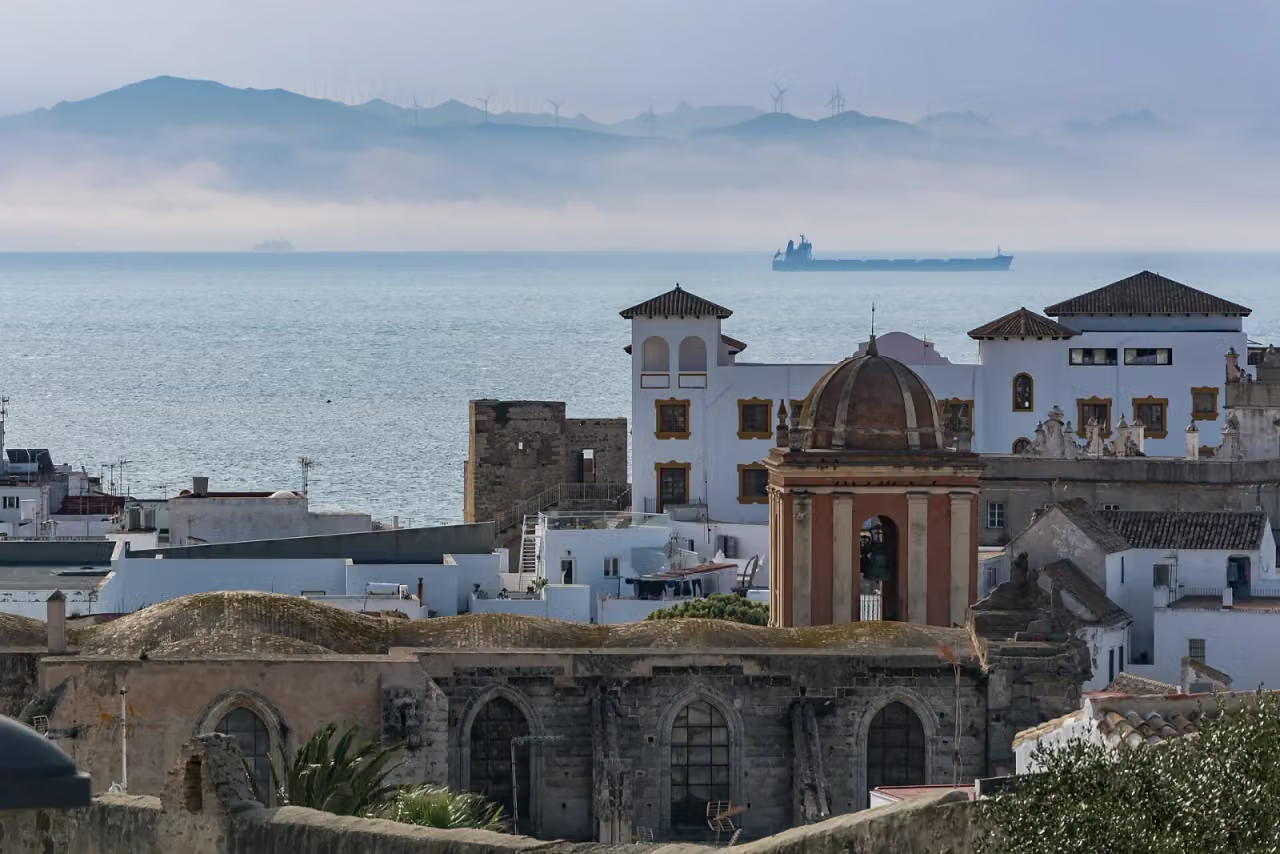
Short answer
The solar eclipse of 2 August 2027 is a total eclipse that crosses the far south of Spain around 10:45 in the morning, local time. According to Spain's National Geographic Institute (IGN), totality is visible in almost the whole province of Cádiz, much of the province of Málaga, the southern tip of Granada and Almería, and in Ceuta and Melilla, where it lasts longest: 4 minutes and 48 seconds in Ceuta. The rest of Spain sees a partial eclipse, with at least 70% of the Sun covered.
Times and durations come from the IGN and from the English Wikipedia article on the eclipse, which uses NASA eclipse predictions. Facility figures come from the Outdoor Pitstop database on 25 November 2026.
Solar eclipse 2027: why it is special
According to the English Wikipedia article on the solar eclipse of 2 August 2027, totality lasts up to 6 minutes and 23 seconds in southern Egypt, which makes it one of the longest total eclipses of the century. The path of totality, up to 258 km (160 miles) wide, starts over the Atlantic, crosses the Strait of Gibraltar and runs through Spain, Gibraltar, Morocco, Algeria, Tunisia, Libya, Egypt, Saudi Arabia, Yemen and Somalia.
For walkers in Europe, southern Spain is the closest place to see it. The eclipse also comes one year after the total eclipse of 12 August 2026 over northern Spain.
Animation: A.T. Sinclair, public domain, via Wikimedia Commons
Where to see the 2027 eclipse in Spain: times and duration
Totality lasts longer the closer you are to the centre line of the path, which runs across the Strait of Gibraltar. These are the figures for places on the Spanish side and Gibraltar:
| Place | Totality starts (local time) | Duration of totality | Source |
|---|---|---|---|
| Ceuta | between 10:45 and 10:50 | 4 min 48 s | IGN |
| Melilla | 10:48 | 4 min 34 s | IGN |
| Gibraltar | 10:45:39 | 4 min 28 s | Wikipedia (NASA data) |
| Marbella | 10:46:53 | 3 min 21 s | Wikipedia (NASA data) |
| Cádiz | 10:45 | 2 min 54 s | IGN |
| Málaga | 10:48 | 1 min 48 s | IGN |
Tarifa, between Cádiz and Gibraltar and closer to the centre line than either city, also lies inside the path. Check the exact time for your spot in the IGN's table before you choose where to stand. Across the strait, Wikipedia gives Tangier in Morocco 4 minutes and 51 seconds, from 09:44 local time.
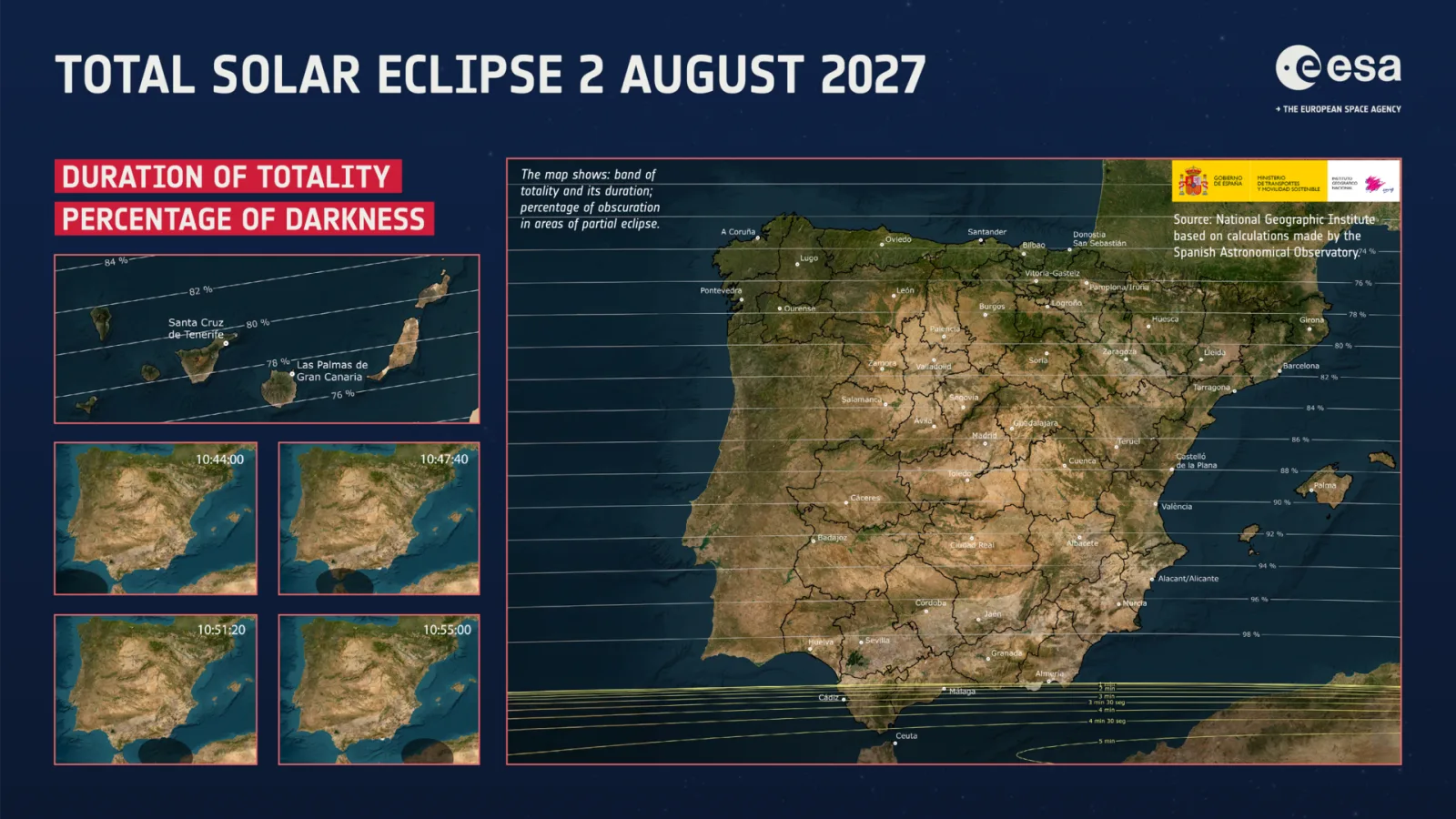
Map: European Space Agency, CC BY-SA 3.0 IGO, via Wikimedia Commons
Walking to an eclipse viewpoint near Tarifa and Cádiz
A walk is a good way to escape the crowds that will fill the beaches and town centres on 2 August 2027. A few ideas in the path of totality:
- Bolonia and Baelo Claudia, Tarifa. The Roman town of Baelo Claudia near Tarifa sits on the beach at Bolonia, looking out over the Strait. The coastal paths and the large dune at Bolonia make it a natural walk for the morning of the eclipse.
- The coast between Tarifa and Algeciras. Paths along the Strait of Gibraltar look across to Morocco, which lies in the path of totality too.
- Corredor Verde de las Dos Bahías. A long walking and cycling route between the Bay of Cádiz and the Bay of Algeciras; in our data the Corredor Verde de las Dos Bahías is 94.6 km (59 miles) long, so pick one section.
At 10:45 in early August the Sun is in the eastern half of the sky, so choose a spot without tall buildings or a hill on that side.
Toilets and water in the eclipse path
Early August is one of the hottest times of the year in Andalusia, and an eclipse means standing still in the open for an hour or more. Water and a toilet nearby make a big difference. According to Outdoor Pitstop's data (as of 25 November 2026), these places in the path of totality have:
| Place | Public toilets | Drinking water points |
|---|---|---|
| Málaga | 101 | 405 |
| Marbella | 49 | 78 |
| Cádiz | 28 | 117 |
| Conil de la Frontera | 17 | 10 |
| Tarifa | 13 | 25 |
| Barbate | 11 | 9 |
| Estepona | 9 | 37 |
| Ceuta | 8 | 7 |
| Vejer de la Frontera | 6 | 14 |
| Algeciras | 5 | 14 |
Small towns such as Tarifa and Barbate will receive many more visitors than they have toilets for. Find the 13 public toilets in Tarifa and the 117 drinking water points in Cádiz before the day, and fill your bottles early.


Eye safety during the 2027 eclipse
NASA's eclipse safety advice is clear: during the partial phases before and after totality, only look at the Sun through eclipse glasses or a solar viewer that meets the ISO 12312-2 standard. Ordinary sunglasses, however dark, are not safe. You may take the glasses off only during totality, when no part of the Sun is visible through them, and must put them back on as soon as the bright Sun reappears.
That rule matters in Spain: in Málaga, totality lasts under two minutes, and outside the path, for example in Seville or Madrid, there is no totality at all, so the glasses stay on the whole time.
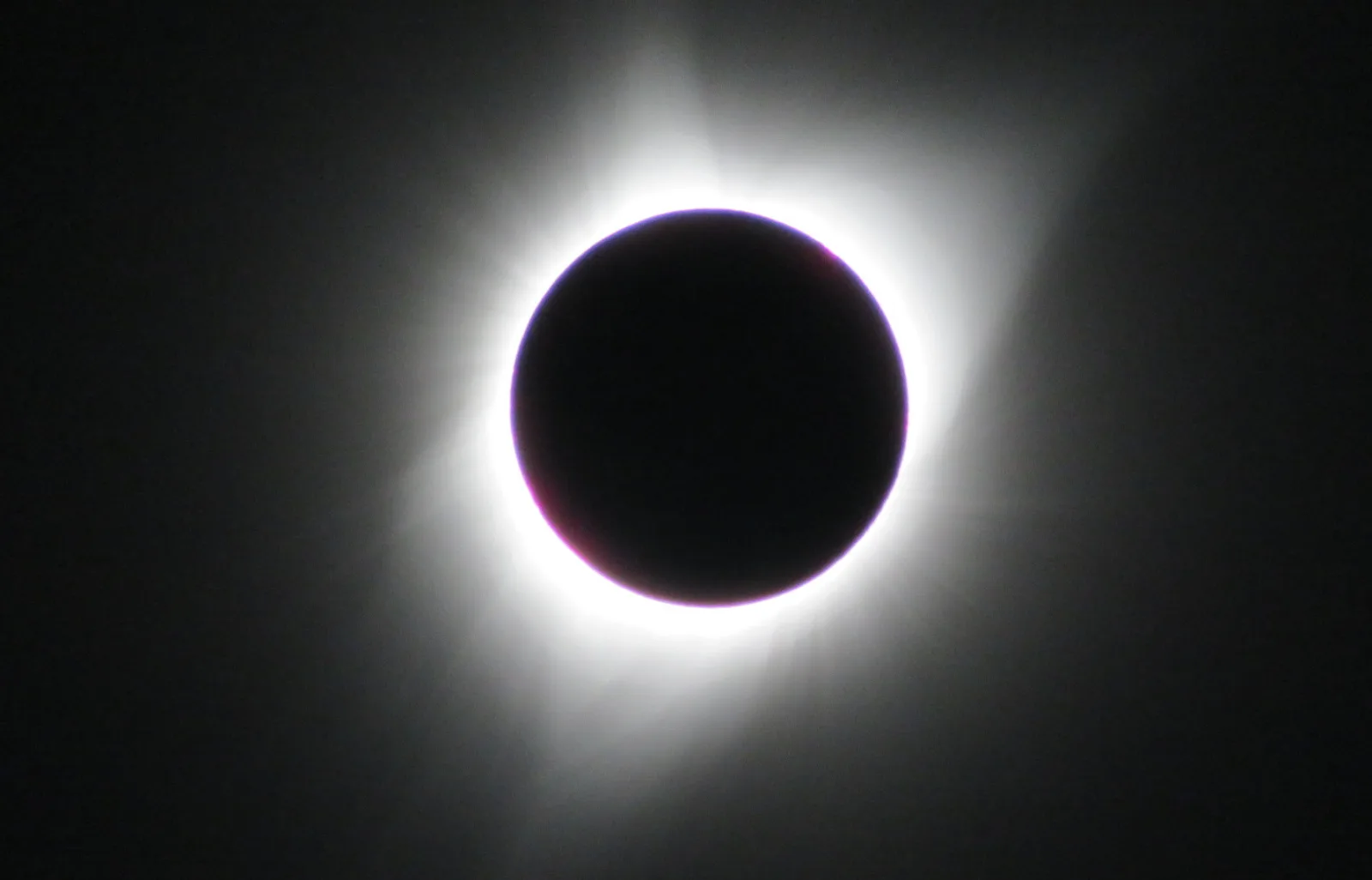
Photo: O'Dea, CC BY-SA 4.0, via Wikimedia Commons. The 2017 eclipse in the United States.
On the map
Public toilets in Spain (7,635)
Take Outdoor Pitstop along on your phone
Free · 3.4 million pitstops in 44 countries