Outdoor Pitstop
Short answer
Liberation Day in the Netherlands (Bevrijdingsdag) is on Wednesday 5 May 2027. It marks the end of the German occupation in 1945 and follows National Remembrance Day on Tuesday 4 May, when the whole country keeps two minutes' silence at 20:00. On 5 May there are 14 liberation festivals across the country, from Groningen to Vlissingen.
We update this post every year once the National 4 and 5 May Committee (Nationaal Comité 4 en 5 mei) and the festival organisers publish the new programme. As of 25 November 2026, the 2027 line-ups and the start city have not been announced. Facility figures from the Outdoor Pitstop database on 25 November 2026, based on OpenStreetMap and additions from our users.
Why the Netherlands celebrates Liberation Day on 5 May
The German forces in the Netherlands surrendered at Lüneburg Heath on 4 May 1945, with effect the next day. On 5 May the Canadian general Charles Foulkes and the German commander Johannes Blaskowitz met at Hotel De Wereld in Wageningen to settle how the surrender would be carried out. That meeting is why 5 May became Liberation Day, and why Wageningen still plays a central part in the day.
According to Wikipedia, 5 May has been held on that date every year since 1968, whatever the weekday, and it became an annual national holiday in 1990.
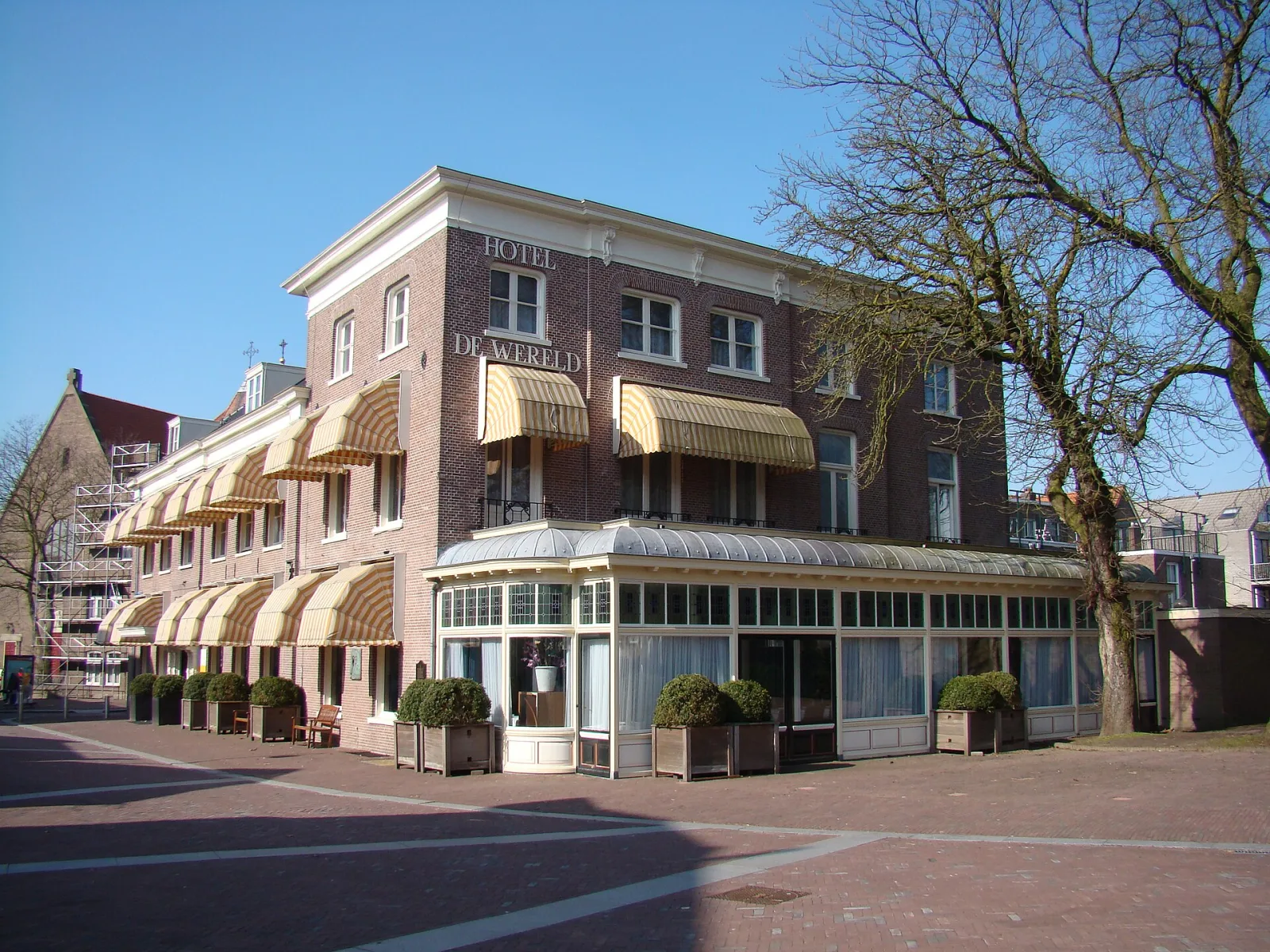
Photo: Arch, public domain, via Wikimedia Commons
Is Liberation Day a day off in the Netherlands?
Liberation Day is a national holiday every year, but that does not make it a day off for everyone. According to the National 4 and 5 May Committee, many collective labour agreements (cao's) give a paid day off on 5 May only in lustrum years, once every five years. 2027 is not a lustrum year, so on Wednesday 5 May 2027 most shops and many offices will be open, and many people will be at work. The festivals still go ahead.
Remembrance Day on 4 May: two minutes' silence
Remembrance Day (Dodenherdenking) on 4 May comes first and has a very different mood. The national ceremony is at the National Monument on Dam Square in Amsterdam, where the King lays the first wreath just before the silence. At 20:00 the whole country is silent for two minutes, and people on the street stand still.
The National 4 and 5 May Committee asks everyone to fly the Dutch flag at half-mast on 4 May. Shops close at 19:00. Almost every municipality holds its own remembrance at a local war memorial, often with a silent walk (stille tocht) from the town centre. Your municipality's website gives the time and route.
If you are walking or cycling at 20:00 on 4 May, stop where you are for the two minutes. In the countryside you may be alone, but in towns you will notice that everyone around you does the same.
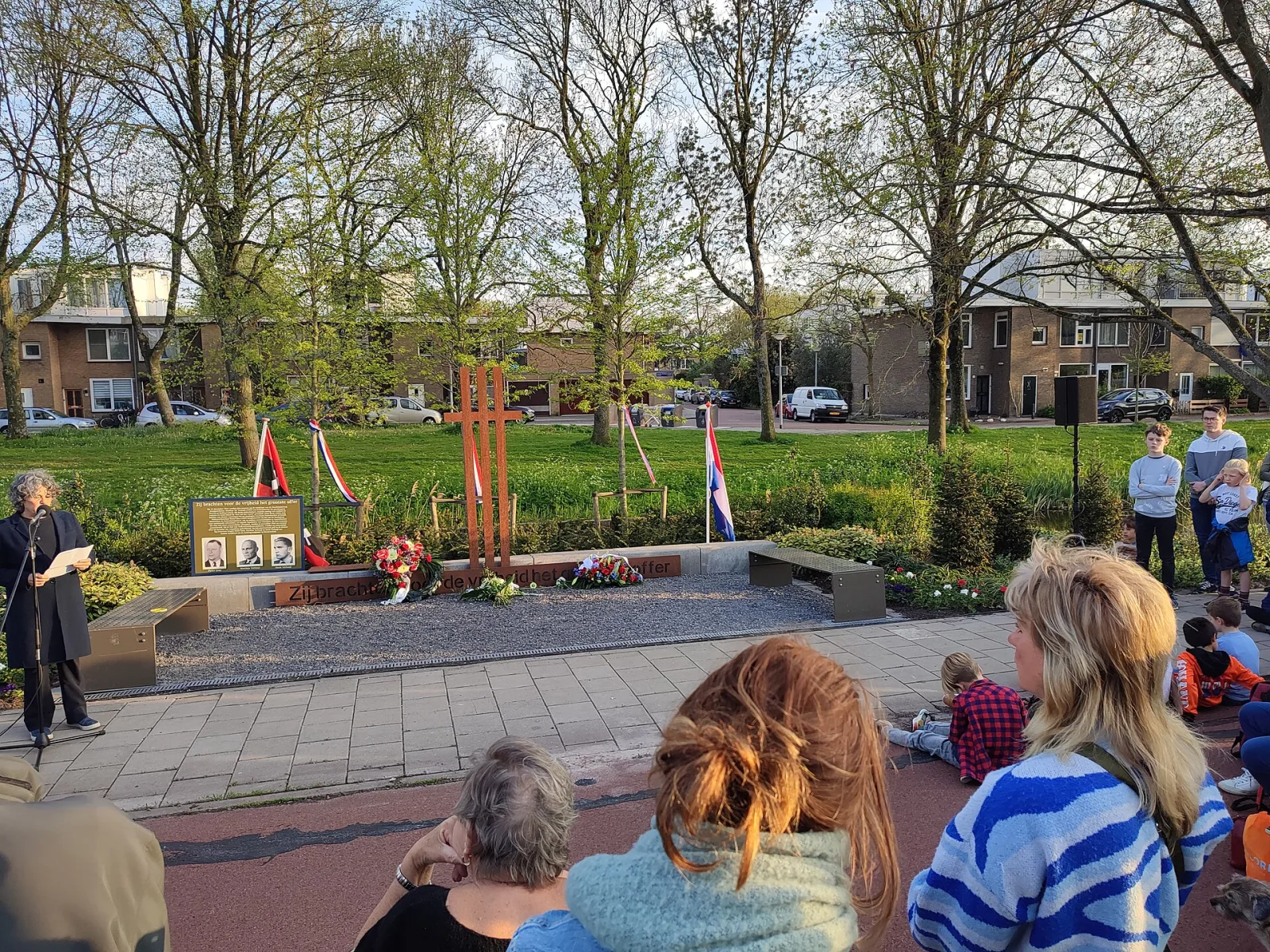
Photo: Paul Berendsen, CC BY-SA 4.0, via Wikimedia Commons
The Liberation Fire: carried across the country by runners
On the night of 4 to 5 May, the Liberation Fire (Bevrijdingsvuur) is lit in Wageningen in a ceremony at Hotel De Wereld. Running groups then carry the flame on foot to towns all over the Netherlands, and it is used to light the fire at each of the 14 festivals. When the fire arrives in a town, the local 5 May programme begins.
The 14 liberation festivals and their pitstops
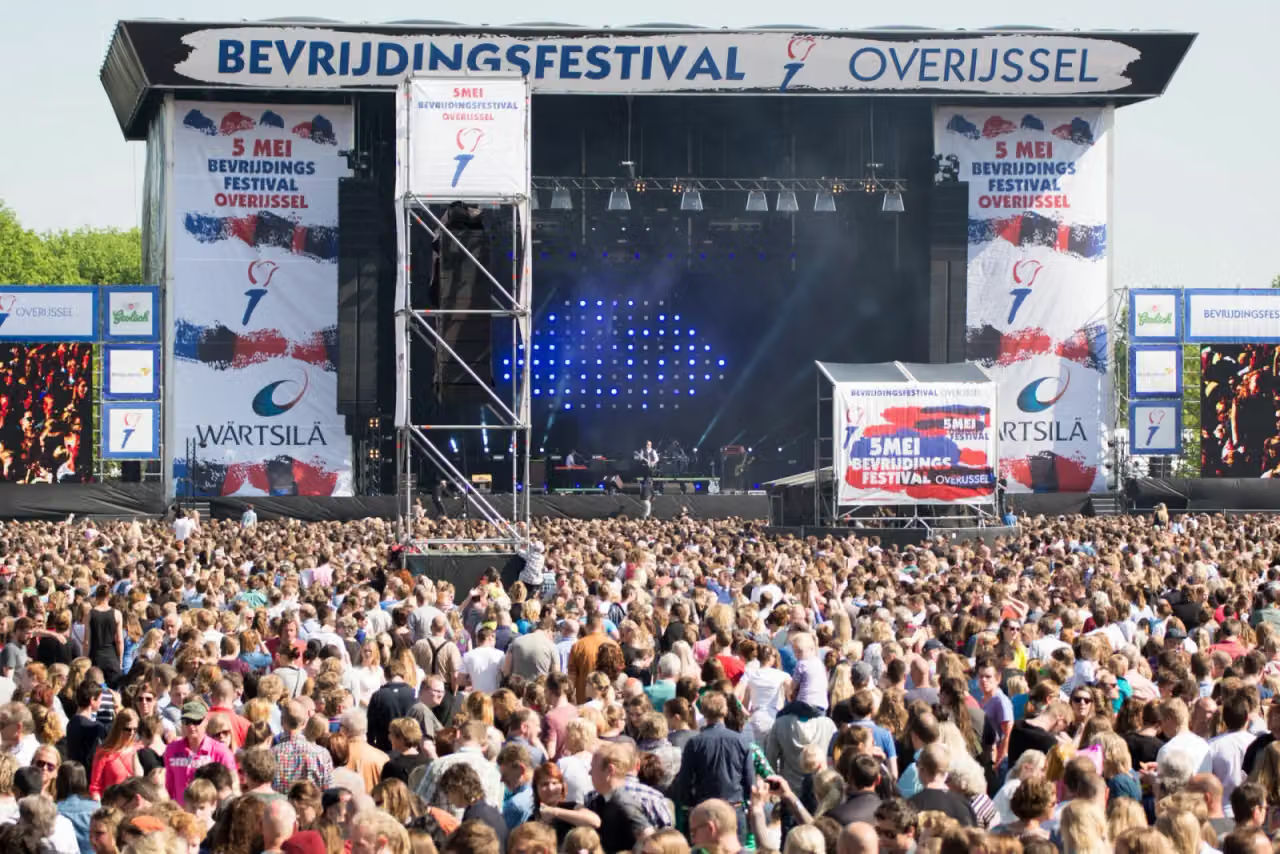
The Liberation Festivals (Bevrijdingsfestivals) are held in 14 cities, one per province plus Amsterdam, The Hague, Haarlem and Rotterdam. Since 1991, a group of well-known artists, the Ambassadors of Freedom, are flown by helicopter from festival to festival during the day. Entry has traditionally been free; check each festival's own website for the 2027 arrangements.
The festivals draw large crowds into city centres and parks. Our map shows the permanent public toilets and drinking water points in each festival city; festivals add their own temporary toilets on the grounds.
| Festival | City and location | Public toilets | Drinking water points |
|---|---|---|---|
| Amsterdam | spread across the city | 155 | 555 |
| Brabant | Pettelaarse Schans, 's-Hertogenbosch | 2 | 15 |
| Den Haag | Malieveld, The Hague | 48 | 90 |
| Drenthe | Baggelhuizen, Assen | 15 | 6 |
| Flevoland | city centre, Almere | 17 | 14 |
| Fryslân | city centre, Leeuwarden | 26 | 9 |
| Gelderland | city centre, Wageningen | 2 | 7 |
| Groningen | De Drafbaan, Groningen | 73 | 30 |
| Haarlem | Haarlemmerhout, Haarlem | 17 | 12 |
| Limburg | city centre, Roermond | 14 | 8 |
| Overijssel | Park de Wezenlanden, Zwolle | 18 | 10 |
| Utrecht | Park Transwijk, Utrecht | 36 | 75 |
| Zeeland | city centre, Vlissingen | 7 | 4 |
| Zuid-Holland | Het Park, Rotterdam | 65 | 77 |
Festivals and locations from bevrijdingsfestivals.nl (2026 edition). Toilets and water points per municipality: Outdoor Pitstop data, as of 25 November 2026.
Wageningen, where the national celebration traditionally starts, has only 2 public toilets and 7 water points on our map, so plan your stops before the crowds arrive. Amsterdam has by far the most, with 555 drinking water points. See the public toilets in Amsterdam, the water fountains in Utrecht and all facilities and walks in Wageningen.


Walking to war memorials around 4 and 5 May
Many people combine 4 or 5 May with a walk or bike ride to a memorial. According to Outdoor Pitstop's data (as of 25 November 2026), there are 482 memorials in the Netherlands on our map, from the National Monument on Dam Square to small liberation monuments in villages. Around Arnhem, Oosterbeek and Ede, the memorials of the 1944 Battle of Arnhem are close enough together to link on foot. Browse the points of interest on our map to plan a route past them.
If you also want to visit the First World War battlefields across the border, see our guide to walking the WW1 battlefields of Flanders and the Somme. And for the other big outdoor day in the Dutch spring, read our tips for King's Day in Amsterdam, a week earlier on 27 April.
On the map
Water fountains and refill points and public toilets in the Netherlands (6,121)
Take Outdoor Pitstop along on your phone
Free · 3.4 million pitstops in 44 countries