Outdoor Pitstop
Short answer
To pump up a bike tyre, first check which valve you have (Presta, Schrader or Dunlop), then read the recommended pressure printed on the side of the tyre. Remove the valve cap, open a Presta valve by unscrewing its small nut, push the pump head on firmly and pump until you reach the pressure. Take the pump off, close the valve and put the cap back.
Step by step: how to pump up a bike tyre
- Find the valve. Turn the wheel until the valve is at the bottom or at a comfortable height, and unscrew the dust cap.
- Check the valve type. See the table in the next section. A Presta valve needs one extra step: unscrew the small knurled nut at the tip, then press it briefly to free the seal.
- Read the pressure. The sidewall of the tyre shows a range, such as "4.5-6.5 bar (65-95 psi)". Stay within it.
- Fit the pump head. Push it straight onto the valve as far as it goes and flip the lever, if there is one. Most modern floor pumps have a head that fits both Presta and Schrader.
- Pump. Use long, full strokes and keep an eye on the gauge. Without a gauge, press the tyre with your thumb: it should give only a little.
- Finish. Flip the lever back and pull the head off straight, so you do not bend the valve. Tighten the Presta nut and put the cap back on.


If the tyre is flat again after a day or two, you probably have a slow puncture or a leaking valve, not too little air. Our guide on bike repair at home: the M-check and tools explains how to check a bike from front to back.
Presta, Schrader or Dunlop: which valve do you have?
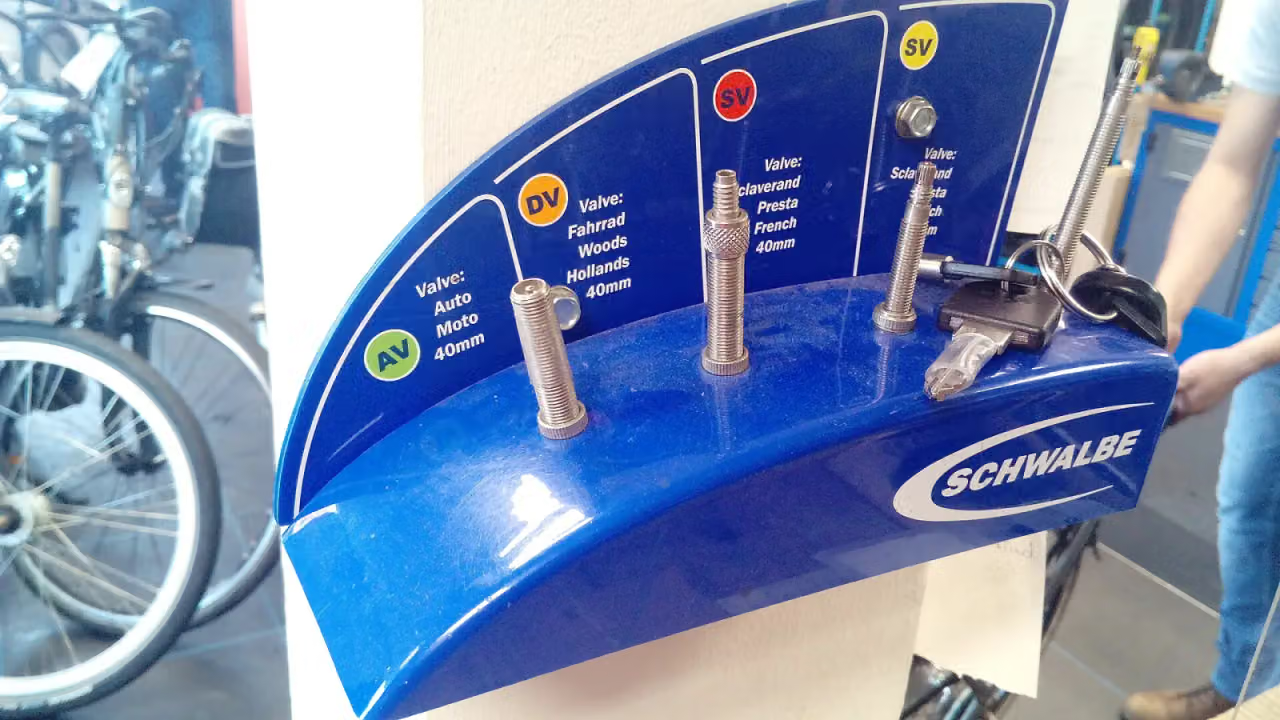
Bikes in the UK and Europe use three types of valve. They look different and each needs the right pump head or an adaptor.
| Valve | Also called | How to recognise it | Common on | Before pumping |
|---|---|---|---|---|
| Presta | French valve, Sclaverand | Thin, with a small knurled nut at the tip | Road bikes, many hybrids and newer mountain bikes | Unscrew the nut at the tip |
| Schrader | Car valve, American valve | Wide, with a pin in the middle, same as a car tyre | Children's bikes, older mountain bikes, some e-bikes | Nothing; just remove the cap |
| Dunlop | Woods valve, Dutch valve | Wide base, a thinner top with a large cap nut | Town and city bikes in the Netherlands, Germany and Scandinavia | Nothing; remove the cap. Most Presta heads fit |
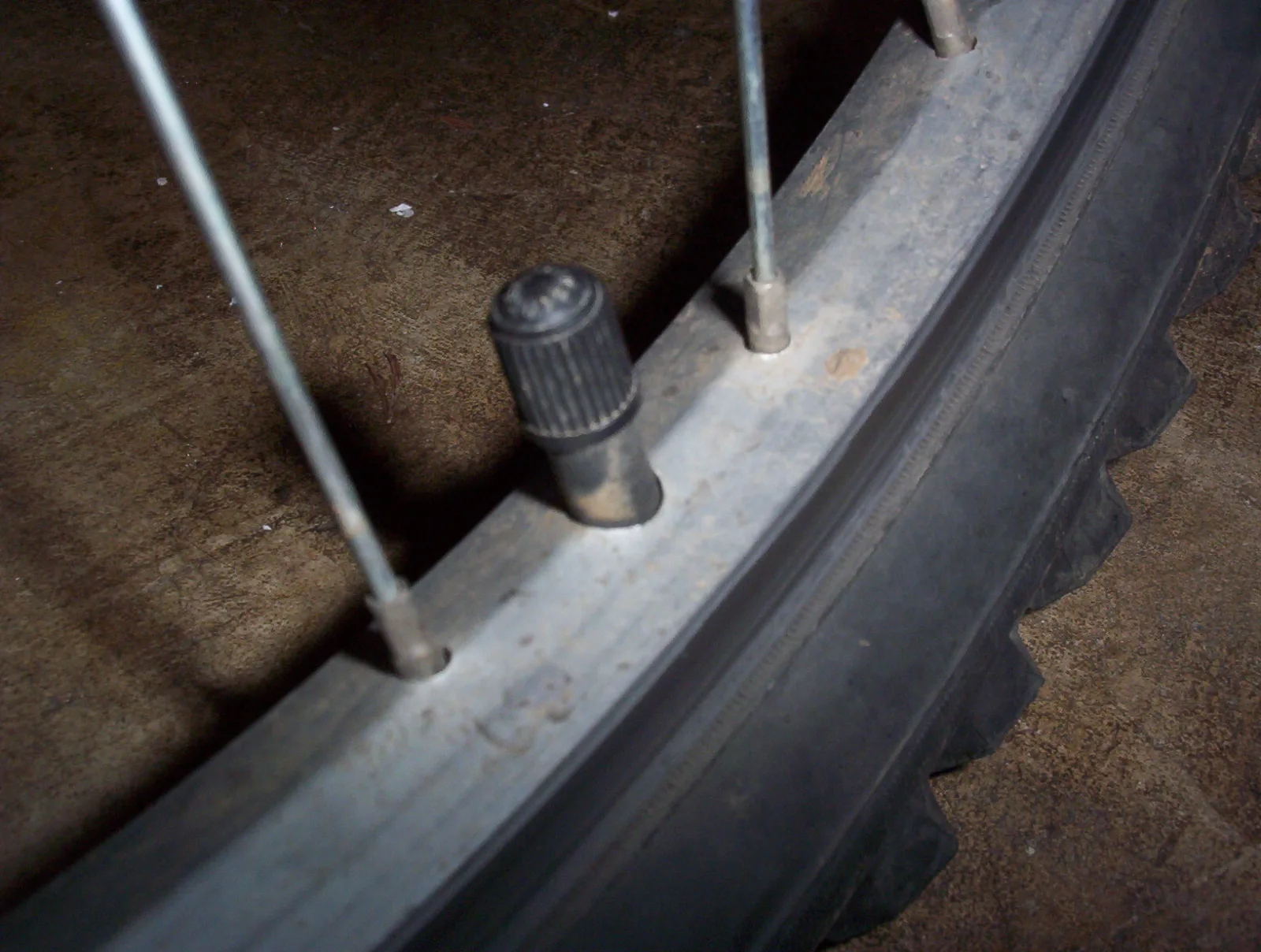
Photo: Jm51, CC BY-SA 3.0, via Wikimedia Commons
The Dunlop valve is the one British cyclists are least likely to know, but you will meet it on hire bikes in the Netherlands and Germany. A pump head for Presta valves usually fits it, because the top is about the same size.
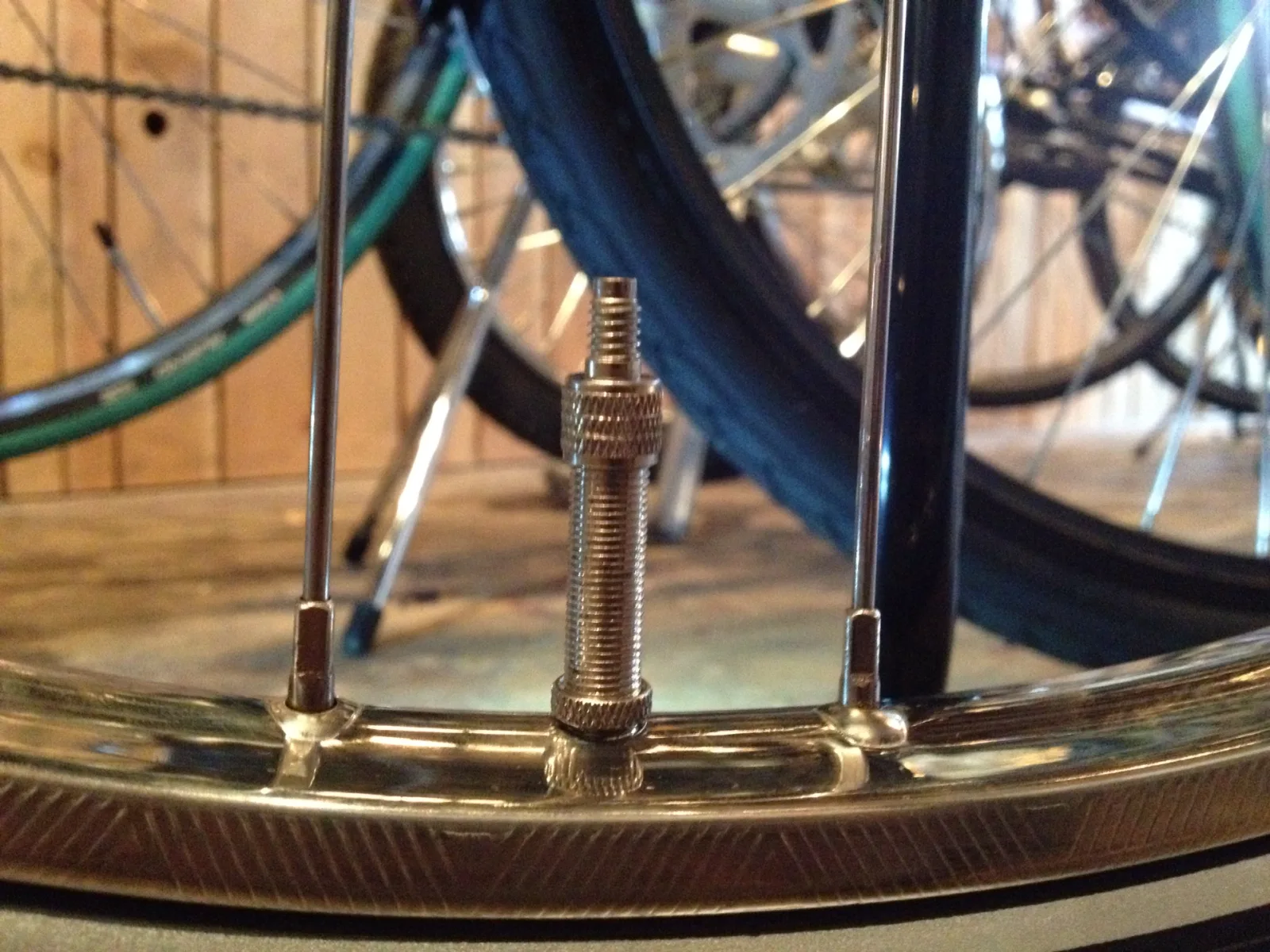
Photo: ubrayj02, CC BY 2.0, via Wikimedia Commons
How much pressure? Bar and psi
Pumps in the UK often show psi, pumps on the continent bar. One bar is about 14.5 psi. Always go by the range on your own tyre: it depends on the tyre width, your weight and the surface. As a rough guide:
| Tyre | Typical width | Typical range in bar | Typical range in psi |
|---|---|---|---|
| Road bike | 25-32 mm | 5.5-8 | 80-115 |
| Hybrid or touring bike | 35-45 mm | 3.5-5.5 | 50-80 |
| Town bike | 37-50 mm | 3-5 | 45-70 |
| Mountain bike | 2.1-2.6 inch | 1.4-2.1 | 20-30 |
Wider tyres need less pressure. A slightly lower pressure in the wet gives more grip; going below the minimum on the sidewall risks a "snake bite" puncture when you hit a kerb.
Free public bike pumps across Europe
You do not need to carry a floor pump to top up on the way. Many towns and cycle routes have public bike pumps and repair stations. According to Outdoor Pitstop's data (as of 25 November 2026), our map shows 15,209 of them in Europe, 10,622 of which are marked as having a pump:
| Country | Public bike pumps and repair stations | Of which with a pump |
|---|---|---|
| Germany | 4,691 | 3,795 |
| France | 2,469 | 1,855 |
| United Kingdom | 647 | 396 |
| Netherlands | 96 | 60 |
| Ireland | 84 | 44 |
These are mainly from OpenStreetMap and additions by our users. For 876 of them we know which valves the pump fits: 847 take Schrader, 835 Presta and 695 Dunlop, and 659 fit all three. At the others, a small Presta-to-Schrader adaptor in your saddle bag solves most mismatches.
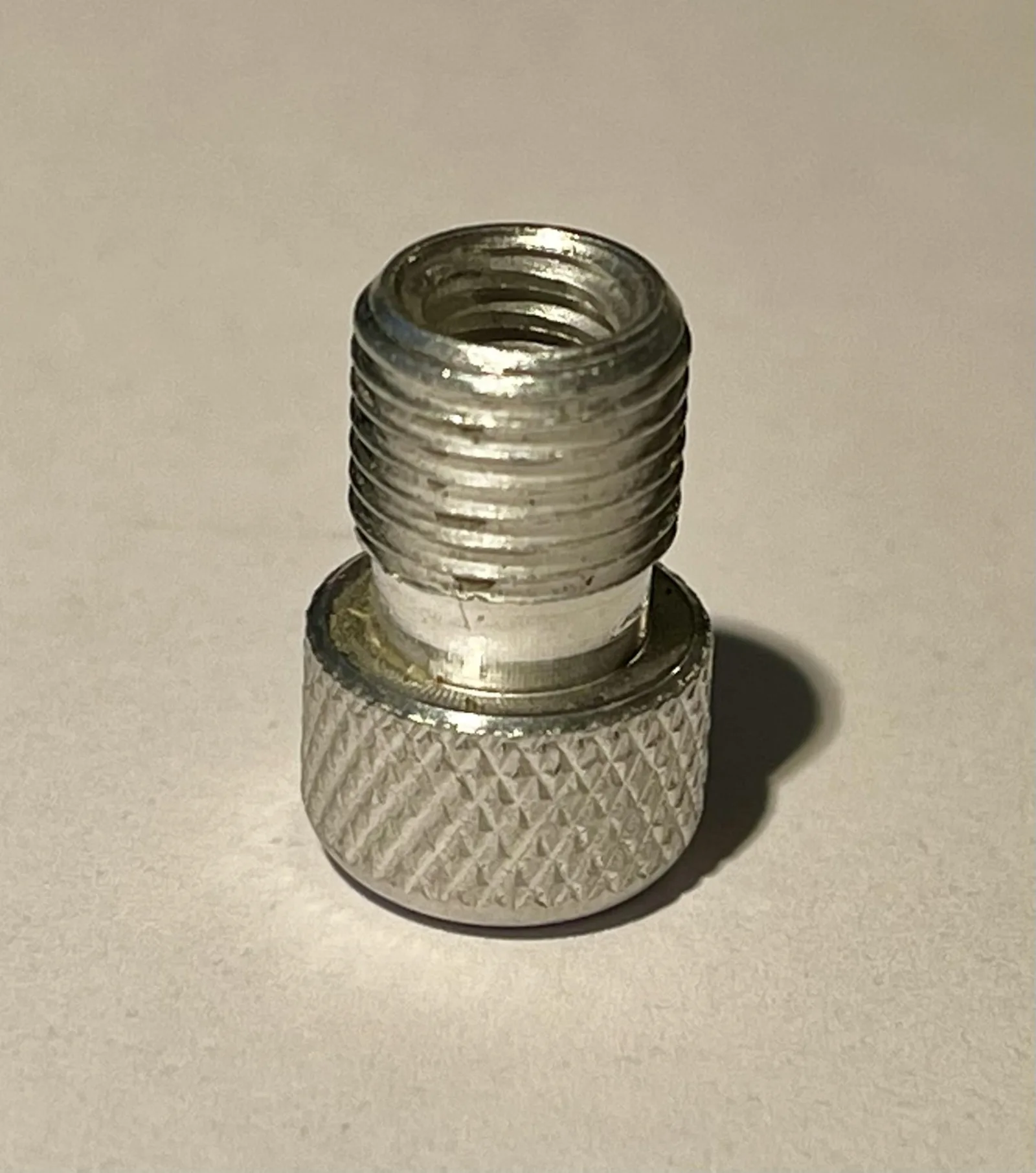
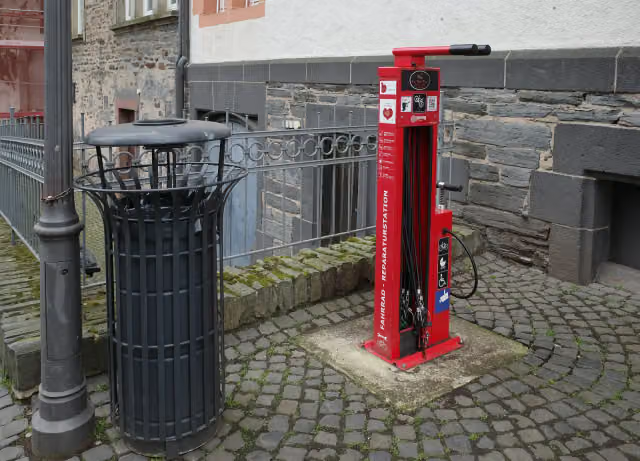
Photo: SCEhardt, CC BY 4.0, via Wikimedia Commons
Find one on your route via the 647 public bike pumps in the United Kingdom, the 4,691 bike pumps in Germany or the 96 bike pumps in the Netherlands. Our guide to public bike repair stations explains what tools you find on them.
On the map
Bike pumps in United Kingdom, Netherlands, Germany and France (7,903)
Take Outdoor Pitstop along on your phone
Free · 3.4 million pitstops in 44 countries