Skip to content
Outdoor Pitstop logoOutdoor Pitstop

Castle · Sankt Goarshausen · Updated on 1 November 2026.

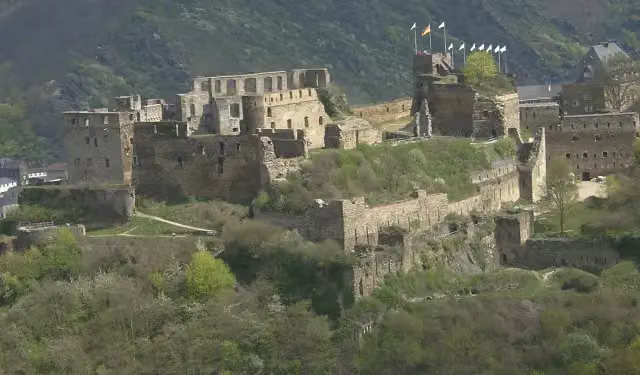
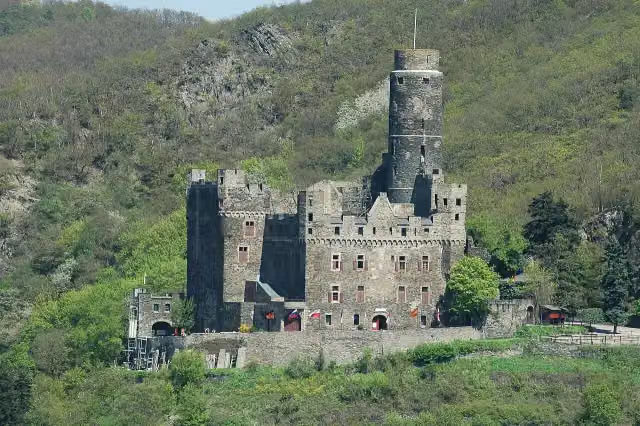
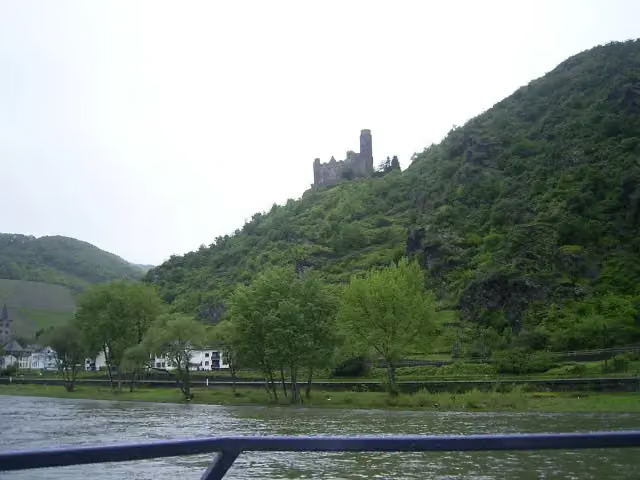
Maus Castle in Sankt Goarshausen

Maus Castle is a castle in Sankt Goarshausen, Rhineland-Palatinate. This place has a story in the app. Within 20 m you'll find a bench.

Maus Castle in Sankt Goarshausen
i
Photo: Wikimedia Commons · Wikimedia Commons · CC BY-SA 3.0View the photo on Wikimedia Commons
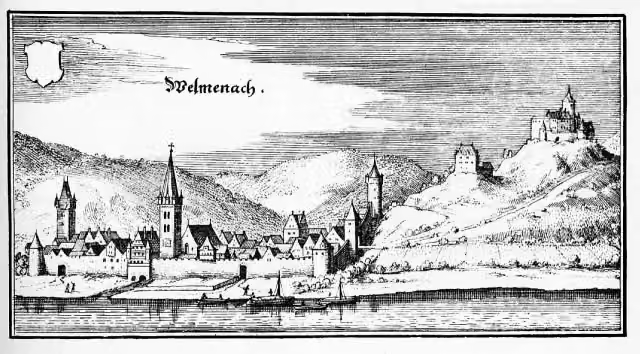
Maus Castle in Sankt Goarshausen, photo 2
Maus Castle in Sankt Goarshausen, photo 3
i
Photo: Claus-Joachim Dickow · Wikimedia Commons · CC BY-SA 2.5View the photo on Wikimedia Commons

Story · Maus Castle

  • en
  • nl

You're standing at Maus Castle, high above the little village of Wellmich on the east bank of the Rhine. Start with the tower. That sturdy round keep sits exactly on the uphill side, because that's where an enemy could most easily attack. Behind the walls, two residential buildings stand around a courtyard.

Read the whole story in the Outdoor Pitstop app: check in at this place and it is yours (with Pro; new users are Pro for the first 4 weeks).
Photos

10 photos from Wikimedia Commons. In the app you add your own photo when you are there.

Maus Castle in Sankt Goarshausen
1 / 10
i
Photo: Wikimedia Commons · Wikimedia Commons · CC BY-SA 3.0View the photo on Wikimedia Commons

Maus Castle in Sankt Goarshausen: a castle with a funny name

Maus Castle is a castle above the river, known for its nickname. Officially it was called Peterseck. The archbishop of Trier started building it in 1356. Later, the counts of Katzenelnbogen built their own castle, Katz, which means "cat". This gave rise to the joke that the cat would eat the mouse, and the castle became known as Maus. The mouse was never eaten, because the castle was never destroyed, unlike the castles nearby. You will find it high above the village of Wellmich, in Sankt Goarshausen in Rijnland-Palts, on the eastern bank of the river. Across the river lie Sankt Goar and Rheinfels Castle. The castle lies in the Midden-Rijndal, which is a world heritage area.

What you see at Maus Castle

The first thing you notice is the round, sturdy tower, a keep set on the side of the slope, where an enemy would once have found it easiest to attack. Behind the walls, residential buildings surround a courtyard, and you walk between them as you explore the castle. From the castle you look out over the valley and the hills around it, and the view across the water is good too. According to the sources, the castle once housed a bird park with falcons, owls and eagles, with flying demonstrations from late March to early October. Outside that period there are probably none, so check beforehand whether the bird park and the demonstrations are still running.

The history of Maus Castle

Archbishop Bohemund II of Trier began building in 1356. His successors, Kuno II of Falkenstein and Werner of Königstein, continued the work. Trier wanted to enforce its toll rights here and protect its borders against the counts of Katzenelnbogen. A second castle, the Petersberg, was planned on the left bank, but it was never built. Kuno and Werner both lived at the castle and died there, and their grave monuments still stand in the Sint-Kastorkerk in Koblenz. After that, the castle fell into decline. By 1744 it was recorded as derelict and uninhabited. In 1806 it was sold for demolition, but little came of it. In 1834 Friedrich Gustav Habel bought the ruin and worked to preserve it. Between 1900 and 1906 the architect Wilhelm Gärtner rebuilt the castle, paying close attention to its original appearance. Damage from shelling during the war was repaired later.

Benches at Maus Castle and what is missing

The nearest bench is 23 metres from the castle, so you can sit down for a while without any trouble. There are 11 benches within 500 metres of Maus Castle, so you don't have to walk far to find a seat. Other facilities are harder to come by. According to our map, there is no public toilet within 1 km of Maus Castle. Drinking water is also unavailable: there is no water point within 1 km. Make sure you bring enough water yourself. It is also a good idea to use the toilet before you walk up to the castle.

Facilities near Maus Castle

The nearest pitstop of each kind within 1 km, as the crow flies. No water point, public toilet, bike pump or honesty box within 1 km.

Well-known points of interest nearby

41 well-known points of interest nearby, those with an audio tour first.

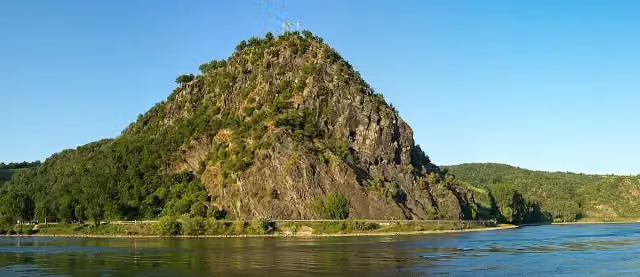
Lorelei
AttractionAudio story · 2 min

Lorelei · 4.3 km

i
Photo: Jörg Braukmann · Wikimedia Commons · CC BY-SA 4.0View the photo on Wikimedia Commons
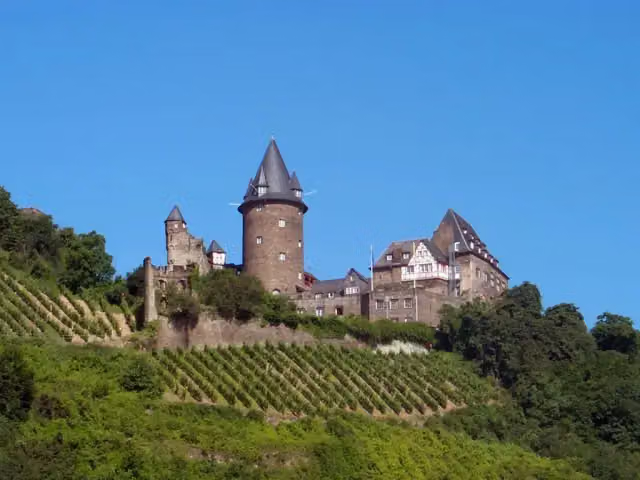
Burg Stahleck
CastleAudio story · 2 min

Burg Stahleck · 13.6 km

Rheinfels Castle
CastleStory

Rheinfels Castle · 2.1 km

i
Photo: Wikimedia Commons · Wikimedia Commons · CC BY-SA 3.0View the photo on Wikimedia Commons
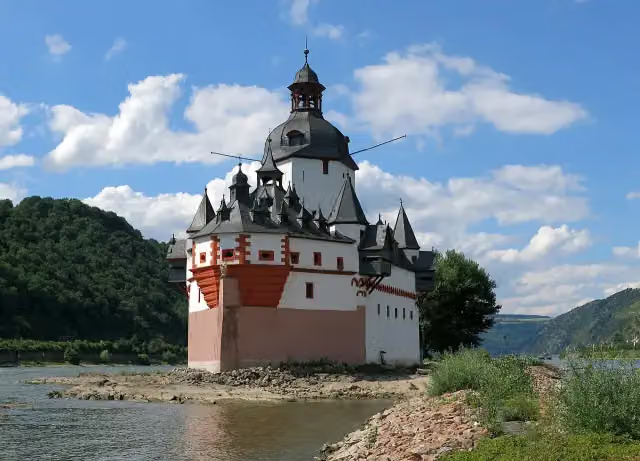
Pfalzgrafenstein Castle
AttractionStory

Pfalzgrafenstein Castle · 11 km

i
Photo: Jörg Braukmann · Wikimedia Commons · CC BY-SA 4.0View the photo on Wikimedia Commons
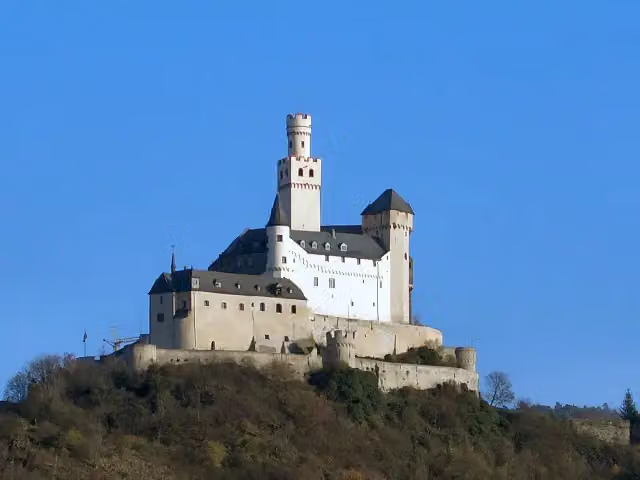
Marksburg
MuseumStory

Marksburg · 11.6 km

i
Photo: Holger Weinandt · Wikimedia Commons · CC BY-SA 3.0View the photo on Wikimedia Commons

Hear the story of Lorelei on the spot with the app

Explore further

Frequently asked questions

Why is Maus Castle called Maus?

Maus Castle got its nickname as a joke aimed at Katz Castle, the stronghold of the counts of Katzenelnbogen: the cat would eat the mouse. Officially, the castle was called Peterseck.

Who built Maus Castle?

Archbishop Bohemund II of Trier began building Maus Castle in 1356. His successors Kuno II of Falkenstein and Werner of Königstein continued the work.

Are there benches at Maus Castle?

Yes, the nearest bench to Maus Castle is 23 metres away. There are 11 benches within 500 metres.

Is there a toilet at Maus Castle?

No, according to our map there is no public toilet within 1 km of Maus Castle.

Is there drinking water at Maus Castle?

No, according to our map there is no water tap within 1 km of Maus Castle.

Has Maus Castle ever been destroyed?

No, Maus Castle was never destroyed, unlike the castles in the surrounding area. However, the castle had fallen into disrepair and was uninhabited by 1744, and between 1900 and 1906 it was rebuilt by architect Wilhelm Gärtner.

Nearby

More well-known points of interest nearby

The free app

All of Outdoor Pitstop, in your pocket

Find the nearest pitstop, navigate there, listen to audio tours, earn XP and make routes and lists together.

Download on the App StoreGet it on Google Play
How Outdoor Pitstop works →
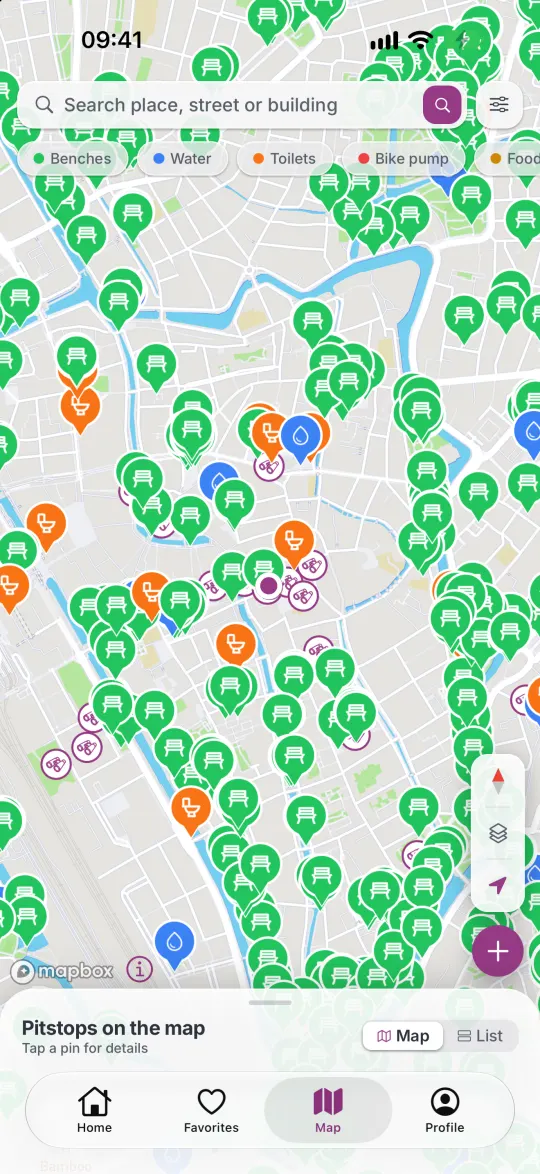
The map of the app with pitstops nearby
A pitstop in the app, with a photo, a review and Navigate
Your profile in the app, with level and XP