Outdoor Pitstop
The story
Audio tour · Sankt Severin
2:00
- en
- nl
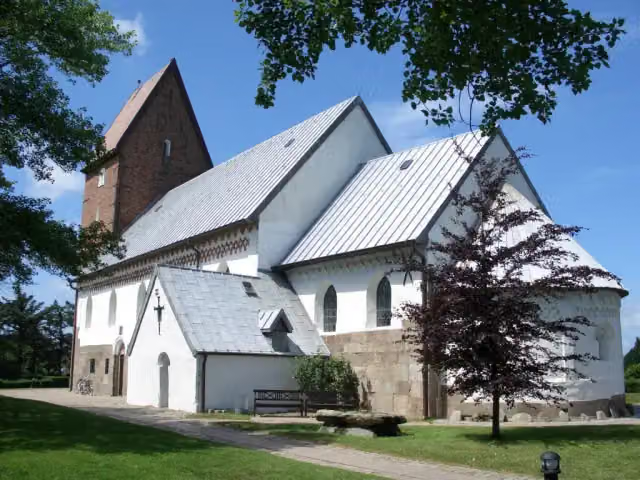
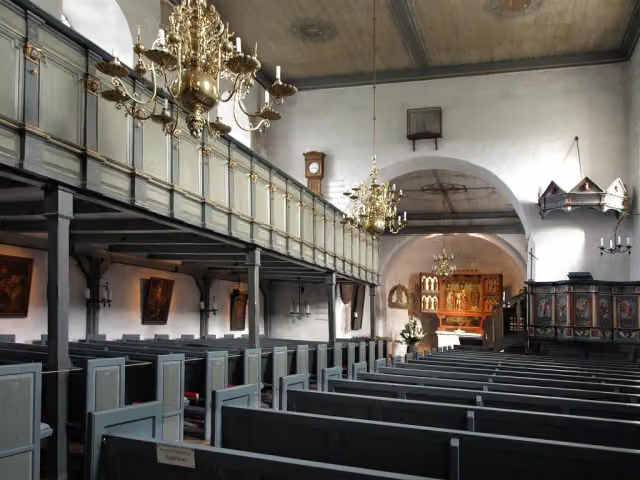
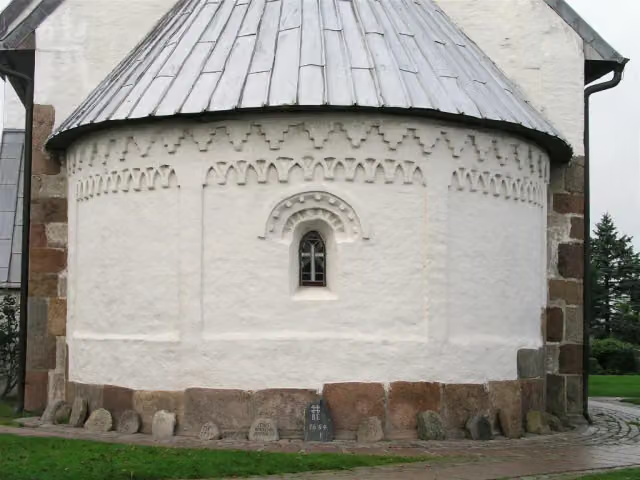
You're standing at St. Severin's church in Keitum, on the German island of Sylt. The church sits just outside the village, on the highest point of a sandy rise. Start with the oldest parts: the nave and the narrower chancel with its rounded apse. Low down you'll see big blocks of granite, with tuff and brick above. Decorative friezes run along the walls, and parts of the roof are covered in lead. Now look at the tower. It was added around 1450, and its red brick and tiled roof stand out clearly from the rest. It's the only Gothic brick tower on the island. Sailors used it as a landmark. It also served as a refuge, and as a prison until 1806. The spot is far older than the church. In pagan times, people here worshipped the Germanic god Odin. According to legend, the Danish king Canute the Great gave money and stones for a church in Keitum. Tests on the roof timbers show the church was already standing in 1216, which makes it the oldest in Schleswig-Holstein. After the plague of 1350 and the great storm of 1362, the island was emptied and the church was abandoned. Missionaries from Cologne brought the faith back and named the church after Severin, a fourth-century bishop of Cologne. In 1544 it became Lutheran. So what's inside? The oldest piece is the baptismal font, with four lions at its base. In the apse stands the Late Gothic altarpiece from about 1480, showing God the Father, the Risen Christ, Mary and Bishop Severin. The pulpit from 1580 came from Møgeltønder in Denmark. The organ dates from 1999. With 46 registers, it's the largest in Nordfriesland. Look for the remains of a Last Judgment fresco as well. A tip: walk once around the outside to see the walls up close. That's free.
Listen to the first 30 seconds
0:00 / 0:30
Read and hear the whole story in the Outdoor Pitstop app: check in at this place and it is yours (with Pro; new users are Pro for the first 4 weeks).