Skip to content
Outdoor Pitstop logoOutdoor Pitstop

Nature areas · Heath and moorland

Heathland plants: heath and moorland areas in the UK

Heathland plants such as heather, gorse and bell heather grow where few other plants can: on poor, acid sand and peat. In the UK you find them on lowland heath and, in the hills, on moorland and blanket bog. Our guide has 21 heath and moorland areas so far, each with its own page, and the app shows the benches, toilets and water points nearby.

Summary

Heathland plants are the plants of poor, acid soils: heather, gorse, bell heather, cross-leaved heath and, in wet spots, sundews. Our guide has 21 heath and moorland areas, all in the United Kingdom. Three to start with are the Flow Country, Thursley Common and the Long Mynd.

· Founder of Outdoor Pitstop

Published · Last updated · 7 min read

Checked in November 2026

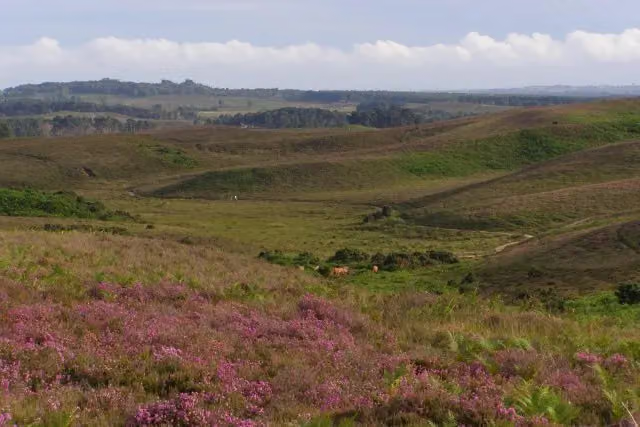
Rolling heathland with purple heather in the foreground and woods on the horizon
Heathland over Broad Bottom in the New Forest, Hampshire · Photo: Jim Champion via Wikimedia Commons, CC BY-SA 2.0

Heathland plants: what grows on heath and moor

Heathland plants have one thing in common: they cope with poor, acid soil that most other plants avoid. That is why a heath usually has few species, and why the same ones keep coming back.

  • Heather is the plant that turns heath and moor purple in late summer.
  • Gorse flowers yellow; the Wildlife Trusts say many heaths turn yellow from April, when gorse blossom is at its peak. Dwarf gorse and western gorse take over towards the damper west.
  • Bell heather is more common in the moist west.
  • Cross-leaved heath grows on wet heath, together with heather and bog mosses.
  • Sundews grow in the dampest spots. They are carnivorous: sticky droplets on their leaves catch small insects, which is how they get nutrients the soil cannot give them.
  • Bilberry, cowberry and crowberry are dwarf shrubs of the upland moors.

On wet heath the Wildlife Trusts also mention lousewort, heath spotted-orchid and white beak-sedge, and in August the blue marsh gentian. In the right parts of the south-west you may find Dorset heath and Cornish heath. Where the soil on a heath is very dry and has little competition, lichens do well.

Soil
poor, acid, often sandy or peaty
Gorse
yellow from April
Heather
at its best in August
Wet heath
cross-leaved heath, sundews

Heathland habitat: lowland heath, moorland and bog

The Wildlife Trusts describe heathland as a landscape people made. Clearing trees on poor soils began at least 5,000 years ago, and most heaths are thought to date from the Bronze Age. Grazing, cutting and burning kept them open; left alone, a heath slowly turns into birch or pine woodland.

Lowland heath lies below about 300 metres on well-drained sands and gravels. It is scattered across the UK, but largely absent from Scotland and north Wales. Typical animals are ground-nesting birds such as the nightjar and woodlark, reptiles, and butterflies such as the silver-studded blue.

Moorland is upland heath: open land above the farmed fields, dominated by heather and kept that way by sheep farming and, on many estates, managed burning for grouse. According to the Wildlife Trusts there is more heather moorland in Britain and Ireland than anywhere else in the world. Where the ground is flat and always wet, moorland gives way to blanket bog, with bog mosses and hare's-tail cottongrass.
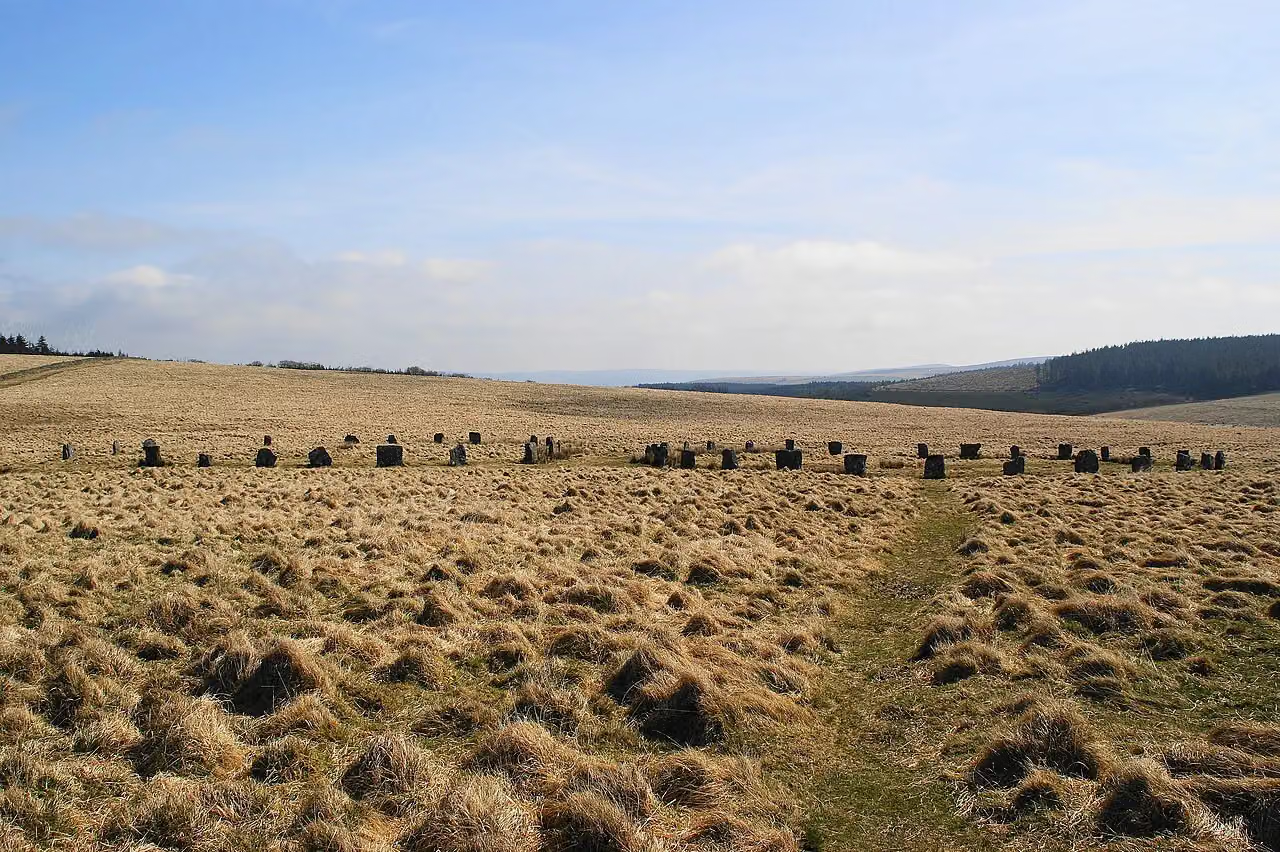
Two rows of standing stones on open, grassy moorland with a faint path
Open moorland at the Grey Wethers stone circles on Dartmoor · Photo: Myself - Herby talk thyme via Wikimedia Commons, CC BY-SA 4.0

Our 21 heath and moorland areas, and three to start with

Our guide has 21 heath and moorland areas so far, all in the United Kingdom: 19 in England and 2 in Scotland. Each has its own page in this guide. These three show three very different kinds of heathland habitat.

The Flow Country, in Caithness and Sutherland in the far north of Scotland, is blanket bog rather than dry heath. Historic Environment Scotland says it covers some 190,000 hectares, has been building up peat for about 9,000 years and became a UNESCO World Heritage Site in July 2024. The RSPB reserve at Forsinard Flows has a boardwalk across the bog, a lookout tower and a small visitor centre.

Thursley Common in Surrey is a National Nature Reserve of 325 hectares, managed by Natural England. The Surrey Hills National Landscape describes dry heath, peat bogs and woodland, 20 species of dragonflies and damselflies, and more than 1.3 kilometres of boardwalk into the wetter parts.

The Long Mynd in Shropshire has its own page in this guide, like every other area in the list below.
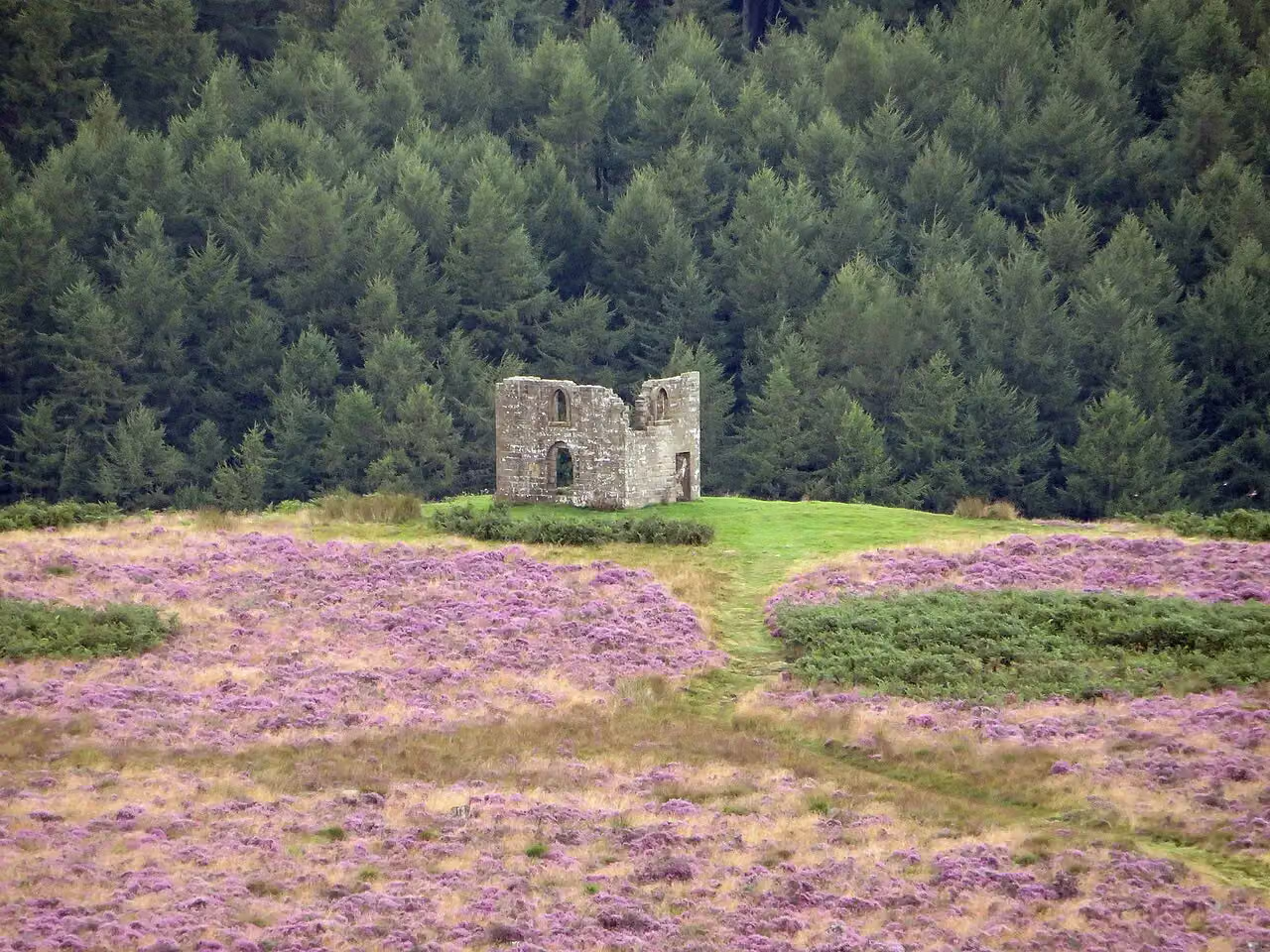
A small ruined stone tower in flowering purple heather in front of a dark forest
Flowering heather around Skelton's Tower in the North York Moors · Photo: Pauline E via Wikimedia Commons, CC BY-SA 2.0

All heath and moorland areas in our guide

  • EnglandAnglezarke · Arne Nature Reserve · Blackstone Edge · Blubberhouses Moor · Bodmin Moor · Chobham Common · Frensham Common · Haworth Moor · Ilkley Moor · Kelling Heath · Long Mynd · Marsden Moor · Rombalds Moor · Saddleworth Moor · Stiperstones · Sutton Heath · Thursley Common · Westleton Heath · Winter Hill
  • ScotlandFlow Country · Rannoch Moor
  • By country and regionUnited Kingdom · England · Scotland · Devon · Cornwall · Cumbria · Ireland · Spain · Portugal · Estonia

Hay meadow plants: the meadows next to the moor

Hay meadows are a different habitat from heath: grassland cut for hay in summer, so farmers can feed their livestock in winter. The Yorkshire Dales National Park Authority describes upland hay meadows by sweet vernal-grass, wood crane's-bill, pignut, great burnet and lady's mantles. They are found at 200 to 400 metres, only where hay has long been made without intensive farming, and the authority puts what is left at under 1,000 hectares in northern England and under 100 hectares in Scotland.

Lowland hay meadows have crested dog's-tail and common knapweed, with bird's-foot trefoil, meadow vetchling, common cat's-ear and yellow rattle. Yellow rattle feeds partly on the roots of grasses, which holds them back and leaves room for wild flowers. In the Dales the best time to see it is late June and early July, before the hay is cut.

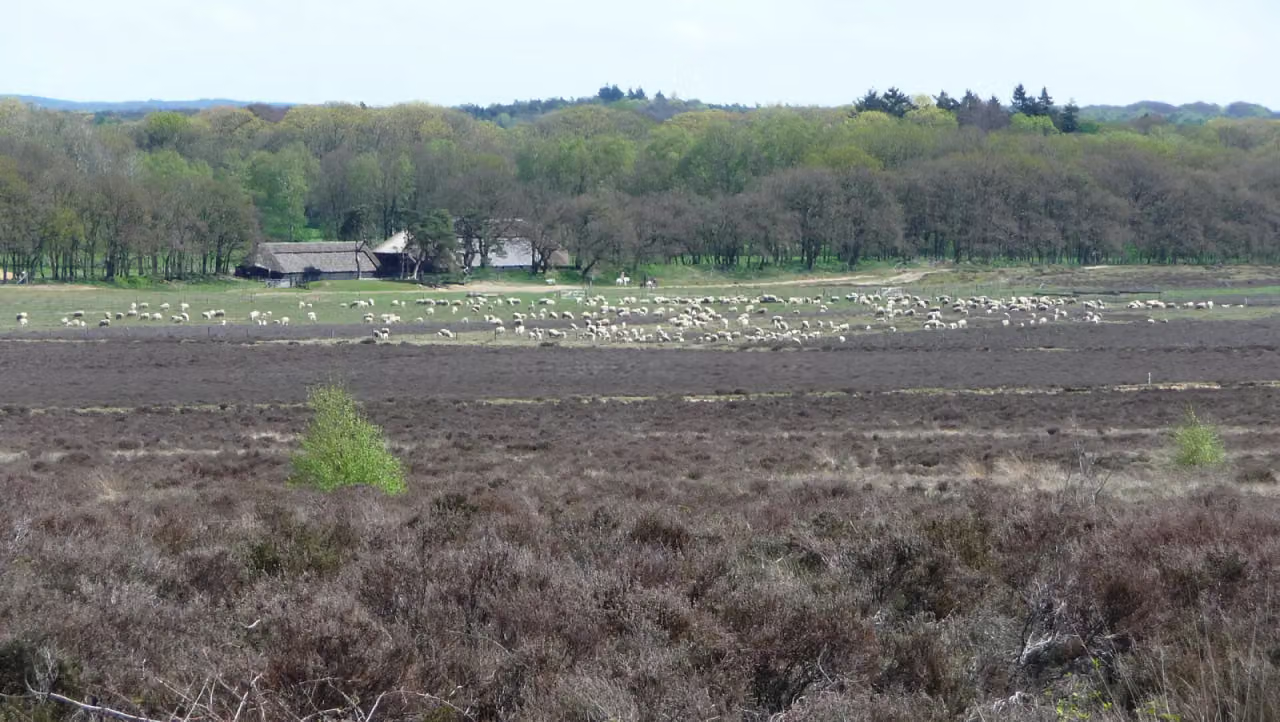
A flock of sheep grazing in front of a sheepfold at the edge of a wood, with brown heather in the foreground
Grazing keeps heath open: a flock of sheep on the Ginkelse Heide in the Netherlands · Photo: JopkeB via Wikimedia Commons, CC BY-SA 4.0

Heathland restoration: bringing heath back

According to the Wildlife Trusts, around 85% of heathland has been lost over the past 150 years, to farming and conifer plantations; the small patches that were left grew over with trees. In the uplands, heavy grazing has turned large areas of heather into poor grassland.

Heathland restoration reverses that. The Wildlife Trusts list the tools: grazing with hardy cattle, ponies or sheep, cutting heather and gorse, some controlled burning, and scraping or removing turf to make bare ground. In Dorset, seven landowners joined their land in 2020 into the Purbeck Heaths, the UK's first "super" National Nature Reserve of 3,331 hectares; Dorset Wildlife Trust writes that conifer plantations there are being carefully restored to heathland.

Hay meadows are restored too. The Yorkshire Dales National Park Authority calls its Hay Time project a very successful meadow restoration programme, and yellow rattle is a favourite plant for it because it weakens vigorous grasses.

For walkers, restoration means one simple thing: stay on the paths. The Wildlife Trusts name arson, trampling and disturbance of ground-nesting birds among the problems on busy heaths.

When heathland plants flower

  1. Jan
  2. Feb
  3. Mar
  4. Apr: good
  5. May: good
  6. Jun: good
  7. Jul: good
  8. Aug: at its best
  9. Sep: good
  10. Oct
  11. Nov
  12. Dec
  • SpringGorse turns many heaths yellow from April, and woodlarks sing on lowland heath early in the season.
  • SummerYellow rattle in the Dales hay meadows in late June and early July; nightjars churr at dusk from May to August.
  • Late summerHeather is at its best in August, together with the marsh gentian on wet heath.
  • Autumn and winterThe colour fades to brown. Open moorland is exposed: check the weather and the time of sunset.

Benches, toilets and water on heath and moorland

On open heath a bench is more than a seat: it is often the one rest stop with the widest view, at the edge of the heather or on a rise above the moor. Public toilets are mostly at car parks, visitor centres and in villages, not out on the heath itself. Water points are rare on moorland, so fill your bottle before you set off.

The boundaries of most heath and moorland areas are not in our database yet, so the numbers below are for the whole United Kingdom. All places are on our pages of benches in the United Kingdom, public toilets in the United Kingdom and water fountains in the United Kingdom.

In the app I can see 188,102 benches, 13,915 public toilets and 2,923 water points across the United Kingdom. Per area I count them on its own guide page.

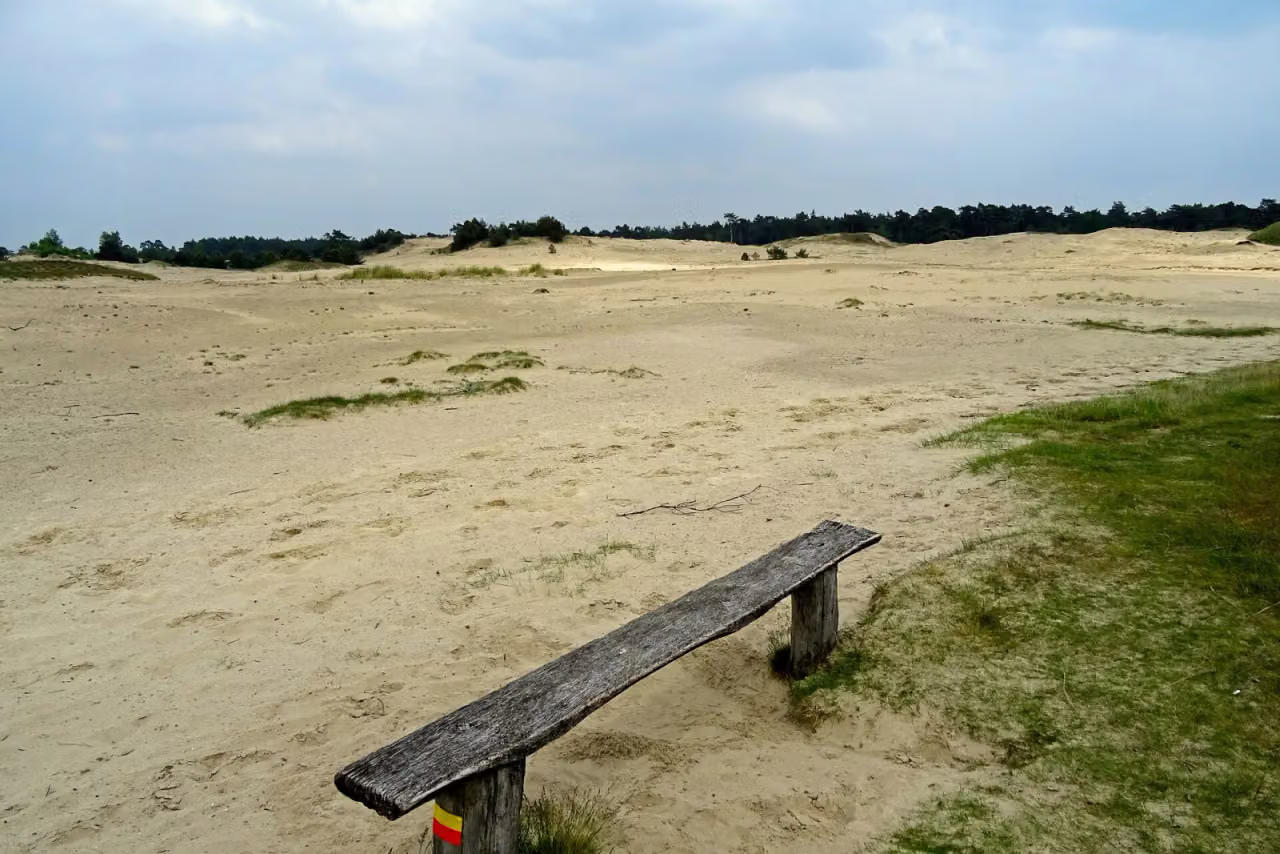
A wooden bench at the edge of a wide, bare sandy plain with woodland on the horizon
A bench at the edge of open heath and sand on the Hulshorsterzand in the Netherlands · Photo: Gouwenaar via Wikimedia Commons, CC0

From our data

Pitstops in the United Kingdom

Pitstops
205,713
in the United Kingdom
Benches
188,102
in the United Kingdom
Public toilets
13,915
in the United Kingdom
Water points
2,923
in the United Kingdom

As of 28 November 2026, from the Outdoor Pitstop database. The whole United Kingdom, not only the heath and moorland areas. Benches, public toilets and water points come from OpenStreetMap and from reports by our users.

Walking on heath and moorland

This page helps you choose a heath or moor. We have no walking or cycling routes for the United Kingdom and Ireland in the app yet; the pitstops are on our country pages, and every area has its own guide.

Pitstops in the United Kingdom →Pitstops in Ireland

Key takeaways

  • Heather, gorse, bell heather and cross-leaved heath are the main plants of UK heathland, which grows on poor, acid soils.
  • Heather on UK heaths is at its best in August, while gorse turns many heaths yellow from April, according to the Wildlife Trusts.
  • Heathland in the UK was made by people clearing and grazing land, and without grazing or cutting it slowly turns back into woodland.
  • The Wildlife Trusts say around 85% of heathland has been lost over the past 150 years, mainly to farming and conifer plantations.
  • Upland hay meadows, with wood crane's-bill, pignut and great burnet, cover less than 1,000 hectares in northern England, says the Yorkshire Dales National Park Authority.
  • The Flow Country in northern Scotland became the first peatland World Heritage Site in July 2024.

Frequently asked questions

What plants grow on heathland?

Mainly heather, gorse, bell heather and, on wet heath, cross-leaved heath with bog mosses and sundews. On the upland moors bilberry, cowberry and crowberry are common too.

What is the difference between heath and moorland?

Moorland is upland heath: open, heather-covered land in the hills above the farmed fields. Lowland heath lies below about 300 metres on dry sands and gravels.

When does heather flower in the UK?

Heather is at its best in August, say the Wildlife Trusts. Gorse flowers earlier, with many heaths turning yellow from April.

What plants grow in a hay meadow?

Upland hay meadows have wood crane's-bill, pignut, great burnet, lady's mantles and sweet vernal-grass. Lowland hay meadows have common knapweed, bird's-foot trefoil, meadow vetchling and yellow rattle.

Why does heathland need to be managed?

Without grazing, cutting or other management, trees move in and heathland slowly turns into birch or pine woodland. Conservationists use grazing animals, cutting, controlled burning and turf removal to keep it open.

How big is the Flow Country?

The Flow Country covers some 190,000 hectares of blanket bog in Caithness and Sutherland, in northern Scotland, according to Historic Environment Scotland.

Sources

  1. The Wildlife Trusts, Lowland heath · wildlifetrusts.org · lowland heath plants, wet heath, sundews, distribution, gorse from April, heather best in August, wildlife, management and restoration techniques, pressures
  2. The Wildlife Trusts, Moorland · wildlifetrusts.org · moorland definition and plants, blanket bog, grazing and burning, more heather moorland in Britain and Ireland than anywhere else
  3. The Wildlife Trusts, Heathland and moorland · wildlifetrusts.org · history of heathland, Bronze Age, lowland and upland heath, 85% lost over 150 years, restoration
  4. Yorkshire Dales National Park, Hay meadows · yorkshiredales.org.uk · upland and lowland hay meadow plants, extent, yellow rattle, best time late June and early July, Hay Time project
  5. Dorset Wildlife Trust, UK's first 'super' National Nature Reserve created on Purbeck Heaths (17 March 2020) · dorsetwildlifetrust.org.uk · seven landowners, 3,331 hectares, conifer plantations restored to heathland
  6. Historic Environment Scotland, The Flow Country · historicenvironment.scot · 190,000 hectares, 9,000 years of peat, World Heritage Site July 2024, Forsinard Flows boardwalk and lookout tower
  7. Surrey Hills National Landscape, Thursley National Nature Reserve · surreyhills.org · 325 hectares, managed by Natural England, habitats, 20 dragonfly and damselfly species, 1.3 km of boardwalk

Last checked in November 2026. Outdoor Pitstop figures come from our own database; the date is with each block.

Written by

Robin

Founder of Outdoor Pitstop

Robin started Outdoor Pitstop to always know where the next toilet, water tap or bench is on the way.

About this guide

What I write here comes from what we keep track of in Outdoor Pitstop: the pitstops, routes and photos in the app, and what users report on the way. I check rules, opening times and facts about nature with the official sources. Spotted something that is not right? Let me know and I will correct it.

Checked in November 2026 · Last updated

How we work

More guides

  • Saddleworth Moor
  • Winter Hill
  • Long Mynd
  • Ilkley Moor
  • Rombalds Moor
  • Frensham Common
  • Arne Nature Reserve
  • Bodmin Moor
  • Kelling Heath
  • Haworth Moor
  • Stiperstones
  • Rannoch Moor
  • Blackstone Edge
  • Blubberhouses Moor
  • Chobham Common
  • Marsden Moor
  • Anglezarke
  • Heath and moorland in Ireland
  • Thursley Common
  • Heath and moorland in United Kingdom
  • Heath and moorland in Spain
  • Sutton Heath
  • Flow Country
  • Heath and moorland in England
  • Westleton Heath
  • Heath and moorland in Scotland
  • Heath and moorland in Devon
  • Heath and moorland in Cornwall
  • Heath and moorland in Cumbria
  • Heath and moorland in Estonia

Other topics in Nature areas

In the app

Heath and moorland in the app

Open the map with pitstops near a heath or moor and see where the benches, public toilets and water points are before you set off. Download the app to have them with you on the way.

  • Benches with a view at the edge of the heath
  • The nearest public toilet to a car park or visitor centre
  • Report a bench or tap that is not on the map yet
Download on the App StoreGet it on Google Play

More from Nature areas

The free app

All of Outdoor Pitstop, in your pocket

Find the nearest pitstop, navigate there, listen to audio tours, earn XP and make routes and lists together.

Download on the App StoreGet it on Google Play
How Outdoor Pitstop works →
The map of the app with pitstops nearby
A pitstop in the app, with a photo, a review and Navigate
Your profile in the app, with level and XP