Outdoor Pitstop
The story
Story · Castle Ward
- en
- nl
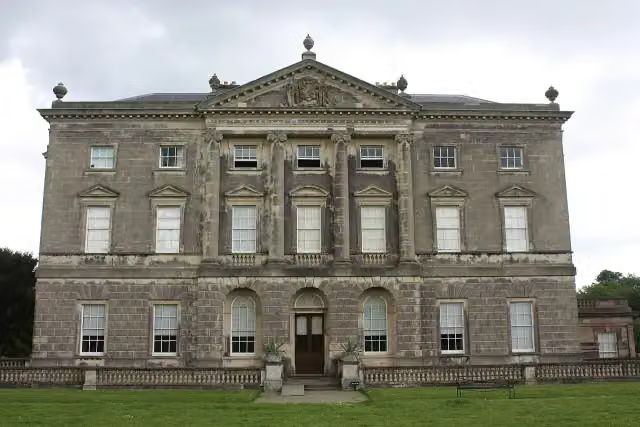
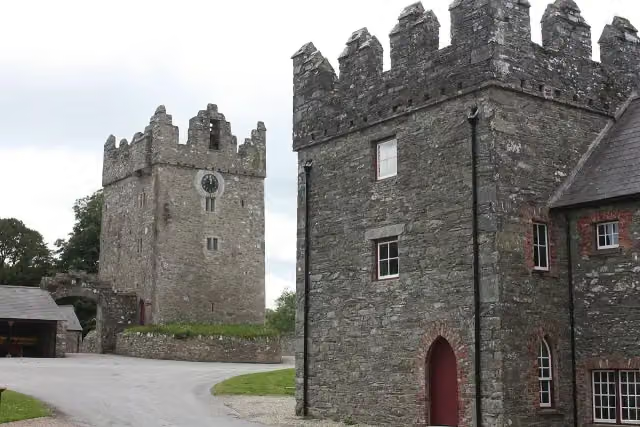
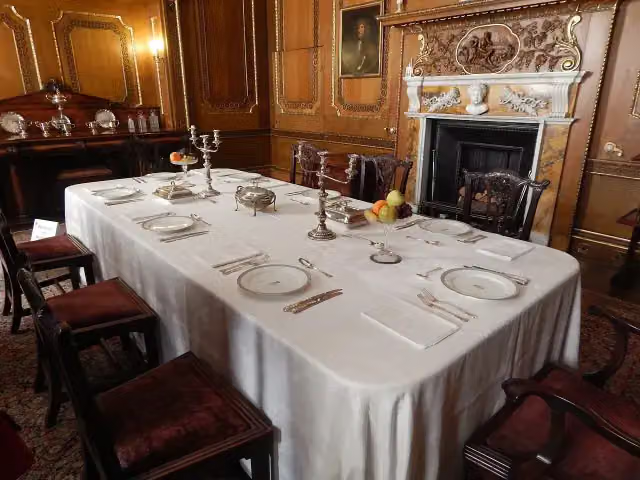
You're standing at Castle Ward, an eighteenth-century estate overlooking the waters of Strangford Lough, just outside the village of Strangford in Northern Ireland. The house is famous for one striking thing: it has two faces. Start with the entrance. You'll see columns and a triangular pediment, neat and classical in the Palladian style. Now walk around to the other side. Suddenly there are pointed windows, battlements and finials, as if you'd wandered up to a little Gothic castle. The reason? Bernard Ward and his wife, Lady Ann Bligh, simply couldn't agree on taste. So each of them got their own half. The house went up in the early 1760s. Nobody knows for sure who designed it. The architect may have come from the Bristol area, where the family had connections. Bernard later became a baron, and then Viscount Bangor. His eldest son inherited the house in 1781, but he was clearly insane. In 1812 a younger brother moved him into a smaller house in Downpatrick and stripped Castle Ward of everything valuable. The house stood empty for years. Only after 1827 did the next viscounts restore it. In 1952 it passed to the National Trust. The family had been here much longer, though. In 1570 an earlier Bernard Ward bought this land, then called Carrick na Sheannagh, the rock of the foxes. Out in the farmyard there's still a defensive tower house from 1610. Look familiar? Castle Ward played Winterfell in Game of Thrones. So what's inside? The tug of war carries on indoors. A dividing line runs right down the middle of the house, with classical style on one side and Gothic on the other. Around the estate you'll also find a Victorian laundry, a theatre, a saw mill and a corn mill that still works. Give yourself plenty of time. The grounds cover 332 hectares of gardens, with their own shoreline on Strangford Lough.
Read the whole story in the Outdoor Pitstop app: check in at this place and it is yours (with Pro; new users are Pro for the first 4 weeks).