Skip to content
Outdoor Pitstop logoOutdoor Pitstop

Attraction · Pécs · Updated on 16 November 2026.

Early Christian Necropolis of Pécs (Sopianae)

Early Christian Necropolis of Pécs (Sopianae) is an attraction in Pécs, Baranya. This place has an audio tour of about 2 minutes, in English or Dutch. 6 of the 10 well-known points of interest nearby are within 1 km. Within 190 m you'll find a bench, a water point and a public toilet.

Early Christian Necropolis of Pécs (Sopianae)
i
Photo: Lestat (Jan Mehlich) · Wikimedia Commons · CC BY-SA 3.0View the photo on Wikimedia Commons
Early Christian Necropolis of Pécs (Sopianae), photo 2
i
Photo: Csörföly Dániel · Wikimedia Commons · CC BY-SA 3.0View the photo on Wikimedia Commons
Early Christian Necropolis of Pécs (Sopianae), photo 3
i
Photo: Lestat (Jan Mehlich) · Wikimedia Commons · CC BY-SA 3.0View the photo on Wikimedia Commons

Early Christian Necropolis of Pécs (Sopianae): Roman Burial Ground

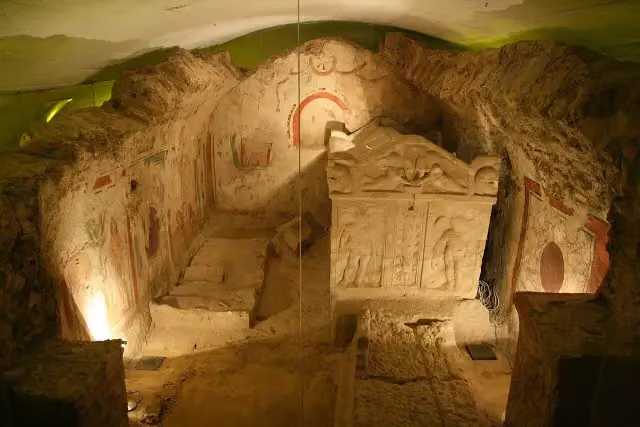
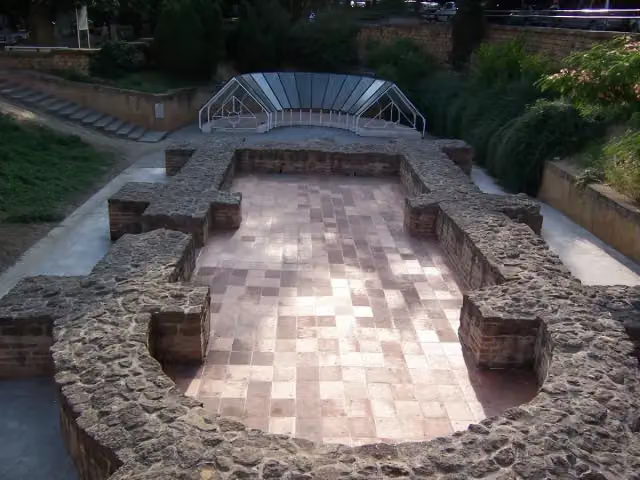
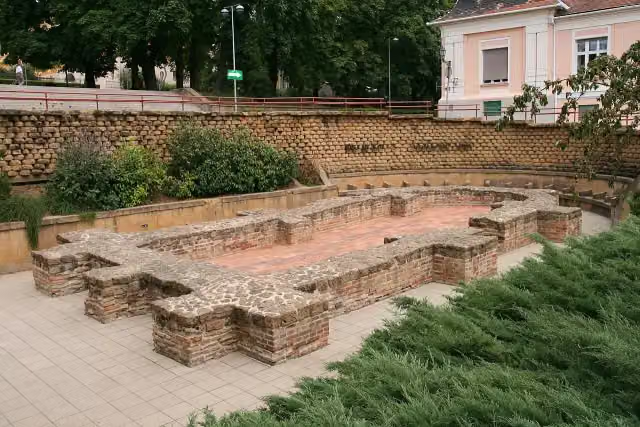
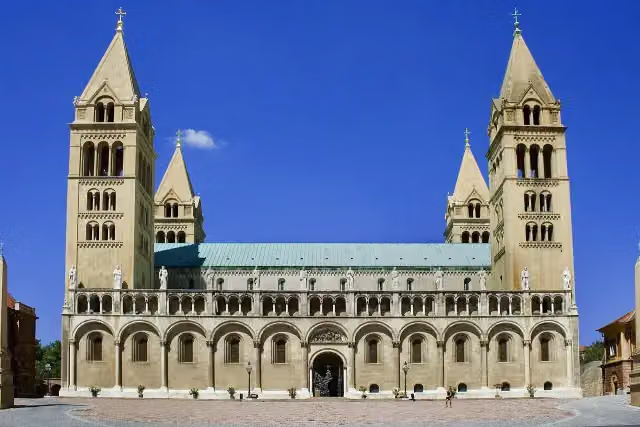
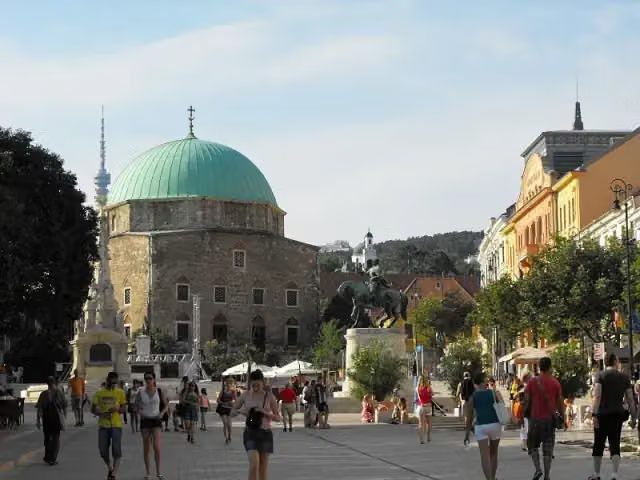
The Early Christian Necropolis of Pécs (Sopianae) is a large burial ground from Roman times. Wealthy Christian families had tombs and small chapels built here, on the site of the Roman city of Sopianae. More than 500 graves have been found so far, and the excavations are not yet finished. For this reason, 16 monuments here have been on the Werelderfgoedlijst van UNESCO since 2000. You will find them around Szent István tér, or Domplein, in the centre of Pécs in Baranya county. Nearby, the Csontváry Múzeum is 101 metres away. The Pécsi Szent Péter és Szent Pál Székesegyház cathedral is 143 metres away, and the Gázi Kászim pasa moskee is 323 metres away.

Early Christian Necropolis of Pécs: its history

Some 1,600 years ago, Sopianae was thriving. The town sat at a crossroads of trade routes, and wealthy families built their tombs in the burial ground just north of the town. The site was later hidden underground. In 1782, a palace was demolished here, and the first burial chamber came back to light. Many more followed in the decades after that. When newcomers arrived in 896, 5 early Christian churches still stood here. The town was therefore named Quinque Ecclesiae, or Fünfkirchen. Through the word for 5, this eventually became Pécs.

Toilets, drinking water and benches nearby

The necropolis is an easy place to take a break. The nearest bench is 36 metres away, at Szent István tér, and there are 71 benches within 500 metres. If you want to fill your bidon, the drinking water point at Szent István tér is 58 metres away, and there are 7 drinking water points within 500 metres. The nearest public toilet is 185 metres away, at Nyugati várfalsétány, kultúrkert, and there are 4 public toilets within 500 metres. So if you want to look at the burial chambers, you could visit the toilet first and top up your water before you go.

Walk and see more nearby

The Hunyadi János memorial stands 371 metres from the necropolis, and you can reach it on foot in a few minutes. Continue on and you will reach the ruins of Ferhád Pasa dzsámijának romjai at 613 metres. These are the remains of a mosque, so you will see a ruin rather than a complete building. The Várostörténeti Múzeum is the furthest away, at 918 metres. As it is a museum, you can also have a look around inside. All of these sights are within 918 metres of the necropolis, which makes for a short walk with a memorial, a ruin and a museum along the way. You pass through the centre of Pécs the whole time, so you won't have to go far from where you started.

Facilities near Early Christian Necropolis of Pécs (Sopianae)

The nearest pitstop of each kind within 1 km, as the crow flies. No bike pump or honesty box within 1 km.

Audio tour · Early Christian Necropolis of Pécs (Sopianae)

2:04

You're standing on Szent István tér in Pécs, the cathedral square. It looks like an ordinary town square, but beneath your feet lies one of the most important Roman cemeteries outside Italy. Some sixteen hundred years ago this was the Roman town of Sopianae, and this spot was its burial ground, just north of town.

Listen to the first 30 seconds

0:00 / 0:30

Read and hear the whole story in the Outdoor Pitstop app: check in at this place and it is yours (with Pro; new users are Pro for the first 4 weeks).
Photos

10 photos from Wikimedia Commons. In the app you add your own photo when you are there.

Early Christian Necropolis of Pécs (Sopianae)
1 / 10
i
Photo: Lestat (Jan Mehlich) · Wikimedia Commons · CC BY-SA 3.0View the photo on Wikimedia Commons

Well-known points of interest nearby

10 well-known points of interest nearby, those with an audio tour first. 6 of the 10 well-known points of interest nearby are within 1 km.

Pécsi Szent Péter és Szent Pál Székesegyház
AttractionAudio story · 2 min

Pécsi Szent Péter és Szent Pál Székesegyház · 140 m

i
Photo: Takkk · Wikimedia Commons · CC BY-SA 3.0View the photo on Wikimedia Commons
Gyertyaszentelő Boldogasszony-templom
AttractionAudio story · 2 min

Gyertyaszentelő Boldogasszony-templom · 320 m

i
Photo: Jozsef TOTH · Wikimedia Commons · CC BY-SA 1.0View the photo on Wikimedia Commons

Hear the story of Pécsi Szent Péter és Szent Pál Székesegyház on the spot with the app

Explore further

Frequently asked questions

Where is the Early Christian necropolis of Pécs (Sopianae) located?

The Early Christian necropolis lies beneath Szent István tér in Pécs. Monuments are also found on the streets Káptalan utca and Apáca utca.

Is the Early Christian necropolis of Pécs (Sopianae) a UNESCO World Heritage Site?

Yes, the sixteen monuments of the necropolis have been recognised by UNESCO as World Heritage since 2000. More than 500 graves have been found in total.

What can you see at the Early Christian necropolis of Pécs (Sopianae)?

In the burial chambers you can see wall paintings with biblical scenes, such as the apostles and the three young men in the burning furnace. There are also flowers, geometric patterns and, sometimes, portraits of the deceased.

How old is the Early Christian necropolis of Pécs (Sopianae)?

The necropolis dates from the fourth century, around 1,600 years ago, when the city of Sopianae flourished. Wealthy families then had tombs built with a burial chamber underground and a chapel above it.

When was the Early Christian necropolis of Pécs (Sopianae) discovered?

The first burial chamber came to light in 1782, when a palace on the site was demolished. Many more followed.

Where does the name Pécs come from?

The name Pécs comes from the word for five and refers to five early Christian churches. These still stood when the newcomers arrived in 896, after which the city was called Quinque Ecclesiae or Fünfkirchen.

The free app

All of Outdoor Pitstop, in your pocket

Find the nearest pitstop, navigate there, listen to audio tours, earn XP and make routes and lists together.

Download on the App StoreGet it on Google Play
How Outdoor Pitstop works →
The map of the app with pitstops nearby
A pitstop in the app, with a photo, a review and Navigate
Your profile in the app, with level and XP




