Outdoor Pitstop
The story
Story · Fotheringhay Castle
- en
- nl
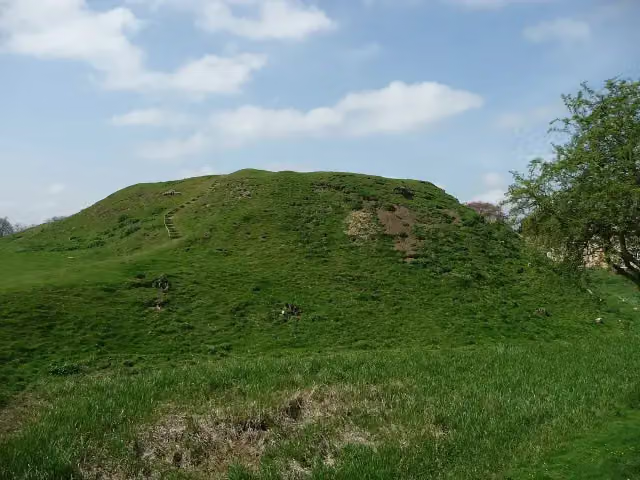
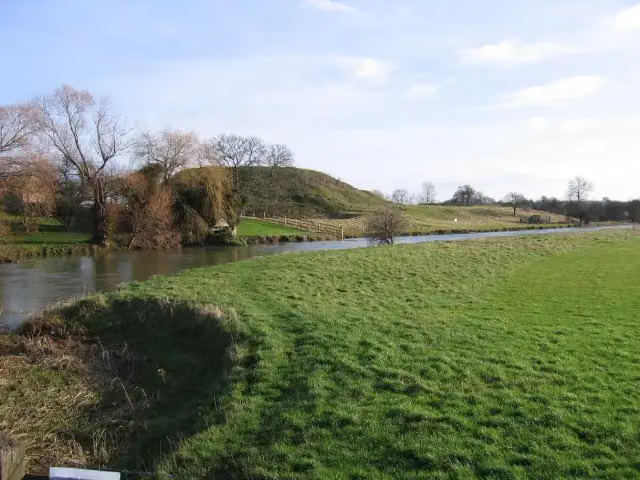
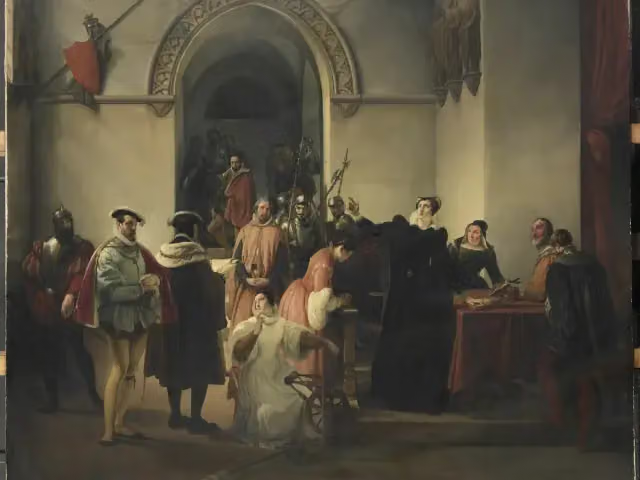
You're standing at Fotheringhay Castle, or rather, at what's left of it. Have a look around. No towers, no walls, just grassy mounds and the odd chunk of stone. And yet one of the most famous dramas in British history played out right here. See that big round hill? That's the motte, a man-made mound. It's about seventy metres across at the base, and the flat top is around thirty metres wide, some seven metres above the ground. A many-sided stone keep once stood on top, surrounded by a wide, water-filled moat. Next to it lay the inner bailey, roughly fifty by sixty-five metres, with a great hall and living quarters. The castle was founded around 1100 by Simon de Senlis, on the north bank of the River Nene. After that it changed hands again and again. Scottish princes, King John and rebellious barons all held it at some point. From 1385 it was the main seat of the Dukes of York. Edmund Langley spent a fortune on it and probably built the outer bailey. In 1452, the future King Richard III was born here. But the story everyone remembers is that of Mary, Queen of Scots. After eighteen years as a prisoner, she spent her final days here. In October 1586 she was tried for treason in the great hall. She was convicted, spent her last night praying in the small chapel, and on 8 February 1587 she was beheaded in that same hall. Less than fifty years later the castle was a ruin. Soon after 1635 it was pulled down completely, and most of the stone was carted away. Do walk up the mound. From the top you can see far along the Nene valley, and you'll understand straight away why someone built a castle here. The story lives on in music, too. Donizetti set three scenes of his opera Maria Stuarda here, and singer Sandy Denny wrote the song Fotheringay about Mary's imprisonment. The site is open to the public during daylight hours.
Read the whole story in the Outdoor Pitstop app: check in at this place and it is yours (with Pro; new users are Pro for the first 4 weeks).