Skip to content
Outdoor Pitstop logoOutdoor Pitstop

Archaeological site · Alise-Sainte-Reine · Updated on 1 November 2026.

Archaeological site Alesia archeological excavations in Alise-Sainte-Reine

Alesia archeological excavations is an archaeological site in Alise-Sainte-Reine, Côte-d'Or. This place has an audio tour of about 2 minutes, in English or Dutch. 1 of the 22 well-known points of interest nearby is within 1 km. Within 620 m you'll find a bench, a water point and a public toilet.

Archaeological site Alesia archeological excavations in Alise-Sainte-Reine
i
Photo: Epona21 · Wikimedia Commons · CC BY-SA 4.0View the photo on Wikimedia Commons
Archaeological site Alesia archeological excavations in Alise-Sainte-Reine, photo 2
i
Photo: Arnaud 25 · Wikimedia Commons · CC BY-SA 3.0View the photo on Wikimedia Commons
Archaeological site Alesia archeological excavations in Alise-Sainte-Reine, photo 3
i
Photo: Thesupermat · Wikimedia Commons · CC BY-SA 3.0View the photo on Wikimedia Commons

Opening hours and admission

Opening hours
Apr Sa[1]-Nov Su[1] 10:00-17:00; Apr-Jun,Sep-Oct 10:00-18:00; Jul-Aug 09:30-19:00, with exceptions
Admission
Paid

Source: OpenStreetMap and Wikidata.

Alesia archeological excavations in Alise-Sainte-Reine: an archaeological site

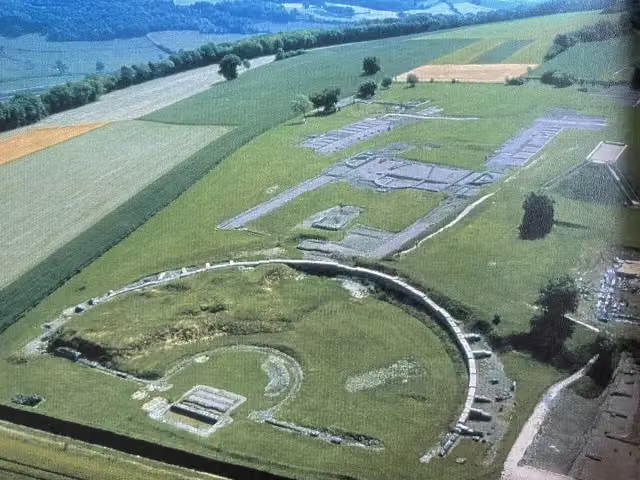
The Fouilles d'Alésia in Alise-Sainte-Reine is an archaeological site where researchers have excavated remains from the past. This was Alesia, the main town of an ancient tribe. The site is known for a battle in 52. The leader Vercingetorix retreated into the town with his army, and Julius Caesar encircled him. Vercingetorix eventually had to surrender, and with that the war was won. You will find the site on the Mont Auxois, a high plateau near the village of Alise-Sainte-Reine in Côte-d'Or. Nearby is the MuséoParc Alésia, a museum about the battle.

What you can see at the Fouilles d'Alésia

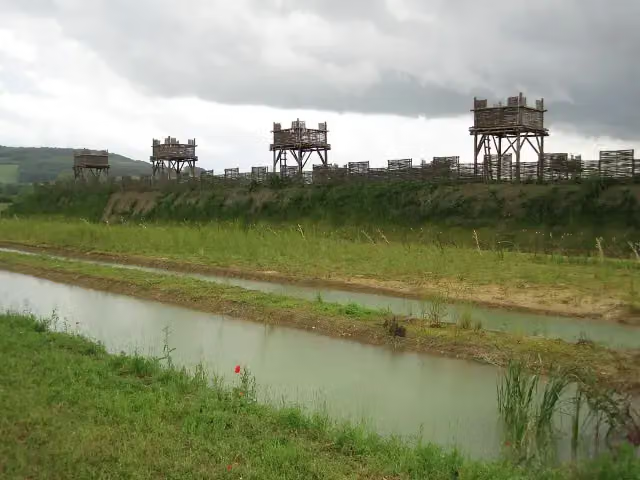
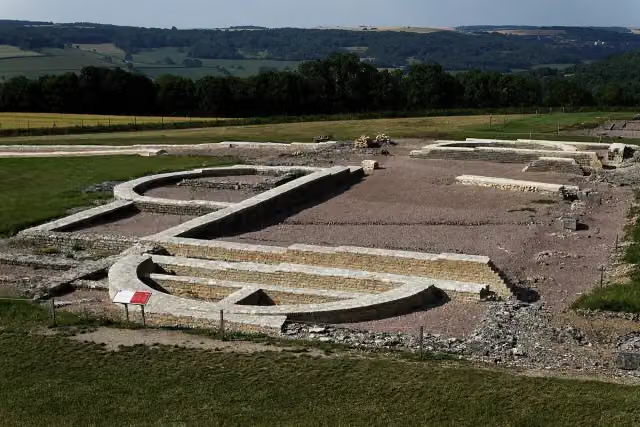
The plateau covers around 97 hectares and sits roughly 200 metres above the valley, with steep rock faces on almost every side. Little remains of the oppidum apart from some traces of a rampart. Most of the ruins date from after the conquest, when Alesia became a town. Remains of a theatre, a forum and a basilica have been found here, and there were also bronze foundries. Make sure to walk to the west side of the plateau. There stands the large statue of Vercingetorix, which Aimé Millet made in 1865. Look closely at the moustache, the cuirass and the weapons, as these are not historically accurate. The face is said to have been modelled on Napoleon III himself. At the MuséoParc Alésia you will see a round museum building. Outside stands a reconstruction of part of the double rampart.

Toilets, drinking water and benches nearby

You'll find benches at Fouilles d'Alésia: the nearest is 76 metres away, and there are 5 benches within 500 metres. If you want to get drinking water at Fouilles d'Alésia, head to the water point at Chemin des Fouilles, 437 metres away. It is the only water point within 500 metres. There are no public toilets within 500 metres of Fouilles d'Alésia. The nearest public toilet is 616 metres away, on Rue du Rochon. It is free to use and wheelchair accessible.

Walk on and see more at the Alesia excavations

The archaeological excavations at Alesia are not the only thing to see nearby. The Monument de Vercingétorix, a memorial, stands 782 metres from the Fouilles d'Alésia, so you can easily combine it with your visit to the archaeological site. You can also listen to an audio story about the Fouilles d'Alésia on the spot. It is in the Outdoor Pitstop app and lasts 2 minutes. It is a nice way to learn something about the place during your break before you carry on walking.

Facilities near Alesia archeological excavations

The nearest pitstop of each kind within 1 km, as the crow flies. No bike pump or honesty box within 1 km.

The story

Audio tour · Alesia archeological excavations

2:19

You're standing on Mont Auxois, near the village of Alise-Sainte-Reine. This is where Alesia stood, the capital of a Gallic people called the Mandubii. The plateau covers about ninety-seven hectares and rises around two hundred metres above the valley, with steep cliffs on nearly every side. A perfect place to dig in.

Listen to the first 30 seconds

0:00 / 0:30

Read and hear the whole story in the Outdoor Pitstop app: check in at this place and it is yours (with Pro; new users are Pro for the first 4 weeks).
Photos

10 photos from Wikimedia Commons. In the app you add your own photo when you are there.

Archaeological site Alesia archeological excavations in Alise-Sainte-Reine
1 / 10
i
Photo: Epona21 · Wikimedia Commons · CC BY-SA 4.0View the photo on Wikimedia Commons

Well-known points of interest nearby

22 well-known points of interest nearby, those with an audio tour first. 1 of the 22 well-known points of interest nearby is within 1 km.

Cistercian Abbey of Fontenay
MuseumAudio story · 2 min

Cistercian Abbey of Fontenay · 14 km

i
Photo: Marc Ryckaert · Wikimedia Commons · CC BY-SA 4.0View the photo on Wikimedia Commons
Domaine du château de Bussy-Rabutin
CastleAudio story · 2 min

Domaine du château de Bussy-Rabutin · 3 km

i
Photo: Christophe.Finot · Wikimedia Commons · CC BY-SA 2.5View the photo on Wikimedia Commons

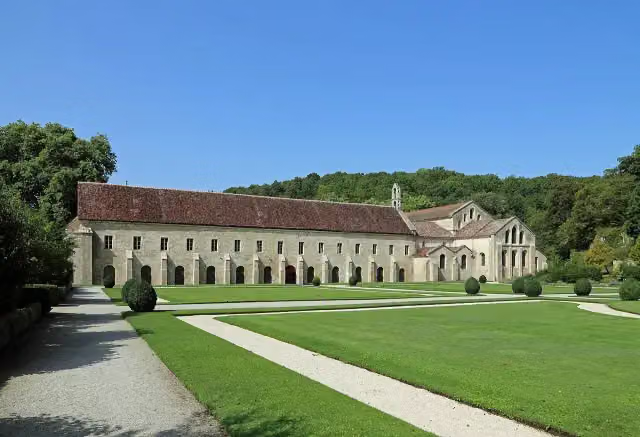
Hear the story of Cistercian Abbey of Fontenay on the spot with the app

Explore further

More points of interest

Frequently asked questions

Where are the Alesia archeological excavations in Alise-Sainte-Reine?

The Fouilles d'Alésia lie on the Mont Auxois, near the village of Alise-Sainte-Reine in the Côte-d'Or. This is where Alesia, the capital of a tribe, once stood.

What can you see at the Alesia archeological excavations?

You mainly see ruins, such as remains of a theatre, a forum and a basilica. On the west side of the plateau also stands the large statue of Vercingetorix, made by Aimé Millet in 1865.

Are there benches at the Alesia archeological excavations?

Yes, the nearest bench is 76 metres away, at Fouilles d'Alésia. Within 500 metres there are 5 benches.

Is there drinking water at the Alesia archeological excavations?

Yes, the nearest water tap is 437 metres away, at Chemin des Fouilles. Within 500 metres this is the only water tap.

Is there a toilet at the Alesia archeological excavations?

The nearest public toilet is 616 metres away, at Rue du Rochon. It is free and wheelchair accessible, but there is no public toilet within 500 metres.

What happened at Alesia in 52 BC?

In 52 BC Vercingetorix withdrew with his army into the fortress of Alesia, where Julius Caesar besieged him. Hunger forced him to surrender, and with this the conflict was won.

The free app

All of Outdoor Pitstop, in your pocket

Find the nearest pitstop, navigate there, listen to audio tours, earn XP and make routes and lists together.

Download on the App StoreGet it on Google Play
How Outdoor Pitstop works →
The map of the app with pitstops nearby
A pitstop in the app, with a photo, a review and Navigate
Your profile in the app, with level and XP




