Outdoor Pitstop

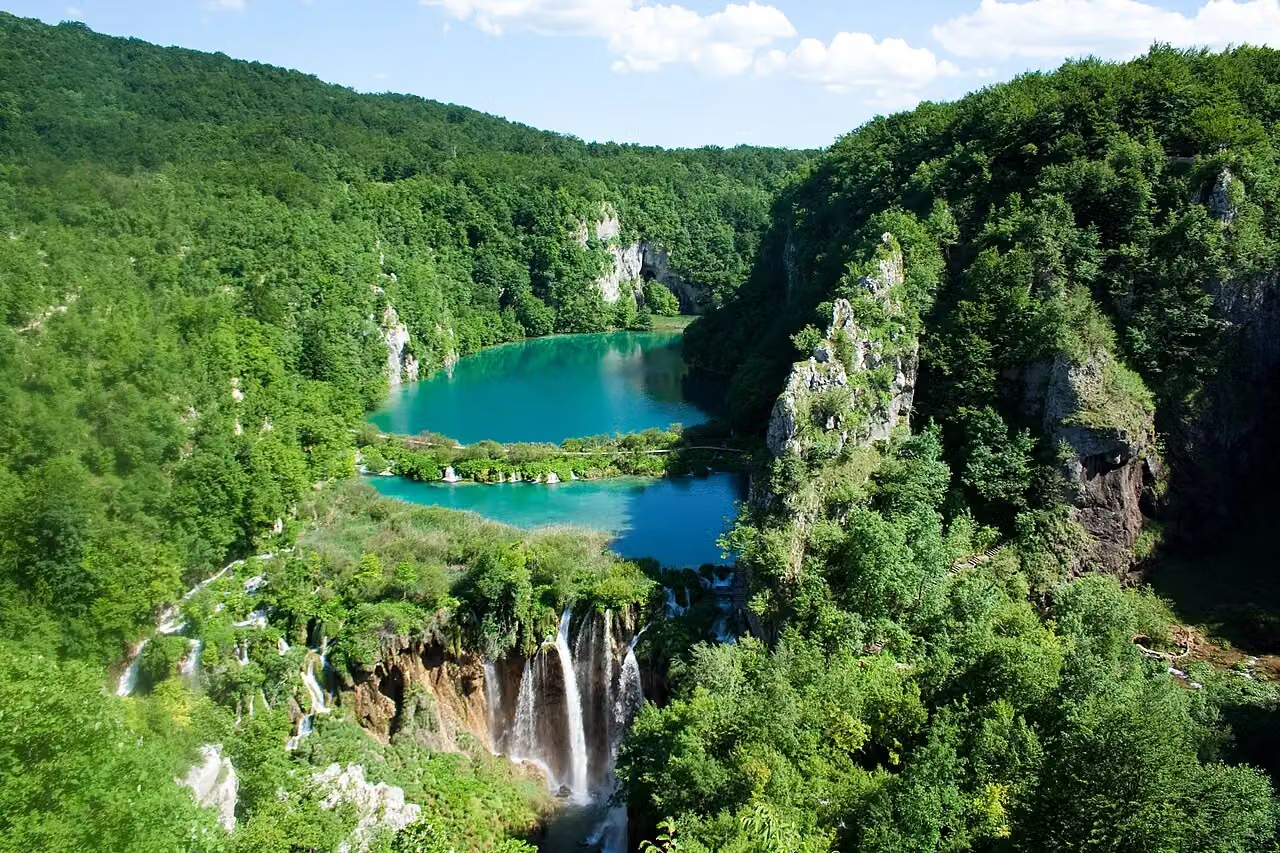
Plitvice Lakes National Park location
Plitvice Lakes National Park lies in the mountainous interior of Croatia, in the region of Lika. According to the park authority it sits between the Mala Kapela range to the west and north-west and the Lička Plješivica range to the south-east. Most of the park, 90.7 per cent, is in Lika-Senj County; the remaining 9.3 per cent is in Karlovac County.
Croatia made Plitvice its first national park on 8 April 1949, and UNESCO added it to the World Heritage List on 26 October 1979. The boundaries were widened in 1997, and the park now covers just under 300 square kilometres (about 115 square miles), mostly forest. The lakes themselves take up less than 1 per cent of that area.
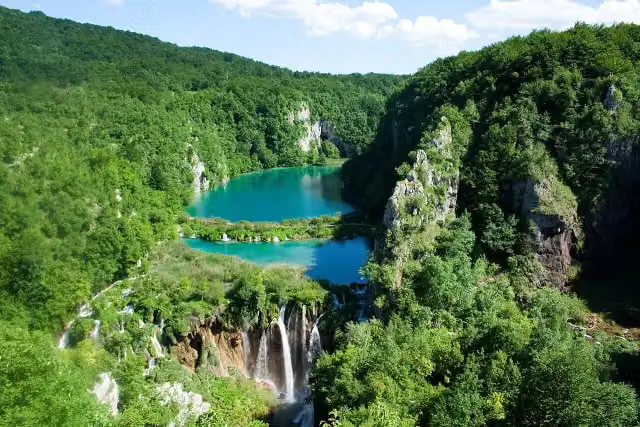
The lake system has 16 named lakes and several small unnamed ones, each spilling into the next. The park splits them in two: twelve Upper Lakes on dolomite, with gentler wooded shores, and four Lower Lakes in a deep limestone canyon with steep cliffs. The lakes are held back by barriers of tufa (travertine), a stone that grows as lime settles out of the water, and that process is the reason for the UNESCO listing.
- Type
- National park, UNESCO World Heritage Site
- Country
- Croatia
- Region
- Lika (Lika-Senj and Karlovac counties)
- Managed by
- Plitvice Lakes National Park Public Institution
- Area
- Just under 300 km²
- Entry
- Ticket required, open all year
- Dogs
- On a lead
- Swimming
- Not allowed
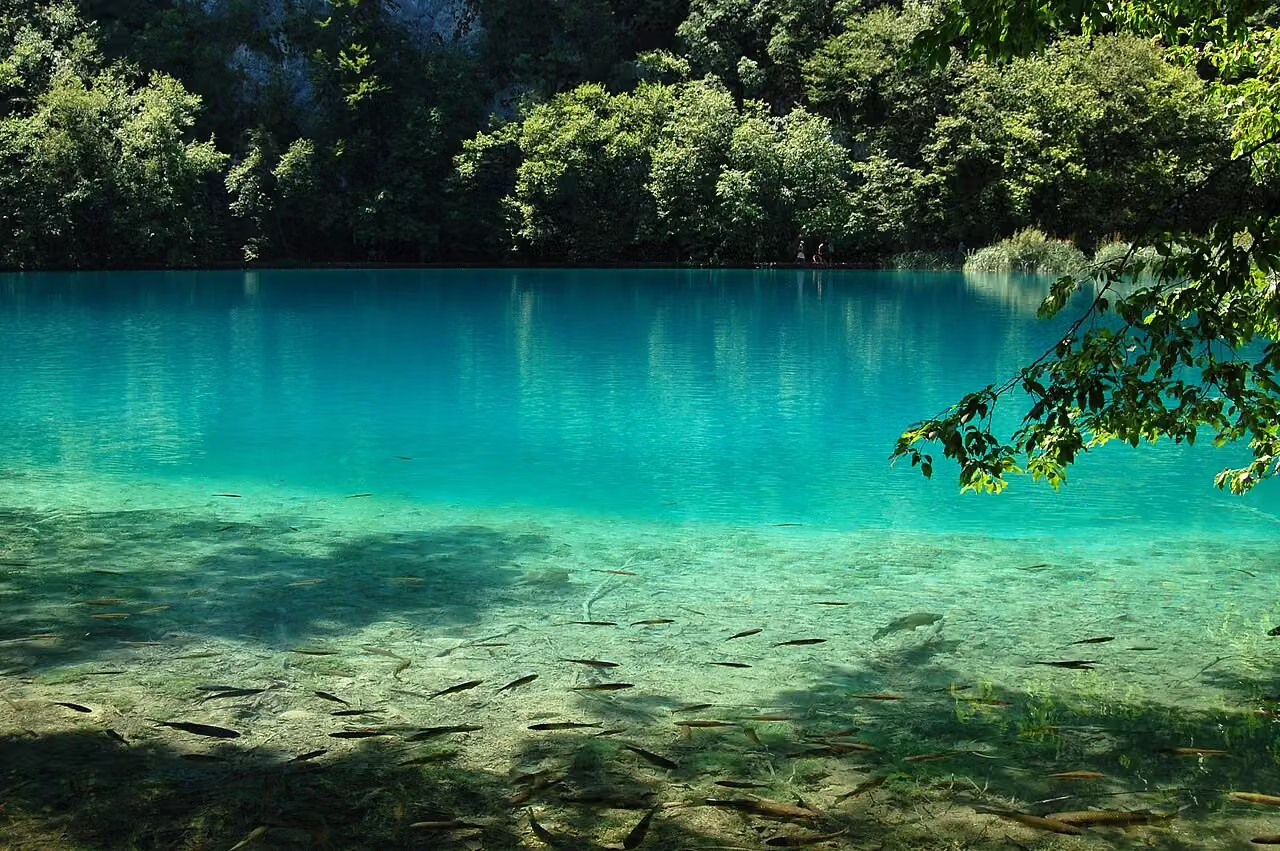
Plitvice entrance and parking
Two state roads lead to the park, according to the park authority: the D429 from the direction of Zagreb and Zadar, and the D52 from Otočac (and the A1 motorway). The D429 runs through the east of the park and passes both main entrances, which are about 3 kilometres (2 miles) apart:
- Entrance 1 (north), closest to the Lower Lakes and the Great Waterfall.
- Entrance 2 (south), closer to the Upper Lakes, with the auxiliary entrance Flora nearby.
Because the two entrances start different tours, the park advises choosing your programme before you arrive.
Parking. Both main entrances have a paid car park for all kinds of vehicles; you pay at the machines when you leave. On the park's price list a car costs €2 an hour from June to September and €1.50 an hour from March to May and in October and November. When the car parks are full, the park asks you not to leave your car along the main road or on the grass, and not to wait for a space and hold up traffic.
By bus. Buses between inland Croatia and the coast use the D429, and there are stops near both entrances, on both sides of the road. The park points to the Zagreb Bus Station website and to Likaline, the local bus service in Lika-Senj County, for timetables. Free luggage storage is available at Entrance 1, Entrance 2 and Flora.
Plitvice tickets and entrance fee
Every visitor to the lakes and hiking trails needs a ticket. The park strongly recommends buying it online in its own webshop. You choose an entrance and a time slot, and you validate the ticket at that entrance, on your phone or printed. You may not enter before the time on your ticket, but you can be up to an hour late. If tickets are left, you can also buy them at the entrances, by cash or card, though queues can be long in peak season.
The ticket includes the electric boat across Lake Kozjak, the panoramic train, accident insurance and the toilets at the stops along the way. The price depends on the season. The adult day ticket on the park's price list (the version I read was headed 2025; the park reserves the right to change prices):
| Adult day ticket | Price |
|---|---|
| January to March, November and December | €10 |
| April, May and October | €23 |
| June to September | €40 |
| June to September, late entry | €25 |
The lower summer price applies after 4 pm from June to August and after 3 pm in September. Children aged 7 to 18 and students pay less, and children under 7 go in free. There is also a two-day ticket, valid on two consecutive days.
Opening hours. The park is open every day of the year, but the hours of the entrances, car parks and ticket desks change with the season, and ticket sales stop well before the entrances close. Check the park's working-hours page on the day you plan to go.
Rules at Plitvice: dogs, swimming and drones
Dogs are welcome, but always on a lead, and that includes the boats and the panoramic train.
The park's rules of conduct are short and strict. Stay on the marked paths, do not swim, fish, camp or light fires, do not feed or disturb the animals, do not pick plants or take natural souvenirs, and do not drop litter. Cycling is not allowed in the park either, and nor are drones for filming from the air.
The park also asks visitors to wear suitable footwear, bring rain and sun protection, check the weather forecast and check the length of their chosen tour so there is enough time to finish it. The regular tours are not wheelchair accessible throughout; staff at the entrance can suggest the most accessible route.
Plitvice waterfalls and lakes
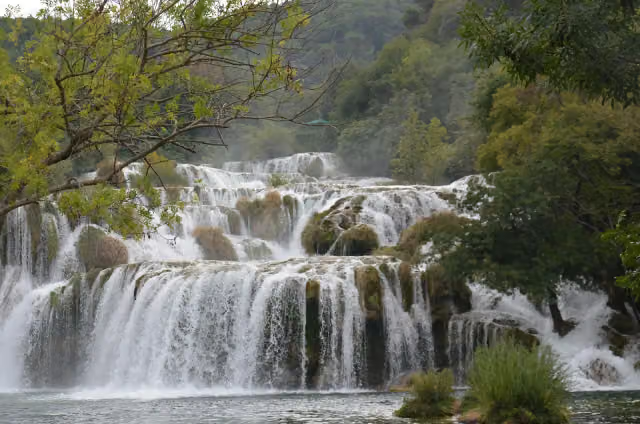
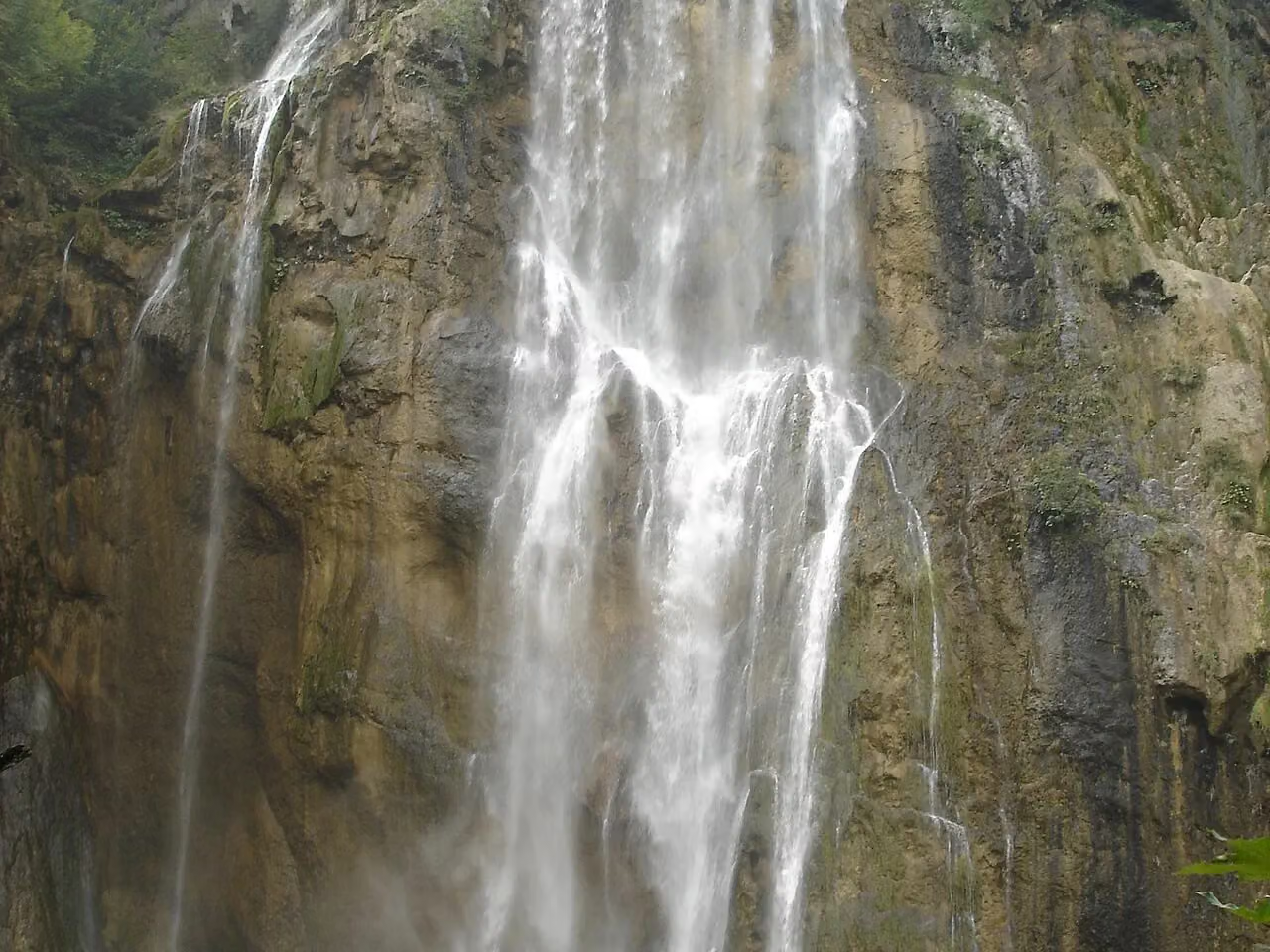
The Plitvice waterfalls form where the water spills over the tufa barriers between the lakes. These are the best-known parts of the lake system.
- Great WaterfallThe largest fall of the Plitvice Lakes and of Croatia, says the park, near Entrance 1.Lower Lakes
- SastavciThe falls at the end of the lake system, where the Korana River springs up below them.Lower Lakes
- Lower Lakes canyonNovakovića Brod, Kaluđerovac, Gavanovac and Milanovac in a deep limestone canyon.Entrance 1
- Lake KozjakThe largest of the Plitvice lakes, crossed by an electric boat.Boat included
- Veliki and Mali PrštavacThe biggest falls of the Upper Lakes, on the longer tours from both entrances.Upper Lakes
- Upper LakesTwelve lakes up to Prošćansko jezero, usually closed in winter.Entrance 2
Things to do in Plitvice Lakes National Park
The park offers seven tour programmes through the lake system plus four hiking trails. You follow the tours on your own along the signs; a guide is not needed. Programmes A, B, C and K1 start at Entrance 1, and E, F, H and K2 at Entrance 2. They range from 3.5 kilometres and 2 to 3 hours (programme A, round the Lower Lakes and the Great Waterfall) to 17.5 kilometres and 6 to 8 hours (K2). Most of the shorter ones combine walking with a boat ride across Lake Kozjak or a stretch on the panoramic train. When I checked, the park listed programme F as temporarily closed.
The ticket also covers 22 kilometres of paths around the lakes and 36 kilometres of hiking trails, according to the price list. The park sells a tourist map at its information offices that helps you find your way.
Plitvice National Park photos: what is allowed
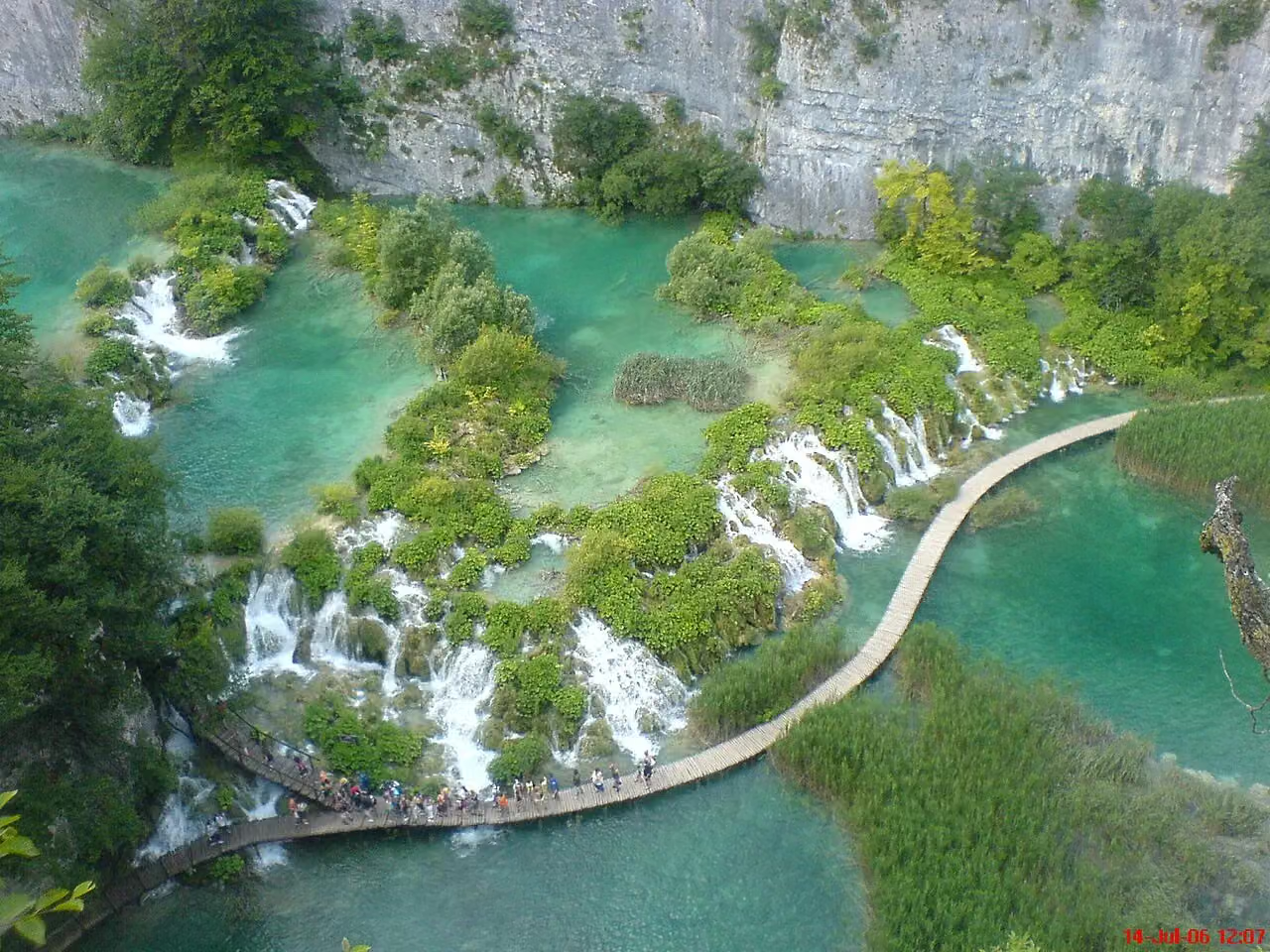
Taking photos with a camera or phone for your own use is allowed, says the park. For commercial photography or filming you have to file a request first, following the park's protocol. Flying a drone for aerial photos is banned throughout the national park.
The photos on this page come from Wikimedia Commons, with the maker and licence under each one.
The best time to visit the Plitvice Lakes
- Jan
- Feb
- Mar
- Apr: good
- May: at its best
- Jun: at its best
- Jul: good
- Aug: good
- Sep: at its best
- Oct: at its best
- Nov
- Dec
- SpringThe Upper Lakes usually reopen in early April, depending on the weather. In April and May the ticket costs less than in summer.
- SummerJune to September is high season with the highest ticket price. A later entry ticket is cheaper: after 4 pm until August, after 3 pm in September.
- AutumnOctober has the middle price again. From November the entrance fee is at its lowest.
- WinterThe Lower Lakes are usually open and the Upper Lakes usually closed. Opening hours are shorter.